REVIEW · GUANGZHOU
Private Historical Tour: Guangzhou City Sightseeing Including Lunch
Book on Viator →Operated by Hantang International Travel Service · Bookable on Viator
A day like this has built-in variety. You’ll move from royal tombs to giant Buddhist statues, then finish on a colonial-feeling river island. The whole thing runs on a private vehicle with a guide who strings the sites together into one story.
What I love most is the mix of art and archaeology: Chen Clan Temple’s carvings and museum treasures feel hands-on, then you go underground to see what was left behind from the Nanyue Kingdom era. I also like that the tour keeps changing pace, so it’s not one long museum lecture. You get lunch plus time to walk around Shamian Island and the Shangxiajiu pedestrian zone.
One possible drawback: this is a tight 8-hour circuit with several major stops, so you’ll want to keep expectations realistic about time inside each site. If you prefer slow wandering without a schedule, you may feel a little rushed.
In This Review
- Key highlights at a glance
- A one-day circuit of royal tombs, Buddhist giants, and colonial streets
- Chen Clan Temple and the Guangdong Folk Art Museum: carvings you can almost touch
- Going 65 feet underground: the Mausoleum of the Nanyue King
- Six Banyan Temple and the Flower Pagoda: copper Buddhas and Yuan-era metalwork
- Shamian Island: Guangzhou’s small colonial island on the Pearl River
- Lunch plus Shangxiajiu Pedestrian Street: food, pacing, and optional shopping time
- Price and what you actually get for $239
- Logistics that make the day feel easier (mobile ticket, private vehicle, tight timing)
- Who this tour suits best
- Should you book this private Guangzhou historical tour?
- FAQ
- What is the start time and duration of the tour?
- How much does the private tour cost?
- What stops are included during the day?
- Is hotel pickup and drop-off included?
- What’s included in the price?
- Is there a lot of walking?
- Is free cancellation available?
Key highlights at a glance
- Chen Clan Temple carvings: wood, brick, and ivory details, now paired with a folk art museum
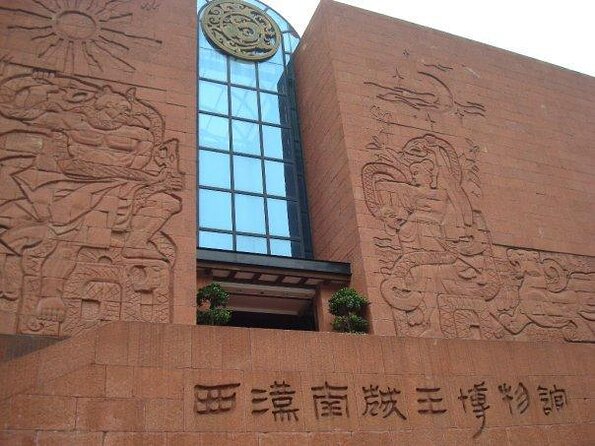
- Nanyue King tomb 65 feet down: seven chambers and more than 1,000 burial artifacts
- Six Banyan Temple copper Buddhas: three giant copper statues, each about 20 feet high
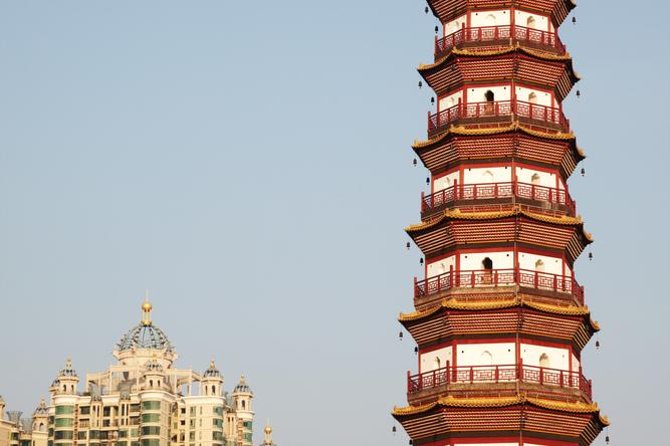
- Flower Pagoda details: a 56-meter tower with colorful exterior carvings and a Yuan Dynasty copper top
- Shamian Island colonial streets: Western mansions and churches from the mid-19th century, now cafes and boutiques
- Private logistics that cut friction: hotel pickup and drop-off plus admissions and lunch in one package
A one-day circuit of royal tombs, Buddhist giants, and colonial streets
Guangzhou can feel big and spread out. This private tour tackles that head-on by linking several top sites that are not clustered in one tiny area. You start with morning pickup, ride in an air-conditioned vehicle, and then walk when it makes sense.
The best part is how the day moves across time. You’ll see ancestral worship and Cantonese craft at Chen Clan Temple, then shift to an imperial burial world at the Mausoleum of the Nanyue King. After that, the mood turns spiritual at Six Banyan Temple and the Flower Pagoda, and finally you get the more relaxed, street-level vibe of Shamian Island.
Chen Clan Temple and the Guangdong Folk Art Museum: carvings you can almost touch
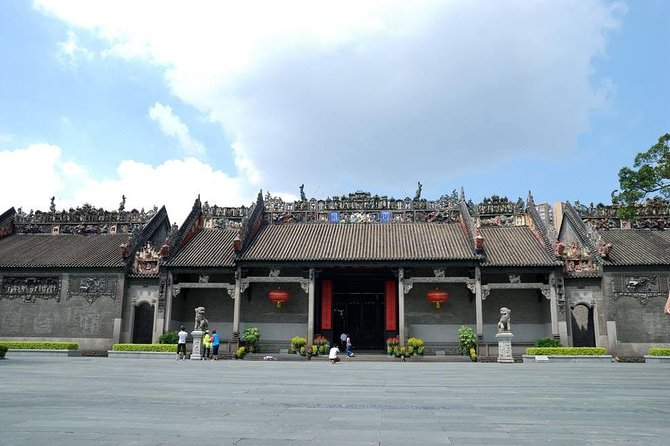
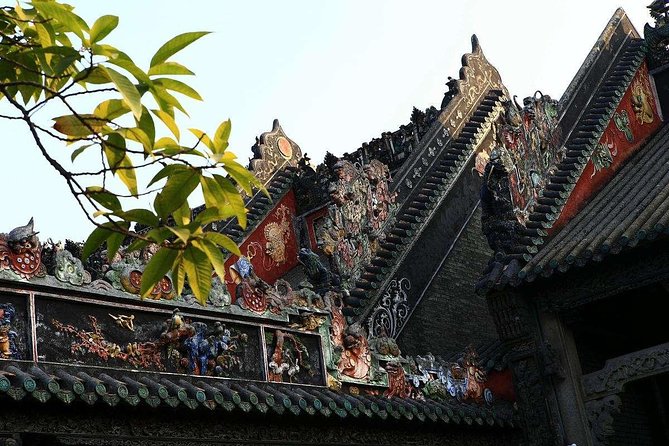
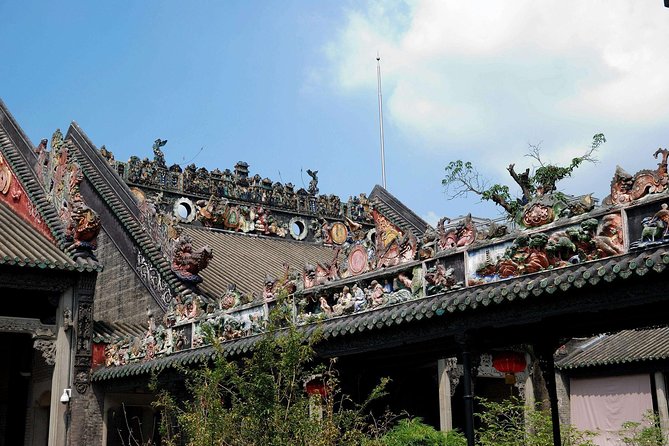
Your first big stop is the Chen Clan Temple, also known as the Chen Family Academy. Built between 1890 and 1894 for ancestral worship, it’s famous for its intricate wood, brick, and ivory carvings plus elaborate beams and columns.
In practice, this kind of place rewards people who slow down for a few minutes at a time. Don’t just rush through the main halls. Look up at the interior structure and take in the layered details. Even if you don’t read Chinese, you’ll get the sense of why this was such a respected family space.
Now it’s tied to the Guangdong Folk Art Museum, which helps turn the visit from “nice building” into “Cantonese creativity, explained.” You’ll see examples of Cantonese craftsmanship such as traditional Chinese ink and embroidery designs, plus rare prints and ceramics. That added context is a big reason the temple works so well early in the day: it gives you cultural grounding before you switch eras again.
Small note on comfort: the walking is moderate, but you’ll be on your feet more than you might expect, especially if you stop often to look at the carving details.
Going 65 feet underground: the Mausoleum of the Nanyue King
Next comes one of the most fascinating surprises in Guangzhou: the Nanyue Royal Tomb on Xianggang Hill. The tomb complex sits about 65 feet (20 meters) underground, and the visitor experience is built around what was preserved in that sealed environment.
The scale here is the point. The tomb is described as having seven chambers holding more than 1,000 burial artifacts. That number makes more sense when your guide explains what the artifacts were and why they mattered. You’re not just looking at objects; you’re seeing how a burial system was arranged.
One detail that really sticks is the story about King Zhao Mo’s burial garment. It’s described as made from more than 2,000 pieces of jade, connected by silk thread. That’s the kind of fact that makes you realize how much effort and planning went into status, ritual, and symbolism.
If you like archaeology-adjacent experiences, this is your anchor stop. If tombs are not your thing, you’ll still get something valuable out of it, because it helps you understand Guangzhou’s ancient identity as more than just modern trading city.
Six Banyan Temple and the Flower Pagoda: copper Buddhas and Yuan-era metalwork
Then you shift fully into Buddhist site territory at the Six Banyan Temple, also called the Liurong Temple. The temple dates to 537, which means you’re looking at a tradition with serious age behind it.
The main hall includes three copper Buddha statues, and the guide emphasizes their size. Each statue is about 20 feet (6 meters) high, and they’re described as the largest of their kind in Guangdong Province. When you see them in person, the scale does the work even if you’re not deeply religious. They feel like landmarks inside the hall.
After the temple, you stroll over to the Flower Pagoda, which measures about 184 feet (56 meters) tall. The exterior is known for colorful carvings, and the top is described as a decorative copper piece cast in the Yuan Dynasty (1271–1368).
This part of the day is a good balance between “religious importance” and “art history you can see.” Pagodas are often hard to understand at street level because they’re tall, but here the guide can help you notice what to look for—carving patterns, and the significance of that Yuan Dynasty copper work.
Practical tip: bring the same energy you’d bring for a viewpoint stop. Stand still, look up, and let your eyes catch details. The pagoda is where a good guide saves you from the classic problem of seeing a tall structure but missing what makes it special.
Shamian Island: Guangzhou’s small colonial island on the Pearl River
After lunch, you head to Shamian Island, an oval islet between the Pearl River and the White Goose Pool. It’s described as only 0.3 square meters in area, so you can cover a lot of it on foot without feeling like you’re lost all day.
What makes Shamian Island different from a lot of Guangzhou sights is its “outside of time” feel. In the mid-19th century, Shamian became an enclave for prosperous expat traders, and that’s when Western-style mansions and churches were built. Today, the area has cafes and boutiques, and many colonial mansions are restored.
This is a great place for a slower pace. You’re not just looking at buildings; you’re walking through a neighborhood texture—streets, facades, and the way the island sits by the river. It’s also where you can take a break from temple and tomb intensity.
One more thing that helps: because you’re on a private tour, you can move at a comfortable rhythm. You can linger for photos or step into a cafe if the weather or your energy level needs a reset.
Lunch plus Shangxiajiu Pedestrian Street: food, pacing, and optional shopping time
Lunch is built into the tour and is described as a traditional Chinese-style meal at a local restaurant. In the feedback you provided, a lot of people mention a dim sum-style lunch and praise the taste. That matters, because a “lunch included” stop can be hit-or-miss on some tours. Here, it seems designed to satisfy real cravings rather than just check a box.
Still, keep your expectations flexible on the lunch setting itself. If you’re the type who cares a lot about ambiance, you might find that the restaurant environment varies. The upside is that you’re not spending time hunting for a place in the middle of sightseeing.
After Shamian, the day may also include time at Shangxiajiu Pedestrian Street, a well-known walking shopping area. Even if you’re not shopping, it’s useful as a way to understand modern Guangzhou street life, and it gives you some space to decompress after the more structured cultural stops.
If you want to buy small gifts or snacks for later, this is where it’s practical. If you don’t care about shopping, you can treat it like a walking break and head back with fewer decisions to make.
Price and what you actually get for $239
At $239 per person, this tour isn’t the bargain bucket. The value comes from what’s bundled and what it saves you.
Here’s what you’re getting inside that price:
- A private guide with professional English-speaking commentary
- Hotel pickup and drop-off
- Transport by private air-conditioned vehicle
- Admission tickets
- A Chinese-style lunch
When you add those up on your own, you quickly notice how time-costly Guangzhou logistics can be. Hiring a guide for a full day plus paying for admission separately adds up fast. This tour also reduces the stress of coordinating routes across different parts of the city.
The other value is attention. With a private format, the guide can answer questions as you go, which is especially helpful for sites like the Nanyue tomb where the stories behind artifacts change how you look at them.
That said, there’s a fair caution: Guangzhou is large and taxis can be easy. If you’re comfortable building your own day and you don’t need a guide to connect the dots, you might feel the price is steep. For first-timers or people with limited time, the private structure usually feels like paying for peace of mind.
Logistics that make the day feel easier (mobile ticket, private vehicle, tight timing)
The schedule starts at 8:00 am with pickup. The total tour time is about 8 hours, and there’s a moderate amount of walking across multiple stops.
You also have practical support built into the setup, like a mobile ticket and confirmation received after booking. There’s a professional driver, and because this is private, your vehicle is ready for you at each transfer rather than you playing catch-up.
Now for the reality check: because it’s a full day and includes several major sites, you’re not going to do super slow sightseeing. The trick is learning when to slow down—at the places that reward it most.
I’d prioritize your slow time for:
- The carved interiors of Chen Clan Temple
- The tomb artifacts, especially when you get the artifact “why”
- The Flower Pagoda, where looking up pays off
- Shamian Island, where the street-level pace is part of the charm
Everything else becomes “see it clearly, then move on.”
Who this tour suits best
This tour is a strong fit if you want a complete Guangzhou snapshot in one day, without wasting time figuring out transportation. It also works well if you like history and art but don’t want to spend your vacation doing ticket math and route planning.
It’s especially good for:
- First-time visitors to Guangzhou who want the big anchors
- People traveling with limited time who still want depth at major sites
- Anyone who enjoys cultural explanations tied to real objects, like carvings and burial artifacts
If your travel style is totally independent and you like roaming for hours without a timetable, you may find this tour’s structure too rigid. In that case, consider using it as inspiration and then building your own route more loosely.
Should you book this private Guangzhou historical tour?
If you’re choosing between “wing it” and “get organized,” I’d lean booking this if you value a guided story and efficient logistics. For a day that mixes Chen Clan Temple, the Nanyue King tomb, Six Banyan Temple, and Shamian Island, having a private guide and driver makes the experience feel smooth rather than chaotic.
I’d skip it or reconsider only if you’re the type who hates schedules or plans to spend most of the day shopping and people-watching instead of touring cultural sites. Otherwise, this is exactly the kind of day trip that turns scattered highlights into one coherent Guangzhou experience—food included, and no map anxiety required.
FAQ
What is the start time and duration of the tour?
The tour starts at 8:00 am and runs for about 8 hours.
How much does the private tour cost?
The price is $239.00 per person.
What stops are included during the day?
You visit Chen Clan Temple (Chen Clan Ancestral Hall), the Mausoleum of the Nanyue King, Six Banyan Temple and the Flower Pagoda, Shamian Island, and you may also spend time at Shangxiajiu Pedestrian Street.
Is hotel pickup and drop-off included?
Yes, the tour includes round-trip hotel transport by a comfortable private vehicle, with pickup and drop-off.
What’s included in the price?
The tour includes a professional English-speaking guide, private air-conditioned transport, Chinese-style lunch, admission tickets, and a professional driver.
Is there a lot of walking?
There is a moderate amount of walking, so comfortable walking shoes are recommended.
Is free cancellation available?
Yes. You can cancel up to 24 hours in advance for a full refund.