REVIEW · PHNOM PENH
Guided Phnom Penh Heritage Tour
Book on Viator →Operated by Phnom Penh Heritage · Bookable on Viator
A tablet tour, but real streets too. I liked the way the digital tablet with headphones turns each stop into a mini time machine, using film, vintage photos, and stories tied to French protectorate-era Phnom Penh. I also found the guide Oliver easy to talk to, quick to help you make sense of what you’re seeing as the city changes around you. One heads-up: the tour is mostly an overview—some big sites have their visit left out, and interiors are only available when they’re open.
This runs as a small group experience, with a maximum of 10 people, and you’ll start near the center at the corner of Street 102 and Street 13. You’ll end on Oknha Chhun St. (240) near the Royal Palace and Wat Botum Square, which is handy if you want to keep exploring right after. Plus, it’s built around a mobile ticket, not paper tickets and paperwork.
In This Review
- Key highlights worth showing up for
- How the 2.5-hour heritage loop fits Phnom Penh (and your day)
- Tablet-and-headphones guide: why it works better than random sightseeing
- The French-era story you’ll recognize on the streets
- Phnom Penh city overview: set your bearings before the big stops
- Cambodia Post Office and the Indochina Bank zone
- Hotels, police, and the machinery of the city
- Chinese house, Hokkien temple, and Naeggas Bridge
- Wat Phnom: photo time, but the hill temple visit is out
- The country club area (US embassy zone): know the photo rule
- National Library and the value of being able to go inside (if open)
- Raffles Hotel Le Royal: architecture stop you can actually feel
- Railway station and Central Market: the day-to-day layer
- No Problem Villa: a pause for a different kind of memory
- Royal University of Fine Arts: the best “inside if open” moment
- National Museum and Royal Palace: great stops, but the visits are not included
- FCC Phnom Penh, UNESCO Cambodia, and finishing on Street 240
- Price and value: is $24.36 a smart buy?
- Who should book this heritage tour (and who might not need it)
- Should you book it?
- FAQ
- How long is the Phnom Penh Heritage Tour?
- How much does the tour cost?
- What’s included in the tour?
- Is private transportation included?
- How many stops does the tour make?
- Are any buildings available to enter during the tour?
- Is the Wat Phnom hill temple visit included?
- Is entry to the National Museum included?
- Is entry to the Royal Palace included?
- Where do the tour start and end?
Key highlights worth showing up for
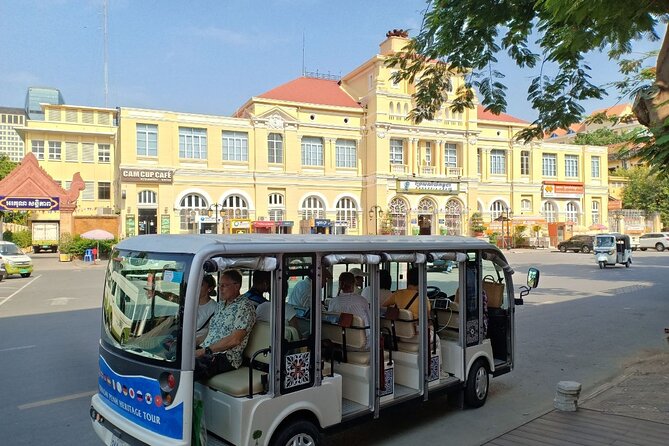
- Tablet-led audio in 10 languages with headphones, so you’re not stuck reading while the bus rolls.
- Nineteen stops that connect to 22 major sites, which helps you build a coherent Phnom Penh story fast.
- Virtual-entry moments from the video guide for some buildings that aren’t accessible to the public.
- Small group size (up to 10), so questions to Oliver don’t get swallowed by a crowd.
- Photo-friendly pacing from the bus, plus “inside if open” options at a few key stops.
How the 2.5-hour heritage loop fits Phnom Penh (and your day)
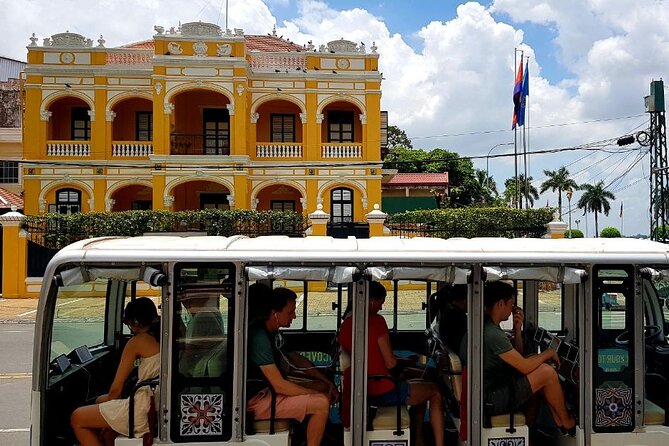
The Phnom Penh Heritage Tour is about 2 hours 30 minutes, set up to give you orientation plus ideas—without dragging you through every corner on foot. The route covers a cluster of heritage sites around the capital, centered on when Cambodia sat under French protectorate influence and when Phnom Penh started reshaping into a planned city. Expect 19 stops with audiovisual guidance that connects the dots between buildings, institutions, and the people who used them.
This is also a smart option on hot days. You’re not walking from one big site to the next, and the tour is designed so you still get photo stops and time to look without losing your energy. The tour also includes bottled water, which sounds basic until you realize how quickly “basic” matters in Phnom Penh.
The biggest practical win is where it ends. You finish on Street 240, close to the Royal Palace area and Wat Botum Square, so you’re not forced to start a fresh commute just to keep sightseeing. It also makes it easier to plan a second half of the day around what you found most interesting.
You can also read our reviews of more tours and experiences in Phnom Penh.

Tablet-and-headphones guide: why it works better than random sightseeing
At each stop, you’re using a tablet with audiovisual guidance and headphones provided. What you’re watching isn’t just modern commentary. The guide uses films, vintage photos, and historical anecdotes tied to the building in front of you. That matters because Phnom Penh can feel like layers—new buildings, old structures, and sudden changes in style. The tablet helps you read those layers instead of just taking pictures.
A neat bonus is that some segments include virtual entry into certain buildings that aren’t accessible to the public. You still aren’t “inside” those places in real life, but the guide gives you a sense of what’s behind the doors, hallways, or key spaces. It’s especially useful for big civic or institutional buildings where public access can be limited.
The tablet is also available in 10 languages, which is helpful if you’re traveling with someone who needs a specific language option. In practice, this kind of multi-language setup keeps the group calmer: you’re listening with your headphones instead of all leaning in for one spoken script.
The French-era story you’ll recognize on the streets
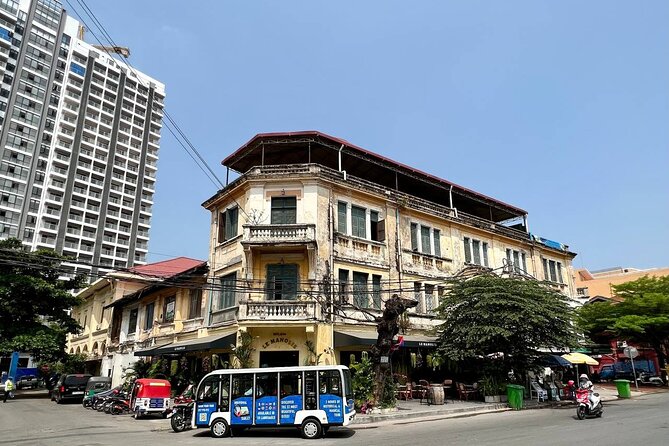
One reason this tour is so effective is that it has a storyline. You’re essentially following Phnom Penh as it shifts from older patterns into a city shaped by French models, institutions, and architectural tastes. As the tour moves stop to stop, you’ll see how administration, hotels, banks, and policing all appear in the same urban neighborhoods.
You’ll also notice the style angle. Art Deco comes up as a theme, and the route is designed so you can connect that architecture to the era that built it. It’s the kind of connection that’s hard to make if you’re just hopping between landmarks on your own.
If you’re planning a longer trip, this is the part that helps most. Once you understand the “why” behind the buildings, you’ll be able to choose what’s worth your time later—whether that’s a return visit, a museum add-on, or a slower walk through one area.
Phnom Penh city overview: set your bearings before the big stops
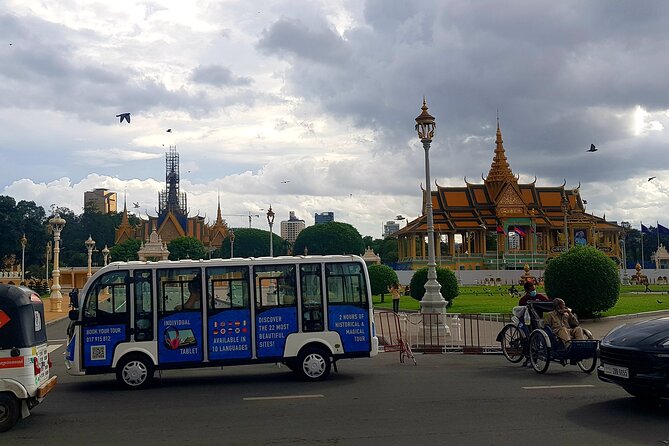
The tour starts with an orientation stop at Phnom Penh itself, framing the city as it changed into a capital. This is useful because many of the later buildings can feel like isolated objects if you haven’t been given a map of the story first. Once you’ve got the arc in your head, each next stop feels less random.
Another practical point: this tour is built around a bus-and-stop format. You’re not only standing in one place waiting for information. You’ll often get a ride between points, which keeps momentum and helps on busy streets. The tour is also set up to give you time to take pictures from the bus and at stops, so you’re not stuck watching everything through exhaustion.
Cambodia Post Office and the Indochina Bank zone
A highlight early on is the Cambodia Post Office, where the guide and driver welcome you and share stories. This is where you really feel the benefit of having someone like Oliver with you: you can ask questions as you go, and those answers make later buildings easier to interpret.
Right after that, you’re guided toward Palais de la Poste, tied to the old Bank of Indochina. The video guide here focuses on the old bank, and the stop is structured to help you connect banking with the broader colonial-era urban plan. In cities where history is scattered, seeing institutions grouped like this helps you understand how power worked—on paper, in money, and in physical buildings.
One tip: the tour mentions a possibility to visit the inside of the old bank if it’s open. If the doors are accessible, it’s worth stepping in briefly, because you’ll likely spot details you’d miss from the outside only.
Hotels, police, and the machinery of the city
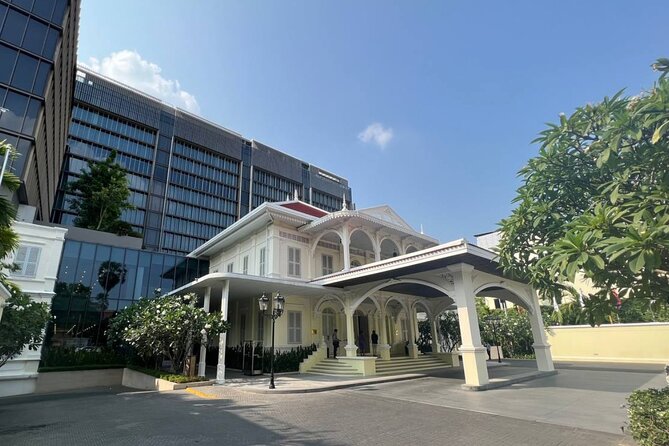
Next comes Le Manolis, framed as the first hotel of Phnom Penh. Hotels can sound like a footnote, but in a growing colonial-era capital, they were social infrastructure. They were places where business, official life, and visitors intersected. Seeing a hotel in this historical chain helps you understand Phnom Penh as a city of connections, not just monuments.
Then you’ll move to the Commissariat of Phnom Penh Municipal Police, an audiovisual stop about the old police station. This isn’t the kind of site most people rush through, and that’s exactly why it’s valuable. Police buildings show the government side of urban life—order, control, and everyday enforcement—revealing a different layer than palaces or museums.
The route continues with the Council for the Development of Cambodia, described as the old governor’s house. That stop works as a bridge between civic institutions and elite power. You’re not only seeing who lived at the top; you’re seeing how the city was managed in the background.
Chinese house, Hokkien temple, and Naeggas Bridge
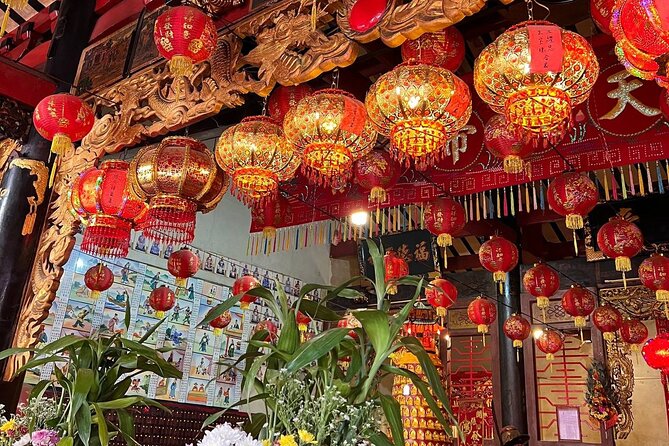
A very different side of Phnom Penh shows up with the stop for the Chinese house and the Hokkien Temple area (including 關帝古廟, tied to the Hokkien temple). This is guided with audiovisual sections about the Chinese house and the Hokkien temple, including more time for you to absorb the cultural mix that sits alongside French-era influences.
The Hokkien temple stop comes with one of the best “maybe inside” perks: the tour includes a possibility to visit inside if it’s open. If it is open, take that chance. Even a short interior look can change how you understand the role of temples in daily neighborhood life.
You’ll also pass over Naeggas Bridge, guided through the story of the old naga bridge. Bridges are easy to ignore until you remember they’re part of the city’s identity: they connect routes, neighborhoods, and legends. This stop keeps the tour from becoming only government and architecture.
Wat Phnom: photo time, but the hill temple visit is out
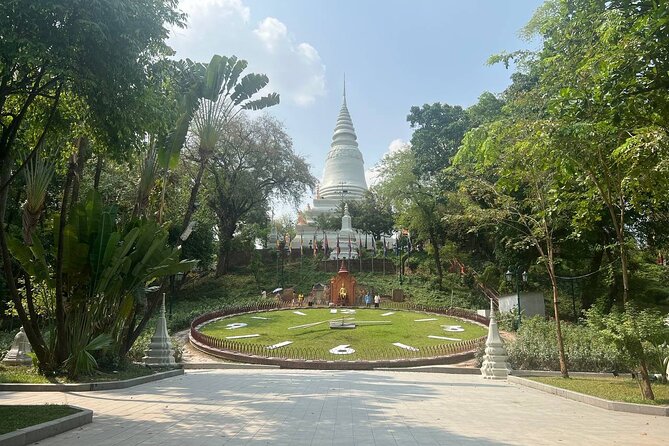
Wat Phnom is included as a stop, and you can take pictures there. The important consideration: the visit of the temple on the hill is not included in the city tour. So if you were hoping for a full Wat Phnom experience with the climb and interior time, you’ll need to plan that separately.
That said, it’s still useful. You’ll get the context to understand why Wat Phnom sits as a focal point in Phnom Penh’s story, and the photo access lets you decide how much you want to do next. I like doing this kind of “starter viewpoint” on a tour, then choosing the full visit later when you have time.
The country club area (US embassy zone): know the photo rule
One stop in the middle is the country club area, described as the location where the actual Embassy of the USA is today. There’s a note that pictures are not allowed at this part of the tour.
This is one of those details that can save you stress. If you’re the type who documents everything, keep your camera ready for the other stops and plan on a no-photo moment here. Think of it as an opportunity to listen rather than shoot.
National Library and the value of being able to go inside (if open)
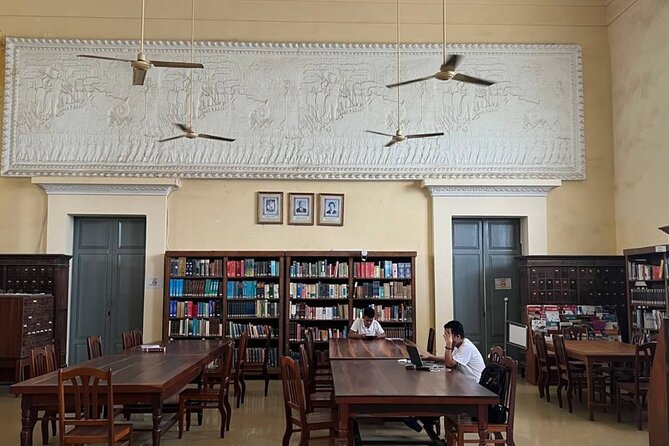
The National Library stop has audiovisual guidance and includes the possibility to visit inside if it’s open. Even if you only have a minute inside, libraries can tell you a lot about how a city values learning and public institutions—especially when paired with the tour’s broader theme of how Phnom Penh modernized.
If it’s closed, don’t worry. The exterior plus the tablet narrative is still useful. You’ll just need to swap in a later independent visit if you want longer time for details.
Raffles Hotel Le Royal: architecture stop you can actually feel
The route includes Raffles Hotel Le Royal, which the tour frames as probably the best hotel in Cambodia. Even if you never stay there, an architecture-focused stop like this is worth it because hotels from this era often concentrate style and status in one place. It’s an easy stop to enjoy visually, and the timing is short enough that it doesn’t drag.
From a practical standpoint, this is another spot that works well for quick photos from outside. You’re on a heritage circuit, so you’ll be comparing features with earlier buildings, and that comparison makes the architecture feel more meaningful.
Railway station and Central Market: the day-to-day layer
The tour then shifts toward movement and commerce with a guided stop at the railway station (referred to as the train station). After that, you get Central Market, guided as part of the route that includes a lot of the lived-in Phnom Penh feel.
This matters because heritage isn’t only palaces and formal buildings. Markets and transit hubs show how the city breathes—how people move, shop, and work. If you’re trying to avoid a tour that’s all postcard views, these stops help balance the day.
No Problem Villa: a pause for a different kind of memory
You’ll also stop at No Problem Villa, guided as part of the heritage loop. This isn’t framed as a typical building-to-buildings style stop. It’s included as an important element in the overall story of Phnom Penh, and it gives you a chance to keep thinking beyond architecture.
I found stops like this valuable because they add human weight to a route that otherwise focuses heavily on institutions and buildings.
Royal University of Fine Arts: the best “inside if open” moment
One of the longest stops on the route is the Royal University of Fine Arts, with audiovisual guidance and a guided visit of the university. Most of the time, you can see students practicing their art.
That’s a big deal for two reasons. First, it turns the tour from looking at history to watching living culture in real time. Second, seeing students work helps you understand the university as a place, not just a name on a map.
If your schedule is tight, this stop is still worth it because you’ll likely get both context and a visual snapshot of Phnom Penh’s creative present. If you’re a photo person, this is also one of the more rewarding areas for pictures—just be respectful in how you shoot.
National Museum and Royal Palace: great stops, but the visits are not included
Two major “big-ticket” sites appear on the route—National Museum and Royal Palace—but the tour’s city loop does not include the visits inside them. The National Museum stop is guided with audiovisual context, and Royal Palace is guided as well, but you’ll need separate planning if you want full entry and time inside.
This is the main reason I call this an overview tour rather than a full heritage day. You’ll leave knowing what matters and why, then you can decide whether you want to spend the extra time with tickets and guided entry later.
If you’re the kind of person who wants every inside visit handled for you, you might find the lack of included museum/palace time a little limiting. If you’re more about orientation and choosing your next moves, it fits well.
FCC Phnom Penh, UNESCO Cambodia, and finishing on Street 240
The tour includes FCC Phnom Penh, described as the old mansion that’s under renovation (noted as 2024/2025). Even if it’s covered, you still get the story behind it, which helps you understand what you’re seeing during reconstruction.
Then you’ll stop at UNESCO Cambodia, guided with audiovisual context about the UNESCO house. It’s a nice shift from early-20th-century institutions to an international-modern layer of Phnom Penh.
The grand finale is Royal Palace precinct area momentum, then the tour ends at the Residence of the British Ambassador to Cambodia on Street 240. You’ll get an epilogue guided story as the day closes. Finishing here is genuinely practical: you’re near the Royal Palace and Wat Botum Square, so you can keep going based on what you care about most.
Price and value: is $24.36 a smart buy?
At $24.36 per person for about 2½ hours, this tour is good value for what you get: a guide, headphones, a tablet-based 10-language audiovisual system, and built-in time for photos and quick Q&A. You’re also getting bottled water included, and you don’t need to arrange your own transport because the tour runs as a set route format without private-vehicle add-ons.
The best way to think about value here is not just time saved. It’s the value of interpretation. Phnom Penh can be confusing if you only rely on plaques or your own guesses. This tour gives you a framework—French protectorate-era transformation, architectural influences, civic institutions, and the Khmer Rouge-era dark hours are all part of the themes covered—so later sightseeing clicks faster.
If you’re on a short trip, you’ll likely feel the value. If you have days to spare and prefer totally independent exploring, you might still enjoy it, but it becomes less essential. For many people, it’s the best first-stop plan because it tells you where to go next.
Who should book this heritage tour (and who might not need it)
I think you should book this if:
- you’re short on time and want a structured orientation around major sites
- you enjoy history tied directly to buildings and style, not just dates
- you prefer heat-friendly sightseeing rather than long walks
- you want help deciding what to revisit later
You might skip it (or pair it differently) if:
- you want long, slow inside visits to National Museum or Royal Palace as part of one ticketed program
- you dislike tours where some moments are mainly audio/video context rather than full physical access
A good strategy: treat this as your first major Phnom Penh move. Then use what you learned to guide your next half-day or next day’s ticketed visits.
Should you book it?
If you want a clear, guided introduction to Phnom Penh’s heritage circuit, this tour is an easy yes. You get a small-group pace, a tablet-and-headphones system that helps you understand what you’re seeing, and a route that links major institutions, architectural eras, and neighborhood culture into one coherent storyline.
Just go in with the right expectations: it’s an overview, not a full-entry museum-and-palace marathon. If you want deeper time inside places like the National Museum or Royal Palace, plan separate visits. Do that, and you’ll get the best of both worlds: fast context today, slower exploration tomorrow.
FAQ
How long is the Phnom Penh Heritage Tour?
It runs for about 2 hours 30 minutes.
How much does the tour cost?
The price is $24.36 per person.
What’s included in the tour?
You get bottled water, an in-guide person, and a tablet with an audiovisual guide in 10 languages. Headphones are also provided.
Is private transportation included?
No. Private transportation is not included.
How many stops does the tour make?
The route includes 19 stops, connecting you to 22 major sites.
Are any buildings available to enter during the tour?
Yes, some stops mention a possibility to visit inside if open, including the old bank (if open), the Hokkien temple (if open), the National Library (if open), and the Royal University of Fine Arts.
Is the Wat Phnom hill temple visit included?
No. You can take pictures at Wat Phnom, but the temple on the hill visit is not included in the city tour.
Is entry to the National Museum included?
No. The National Museum visit is not included during the city tour.
Is entry to the Royal Palace included?
No. The Royal Palace visit is not included during the city tour.
Where do the tour start and end?
It starts at the corner of Street 102 & Street 13 and ends on Oknha Chhun St. (240) near the Royal Palace and Wat Botum Square.