REVIEW · SIEM REAP
Biking Tour in Angkor Wat, Angkor Thom Ancient Capital, Ta Promh
Book on Viator →Operated by Remorque Cambodia Tour · Bookable on Viator
Pedal through Angkor without the stress. This private cycling day pairs a licensed guide with a solid mountain bike so you can move at a real human pace through Angkor Wat, Ta Prohm, and a notably detailed Angkor Thom. It’s a great way to turn big temple names into something you can actually walk away understanding.
I also loved how the route centers on Angkor Thom and not just the famous “one photo stop.” You’ll cover the Victory Gate and then keep working through Bayon’s 54 towers with smiling faces, plus Baphuon and the major royal terraces. The main thing to consider: temple entry costs extra, and the day is best for people with strong physical fitness.
In This Review
- Key highlights to know before you go
- Why cycling Angkor Wat and Angkor Thom works better than just touring on foot
- What you’re really paying for at $69 per person
- Hotel pickup and the 8:30 start: how logistics shape comfort
- The guide experience: what Veasna (often listed as Pierre) brings to Angkor
- Stop 1: Angkor Wat on a mountain bike day, not a rushed checklist
- Stop 2: Ta Prohm, where roots steal the show
- Stop 3: Angkor Thom, Victory Gate to Bayon faces and royal terraces
- Bayon: 54 towers and the faces that follow you
- Baphuon and the royal power landscape
- Bikes, effort, and who this tour fits best
- Entrance tickets and the Angkor Pass: budget like a pro
- How to get the best day: small choices that pay off
- Should you book this Angkor bike tour?
- FAQ
- How much does the Angkor cycling tour cost?
- How long is the tour?
- What time does the tour start?
- Does the price include temple entrance tickets?
- What’s included in the $69 price?
- Is hotel pickup available in Siem Reap?
- Is this tour private?
- Is the tour suitable for kids?
- How physically demanding is it?
- What is the cancellation policy?
- Who operates the tour?
Key highlights to know before you go
- Private means your pace is the schedule: ride easier when you need to, stop longer when the light and angles are right
- Licensed guide with strong history context: you’ll get clear explanations, not just facts read off a sign
- Angkor Thom is the focus: Bayon faces, Royal Enclosure, Phimeanakas, Elephants Terrace, and the Terrace of the Leper King
- Ta Prohm’s photo chaos is part of the deal: roots and tree growth are the visual star
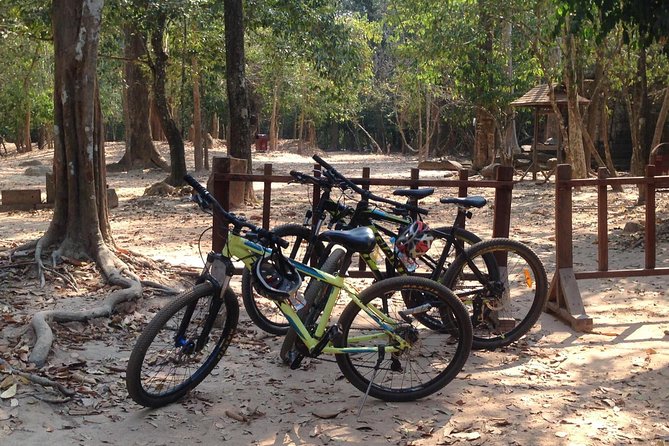
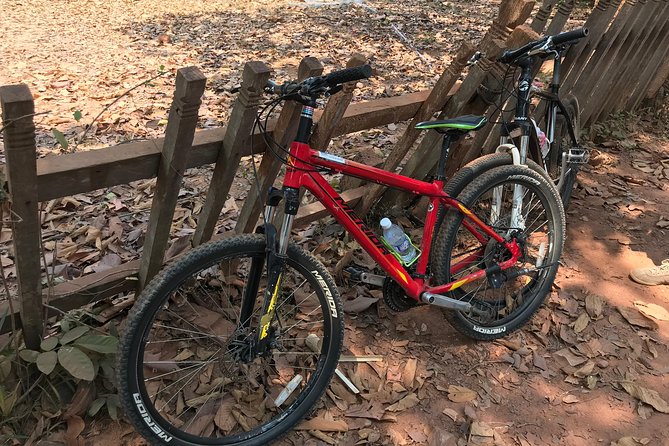
- You get proper cycling support: mountain bike for the day plus cool water to keep you comfortable
Why cycling Angkor Wat and Angkor Thom works better than just touring on foot
Angkor has a way of swallowing whole afternoons. You arrive expecting temples, then suddenly you’re staring at doorways, carvings, and stairways that feel impossible to take in with a tight group schedule. Cycling changes the rhythm. You still see the details, but you also get time to breathe between the big moments.
On this day, you’re not only “going from A to B.” You’re moving through Angkor in the order that makes sense, then switching into walking where temples demand it. That mix helps you get the scale without turning the day into a sprint.
Also, the experience is private. That matters more than people think. If your group wants extra photos at the Victory Gate, or you need to slow down in the heat, you can do that without holding everyone else hostage.
You can also read our reviews of more tours and experiences in Siem Reap.
What you’re really paying for at $69 per person
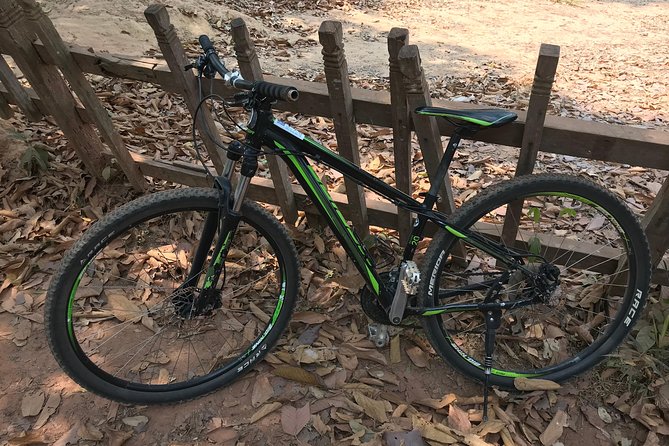
The price sounds simple: $69 per person for a 6 to 8 hour private cycling tour. The value comes from what’s bundled: a licensed local guide, a good-quality mountain bike for the day, cool water, and both walking and cycling during the visit.
This setup is especially practical if you don’t want to deal with bike sourcing, figuring out routes, or hiring a separate guide just to get context. You show up, get gear and support, and your guide handles the “how to see this properly” part.
One line in your budget planning matters a lot: temple entrance tickets are not included. The Angkor Pass is listed at $37.00 USD per person for one day, so your real all-in cost is closer to $106 per person (tour price plus pass). If you’re comparing options, compare on that basis.
Hotel pickup and the 8:30 start: how logistics shape comfort
You’ll start at 8:30 am, and pickup is offered from Siem Reap hotels that have a sign. That’s a small detail, but it can save you time and hassle, especially if your hotel is a little off the main drag.
The tour also notes that you’ll receive confirmation at booking and that the meeting area is near public transportation. In plain terms: you’re not walking blind into a complicated rendezvous.
And since you’re riding for much of the day, starting earlier helps more than it sounds. The morning tends to feel easier for biking, and you’ll be able to enjoy the temples without spending the hottest hours only waiting in lines.
The guide experience: what Veasna (often listed as Pierre) brings to Angkor
A temple day lives or dies on the guide. Here, the guide is described as licensed and is consistently praised for being professional and fun, with clear, educational explanations. One guest specifically called out the guide’s French and the way he teaches Cambodia through the story of the temples.
What I’d consider the practical magic is how the guide handles pacing. Multiple comments highlight that the guide doesn’t rush people, adjusts to needs, and keeps the day moving without watching the clock. If you’re the type who asks questions mid-photo, you’ll probably feel comfortable doing it.
There’s also a “small but smart” comfort layer. Guests mention cold bottled water and even damp towels to cool off. That kind of real-world support matters when you’re biking in the heat and humidity.
Stop 1: Angkor Wat on a mountain bike day, not a rushed checklist
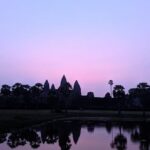
Angkor Wat is the obvious name. It’s huge, and it’s famous for a reason: a temple-mountain style built by King Suryavarman II, dedicated to Vishnu, from the early to mid-12th century.
What’s different when you see it as part of a bike day is how you can arrive with more energy. You’re not stuck doing all the hard walking right away. You’ll spend about 3 hours here, and the timing gives you space to look up, scan carvings, and take in the layout instead of being pushed along like a human conveyor belt.
One thing to keep in mind: since admission tickets are not included, you’ll want your Angkor Pass plan in place before you arrive. That way, you’re not scrambling while the day is already rolling.
Why this stop feels special: Angkor Wat is where you get the “masterpiece” Khmer architecture vibe most visitors dream about, but the biking-and-walking structure helps you slow down enough to actually register the craftsmanship.
Stop 2: Ta Prohm, where roots steal the show
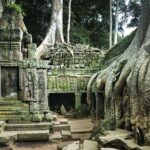
Ta Prohm is the temple most people picture when they think about Angkor’s jungle overlap. It’s built from the mid-12th to early 13th centuries, and its big claim to fame is that it was left largely as it was found.
That means crumbling sections, dense vines, and trees that feel like they’re collaborating with the stone. It’s a surreal look at time and survival, and it’s also a photographer’s playground. The tour gives you about 2 hours at Ta Prohm, which is enough to wander, pause, and catch different angles of the roots and doorways.
A practical tip for your photos: don’t treat every root as a background. Pick one main subject and build your frame around it. With the chaos of vines and stones, a simple focus tends to look more “intentional” in the final shots.
A possible drawback: Ta Prohm can feel visually busy. If you’re easily overstimulated by clutter, take breaks. Walk slower than you think you should, and let the visual rhythm reset between “must-see” corners.
Stop 3: Angkor Thom, Victory Gate to Bayon faces and royal terraces
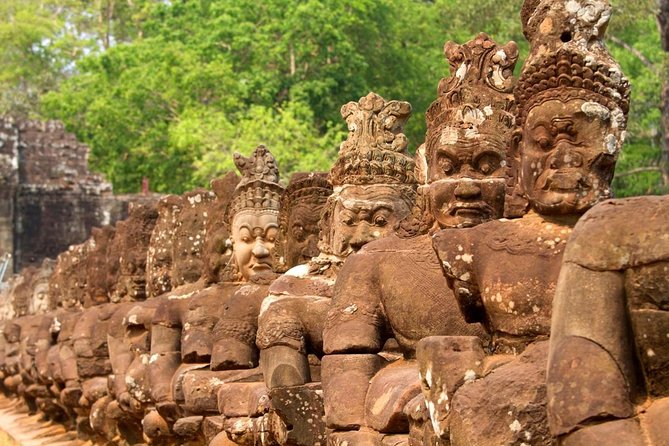
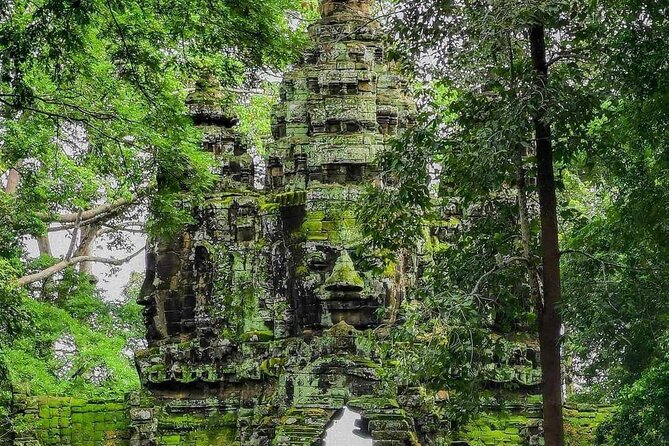
Angkor Thom is where the tour gets unusually in-depth, and that’s why I’d prioritize it even if you already know the basics. You’ll start around the Victory Gate for photos and then work toward Bayon.
Bayon: 54 towers and the faces that follow you
Bayon is famous for its 54 towers with the enigmatic smiling faces. You’ll spend time here with the nearby temple-mountain of Baphuon as part of the broader flow. This is one of those places where you keep noticing new details as you move.
The faces can look different depending on where you stand and how the light hits. That’s why having control of your pace matters. You can shift position, take one more step, and catch the face in a better angle instead of being pulled away.
Baphuon and the royal power landscape
From Bayon, you’re not just ticking off a temple name. You’re moving into the wider “royal Angkor Thom” world: the Royal Enclosure and a cluster of major terraces.
You’ll also encounter the Phimeanakas temple, the Elephants Terrace, and the Terrace of the Leper King. Seeing these in one connected day matters because they help you understand how Angkor Thom wasn’t a single monument. It was a structured complex tied to royal and ceremonial life.
Why this matters for you: the tour’s depth here prevents the common Angkor problem—knowing the names but not feeling the meaning. The terraces and placement help the story click.
Bikes, effort, and who this tour fits best
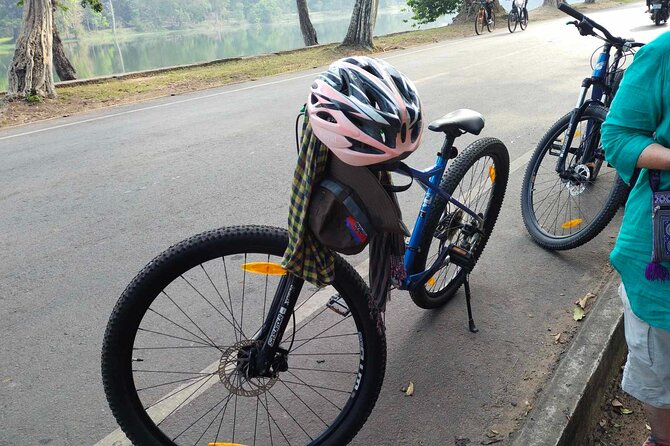
This isn’t a “sit and watch” tour. You’re cycling, and the tour notes that travelers should have a strong physical fitness level. That fits best if you’re comfortable with long days and some heat, plus the basic effort of riding a mountain bike between temple areas.
If you’re a casual rider, you might still manage it, but I’d be honest with yourself about stamina. The day runs around 6 to 8 hours, and that includes bike time plus walking inside temple zones.
It also mentions kids are available starting at 10 years old, which suggests the bikes and day structure can handle younger teens. If you’re traveling with a child, ask how the bike sizing works for your specific rider, since you’re relying on a mountain bike for the day.
Entrance tickets and the Angkor Pass: budget like a pro
The Angkor Pass is explicitly listed as your expense. At $37.00 USD per person for one day, this is the one cost that can surprise people when they compare tour prices.
Here’s how I’d plan it:
- Count $69 as the guide + bike + tour service price
- Add the $37 Angkor Pass per person for entry
- Expect gratuities may come up as well, since the tour notes they’re recommended
If you already know you’re going to do multiple Angkor sites in a single day, buying the pass becomes a smart, fixed line item. If you skip the pass budgeting, the “cheap tour” starts looking not-so-cheap fast.
How to get the best day: small choices that pay off
This is a private tour, so your best moves are personal. Still, a few things consistently improve the day for most people:
- Wear sun protection and breathable clothes. You’ll be outside most of the day, plus cycling.
- Bring a water strategy. You’ll get cool water, but you’ll feel better if you also plan your intake.
- Go slower at the points that matter. Angkor Wat’s geometry and Ta Prohm’s roots reward patience.
- Ask questions during walking, not only at the stops’ end. Temple stories land better when you can look at carvings while you learn what they mean.
If you like photography, treat this like a photo day with learning attached. Angkor’s most memorable images usually come from waiting one extra minute. The tour structure supports that style.
Should you book this Angkor bike tour?
Book it if you want an Angkor day that’s active but not chaotic, with a guide who explains what you’re seeing and a private pace that keeps you comfortable. I’d especially recommend it if Angkor Thom is high on your list and you like the idea of covering Bayon and the royal terraces as more than background scenery.
I’d think twice if you hate cycling or you’re worried about strong physical effort for a 6 to 8 hour day. Also factor in the Angkor Pass cost; the $69 price becomes meaningfully higher once you add admission.
If you’re a “give me the story and the photos” person, this tour’s mix of biking, walking, and history teaching makes a lot of sense. It’s one of the more practical ways to see major Angkor highlights without spending the whole day standing still.
FAQ
How much does the Angkor cycling tour cost?
It costs $69.00 per person.
How long is the tour?
The duration is listed as approximately 6 to 8 hours.
What time does the tour start?
The start time is 8:30 am.
Does the price include temple entrance tickets?
No. Temple entrance tickets and the Angkor Pass are not included. The Angkor Pass is listed as $37.00 USD per person for a 1-day pass.
What’s included in the $69 price?
Included items are a local licensed tour guide, a best-quality mountain bike for the day, cool water, and a private walking and cycling tour during the day.
Is hotel pickup available in Siem Reap?
Yes, two-way transfers are offered from any Siem Reap hotel that has a sign.
Is this tour private?
Yes. It’s described as a private tour/activity with only your group participating.
Is the tour suitable for kids?
Kids are available at 10 years old and up, according to the tour info.
How physically demanding is it?
You should have a strong physical fitness level.
What is the cancellation policy?
Free cancellation is allowed if you cancel up to 24 hours in advance for a full refund.
Who operates the tour?
The experience provider is Remorque Cambodia Tour.