REVIEW · ROME
Ancient Appian Way PRIVATE Bike Tour
Book on Viator →Operated by Roma STARBIKE · Bookable on Viator
The Via Appia pulls you into ancient Rome fast. You’ll pedal from Porta San Sebastiano past aqueducts and tombs on a route built to escape the city’s noise. I really love how the stops mix big sights with peaceful park paths, and how guides like Chris and Valerio make the history click. The one caution: part of the ride runs on busy city streets, so you need to feel comfortable riding in traffic and you’ll still pedal even on the e-bike.
This is a true private tour, so you’re not stuck with a slow-or-fast group. You get a high-quality e-bike plus practical extras like a helmet and phone/handlebar holders, which matters more than you think on a 4-hour loop. It also works well for families, with a child seat and rules for a child trailer bike if you’re traveling with kids.
One more reality check: you must know how to ride a bike well, and the tour is listed for moderate physical fitness. If you’re a brand-new cyclist or you get nervous sharing the road, you may want to choose a walking tour instead.
In This Review
- Key things to know before you go
- Entering the Appian Way from Porta San Sebastiano
- Stop by Stop: Gates, parks, aqueducts, villas, and tombs
- Stop 1: Porta San Sebastiano (Aurelian Walls meets the Via Appia)
- Stop 2: Parco della Caffarella (green paths with ancient remnants)
- Stop 3: Ninfeo di Egeria (myth you can actually stand in)
- Stop 4: Parco degli Acquedotti (the water network you can see)
- Stop 5: Villa dei Quintili (a grand villa with political drama)
- Stop 6: Mausoleo di Cecilia Metella and Castrum Caetani
- Stop 7: Circus of Maxentius (a big Roman structure still recognizable)
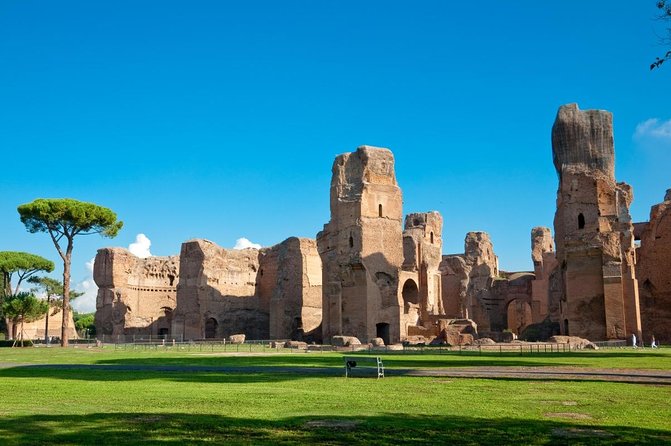
- Stop 8: Terme di Caracalla (the biggest baths idea, preserved)
- The e-bike ride: what’s easy, what still needs effort
- Who this tour suits best (and who should skip it)
- Family-friendly Appian Way rules: child seats and height limits
- Value for the money: private time plus free stops
- What to bring and how to prepare for a hot Rome day
- Should you book this Appian Way private bike tour?
- FAQ
- How long is the Ancient Appian Way private bike tour?
- What is the price per person?
- Is the tour private?
- What language is the guide?
- What’s included with the e-bike tour?
- Are there admission fees for the stops?
- Do the e-bikes have a throttle?
- Is the tour suitable for children?
- Where do we meet and where does it end?
- Is there anything I should know about bike skills and fitness?
Key things to know before you go
- Private guide attention means you can ask questions and move at your pace
- Aqueduct Park time gives you the calm, open-air side of Rome
- Pedal-assist e-bike still requires real pedaling (no throttle)
- Traffic is part of the route, so being comfortable on busy streets helps
- Family setup is built in, with a child seat and a trailer-bike option for kids
- Many stops are free, including major ruins and park areas
Entering the Appian Way from Porta San Sebastiano
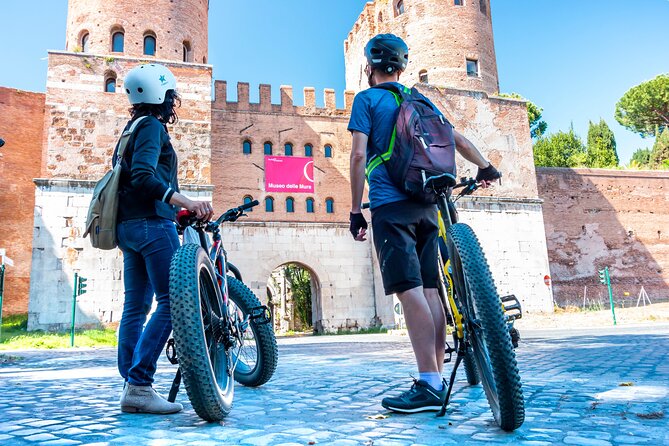
The tour starts at Via dei SS. Quattro, 58, in central Rome (the meeting point is easy to reach by public transport). From there, you begin at Porta San Sebastiano, the imposing southern gateway tied to the Aurelian Walls from about 275 AD. This is a great “start line” because it immediately frames what you’re riding through: not just ruins, but a living corridor of Roman movement.
What I like here is the way the route sets your expectations. One minute you’re looking at a major city wall gate, and the next you’re transitioning toward the historic Via Appia Antica. Even if you’ve seen Roman sights before, this entrance feels different—more like leaving the tourist strip and stepping into a long road that simply kept going.
You’ll also notice the medieval graffiti on the gate, a reminder that pilgrims and travelers used this road long after the Romans. It’s a small detail, but it makes the whole day feel less like a museum and more like a real route people walked and biked through for centuries.
You can also read our reviews of more tours and experiences in Rome.
Stop by Stop: Gates, parks, aqueducts, villas, and tombs
Each stop is timed for about 20 minutes, so you’ll have a rhythm: ride, brief story, look around, then move on.
Stop 1: Porta San Sebastiano (Aurelian Walls meets the Via Appia)
This is more than a pretty gateway. It marks the beginning of the historic Via Appia Antica and connects your ride to the broader story of Rome’s walls and city planning. Expect to spend a short, focused block of time here—enough to absorb the gate and the medieval graffiti without dragging the schedule.
Consideration: it’s the first stop, so if you’re still getting comfortable on your bike, take a breath and set your rhythm before you roll out.
Stop 2: Parco della Caffarella (green paths with ancient remnants)
Caffarella Park is today part of the Appia Antica Regional Park, and it’s one of the large green areas in Rome and beyond Europe. The best part is that it doesn’t feel like you’re simply biking around scenery; you’re moving through a park where you can spot remains of ancient buildings.
This stop works especially well for camera lovers and for people who want a break from crowds. You get the sense of Rome’s outskirts—space, shade in places, and a quieter mood than inside the old center.
Consideration: parks mean paths, and paths mean you’ll want to stay alert for changes in road surface and any uneven ground.
Stop 3: Ninfeo di Egeria (myth you can actually stand in)
Ninfeo di Egeria is one of those stops that makes history feel personal. You’re set in a sacred space tied to the myth of the nymph Egeria and King Numa Pompilius, with the story of her grief and the spring that comes from it.
What makes this stop valuable is the tone. Instead of just dates and emperors, you get myth and meaning—why people cared about this place enough to treat it as sacred.
Consideration: it’s a short stop, so if you’re the type who likes to read every sign, you may want to pace yourself and save deeper exploring for a return visit.
You can also read our reviews of more private tours in Rome

Stop 4: Parco degli Acquedotti (the water network you can see)
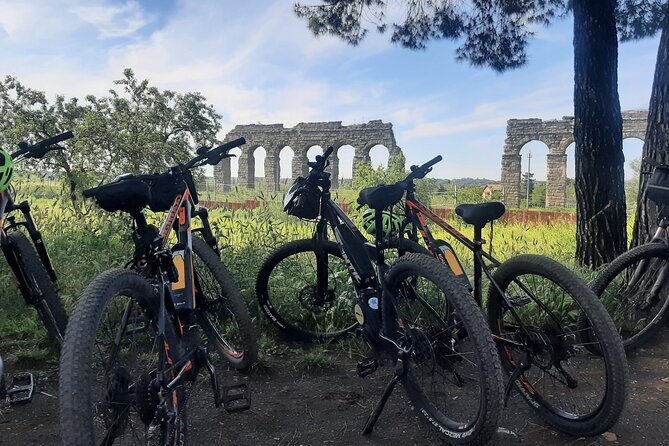
This is where you get the Roman engineering showpiece. The Parco Archeologico dell’Appia Antica crosses a vast green area that once carried the water network of ancient Rome. You’ll see aqueduct remains, and the cool twist is that some still function.
The stop also links back to the oldest roads in Rome—like the Via Latina—and the idea that the city’s infrastructure shaped daily life. It’s not just archaeology; it’s proof that Roman solutions survived long after empires changed.
One review-highlight that matches what you’ll likely feel here: the aqueduct views can make you forget you’re in a big city at all. You’ll likely notice fewer people than you’d expect for a famous Rome attraction.
Consideration: sun and heat can be a factor. Even on a hot day, the route can still feel great, but you’ll want water and sunscreen.
Stop 5: Villa dei Quintili (a grand villa with political drama)
At the fifth mile of the Appian Way, you reach the remains of the Villa dei Quintili, tied to two consuls—Sesto Quintilio Condiano and Massimo Valerio—during the second century AD. The story turns grim: they were killed by Commodus, who confiscated the villa and made it imperial property.
This is the stop for people who like the human side of empire—how wealth and power could shift quickly. And even if the villa is ruins now, the scale helps you imagine how much space and status were once here.
Consideration: ruins are often uneven. Take it slow when you step off the bike and when you move around footpaths.
Stop 6: Mausoleo di Cecilia Metella and Castrum Caetani
This stop pairs a major pagan tomb with medieval layers. The Mausoleo di Cecilia Metella dates to the 1st century BC and is described as the best preserved mausoleum on the Via Appia Antica. Next to it, you can also see the Castrum Caetani, including remains of a medieval house linked to the Caetani family, plus the perimeter walls of San Nicola.
This combination matters because it shows Rome as a multi-era place. You don’t just get one time period. You get Rome piling on, changing functions, and reusing space.
Consideration: because it’s a prominent, photogenic site, keep an eye out for others who might stop suddenly near the route edges.
Stop 7: Circus of Maxentius (a big Roman structure still recognizable)
The Circus of Maxentius is one of the best surviving Roman circuses. You’ll see the remains and the spina—the central divider—still visible. There’s also a story about the Agonale obelisk: it was moved during the Renaissance to the Fountain of the Four Rivers in Piazza Navona.
This stop is great because it gives shape to what a circus meant in Roman life. Even if you don’t know sports history, the structure helps you “read” the arena.
Consideration: your time here is brief, so if you want more context, ask your guide what to look for first.
Stop 8: Terme di Caracalla (the biggest baths idea, preserved)
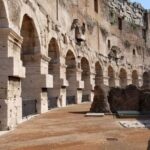
The final major site is Terme di Caracalla, built by Emperor Caracalla. For about a century, these baths were the largest public baths ever built, and much of the structure still survives.
You’ll also hear how water reached the baths via the Aqua Marcia and the Antoninian aqueduct. Even though this is the end of the ride, the day closes with a reminder that water wasn’t just infrastructure—it shaped daily ritual and public life.
Consideration: it’s easy to feel the day “click” by the end, but don’t skip your own pace. If you’re tired, slow your bike stops and keep your posture steady for the ride back.
The e-bike ride: what’s easy, what still needs effort
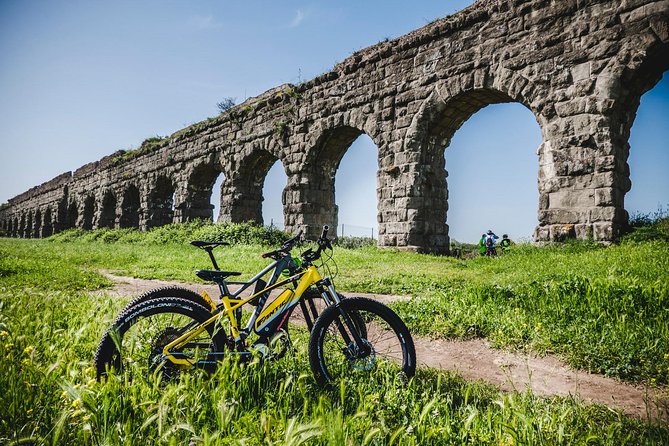
The tour includes a high-quality e-bike, a helmet, and handlebar/phone holders. That sounds small, but it’s a big deal on a route like this, where you may want your phone ready for photos without juggling it in your hands.
Also key: the e-bike is pedal-assisted, not throttle. You still need to pedal, and one rider specifically warned that there’s no throttle. The good news is that this makes the ride feel more natural—less like driving, more like cycling with help.
Here’s the practical part to plan for: you must know how to ride a bike well. If you’re shaky at balance, turning, or starting smoothly, this kind of day can get stressful.
And yes, there’s traffic. One review noted about 20% of the ride happens in city traffic. That means you should stay calm, keep spacing, and don’t assume drivers will follow the rules in a way that feels familiar. If you’re nervous sharing the road, this is the biggest variable in the whole experience.
A practical tip: before you set off, pay attention to how your guide explains the route and where the busier segments are. It’ll save you stress later.
Who this tour suits best (and who should skip it)
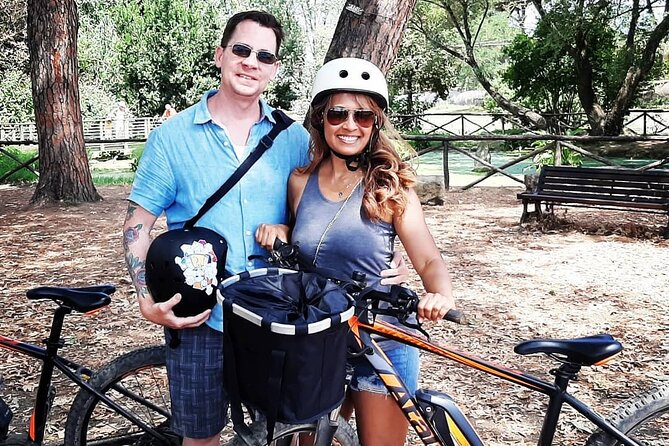
If you want Rome’s major ancient sites but you also want space and quiet beyond the center, this fits well. It’s a strong choice for people who enjoy history explanations while moving through real terrain.
It’s especially good for families. One family ride included kids aged 11, 9, 7, and 5, and they described the day as a hit that kept their children from wanting it to end. The fact that you’re not walking the entire distance helps.
It also works well if you like structure. The stops are thoughtfully distributed, so you’re not stuck with one long monument while the rest of the route passes by.
You might want to skip (or at least consider another format) if:
- you’re not confident riding a bike in traffic
- you dislike pedaling for long stretches, even with assistance
- you prefer all-time off-road paths (this route includes street segments)
Family-friendly Appian Way rules: child seats and height limits
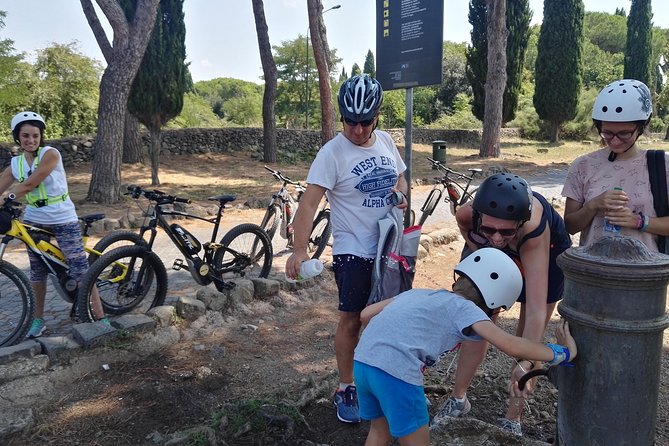
This tour is built to be family-friendly, and it’s not vague about how it works.
You can use a child seat up to 25 kg. There’s also child pricing for ages 6–10, but only if the child is under 4/7 feet tall (143 cm), because they’ll ride in a trailer bike rather than on a bike alone.
That height rule matters for planning. If you’re traveling with kids, measure them at home so you don’t find out at the meeting point that the setup is different than expected.
Practical note: bring your patience. Kids can get bored if the stories are too fast, but a private guide can slow down and adjust, which is one of the real upsides of going private.
Value for the money: private time plus free stops
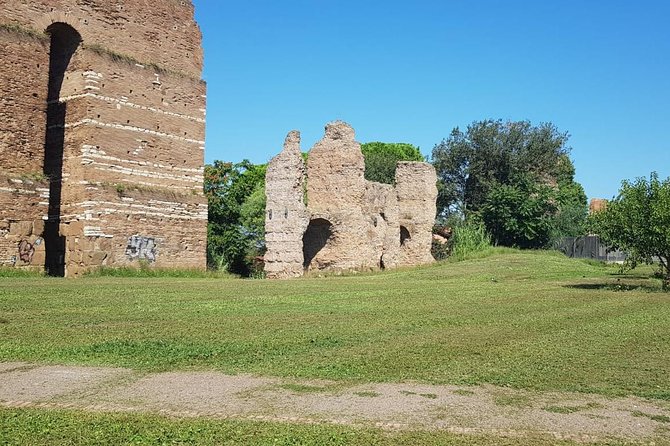
At $147.54 per person for about 4 hours, the value depends on what you care about. If you want to see a lot of sites without spending your entire day walking, the e-bike makes the price feel more reasonable.
You also get a real package:
- a high-quality e-bike
- helmet plus phone/handlebar holders
- child seat (where relevant)
- a private experience, meaning only your group is on the route
- stops listed as free admission for the main points along the way
Private guide time is the biggest part of the cost, and the reviews you have on hand show why that matters. Guides such as Alex, Nico, Claudio, Sara, and Marco are described as patient and engaging, with a strong focus on explaining what you’re seeing—especially aqueducts and Appian Way history.
My take: if you enjoy guided context and you want a smooth, low-planning day, this price can be a good deal. If you don’t care about narration and you’re comfortable figuring route and safety on your own, you might compare other free-form rentals. But for most people, the guided structure is what turns “a bike ride” into a Roman road experience.
What to bring and how to prepare for a hot Rome day
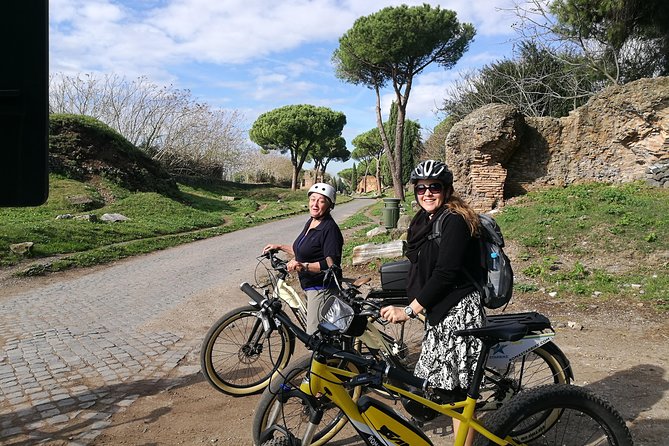
The tour is listed for moderate physical fitness, and you’ll be pedaling on a pedal-assisted bike. Wear comfortable shoes with grip, and treat this like a half-day cycling activity, not a casual stroll.
Bring essentials for outdoors time—water, sun protection, and something light to cover your head. One rider noted it was super hot, but the outing still worked well, which suggests you’ll enjoy it even when the weather is intense as long as you’re prepared.
If you’re riding in the city traffic portion, keep your focus. On days like this, small stress adds up, and calm turns it into a great ride instead of a chore.
Should you book this Appian Way private bike tour?
Book it if you want:
- a private guided ride through key Appian Way sites
- big Roman structures plus park paths that feel quieter than the center
- e-bike help, but you’re okay still pedaling
- family-friendly options with child seat and trailer-bike height rules
Skip it if:
- you’re a new rider or unsure about handling a bike well
- sharing the road with drivers makes you anxious
- you don’t want any traffic segments at all
FAQ
How long is the Ancient Appian Way private bike tour?
It runs for about 4 hours.
What is the price per person?
The price is $147.54 per person.
Is the tour private?
Yes. It’s a private tour/activity, and only your group participates.
What language is the guide?
The tour is offered in English.
What’s included with the e-bike tour?
Included are a high-quality e-bike, helmet, and phone/handlebar holder equipment. There’s also a child seat up to 25 kg.
Are there admission fees for the stops?
Each listed stop is marked as Admission Ticket Free.
Do the e-bikes have a throttle?
You pedal, and the e-bikes are described as pedal assisted with no throttle.
Is the tour suitable for children?
Yes. A child seat is included up to 25 kg. For children aged 6–10, a child price applies only if they are under 143 cm (because they use a trailer bike).
Where do we meet and where does it end?
You meet at Via dei SS. Quattro, 58, 00184 Roma RM, Italy, and the tour ends back at the meeting point.
Is there anything I should know about bike skills and fitness?
You should have moderate physical fitness, and you must know how to ride a bike well.
If you want, tell me your group ages and bike comfort level, and I’ll help you decide if this is the right fit for your exact mix of riders.