REVIEW · VOLKLINGEN
Völklingen Ironworks World Heritage Site: Guided tour of the ironworks site
Book on GetYourGuide →Operated by Weltkulturerbe Völklinger Hütte · Bookable on GetYourGuide
The Völklinger Hütte is industrial history you can walk through. In just 2 hours, you’ll get a guided way into the big machines and the logic behind how a blast furnace produced pig iron, then you’re free to explore on your own. I especially like the UNESCO ironworks angle, and I also like that the tour is built around real production spaces, from blower hall to blast furnace.
Second, I love how the guided explanation ties technology to people—what it meant to live and work in Saarland when this place was active. One practical drawback to plan for: you might find it a bit hard to stop for photos or read small details while the group is moving.
In This Review
- Quick hits: what makes this tour special
- Völklingen Ironworks and the UNESCO factor: a factory you can actually see
- Meeting point and the 2-hour rhythm inside the Völklinger Hütte
- Blower hall to blast furnace: the tour’s main production storyline
- Pig iron explained, plus what working life was like in Saarland
- After the 2 hours: exhibitions, the old coking plant, and the pipe-system maze
- Ferrodrom® Science Center: where industrial tech gets a modern explanation
- Paradise garden: reclaimed nature where the coking plant used to work
- Rooftop viewing platform: Völklingen from above
- Photography, pacing, and the one likely annoyance
- Price and value: is $25 per person worth it?
- Who should book this tour (and who should think twice)
- Should you book the guided Völklingen Ironworks tour?
- FAQ
- FAQ
- How long is the Völklingen Ironworks guided tour?
- Where do I meet for the guided tour?
- What does the tour include?
- Is the guided tour in German?
- How much does it cost?
- Can I explore the site after the guided portion?
- Is the site wheelchair accessible?
- Is this tour suitable for people afraid of heights?
- Are there discounts or free tickets for certain ages?
- Are there discounts for disability?
- What language support is available?
Quick hits: what makes this tour special
- From blower hall to blast furnace: you see the production flow, not just random buildings.
- Ask questions during the tour: the guide handles curiosities and follows up with clear answers.
- Full site access after 2 hours: you get the best of both guided learning and self-paced wandering.
- Ferrodrom® Science Center included: you’re not only looking backward at old machines.
- Paradise garden on former industrial land: reclaimed nature inside a working-museum setting.
- Not for people afraid of heights: plan your comfort level before booking.
Völklingen Ironworks and the UNESCO factor: a factory you can actually see
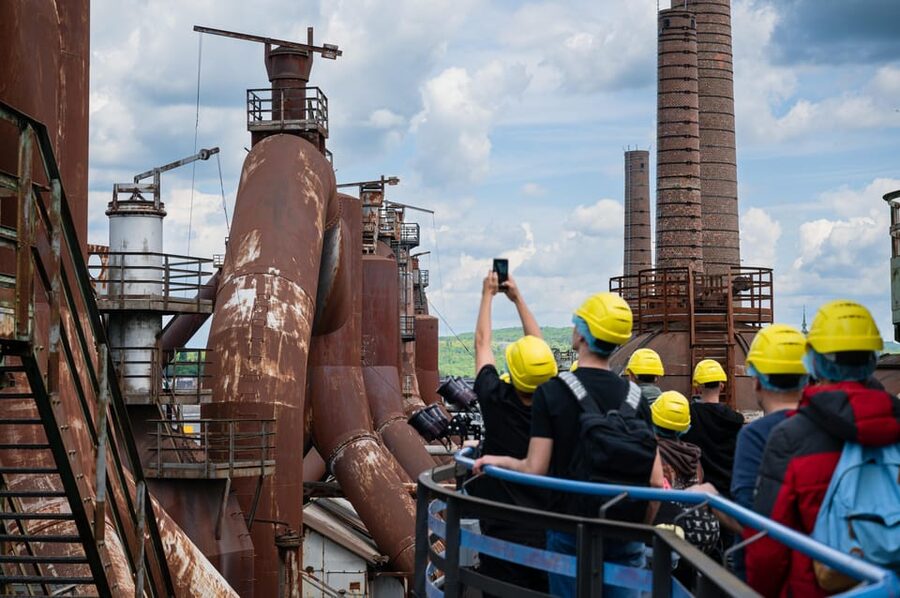
If you want industrial history that feels real, not staged, this is a strong choice. The Völklingen Ironworks—also known as the Völklinger Hütte—holds UNESCO World Heritage status and is described as the only fully preserved ironworks from the heyday of industrialization. That matters because you’re not looking at a few restored facades. You’re walking through an organized industrial system with halls, open areas, and the pipework that helped everything work together.
Saarland is in the heart of Europe, and the ironworks shows why that location mattered. When you tour the site, you start to understand the scale of production and the everyday impact this kind of industry had on local life. The place also works today as an event venue for international exhibitions, festivals, and concerts, so it isn’t frozen in time.
The overall vibe: part museum, part active cultural space, part “how did they do this without modern tech?” challenge.
You can also read our reviews of more tours and experiences in Volklingen.
Meeting point and the 2-hour rhythm inside the Völklinger Hütte
You start in the entrance area at the ticket office. That’s useful because it keeps the beginning simple: arrive, check in, and get moving without hunting for your group.
The guided portion lasts about 2 hours, and the tour language is German (with “some content” shown in its original language). If you’re not comfortable in German, you can still enjoy the visuals and structure, but you’ll get the most from it if you can follow along or read support materials on site.
Here’s the rhythm that works for most visitors: the guide leads you through the key production areas first, then you’re released to explore everything at your own pace. That two-phase setup is one of the best things about this experience. You get context fast, then you have time to slow down for the parts that catch your eye.
One more note for your comfort planning: the site is described as wheelchair accessible, so you can plan a visit with mobility needs in mind. And if heights make you uneasy, take that seriously—this tour is noted as not suitable for people afraid of heights.
Blower hall to blast furnace: the tour’s main production storyline
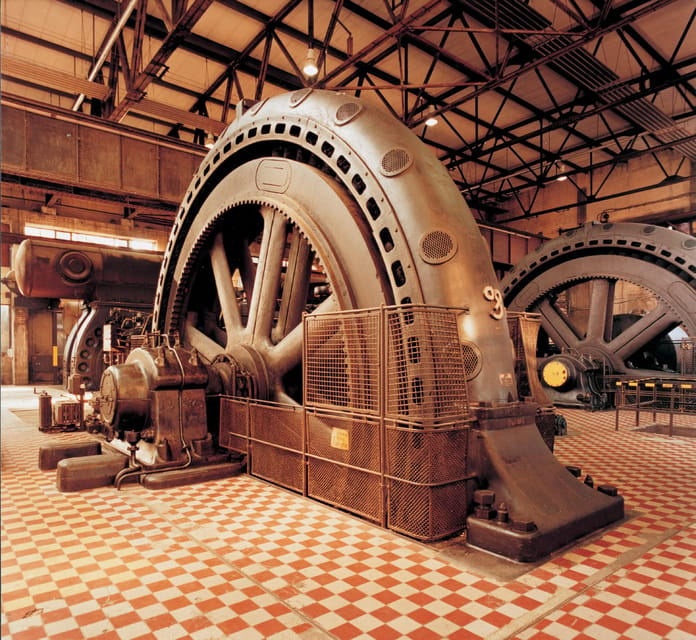
The tour is built around the most dramatic spaces of the ironworks. You’ll pass through areas connected to air supply and furnace operation, moving from the blower hall toward the blast furnace itself. That progression isn’t just for sightseeing—it’s a way to understand production as a sequence.
What I like about this structure is that it answers a question you might already be carrying: how does pig iron actually get made? You’re not left guessing. The guide explains the machines and the old technology step by step, so the site’s complexity becomes organized instead of overwhelming.
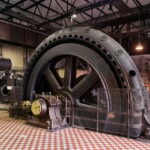
The blower hall and related machinery are the “engine room” feel of the visit: big industrial equipment, industrial scale, and lots of connections. Then you shift toward the blast furnace, where the story peaks. The furnace isn’t just impressive to look at. It’s also central to understanding the chemical and mechanical logic of turning raw materials into pig iron.
Pig iron explained, plus what working life was like in Saarland
One of the clearest values of a guided tour here is interpretation. These aren’t museum props. They were working tools. The guide explains how pig iron production worked and also discusses how the people who lived and worked here fared.
That second part is easy to miss when you tour independently. You can certainly wander the halls and see equipment. But the guide helps you connect the dots between the industrial setup and human reality—work rhythms, jobs tied to production, and what industrial life in Saarland meant.
I also like the pacing of this kind of explanation: the guide doesn’t just name machines. It’s about why they existed and what they did. That’s the difference between walking through buildings and actually understanding the site.
After the 2 hours: exhibitions, the old coking plant, and the pipe-system maze
Once the guided portion ends, you get to explore the whole site with day admission. That means you’re not racing against a clock to catch the basics—you can go back to the areas that grabbed you.
You’ll find permanent and special exhibitions available, and the site also includes the old coking plant area. The coking plant is especially important because it broadens the story beyond the blast furnace alone. It helps you see iron production as a full chain of steps, not a single “big machine” moment.
You’ll also notice the site’s maze-like arrangement of pipe systems. It can look confusing at first, but that’s part of what makes the place fascinating. When you’re on a guided route, you learn what those pipes are doing in the production system. After that, you’re free to follow the structure with your own eyes.
And yes, you can also connect the past to the present. Today, the ironworks functions as a unique venue for exhibitions, festivals, and concerts. So while you’re surrounded by industrial tech, you’re also seeing how the space still holds community energy.
Ferrodrom® Science Center: where industrial tech gets a modern explanation
Your ticket includes access to the Ferrodrom® Science Center, which is a big part of the value here. This isn’t only about staring at old equipment. It’s also about understanding the science and context behind what you saw.
If you enjoy hands-on or interpretive learning, the science center can help you translate industrial processes into something you can grasp quickly. Even if you’re more of a “watch the machines and read later” person, you’ll likely appreciate having a structured place to make sense of what you encountered during the tour.
A practical way to use this: go to the science center after you’ve walked the production areas with the guide. That order helps your brain connect the visuals you just saw with explanations you can take your time with.
Paradise garden: reclaimed nature where the coking plant used to work
The ironworks includes the “Paradise” garden, described as a landscape garden that emerged from the former coking plant area. The site’s own description frames it as reclaimed parts of the former industrial ground, with diverse flora and fauna.
This is a genuinely memorable contrast. You start in heavy industry: metal, machinery, production logic. Then you shift into a greener space built from the site’s reclaimed structure. It doesn’t erase the industrial story—it adds another layer.
What I like about including the Paradise garden is that it keeps the visit human-scale and reflective. You’re still on industrial heritage ground, but you’re also seeing how places can be repurposed. It’s a reminder that heritage sites aren’t only about preserving objects; they’re also about preserving meaning.
Tip for your visit: take a slow walk there after you’ve had your guide-led overview. It’s a nice way to settle your thoughts before you head to any remaining exhibitions.
Rooftop viewing platform: Völklingen from above
The visit also includes access to a viewing platform above the rooftops of Völklingen. This matters because you get a different perspective on what you toured. In the halls, the site feels like a machine at human height. From above, you start to understand the layout in relation to the surrounding town.
This viewpoint is also where your photo opportunities might improve—if you’re someone who likes composition and wide angles. Just remember: the activity is noted as not suitable for people afraid of heights, so only go if you feel comfortable.
Photography, pacing, and the one likely annoyance
Let’s talk about the practical snag. One concern that comes up is that the tour can feel relatively quick, with limited opportunities to photograph or read details. That’s not a dealbreaker, but it changes how you should plan your expectations.
How to handle it:
- Let the guide do the explaining first. You’ll get more out of the site if you don’t pause too much during the guided route.
- After the tour ends, use your freedom to return to areas you want to study or photograph more carefully.
- If you care about reading small labels, build in time for that during your self-paced exploring.
The good news is that the structure of the experience helps: you get context from the guide, then you get time on your own. So even if the guided portion doesn’t give you long “camera moments,” the day admission portion gives you room to breathe.
Price and value: is $25 per person worth it?
At about $25 per person for a 2-hour guided tour, this can be a strong value—mostly because your ticket isn’t only for the guided part. You also get day admission to the World Cultural Heritage Site and access to all permanent and special exhibitions. On top of that, you get included access to Ferrodrom® and the Paradise garden.
So you’re paying for:
- a guided route through the key production areas (where interpretation really matters),
- full admission to the exhibitions after the tour,
- and two extra “meaning layers” (the science center and the reclaimed garden).
If you were to pay separately for a guided tour plus multiple museum-type stops, costs add up quickly. Here, the ticket bundles it into one visit. For a traveler, that’s what you want: a clear price tied to a full experience, not just a quick walk-through.
Who should book this tour (and who should think twice)
This guided tour is best for you if you like industrial history you can physically walk through. You’ll also appreciate it if you enjoy learning how processes work—especially if questions like how pig iron was made make you curious.
You’ll probably enjoy the extra included spots (Ferrodrom® and the Paradise garden) if you like a mix of industrial mechanics and interpretive context.
You might think twice if:
- you’re afraid of heights (the tour is noted as not suitable),
- you need long unstructured time during the guided part (the tour can feel fast),
- or you want to spend most of your time photographing tiny details during the route.
On the positive side, wheelchair accessibility is noted, so it’s a good sign for mobility planning.
Should you book the guided Völklingen Ironworks tour?
I think you should book it if you want the ironworks to make sense quickly. The guided structure helps you move from “wow, machinery” to “okay, here’s how it worked,” and the tour also connects the tech to life in Saarland. After the guide, you’re free to explore the site and exhibitions at your own pace, which is exactly how you want a heritage visit to function.
If you’re short on time in Saarland, this also does a lot in 2 hours without cutting off the rest of your day. At $25, with access to special and permanent exhibitions plus Ferrodrom® and the Paradise garden, the value is solid.
FAQ
FAQ
How long is the Völklingen Ironworks guided tour?
The tour lasts 2 hours.
Where do I meet for the guided tour?
The meeting point is in the entrance area at the ticket office.
What does the tour include?
It includes a guided tour of the World Cultural Heritage Site at the Völklingen Ironworks, day admission, access to special and permanent exhibitions, access to the Ferrodrom® Science Center, and access to the Paradise garden.
Is the guided tour in German?
Yes, the live guide is German. Some content may be shown in its original language.
How much does it cost?
The price is listed as $25 per person.
Can I explore the site after the guided portion?
Yes. After the guided tour, you are free to explore the entire site and visit the exhibitions.
Is the site wheelchair accessible?
Wheelchair accessibility is noted.
Is this tour suitable for people afraid of heights?
No, it is noted as not suitable for people afraid of heights.
Are there discounts or free tickets for certain ages?
Yes. Free admission is listed for under 18s. Free admission for under 27s is listed with a valid student ID. You can get free or reduced tickets at the entrance ticket office.
Are there discounts for disability?
Reduced admission is listed for disabled persons (from GdB 60%). You can get the reduced ticket at the entrance ticket office.
What language support is available?
The tour guide is German, and some content may be shown in its original language.
If you want, tell me your travel month and whether you prefer more science or more industrial architecture, and I’ll suggest the best order for your time on-site.