REVIEW · NEW YORK CITY
New York: Mafia and Gangster History Tour in Little Italy
Book on GetYourGuide →Operated by Tourizee · Bookable on GetYourGuide
If you like crime stories with real street corners, this walk is for you. I like how it traces the mafia’s path from early Black Hand gangs and Prohibition liquor wars all the way to later syndicate power plays. I also really liked the hands-on feel of the tour—stops are tied to specific places you can stand in front of, plus your guide uses visual materials (photos and period articles) to make old events feel less like legend.
One thing to consider: this is a 2-hour walking tour with multiple brief stops, so you’ll want solid shoes and the energy to keep moving. If mobility is a concern, this one is not set up for that.
In This Review
- Key Points You’ll Care About
- Walking the Blocks Where the Mob Owned the Night
- Price and Time: What $40 Buys You in Real Value
- Starting Point at Spring and Mulberry: The Beat of the Tour
- Little Italy: Prohibition, Liquor Wars, and the Black Hand Era
- From Joe The Boss Masseria to Organized Power
- Lucky Luciano and The Commission: Turning Chaos Into a System
- Gambino Underworld: The Ravenite Social Club and Gotti’s Era
- Crime Fighters in Plain Sight: Lt. Petrosino and Frank Serpico
- Umberto’s Clam House Stop: Old-School Little Italy Energy
- Crazy Joey Gallo and Sally Bugs Briguglio: Where Violence Landed
- Optional Film and TV Stops: Godfather and The Sopranos Spots
- Who This Tour Suits Best
- Should You Book This Mafia and Gangster History Tour in Little Italy?
- FAQ
- How long is the tour?
- Where do I meet the guide?
- How many people are in the group?
- What’s the distance for the walking portion?
- Is the tour guided in English?
- What should I bring?
- Are pets allowed?
- Is the tour suitable for mobility impairments?
- What if the weather is bad?
- Can I cancel for a full refund?
Key Points You’ll Care About
- A tight 2 hours, about 1 mile (1.5 km) on foot without wasting time on transit
- Small group capped at 10, so the guide can actually keep the pace and answer questions
- Major mob storylines in one loop: Prohibition, Luciano’s Commission, and Gotti’s rise/fall
- Not just criminals—police pressure gets real airtime with Lt. Petrosino and Frank Serpico
- Film nods as optional add-ons like spots tied to The Godfather and The Sopranos
- Short visits at key sites like the Ravenite Social Club and the areas tied to Crazy Joey Gallo and Sally Bugs Briguglio
Walking the Blocks Where the Mob Owned the Night
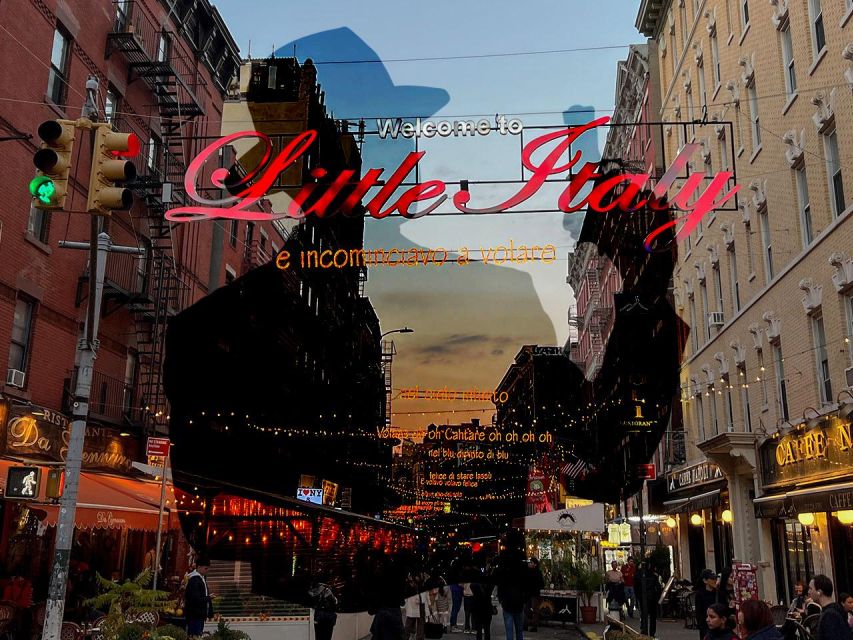
Little Italy isn’t just a postcard name. On this tour, I love that the neighborhood becomes a timeline you can walk through. One minute you’re hearing how early criminal crews fought for control during Prohibition; the next you’re hearing how later leaders organized “business” like a system.
The best part is that the stories aren’t treated like random crime trivia. They’re connected to places—street-level locations you can actually point at—so you start seeing how the city’s layout helped these groups operate.
And yes, you’ll hear names you’ve seen in movies and TV. The difference here is that you also get the real-world context: who had leverage, what changed after WWII, and how law enforcement learned to push back.
You can also read our reviews of more historical tours in New York City



Price and Time: What $40 Buys You in Real Value
At $40 per person for about two hours, this tour is priced like a “serious walk” rather than a quick sightseeing add-on. You’re paying for a guided thread through multiple eras: early gang formation, Prohibition’s violence, the Luciano-led shift toward structured families, and the later push by crime fighters.
You’re also not asked to invest in long travel times or complicated logistics. The total walking distance is about a mile (1.5 km), and the group is capped at 10. That small-group size matters on a story like this—you get a more controlled pace and more direct attention from the guide when you’re asking something.
One practical point: because the stop durations are short, you’ll get the most out of it if you show up early and stay present. This is not the kind of tour where you can half-check your phone without losing something.
Starting Point at Spring and Mulberry: The Beat of the Tour
Meet on the sidewalk at the corner of Spring and Mulberry Streets, next to the DaSalvio Playground at 44 Spring Street. Look for the guide wearing a white cap, and plan to arrive about 10 minutes early because the tour starts promptly.
This matters more than it sounds. When you’re covering mafia history across a small area, delays ripple fast. Getting there early helps you catch the opening setup and get your bearings before the real stories begin.
Once you’re with the group, the tone is part history lecture, part city-walk storytelling. The guide I saw described in the feedback—Tom and Thomas came up often—keeps things lively, with humor and a clear sense of what matters.
Little Italy: Prohibition, Liquor Wars, and the Black Hand Era
The first stretch is where the tour sets its foundation. You start with early black hand gangs and the violence that came with criminal control. Then it moves into the battles to manage the liquor trade during Prohibition, which is when organized crime really starts looking like an organized operation instead of isolated gangs.
This is the section I think is the key to enjoying the rest. If you only remember later names like Luciano or Gotti, the early era makes those later leaders make more sense. You learn why alcohol, cash flow, intimidation, and territory became the engine of the entire machine.
Also, Little Italy’s streets are perfect for this kind of story. You’re not stuck in a museum. You’re on sidewalks that still hold the city’s sense of scale—narrow, close, and built for the kind of social and business contact criminals would exploit.
From Joe The Boss Masseria to Organized Power
As the tour moves forward, it connects Prohibition-era pressure to the rise of Joe The Boss Masseria. You’ll hear how leadership becomes the scarce resource: who controls routes, who commands fighters, and who can negotiate or outlast rivals.
I like that this part keeps the focus on cause and effect. You’re not just memorizing a chain of names. You’re learning how power shifts happen—often because of money, often because of loyalty, and sometimes because law enforcement starts changing the rules.
One consideration here: since the tour is fast-paced and the stop time is limited, you’ll want to listen for the relationships between figures. The guide’s visual aids help, but the pacing still rewards focus.


Lucky Luciano and The Commission: Turning Chaos Into a System
Then you hit one of the most important ideas of American organized crime: Lucky Luciano’s move toward coordination. The tour explains how he transformed organized crime with The Commission of Five Families and how he made an unlikely deal with the government during WWII.
This is where the tour gets genuinely interesting for me, even if you’re not a mob-genre person. It’s not just about street violence. It’s about strategy—how criminals adapted to outside forces and tried to reduce internal conflict so they could run a more profitable and controllable operation.
And it’s also where you start hearing how modern syndicates formed from earlier gang models. The “how we got here” thread becomes clear: what used to be local gang competition evolves into something closer to a rule-based system.
Gambino Underworld: The Ravenite Social Club and Gotti’s Era
One highlight is the Ravenite Social Club. You get a short guided look there, and the story it ties to is the kind of place-based detail that makes this tour feel real. You’re not just hearing about men—you’re seeing the kinds of spaces where reputation and influence lived.
From there, the tour follows the rise and fall of Dapper Don John Gotti. You’ll hear where Gotti held court, and the tone shifts from old-school power to something more public-facing and calculated.
This is also one of the stops where the tour’s value shows. A lot of mafia tours either go heavy on myths or heavy on violence. This one keeps the story anchored to leadership style and to how those styles affected outcomes.
Crime Fighters in Plain Sight: Lt. Petrosino and Frank Serpico
The best “balance” moment comes when the focus turns to the people fighting organized crime. You visit Lt. Petrosino Square and then the Police Building area, with stories that include Frank Serpico and the risk he took to expose police corruption.
I appreciate this section because it prevents the tour from becoming a one-note celebration of mob power. It reminds you that organized crime wasn’t fought with luck. It was fought with pressure, investigations, and people willing to challenge the system—even from inside it.
If you’re the type who likes New York history in general, this portion makes the tour feel broader than mafia lore. It becomes a story about institutions trying (and sometimes failing) to catch up to criminal evolution.
Umberto’s Clam House Stop: Old-School Little Italy Energy
You also make a stop around Umberto’s Clam House. Even when the conversation turns serious, this is a useful reminder: Little Italy isn’t only “history sites.” It’s a living neighborhood with real food culture and everyday street life.
The stop itself is brief, but it helps you keep the city present in your mind. When you picture the past, it’s easy to treat it like a closed chapter. Standing in a spot tied to the current neighborhood vibe makes the past feel like it overlaps the present.
Quick tip: since the tour includes walking between stops, plan to eat after. Don’t count on having time for a full meal during the tour unless you’re willing to grab something quick on your own schedule.
Crazy Joey Gallo and Sally Bugs Briguglio: Where Violence Landed
The ending portion is where the mob story turns sharply into aftermath. You visit locations connected to mobster Crazy Joey Gallo and Sally Bugs Briguglio—the places tied to where they met their bloody demise.
This part is intense, but it’s also where you learn how quickly fortunes could flip in a world built on violence and betrayal. It’s not presented as spectacle. It’s presented as consequence: leadership decisions lead to escalations, escalations lead to retaliation, and retaliation can end careers fast.
I found this ending works because it ties back to earlier themes. You see how earlier gang structures and later syndicate planning still didn’t prevent chaos. In the end, the same dynamics—territory, money, loyalty—keep resurfacing.
Optional Film and TV Stops: Godfather and The Sopranos Spots
There’s an optional element if you want it: stops related to The Godfather and one from The Sopranos. This is a smart add-on for pop-culture fans because it gives you a second entry point into the same locations.
If you’re mainly into real history, you can treat these as “bonus context” rather than the main event. Either way, the tour uses them to connect fiction to the real places the stories are inspired by.
Who This Tour Suits Best
This is a great pick if you want more than generic mafia names. I think you’ll enjoy it most if you like:
- city-walk history that connects people to places
- crime stories that include the “counterpressure” from law enforcement
- a guide who uses visuals (photos and newspaper articles) to make scenes clearer
It also fits well for groups who may not all be obsessed with the genre. The guide’s humor and the broader institutional angle (Petrosino, police corruption issues) make it easier for non-fans to keep up.
Should You Book This Mafia and Gangster History Tour in Little Italy?
I’d book it if you want a focused, two-hour walking tour that’s built around real locations and real timeline connections—not just a list of famous names. The small-group size, the guide’s energy (Tom/Thomas came up again and again), and the use of visual materials make the experience feel more like an actual guided lesson than a performance.
Skip it if you hate fast pacing or you need a very slow, sit-down style tour. Also skip if mobility is a concern, since this isn’t set up for that.
If you’re in NYC and you want your mafia story grounded in street reality, this is a strong value at $40—especially with a max group of 10 and about a mile of walking.
FAQ
How long is the tour?
The tour lasts 2 hours.
Where do I meet the guide?
Meet on the sidewalk on the corner of Spring and Mulberry Streets, next to the DaSalvio Playground at 44 Spring Street. Look for the guide in a white cap.
How many people are in the group?
The tour is limited to a maximum of 10 participants.
What’s the distance for the walking portion?
The tour covers 1 mile / 1.5 km.
Is the tour guided in English?
Yes, the live tour guide speaks English.
What should I bring?
Wear comfortable shoes.
Are pets allowed?
Pets are not allowed. Assistance dogs are allowed.
Is the tour suitable for mobility impairments?
No, it is not suitable for people with mobility impairments.
What if the weather is bad?
The tour may be cancelled due to inclement weather or not enough bookings. If it is cancelled, you’ll receive a full refund.
Can I cancel for a full refund?
Yes. You can cancel up to 24 hours in advance for a full refund.