REVIEW · GYEONGJU
Private World Heritage Gyeongju Taxi Tour
Book on Viator →Operated by Visit Korea Tour · Bookable on Viator
A perfect day starts with fewer buses. This private Gyeongju taxi tour strings together major UNESCO and Silla-era stops with the kind of flexibility that saves you time and stress. You can aim for the highlights, then adjust on the fly if your group needs a pause.
I especially like that you can go comfortably between far-flung sights without wrestling transfers. I also love the human touches people highlight, like photo help and drivers who manage communication with a translation app when English is limited.
One thing to consider: you are trading spontaneity for a set route and limited time. If your booking hours get eaten by travel, you’ll have less time at each stop—plan with that in mind.
In This Review
- Key Things You’ll Notice on This Tour
- Why a Gyeongju Taxi Tour Beats Public Transit for This Route
- Price and Value: What You’re Really Paying For
- Pickup, Meeting Point, and How to Plan Your Timing
- Your Driver and Language Support: What to Expect
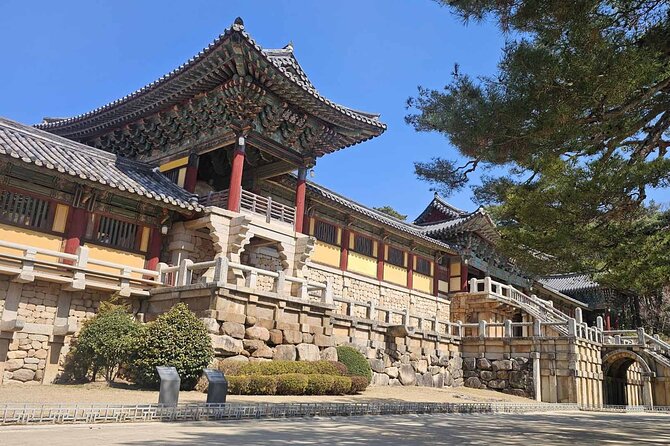
- A Day Built Around UNESCO: Bulguksa Temple and Seokguram Grotto
- Bulguksa Temple (about 1 hour, admission listed as free)
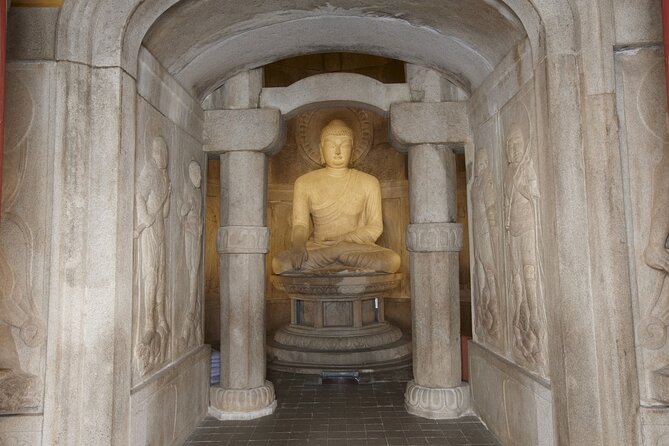
- Seokguram Grotto (about 1 hour, admission listed as free)
- Cheonnyeon Forest Garden: Your Reset Between Big Sights
- Bunhwangsa Temple and the Hwangnyongsa History Center
- Hwangnyongsa Temple History and Culture Center (duration not listed)
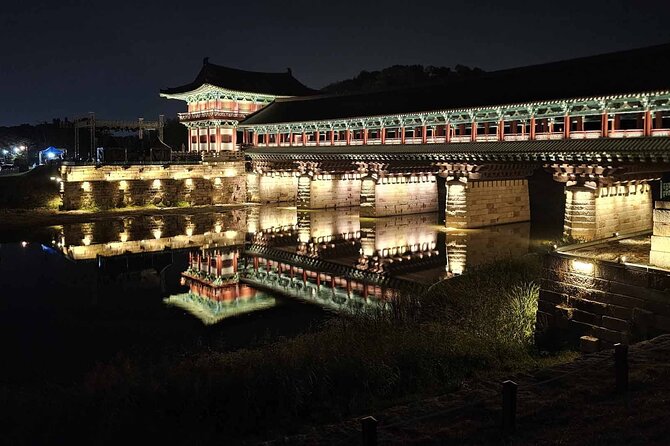
- Donggung and Wolji: Royal Atmosphere at the Water
- Gyeochon Traditional Village and Cheomseongdae: Human Scale Meets Icons
- Gyeongju Gyochon Traditional Village (about 30 minutes, free admission listed)
- Cheomseongdae Observatory (about 30 minutes, free admission listed)
- Daereungwon Tomb Complex and Hwangridan-gil for Final Photo Stops
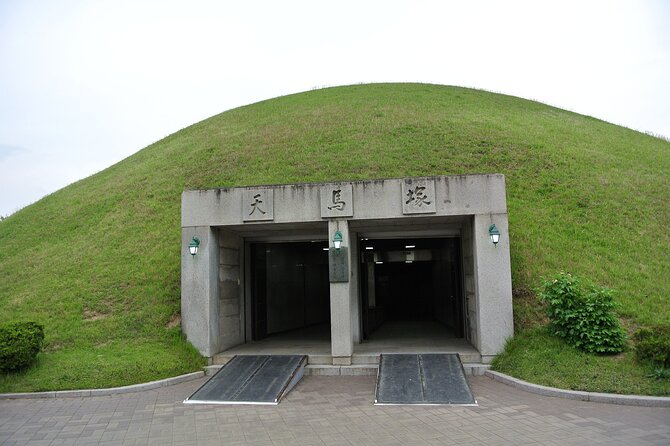
- Daereungwon / Cheonmachong (tomb complex)
- Hwangridan-gil (about 30 minutes, free admission listed)
- Small Comforts You’ll Appreciate: Clean Vans, Umbrellas, and Photo Help
- Who Should Book This Private Gyeongju Taxi Tour
- Should You Book It?
- FAQ
- FAQ
- Is pickup offered for this Gyeongju taxi tour?
- How many people can fit in the group?
- What’s included in the price?
- Is the entrance fee included?
- Are English-speaking drivers available?
- How long is the tour?
Key Things You’ll Notice on This Tour
- Private car, not group chaos: you control the pace and stops are arranged around your day
- UNESCO hits fast: Bulguksa Temple and Seokguram Grotto are the big anchors
- A real change of scenery: Cheonnyeon Forest Garden gives your legs and eyes a break
- Driver photo support: several reviews call out the extra effort for getting great pictures
- Communication support: even with limited English, translation apps make it work
Why a Gyeongju Taxi Tour Beats Public Transit for This Route
Gyeongju is the kind of city where history is everywhere, but the distances can add up fast. With this tour, you’re not doing the math on buses, stops, and walking segments. You’re in a car, and you move when it makes sense.
What I like about the private setup is how practical it is. Most of the itinerary consists of well-known cultural landmarks, plus a few “nearby” stops that help you round out the story of the city in one day. That matters because you’ll spend less energy getting from one place to the next and more energy actually looking.
Also, the tour is designed for short-to-medium time windows, listed as about 3 to 8 hours. That range is handy if you’re only passing through, or if you want to stack this with other plans in Gyeongju without turning the whole day into logistics.
You can also read our reviews of more private tours in Gyeongju
Price and Value: What You’re Really Paying For
The price is $112.70 per group up to 4 people. If you book with four travelers, that works out to about $28 per person for transportation through multiple major sites.
That’s the key value: you’re not just paying for a ride. You’re paying for a full private driving service that includes:
- private transportation
- all fees and taxes
- fuel, toll, and parking fees
- driver’s meal
- car accident insurance
Admissions are not included as a general rule. At the same time, the stop details list free admission for several big sights (like Bulguksa Temple and Seokguram). So, in practice, your out-of-pocket cost often stays low for entry—just keep your expectations flexible and double-check anything that might not be free on your exact day.
Compared with a DIY day (where you pay for tickets, transit, taxis, and extra time), the math often favors a private car—especially if your group includes anyone who doesn’t want a lot of walking between dispersed sites.
Pickup, Meeting Point, and How to Plan Your Timing
You start at Gyeongju Station, and the tour ends back at the same meeting point. The address listed is 80 Singyeongjuyeok-ro, Geoncheon-eup, Gyeongju, Gyeongsangbuk-do.
One helpful detail: Gyeongju offers free pickup services from KTX Gyeongju Station or from any hotel in the central area. So if you’re staying near the core, you can often avoid the hassle of arriving at the station first.
One caution I’d keep front and center: the tour notes that any remaining hours may be allotted for travel time from pick up until drop off. Translation for your calendar: if you choose a shorter duration, you’ll want to expect fewer minutes at each stop.
Your Driver and Language Support: What to Expect
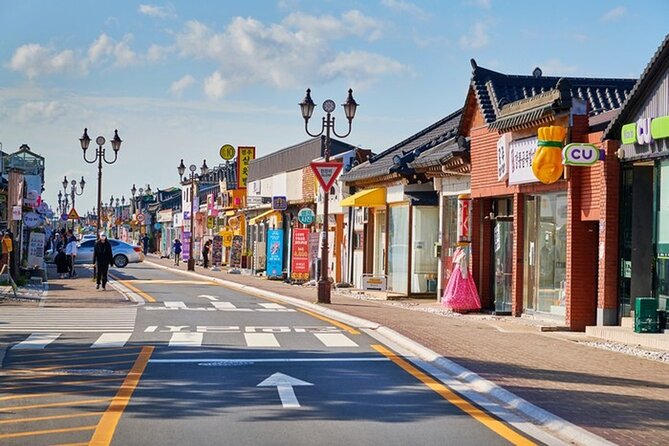
Language can make or break a smooth day, and this tour has a workable plan.
Here’s what’s stated:
- English-speaking driver option is temporarily deactivated.
- Korean-speaking driver language assistance is available online.
- If you need an English-speaking driver, it may be available upon request with extra fees, but you have to contact after booking if required.
In real-life terms, reviews back up that communication can run fine even with limited English. People describe using a translation app without issues, and they also mention drivers going out of their way to make the day work.
So if you’re comfortable using your phone for translation (or you don’t mind pointing, reading signs together, and letting the driver handle the basics), this tour will feel easier than you might expect.
A Day Built Around UNESCO: Bulguksa Temple and Seokguram Grotto
The tour’s first two stops are the heavyweights: Bulguksa Temple and Seokguram Grotto, both UNESCO World Heritage sites listed in 1995 (with Seokgulam, Jongmyo, and Haeinsa also part of that UNESCO-era grouping).
You can also read our reviews of more historical tours in Gyeongju
Bulguksa Temple (about 1 hour, admission listed as free)
Bulguksa is a classic “start strong” site. The point of arriving with a car is not speed for its own sake—it’s that you can settle in without time lost to navigating between systems.
Expect this stop to be your main cultural intro. You’ll likely walk, look closely, and take your time reading the context around the temple grounds. One hour is a decent block here if you want to see the main areas without rushing.
Seokguram Grotto (about 1 hour, admission listed as free)
Seokguram pairs beautifully with Bulguksa. UNESCO recognition can sometimes feel like a label you read and then forget, but in this case the pairing makes the experience stronger because they’re linked in the World Heritage story.
Seokguram is also the kind of stop where you’ll appreciate not having to coordinate transit. One review experience points to how the day can fit a lot in one go without feeling rushed, and this UNESCO two-stop foundation is part of that.
Potential drawback: two big UNESCO stops can be mentally heavy. If your group prefers lighter pace, you might ask the driver to keep photo breaks efficient and leave a bit more breathing room for the later gardens and village stop.
Cheonnyeon Forest Garden: Your Reset Between Big Sights
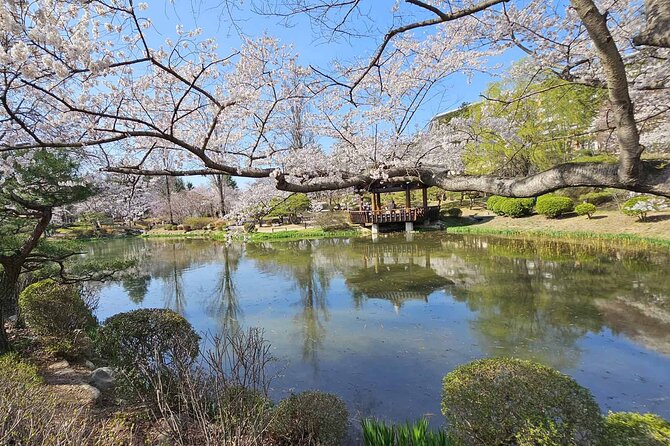
After the UNESCO core, the itinerary includes Cheonnyeon Forest Garden, also referred to as the Gyeongju Millennium Forest. It covers about 28 hectares, which matters because it’s a real chance to step away from the “monument mode.”
This stop is listed at about 30 minutes and admission is free.
Why it’s worth including: it gives your day balance. The morning can be all temples and monuments; the forest segment gives you visual variety and a slower rhythm. It’s also a smart move if you’re traveling in summer. One review specifically mentions small reprieves from summer heat, and this is exactly the kind of stop that helps.
Practical tip: don’t treat this like a drive-by. Even if your time is short, take a short walk and let the scenery reset your eyes before you head back into ruins and observatories.
Bunhwangsa Temple and the Hwangnyongsa History Center
Next up is Bunhwangsa Temple (about 30 minutes). It’s tied to Silla history and was established in 634 during the Silla dynasty. The site is described as being next to the ruins of Hwangnyongsa Temple.
Why that relationship is useful: it helps you connect the dots. Even without a long lecture, you get a stronger sense of how multiple religious sites relate to each other in one historical landscape.
Hwangnyongsa Temple History and Culture Center (duration not listed)
After Bunhwangsa, you’ll visit the Hwangnyongsa History and Culture Center, a museum dedicated to the history and cultural significance of the ancient Hwangnyongsa Temple.
This stop is valuable because it gives context. Temple sites can look like beautiful places with incomplete stories unless someone helps you frame what you’re seeing. A short museum visit before you move on to the next outdoor area can make the rest of the day click.
Donggung and Wolji: Royal Atmosphere at the Water
Then comes Donggung Palace and Wolji Pond—a must for anyone who likes Silla-era court vibes. The tour notes that this palace complex served as a royal residence during the Silla Dynasty.
What you can expect: a calmer, atmospheric break from the temple-focused stops. Water-adjacent sights tend to feel different even when your time is limited, and Donggung/Wolji is often the kind of place where you can slow down for photos and lingering looks.
A practical note from the reality of reviews: one experience described a night-focused taxi outing with beautiful nighttime views. That doesn’t mean the tour is only for nights, but it does suggest your timing can change the mood. If your day runs later, ask your driver whether the lighting is best at your planned time.
Gyeochon Traditional Village and Cheomseongdae: Human Scale Meets Icons
Gyeongju Gyochon Traditional Village (about 30 minutes, free admission listed)
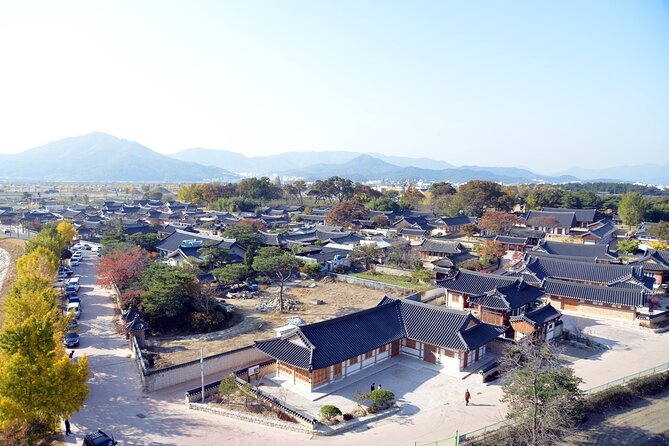
This is where the day gets more human. At Gyeochon, you can see the House of the Gyeongju Choi Clan (listed as Important Folklore Material No. 27). The tour info also mentions you may try Gyeongju Gyodong Beopju liquor, described as an Important Intangible Cultural Property.
Even if you don’t taste anything, the real value is atmosphere. Traditional village areas let you imagine how ordinary daily life sat beside major royal and religious sites. In a day that otherwise feels like monuments on repeat, this stop gives variety without adding long travel time.
Cheomseongdae Observatory (about 30 minutes, free admission listed)
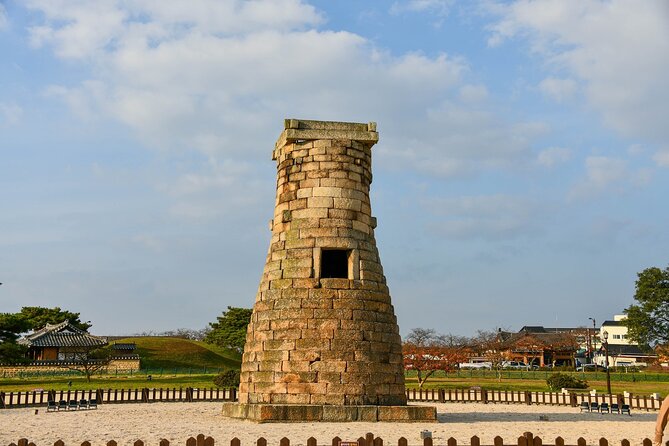
Cheomseongdae is one of Gyeongju’s landmark structures. It was constructed during the reign of Queen Seondeok (r. 632–647), and it’s built in a cylindrical shape.
Because it’s an iconic structure, the car helps here too. You arrive, park, see it clearly, and don’t waste your limited time hunting the right approach.
One detail I’d take seriously: Cheomseongdae is short, but it benefits from attention. Spend your minutes actively looking at the shape and the setting around it. This is a stop where a quick photo is easy, but a thoughtful look makes it more meaningful.
Daereungwon Tomb Complex and Hwangridan-gil for Final Photo Stops
The itinerary finishes with two kinds of sights: tomb heritage and street atmosphere.
Daereungwon / Cheonmachong (tomb complex)
The Daereungwon Tomb Complex consists of five tombs: Ancient Tombs of Gyeongju Nodong-ri, Noseo-ri, Hwangnam-ri, Hwango-ri, and Inwang-ri. They’re distributed across those different areas within the complex.
This is a fitting ending because tomb complexes often feel like open-air “history at scale.” You get a wider sense of how long a city’s story runs. Also, outdoor tomb sites tend to work well when your day is already packed—no ticket line drama, just careful walking and looking.
Hwangridan-gil (about 30 minutes, free admission listed)
Finally, you have Hwangridan-gil, also referenced as Hwangnidan Street. The name is described as coming from a combination of Hwangnam-dong and Gyeongnidan Street in Itaew… (the details are truncated, but the idea is that the name reflects local geography and street identity).
This stop is where you soften the day before heading back. It’s also the kind of place where photo-taking can be easy, and that lines up with reviews that highlight drivers helping with pictures.
Small Comforts You’ll Appreciate: Clean Vans, Umbrellas, and Photo Help
Even when two tours list the same stops, the experience can feel totally different based on how the driver manages the day.
In the reviews provided:
- The van is described as large, clean, and spacious.
- Drivers are described as friendly and attentive.
- One review notes umbrellas were provided during rain.
- Multiple people mention the driver helped with taking photos and suggesting things to see.
- People also note the ability to communicate through a translation app.
That’s not fluff. It’s what turns a “checklist day” into a day that feels cared for.
If you’re traveling in a group of four, pay attention to vehicle size and luggage. The tour lists luggage allowances by vehicle type: sedans carry 2 (24-inch) bags, MPVs 6, and minibuses 10. If you have big suitcases, pick your vehicle category early through your booking.
Who Should Book This Private Gyeongju Taxi Tour
This tour is a strong fit if:
- you want to see multiple major World Heritage sights without long transit planning
- you’re traveling with a group of up to four and want a cost-effective private day
- you care more about comfort and time than squeezing in extra stops
- you prefer a driver who can help manage logistics and photos, not just drive
It may be less ideal if:
- you like slow, open-ended days with lots of wandering
- you want to build your own route from scratch without a set structure
- you have tight time limits and will feel annoyed if travel time reduces stop time
Should You Book It?
Yes, if your goal is a high-hit Gyeongju day that covers the biggest cultural stops without stress. For about $112.70 per group up to four, you get a private ride, driver coordination, and an itinerary built around UNESCO anchors plus context stops.
I’d book this especially if you’re the kind of traveler who hates arguing with transit apps while everyone is hot, tired, and holding bags. The private setup, plus translation support when English isn’t the main language, makes it feel doable for more people than you’d think.
FAQ
FAQ
Is pickup offered for this Gyeongju taxi tour?
Yes. Pickup is offered from KTX Gyeongju Station or from any hotel in Gyeongju central area. The tour meeting point is Gyeongju Station.
How many people can fit in the group?
The tour price is per group, up to 4 people.
What’s included in the price?
Private transportation, all fees and taxes, fuel/toll/parking, driver’s meal, and car accident insurance are included.
Is the entrance fee included?
Admission fees are listed as not included. Some major stops in the itinerary show free admission, but it’s safest to expect that entry fees can still vary by stop.
Are English-speaking drivers available?
The English-speaking driver option is temporarily deactivated. Language assistance is available online for Korean-speaking drivers. An English-speaking driver may be available upon request with extra fees if you contact after booking.
How long is the tour?
The duration is listed as approximately 3 to 8 hours, depending on your schedule and how much time is spent traveling between pickup and drop-off.