REVIEW · AOMORI
Half-day JOMON World Cultural Heritage Sites Tour in Aomori City
Book on Viator →Operated by Tomio Yokouchi · Bookable on Viator
Aomori’s Jomon past feels close up and personal. This half-day UNESCO World Heritage tour pairs two major sites near the city, with excavated features and museum stops that make the Jomon period easier to picture. I particularly like the English guidance and the way the timing works—two solid site visits in about four hours—so you can fit Jomon into a busy Aomori day. One thing to consider: it’s weather-dependent, so have a flexible plan if conditions aren’t great.
The tour’s value is strongest when you travel with up to three people. You’ll get a private-car route (with pickup offered), and your guide can adjust the plan to your requests, like the extra option to enjoy Nebuta-related displays at the Wrasse Nebuta museum at the end. A possible drawback is cost creep if you’re in a larger group, since transportation for additional seats may require a taxi for one of the stops.
In This Review
- Key highlights at a glance
- Jomon UNESCO in half a day: how the tour fits real travel days
- Stop 1: Komakino Site Preservation Museum and the Komakino stone circle
- Stop 2: Sannai-Maruyama and its restored chestnut-log tower
- Why the English guidance is the real difference
- Transportation and timing: private car comfort versus taxi reality
- Price and value: what you’re really paying for
- What to do with four hours: build the rest of your Aomori day
- Practical tips for a smooth visit
- Who this tour is best for (and who should skip it)
- Should you book the Half-day Jomon World Heritage tour in Aomori?
- FAQ
- What sites are included in the half-day tour?
- How long is the tour?
- Is pickup included?
- Is this a private tour?
- Is English guidance included?
- Are admission fees included?
- What about transportation for larger groups?
- What extra costs should I expect?
- Does the tour use a mobile ticket?
- What happens if weather is bad?
- What is the cancellation policy?
Key highlights at a glance
- Komakino’s stone-circle style: a famous Jomon stone arrangement discovered by local high school students
- Museum time without the rush: see artifacts and excavated remains in a preservation setting
- Sannai-Maruyama’s scale: one of the biggest known Jomon villages, built for hundreds of residents
- That restored tower look: six big chestnut-log posts are a huge visual anchor for the site
- Private, English-led flow: guidance by Tomio Yokouchi, designed around your group
Jomon UNESCO in half a day: how the tour fits real travel days
This is a short, focused way to experience Jomon culture without turning your afternoon into a full logistics exercise. You’re in and out of two nearby Jomon sites, each with time to walk the remains and then connect the dots through the museum exhibits. If you like “see it, then understand it,” this format works well.
The tour runs about four hours total, with about two hours at each stop. That’s long enough to actually look around instead of doing a quick photo loop. It also means you can pair it with other Aomori highlights the same day, including a Nebuta museum stop if your guide adds it to your plan.
Transport is built around your group size. With one to three people, you travel in the guide’s private car, and pickup is offered. With four to six people, you may need a taxi for at least part of the route—specifically to visit the Komakino area—so the logistics get a bit more expensive and a bit less smooth.
You can also read our reviews of more tours and experiences in Aomori.

Stop 1: Komakino Site Preservation Museum and the Komakino stone circle
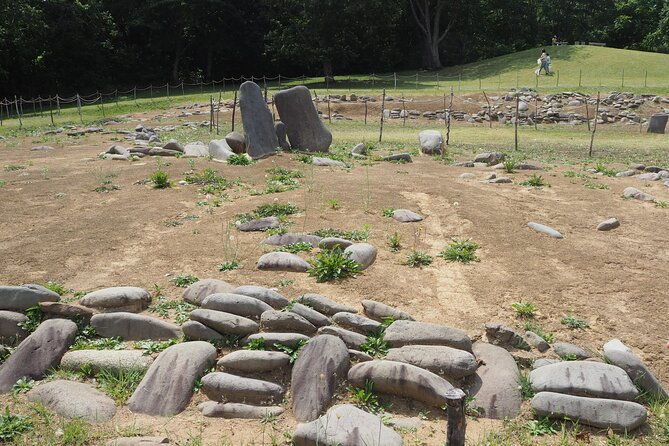
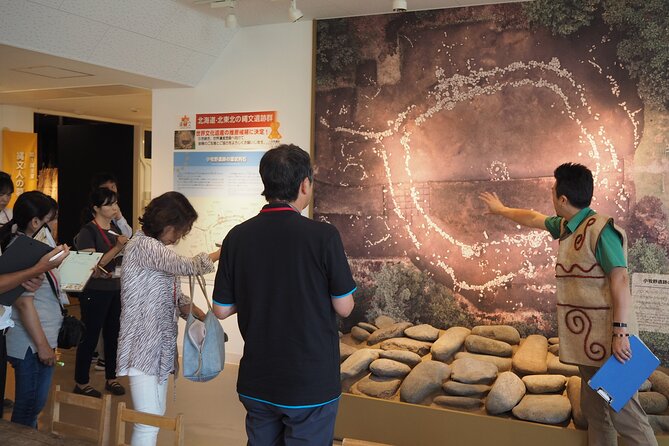
Komakino is where the story becomes visible in stones. This site centers on an original Jomon stone circle and a distinctive stone-line arrangement that’s known across Japan as the Komakino style. It’s not just a pretty pattern—Jomon stone layouts help show how people organized sacred or practical spaces long before writing, and Komakino is one of the best places near Aomori to grasp that feeling.
One of the coolest background details is how it was found: local high school students discovered the site. That detail matters because it changes your mindset when you’re standing there. You’re not just looking at an old ruin; you’re visiting a place that was literally recognized and brought to attention by local youth, and later protected through the preservation setup.
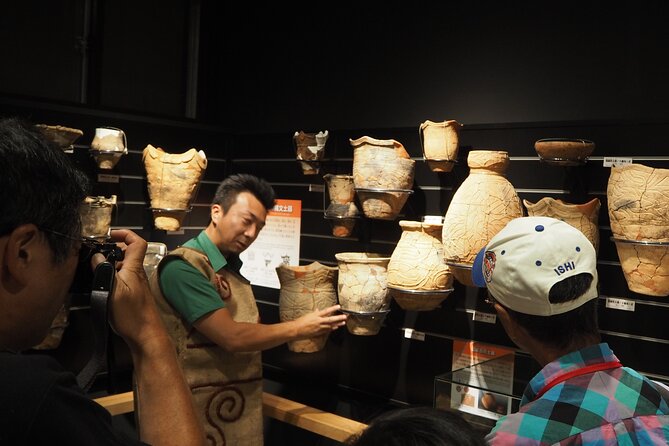
What you’ll do here is split between the outdoor remains and the museum. You’ll see the stone circle and arrangement, then move into the Jomon-no Manabiya Komakinokan museum to view excavated artifacts. The value is that you can connect the stones you’re seeing with what archaeologists recovered—an important pairing when you’re trying to understand life in a prehistoric period.
Two practical notes:
- The stop is listed as about two hours, and Komakino can hold your attention if you like walking slowly and reading interpretive info.
- Entry at this stop is free, which makes Komakino an efficient use of your time and budget.
Stop 2: Sannai-Maruyama and its restored chestnut-log tower
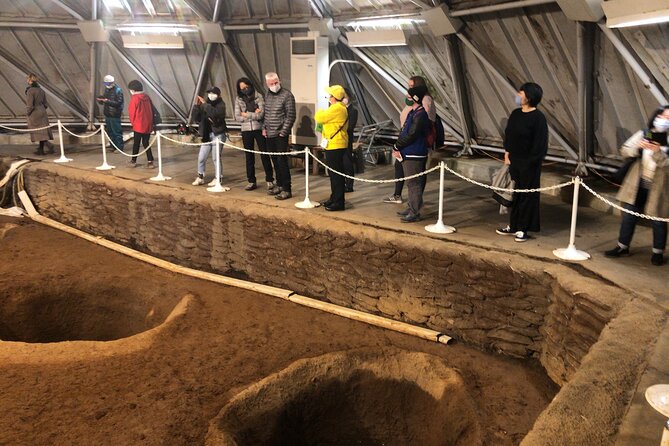
Sannai-Maruyama is the “big village” moment of the tour. This is considered one of the largest Jomon villages, with evidence suggesting more than 500 people lived there. Even if you don’t know the Jomon chronology, the scale helps your brain do the work: you start picturing not just individuals or small groups, but a community with shared routines and long-term settlement.
You’ll walk through the remains of the settlement and see how the site is presented to help you understand everyday life. The information focuses on hunting and gathering, but it also points to signs of domestication, including chestnut trees. That matters because it shows you the Jomon story isn’t only about wild resources—it’s also about experimenting with long-term plant relationships.
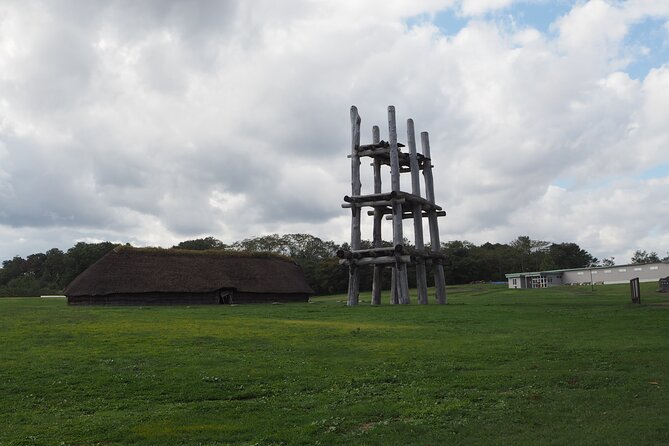
Then comes the tower, and it’s hard to ignore. The symbol of Sannai-Maruyama is a restored structure built from six large chestnut-log posts. Even if restoration isn’t the same as the original, it’s a useful tool: it gives you a visual reference for how structures may have looked and how people might have used communal space.
Here’s what to expect on the practical side:
- This stop is also listed for about two hours.
- Admission is not included at the time of booking; there’s a fee of 500 JPY per person for Sannai-Maruyama.
- Because it’s a site you’ll walk through, your comfort level will depend on weather and how long you feel like taking in open-air remains.
Why the English guidance is the real difference
With prehistoric sites, the difference between a quick visit and a memorable one is interpretation. The tour includes English guidance, and your guide on this experience is Tomio Yokouchi.
In practice, what I like about a guide-led approach is simple: the sites can look like ruins until someone helps you connect the dots. Tomio is described as extremely knowledgeable about Aomori’s history and the inhabitants and villages tied to Jomon-era life. That matters because the sites are UNESCO-level, but they’re also local—your understanding improves when the story includes how Aomori connects to the wider Jomon picture.
Also, the pacing isn’t rigid. One review specifically notes that Tomio listened to requests and modified the plan accordingly. That’s a big deal on a half-day tour, because half-days are all about tradeoffs. If you want a bit more time to look at exhibits or you’d rather add an option at the end, a flexible approach can make the difference between feeling rushed and feeling satisfied.
Transportation and timing: private car comfort versus taxi reality
The tour’s half-day length is part of why it’s so convenient—but it only stays convenient if transport works smoothly. Here’s the key setup:
- Pax 1 to 3: you use the guide’s private car. You’ll cover a 3,000 JPY cash cost for gas and other expenses.
- Pax 4 to 6: you may need to hire a taxi to visit the Komakino area, with costs starting at 14,050 JPY.
Why you should care: this is one of those tours where the schedule is tight enough that you don’t want long waits between stops. A private-car setup usually feels smoother and more time-efficient, especially if you’re arriving with kids, or you just don’t want to fight local transit timing during a short visit.
For most readers, the sweet spot is one to three people. That’s when you get pickup plus a direct route, and you only deal with one main cost item in addition to the tour price.
Price and value: what you’re really paying for
The price is listed as $214.62 per group, up to three people. On its face, that’s not a budget bargain. But when you break it down against what you get—private English guidance, pickup, a private car, and museum-plus-outdoor access to two UNESCO Jomon sites—it starts to feel like a “buy time and clarity” deal.
Think of it this way:
- If you’re traveling with one or two others, the per-person cost becomes much more reasonable.
- You avoid the stress of piecing together transportation for two separate prehistoric stops close to Aomori City.
- You get interpretation for two complex sites in one compact window.
Then add the known extras:
- Sannai-Maruyama admission: 500 JPY per person (not included)
- Gas/other expense (private car): 3,000 JPY cash per booking for groups of 1 to 3
- Optional gratuity (not required)
The overall value calculation improves if your group size is small and you care about understanding what you’re seeing—not just checking boxes. If you’re the type who enjoys reading interpretive details and learning how excavated artifacts connect to the story, you’ll likely feel the money go further.
What to do with four hours: build the rest of your Aomori day
Because the tour is compact, you can plan your day around it rather than the other way around. You’ll spend roughly two hours at Komakino, then about two hours at Sannai-Maruyama.
This also gives you room to add something fun at the end. One review notes an option involving Nebuta floats displays at the Wrasse Nebuta museum. If you’re in Aomori around Nebuta season—or if you simply enjoy the local festival culture—this can be a great way to balance prehistoric depth with something more lively and colorful.
If you’re booking this as part of a multi-site Japan trip, I’d treat it like a focused “Jomon module.” Pick one other theme for the rest of the day (food, festival arts, or a simple walk in the city). The tour is already doing the heavy lifting on Jomon.
Practical tips for a smooth visit
A few details can make your half-day feel calm instead of chaotic:
- Weather matters. The experience requires good weather, and if it’s canceled due to poor conditions, you’ll be offered another date or a full refund. Build a little flexibility into your schedule.
- Bring cash for the add-ons you know about. If you’re in the private-car group range (1 to 3), there’s a 3,000 JPY cash cost for gas and other expenses. Sannai-Maruyama admission is 500 JPY per person.
- Use the mobile ticket. The tour provides a mobile ticket, which should make entry easier if you keep your phone handy.
- Plan for walking. You’ll be touring remains and visiting museums, so wear comfortable shoes and don’t expect everything to be fully seated.
If you’re traveling with older kids or teens, this tour can be especially fun because Komakino’s discovery story connects to real local people, not just distant academic work.
Who this tour is best for (and who should skip it)
This tour fits best if you want a guided, interpretation-heavy Jomon experience without spending a full day driving and coordinating. It’s ideal for:
- Couples and small groups (especially up to three), where the private car value is strongest
- People who enjoy museums and want excavated artifacts explained alongside outdoor remains
- Travelers who like UNESCO sites but want the “so what” behind them
You might skip it if:
- You’re only interested in quick photo stops and don’t care about museum context
- You’re trying to minimize any cash add-ons, since there are known extra costs (Sannai admission and gas contribution depending on your group size)
- Your schedule can’t bend if weather causes a reschedule
Should you book the Half-day Jomon World Heritage tour in Aomori?
I’d book it if you want Jomon in a tight, high-clarity format. The biggest reason is not the label “UNESCO”—it’s the combination of two major sites, English guidance by Tomio Yokouchi, and a pace that leaves room to actually understand what you’re looking at.
Choose it with confidence if your group size is one to three, since that’s when the transport setup is simplest and the value math works best. If you’re flexible on timing and you enjoy both outdoor remains and indoor artifacts, this half-day tour is one of the best ways to make Aomori’s Jomon story feel real instead of abstract.
FAQ
What sites are included in the half-day tour?
You’ll visit two Jomon World Cultural Heritage sites near Aomori City: the Komakino site (with the Komakino preservation museum) and the Sannai-Maruyama site.
How long is the tour?
The tour lasts about 4 hours.
Is pickup included?
Yes, pickup is offered.
Is this a private tour?
Yes. It’s a private tour/activity, and only your group participates.
Is English guidance included?
Yes, English guidance is included.
Are admission fees included?
Admission is free for the Komakino site stop. Admission for Sannai-Maruyama is not included and costs 500 JPY per person.
What about transportation for larger groups?
For 1 to 3 people, the guide uses a private car. For 4 to 6 people, you need a taxi to visit the Komakino site, with cost at least 14,050 JPY.
What extra costs should I expect?
For 1 to 3 people, there is a 3,000 JPY cash cost for gas and other expenses. You’ll also need to pay 500 JPY per person for Sannai-Maruyama admission. Gratuity is optional.
Does the tour use a mobile ticket?
Yes, the tour includes a mobile ticket.
What happens if weather is bad?
The experience requires good weather. If it’s canceled due to poor weather, you’ll be offered a different date or a full refund.
What is the cancellation policy?
You can cancel for free up to 24 hours in advance for a full refund. If you cancel less than 24 hours before the start time, the amount paid is not refunded.