REVIEW · HAKONE
Hike Japan Heritage Hakone Hachiri with certified mountain guide
Book on Viator →Operated by Coconuts Hike Japan · Bookable on Viator
Hakone Hachiri feels like a time machine on foot. I like the small-group pace and the way you combine Edo-period routes with real-world stops like Lake Ashi and Genba River. I also like that the guide’s plan includes transport jumps so you spend less time guessing and more time walking the best sections. The one caution: the day depends on weather, and you may lose some Mount Fuji views if clouds roll in.
You’ll tackle about 8km over roughly 7 hours, and the route is built around the Old Tokaido travel corridor—complete with a checkpoint story and steep Hakone slopes that Edo travelers knew all too well. If you’re the type who likes your travel with context and good logistics, this hits the sweet spot.
In This Review
- Key things to know before you go
- Edo-era travel made walkable: what Hakone Hachiri really is
- Your guide and small-group vibe (Aki/Akihiro shows up in the best feedback)
- Meeting at Hakone-Yumoto, then getting onto the trail
- Quick pacing note
- Lake Ashi at Motohakone-Ko: Torii + Fuji if the sky cooperates
- The Hakone checkpoint moment: understanding travel control in Edo Japan
- A practical note on comfort
- Hakone-machi lunch and a bus jump to keep the route on track
- Yamanaka Castle Ruins: walking the old route with Fuji chances
- Ending in Mishima: shrine visit, river walk, and train options
- Price and logistics: is $158.52 a good deal?
- Who this tour suits best (and who might want a different plan)
- Weather reality check: when clouds take over, you still get a good day
- Should you book Hakone Hachiri with a certified guide?
- FAQ
- How long is the Hakone Hachiri hike experience?
- How far will we walk?
- Where does the tour start and end?
- What’s included in the price?
- What isn’t included?
- What fitness level do I need?
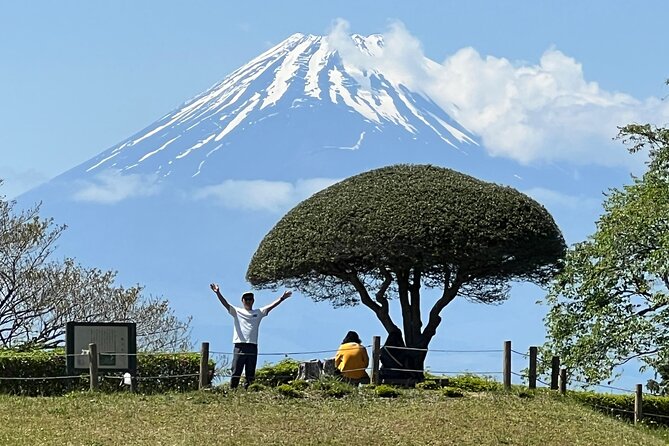
- Do you see Mount Fuji on this hike?
Key things to know before you go
- Certified mountain guide with wilderness first aid for a safer, more confident hike
- Max 6 travelers, so it’s not a cattle-call history lesson
- 8km route with mixed walking and local transit between key points
- Lake Ashi stops where you may catch Heiwa no Torii and Mount Fuji (weather permitting)
- Hakone checkpoint + cedar road gives you the Edo-era “how travel worked” picture
- Ends in Mishima at Mishima Station, where you can continue by train
Edo-era travel made walkable: what Hakone Hachiri really is
Hakone Hachiri is part of Japan Heritage, and it tells the story of how people moved through this area in the Edo period, when travelers, officials, and merchants needed workable routes through difficult terrain. This isn’t just scenery walking. The route follows the Old Tokaido Highway idea—so you get a sense of why certain paths mattered, and how travel friction shaped daily life.
On this hike, you’re following a line of travel logic. You’re not only going from point A to point B. You’re going through the “why,” like a route planner with a history degree. The guide explains the background as you go, including the role of the Hakone checkpoint, which is the kind of place that sounds boring until you understand what it controlled.
You’ll also be treated to that classic Hakone rhythm: forest trails, then a bus jump, then more walking. It’s a practical way to cover ground without burning the entire day.
You can also read our reviews of more tours and experiences in Hakone.

Your guide and small-group vibe (Aki/Akihiro shows up in the best feedback)
This tour caps at 6 travelers, and that changes the whole feel. In a small group, it’s easier to ask questions, adjust pace on uneven ground, and get unstuck quickly if you’re unsure where to go next.
In the feedback, guides named Aki (also appearing as Akihiro) come up again and again for handling both logistics and storytelling well. That matters here because you’re dealing with multiple stops, short transit sections, and weather-dependent views. A guide who can keep the day flowing makes the hiking portion feel calm, not chaotic.
One more thing I appreciate: the tour includes a guide with wilderness first aid certification. You’re not going off into remote wilderness, but Hakone still has real outdoor conditions—mud can happen, steps can be slippery, and footing matters.
Meeting at Hakone-Yumoto, then getting onto the trail
You meet at Hakone-Yumoto Station at 9:00 am. From there, the first move is a shared taxi to reach the trailhead. That’s a smart start, because it saves you from playing transport roulette before the hike even begins.
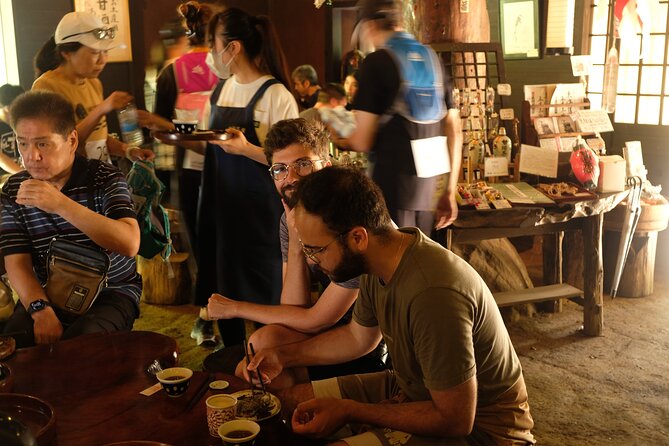
After the taxi ride, you walk for about an hour to reach the Hakone Amazake Tea House area and a wood crafting village setting. The tour gives you a chance to see craft life in the middle of a travel corridor—exactly the kind of stop that turns a scenic walk into a place you understand.
How long you’ll stand around depends on the group and conditions, but the general pattern is clear: you start moving early, and you use this first segment to get your legs working before the Lake Ashi portion.
Quick pacing note
The hike is described as moderate fitness level. Expect mixed terrain and some slope. If you’re comfortable walking for an hour without stopping every five minutes, you’re in the right zone.
Lake Ashi at Motohakone-Ko: Torii + Fuji if the sky cooperates
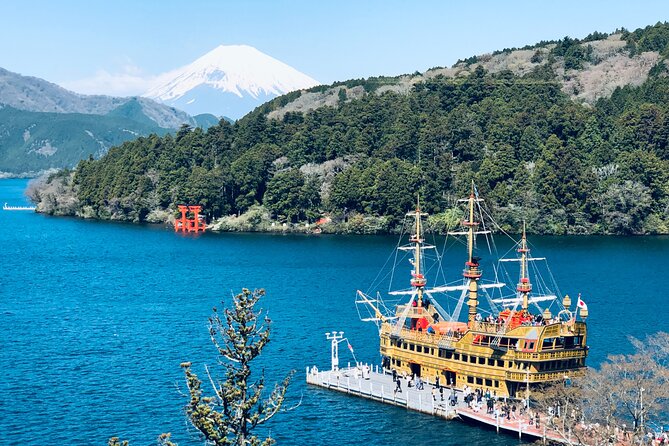
Once you reach Lake Ashi, you shift into classic Hakone mode. You spend time at Motohakone-Ko Pier and then walk along the shoreline area. This is where you have a shot at the iconic Heiwa no Torii and Mount Fuji in the background, but only if the weather allows.
That “weather permitting” line is not a throwaway. In Hakone, a change in cloud cover can completely change the value of your photos and your overall wow factor. Even if Fuji is hidden, the lake views and the atmosphere of the pier area are still part of why this route makes sense.
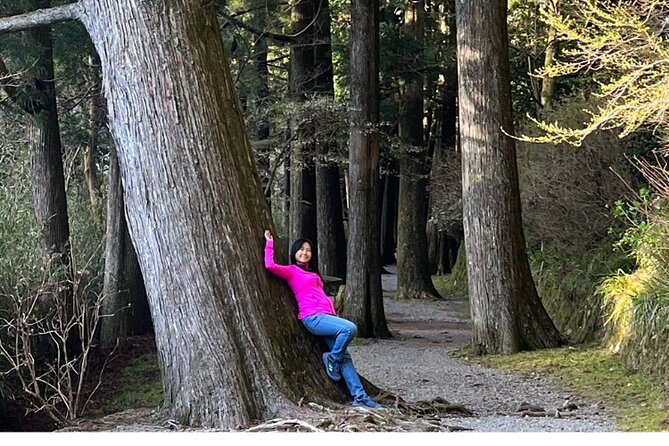
You then continue through the cedar avenue on the Hakone Old Road side of things. Cedar avenues have a particular vibe: cooler air under tall trunks, and a corridor effect that makes the walk feel intentional, not random.
The guide’s job here is to time the sighting windows—when the group is together, moving slowly enough to see, and not drifting into “everyone walks on their own schedule” chaos.
The Hakone checkpoint moment: understanding travel control in Edo Japan
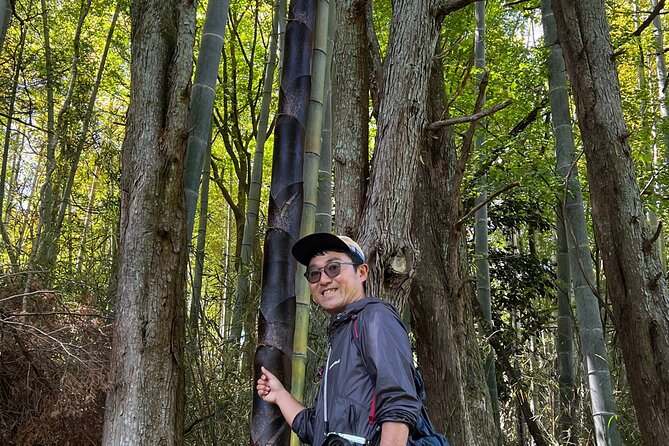
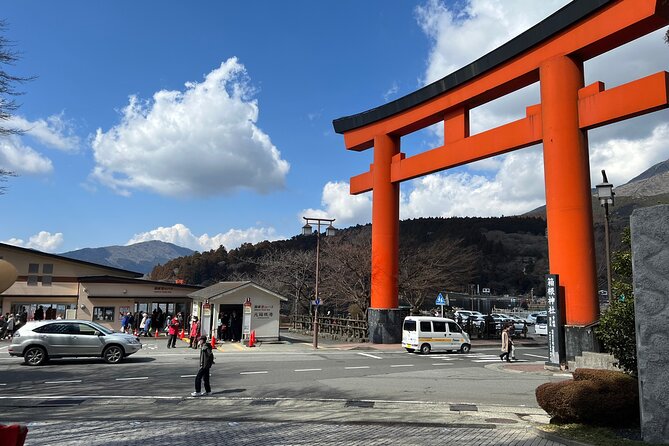
After the cedar avenue, you reach the Hakone Checkpoint, a spot that works as a story anchor for the entire day. The tour explains it like an immigration department in modern terms—what it signaled, and why travelers would have expected checks or procedures as they moved along the corridor.
This stop turns the day from scenic hiking into real interpretation. You start noticing details in the route itself: why the checkpoints sat where they did, and how the steep Hakone mountain stretch affected how travel was managed. It’s also the part of the tour that makes you see why the heritage label isn’t just a marketing label.
You’ll spend about 30 minutes here. That’s long enough for the explanation and short enough to keep momentum.
A practical note on comfort
Checkpoint areas can involve standing and walking on uneven ground. Wear shoes that can handle both forest trail dirt and stone surfaces you’ll encounter later.
Hakone-machi lunch and a bus jump to keep the route on track
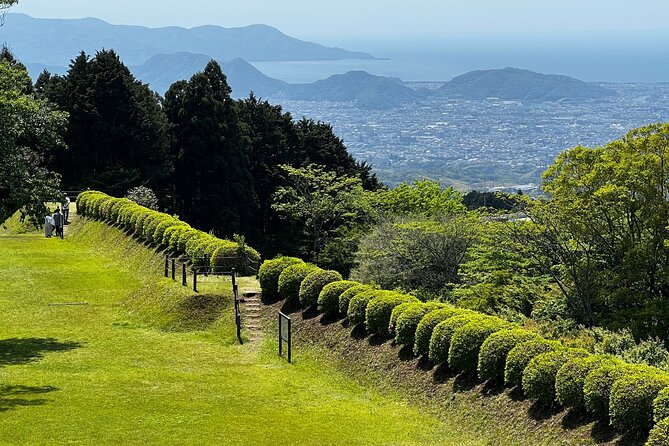
After the Hakone checkpoint segment, the tour continues toward Hakone-machi. You’ll have lunch at a local Japanese restaurant. Lunch is not included, and it’s listed around 2,000 yen for your group.
Then comes a key logistics move: you take a bus to reach the trailhead on the Shizuoka side, and the schedule also accounts for a portion that may be temporarily closed. In plain terms, this is why the tour works. Instead of forcing you to fight closures or detours, the plan uses local transit to keep the heritage route intact.
That might not sound exciting, but it’s one of the biggest reasons a guided version feels better than “just try to DIY it.” You keep the story, and you don’t lose half a day to logistics.
Yamanaka Castle Ruins: walking the old route with Fuji chances
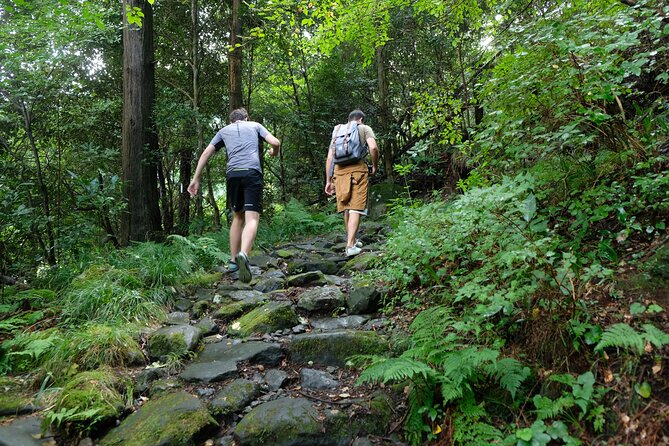
Next stop: Yamanaka Castle Ruins along the Hachiri heritage path. The tour gives you about one hour here, and it notes that if the weather is right, you might spot Mount Fuji from this area as well.
Even if Fuji isn’t visible, castle ruins still give you something different from a lake viewpoint. You get a sense of the strategic terrain: what the land offered and why someone would build or defend a place here. It’s also a good contrast point after the cedar avenue and checkpoint story.
This portion reinforces the theme of the day. Hakone wasn’t an easy corridor. It was a controlled, hard-working travel zone.
Ending in Mishima: shrine visit, river walk, and train options
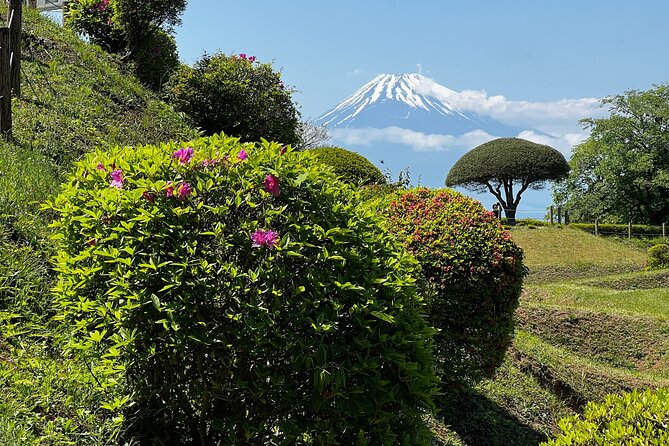
The tour ends at Mishima Station, after you reach Mishima. You’ll visit Mishima Taisha, described as the biggest shrine in Mishima, plus the Genba River.
This ending sequence matters. You’re not finishing in some remote dead-end bus stop. You’re finishing in a place with real transit options, which makes it easier to fold into the rest of your itinerary.
From Mishima Station, you can take the shinkansen back to Odawara (about 15 minutes, listed around 2,500 yen) or continue toward Tokyo (about 45 minutes, around 4,400 yen). The shinkansen portion is not included in your tour price, so plan on that extra cost if you’re heading back to the main Tokyo base.
Price and logistics: is $158.52 a good deal?
At $158.52 per person for about 7 hours and an ~8km hike with a certified mountain guide, the big question is value. Here’s how I see it:
What you’re getting for your money
- A national certified pro guide with wilderness first aid
- A route that includes multiple heritage-focused stops, not just one viewpoint
- Small group size (max 6), which is usually where comfort and pacing improve
- Mobile ticket convenience
- Entrance fees are listed as free for the stops shown
What costs extra
- Lunch around 2,000 yen
- Transportation to the trailhead and between sites around 2,000 yen (via shared taxi and buses)
- Shinkansen from Mishima to Odawara or Tokyo (listed separately)
- Amasake and snacks along the way
Add it up and you end up paying the main guided experience, then budgeting for the day’s food and rail/travel connections afterward. If you’re the kind of traveler who hates improvising route closures and trying to match buses to a heritage walking plan, this price starts to feel fair fast.
One more detail: this tour is often booked about 61 days in advance on average. If your dates matter, it’s smart to check availability earlier rather than waiting.
Who this tour suits best (and who might want a different plan)
This tour is a strong match for:
- People who like walking with context, not just moving from photo spot to photo spot
- Travelers who want Edo-period themes explained while you’re actually on the route
- Anyone who appreciates small-group pacing
- People who don’t want to deal with transport and temporary closures on their own
You might want to consider another option if:
- You’re very sensitive to weather changes. The tour requires good weather, and Fuji views depend on it.
- You want fully independent hiking with zero group coordination. Here, you’re always following the guide’s plan.
The “moderate physical fitness” note suggests you don’t need to be an endurance athlete, but you should be ready for a full half-day with walking and some uneven ground.
Weather reality check: when clouds take over, you still get a good day
The experience requires good weather. If it’s canceled due to poor weather, you’ll be offered a different date or a full refund. That’s reassuring.
Even when clouds block Fuji, the route still makes sense because much of the day isn’t only about the summit view. You’re walking cedar avenues, learning checkpoint purpose, and visiting ruins and cultural stops. The guide’s history tie-ins also help the day stay meaningful when the sky is muted.
Still, I’d pack like Hakone can change its mind: comfortable layers and something to stay dry if light rain shows up. (The tour description also hints that rain and clouds don’t necessarily ruin the day, but weather can affect how pleasant it feels.)
Should you book Hakone Hachiri with a certified guide?
If your ideal Japan day mixes old-route storytelling with real walking and practical transit, I think this is an easy yes.
Book it if you want:
- A guided explanation of the Edo travel corridor, including the checkpoint concept
- A chance at Lake Ashi Torii + Fuji when conditions align
- A low-drama plan that gets you from Hakone to Mishima without stress
Skip it or look elsewhere if you only care about Fuji photos and you’re not okay with the weather odds. In Hakone, the sky is the boss.
FAQ
How long is the Hakone Hachiri hike experience?
It runs for about 7 hours.
How far will we walk?
You’ll hike around 8km during the tour.
Where does the tour start and end?
It starts at Hakone-Yumoto Station and ends at Mishima Station.
What’s included in the price?
The price includes a certified pro guide with wilderness first aid. Admission tickets for the listed stops are shown as free.
What isn’t included?
Lunch (around 2,000 yen), transportation fees to the trailhead and between sites (around 2,000 yen), the shinkansen fee from Mishima to Odawara (around 2,500 yen), and amasake/snacks along the way are not included.
What fitness level do I need?
The tour is listed for people with a moderate physical fitness level.
Do you see Mount Fuji on this hike?
You might, but it depends on weather. The route notes potential Fuji views from Lake Ashi and also from areas like Yamanaka Castle Ruins.