REVIEW · BISHKEK
Bishkek: The Ancient Burana Tower & Kok-Moinok Canyons
Book on GetYourGuide →Operated by TDP · Bookable on GetYourGuide
A single tower tells a whole empire story. This day trip pairs Burana Tower (the last big piece of Balasagun) with the odd, beautiful rock formations of Kok-Moinok Canyons, a perfect pause between Bishkek and Issyk-Kul.
What I like most is the way the visit connects you to real dates and real destruction (Balasagun’s fall and what’s left today), not just pretty stones. I also like that the route includes a second stop where you can stretch your legs and watch the mountains and canyons change in the light.
One consideration: it’s a 12.5-hour outing with limited time at each site, so if the schedule slips you may not reach every canyon viewpoint, and you’ll want to keep expectations realistic.
In This Review
- Key moments worth planning for
- Burana Tower: your shortcut to Balasagun’s 11th-century world
- The stones and the carvings: meaning you can spot on-site
- Kok-Moinok Canyons: rock forms shaped by an ancient ocean
- The 12.5-hour flow: how the day usually feels
- Pickup in Ala Too Square and getting around in Kyrgyzstan-style traffic
- Guides, language, and how the explanations land
- Price and value: what $130 usually buys you
- Food planning: where you’ll likely eat and what to bring
- Who this suits best (and who should skip it)
- Should you book this Bishkek day trip?
- FAQ
- How long is the tour?
- How much does it cost?
- Where do you meet your guide in Bishkek?
- What languages are the guides?
- Is food included?
- What should I bring?
Key moments worth planning for
- Burana Tower + Balasagun context: you’ll understand what the ruins represent, not just where to stand for photos
- 70 km from Bishkek, near Tokmok: a straightforward day trip distance, but expect a full day out
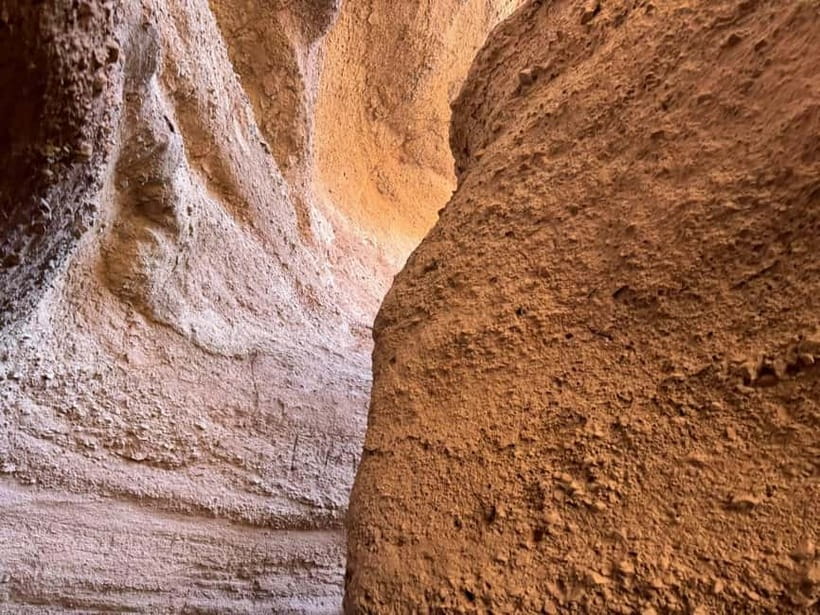
- Kok-Moinok Canyons geology story: the rocks were shaped after an ancient ocean washed away
- Small group (up to 13): easier Q&A with your English/Russian guide
- Local food stops nearby (not included): you’ll likely eat out, so plan for cash and a flexible appetite
Burana Tower: your shortcut to Balasagun’s 11th-century world
Burana Tower sits about 70 km from Bishkek and roughly 12 km from Tokmok. It’s the kind of site that looks simple from far away, then grabs you once you’re close. The tower is the remaining part of the ancient city of Balasagun, tied to the region’s power between the 9th and 11th centuries.
Here’s why this stop matters: Balasagun wasn’t just an old city that faded quietly. It was ransacked by Mongols in 1218, and by the 14th century the city was left in disrepair. When you stand near the tower, you’re seeing survival—one tall remnant that outlasted the rest.
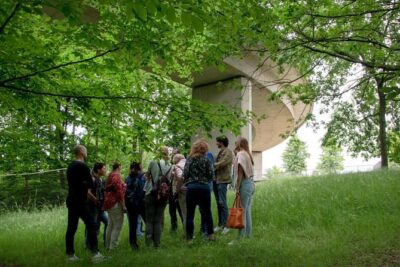
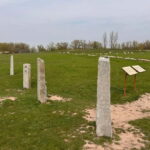
I like that a good guide can translate the stonework into a story you can actually hold in your head. Expect talk about the tower’s historical role and you’ll also see artwork carved into stones and related site details. If you’re the type who likes to connect “what you’re seeing” to “why it exists,” this is a strong match.
A practical point: wear closed-toe shoes. Uneven ground is common at historical sites like this, and you’ll walk more than you think once you factor in time to look around, take photos, and move between points of interest.
You can also read our reviews of more tours and experiences in Bishkek.
The stones and the carvings: meaning you can spot on-site
Burana Tower isn’t only about a tall silhouette. The experience works best when you slow down long enough to notice the stones and any carvings or site artwork. Even if your Kyrgyz/Russian is limited, the guide’s job is to help you see what the markings likely represent and how they connect to the city’s era.
In a small group, you get a little more breathing room. With up to 13 people, it’s easier to ask a question when something catches your eye instead of rushing through. I’d treat Burana like a “read the details” stop, not just a checkpoint.
If you’re tempted to skim, don’t. The payoff is in the texture—stone surfaces, placement, and the idea that these pieces were made when Balasagun still mattered in the wider region.
Kok-Moinok Canyons: rock forms shaped by an ancient ocean
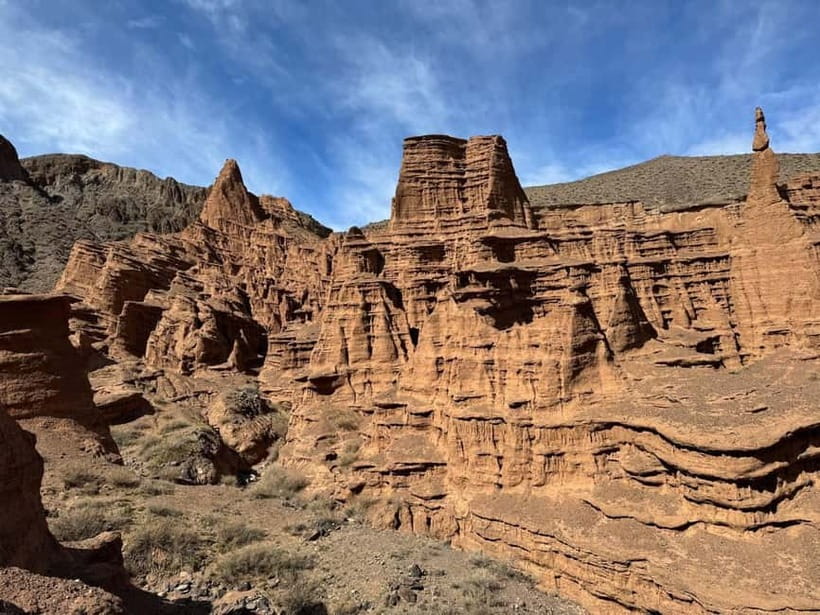
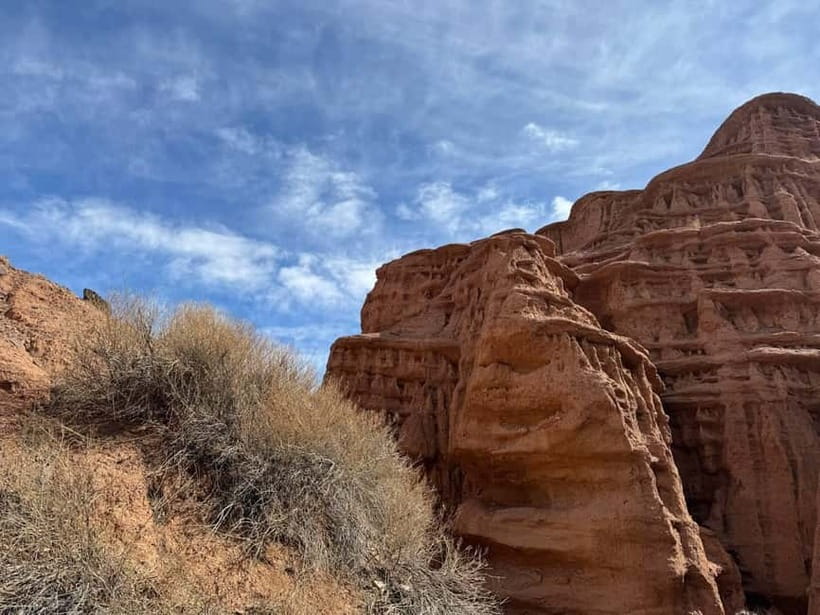
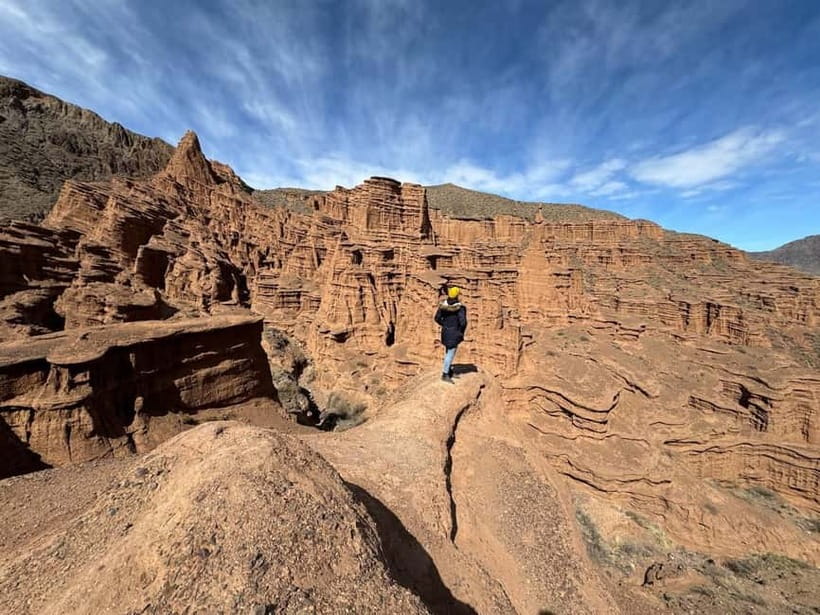
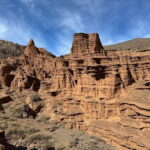
After Burana, the day shifts into pure scenery. Kok-Moinok Canyons are described as unique rocks and mountain formations, with amazing stone shapes and designs. You’ll hear the big origin story: they were made after a very old ocean washed away, leaving behind the rock patterns you see today.
This is the kind of stop that feels different from a ruin. Instead of history written by people, you’re looking at history written by time—erosion, water, and forces that sculpted shapes you can’t fully explain away as random.
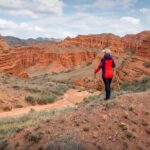
You’ll also get a view experience. Expect to look out over canyon areas and mountains, and use your time for the simple things: walking a bit, checking angles for photos, and watching how shadows move across the rock faces. It’s a good “reset” after the tower’s concentrated story.
One caution to plan around: because this is a full-day schedule, there may not be unlimited time for every viewpoint. If your priority is the canyons, build in patience and keep your energy steady. If you’re strict about seeing everything, you might be disappointed—especially if timing runs tight.
The 12.5-hour flow: how the day usually feels
This tour is set for about 12.5 hours. That means you’re committing to a long but efficient loop out of Bishkek, with two main destination blocks: Burana Tower first, then Kok-Moinok Canyons.
That order makes sense. You start with the historical anchor, where you’ll likely spend more time absorbing explanations and looking at stones. Then you shift to the outdoors side—where the walking and viewpoint time can flex depending on the day’s pace.
If you’re sensitive to long days, take it seriously before you book. Bring water plans even though food and drinks aren’t included, and pace yourself at the tower so you don’t arrive at the canyons already tired. The canyons portion works best when you’re ready to look, not just survive the schedule.
Pickup in Ala Too Square and getting around in Kyrgyzstan-style traffic
Pickup and drop are built in. Your guide meets you just under the Kyrgyz Republic flag in Ala Too square (as per the map location). If you’re staying near the city center, you can provide your accommodation spot and they’ll pick you up there.
From a comfort point of view, this is where things can make or break the day. The tour includes pick-up and drop-off, but vehicle details aren’t specified in what you’re given here. In practical terms, treat this as a “full-day road trip” and dress for changing conditions.
Also: navigation matters. On any day trip where the canyon entrance isn’t obvious, the driver and guide need to get you to the right place efficiently. I can’t predict how smoothly it’ll go every time, but I’d go in prepared to be flexible if you need to clarify where exactly you’re meant to meet the group again at the canyon area.
A small group helps here. It’s easier to keep everyone together, spot confusion early, and adjust pace without losing half the group.
Guides, language, and how the explanations land
You’ll have a live tour guide in English and Russian. That’s a big deal for this itinerary. Burana Tower and the stone artwork make far more sense when someone explains the context—what you’re looking at and what it meant.
The guiding quality also shows up in the tone. Recent experiences mention guides who brought humor, and others who shared a lot of information about the country and people, not just the sites. Names that have appeared include Aqai, Nur Sultan, Arslan, and Alex—and even if you don’t get the same person, the point is this: the best days happen when your guide actively talks, not when you just follow a route.
Because this is limited to up to 13 participants, you’re also more likely to get a personal answer when you ask something specific—like what the carvings represent or why the city mattered.
Price and value: what $130 usually buys you
The price is $130 per person for about 12.5 hours, including: pick-up and drop-off from the city, entrance tickets, language tour guidance, and a guided tour. Food and drinks are not included.
So what’s the value? You’re not just paying for transportation. You’re paying for a structured day:
- entry fees handled for the key stops
- interpretation in English or Russian so the sites feel real
- a guide to keep time moving and the group together
- small-group attention (up to 13), which helps on historical stops
Where you can lose value is if your day ends up shorter on one of the two destination blocks. One practical reality of any long day trip: if timing runs tight, the outdoors stop can get shorter. If you really want maximum canyon time, make sure your expectations match a full-day itinerary.
My take: at $130, this works best if you care about understanding Burana Tower and you want a guided “two-stop” format rather than DIY driving.
Food planning: where you’ll likely eat and what to bring
Food isn’t included, so you’ll be responsible for meals and drinks during the day. The good news is that you’re doing this in a region where you can likely find local options near the tour route.
Still, plan like a local trip: bring cash (it’s specifically recommended), and have closed-toe shoes and layers ready for changes in temperature. If you’re hungry at an awkward time, it’ll be easier if you already know you can grab something rather than waiting for the tour to provide it.
Who this suits best (and who should skip it)
This tour is set up for most active sightseers, but there are clear limits. It’s not suitable for people with altitude sickness, and it also notes people over 95 years. Baby strollers aren’t allowed, and you’ll need a passport or ID card.
Who it fits well:
- you want a guided day with history and nature in one run
- you prefer small-group travel where you can ask questions
- you’re comfortable with a long sit-plus-walk schedule
Who might struggle:
- anyone who needs frequent breaks or has mobility constraints beyond basic walking
- people who get tired fast in road trips
- anyone hoping for a slow, unhurried “wander all day” pace
Should you book this Bishkek day trip?
Book it if you want a high-value day that combines a major historical remnant—Burana Tower—with the outdoor fun of Kok-Moinok Canyons. The guided format is the key reason it works: Burana becomes much more than a photo when you get the story behind Balasagun and the tower’s survival.
Skip or adjust your expectations if you’re the type who needs extra time at every viewpoint. Because it’s built as a 12.5-hour loop, the schedule can be tight. Also, go in with cash for food, and wear shoes that handle uneven ground.
If you’re flexible, this is the kind of day trip that makes Bishkek feel bigger than just the city.
FAQ
How long is the tour?
It runs for about 12.5 hours.
How much does it cost?
The price is listed as $130 per person.
Where do you meet your guide in Bishkek?
Your guide meets you just under the Kyrgyz Republic flag in Ala Too square. If you’re staying in the city center, you can share your accommodation location for pickup.
What languages are the guides?
Live tour guidance is available in English and Russian.
Is food included?
No. Food and drinks are not included.
What should I bring?
Bring cash, closed-toe shoes, and a passport or ID card.