REVIEW · BRIGHTON
LGBTQ History Tour in Brighton (semi-private)
Book on Viator →Operated by Only in Brighton · Bookable on Viator
Brighton has a way of surprising you. This LGBTQ history tour uses a small-group format to show you places on foot that most people miss, from the seafront to Kemptown. You’ll also get a guide who brings stories to the street, not just facts on a page.
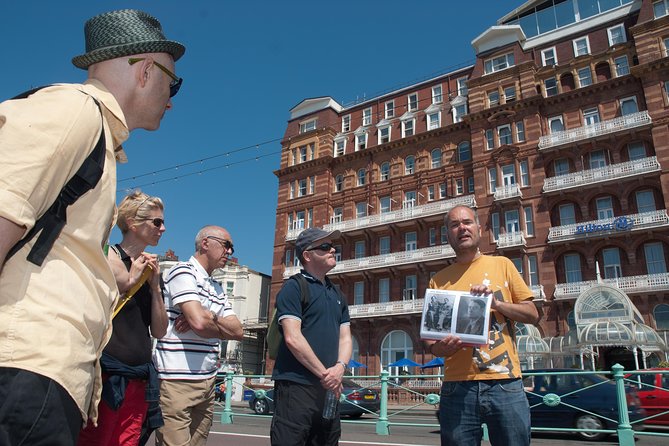
I especially like two things. First, the pacing: 30 minutes per area keeps it relaxed, and you’re never stuck in long explanations with no views. Second, I loved the way guide Ric uses visuals, including a flip folder of pictures, to help the past feel real as you walk.
One possible drawback: it’s weather-dependent and you’ll be on your feet for about 90 minutes. If you don’t love being out in wind off the sea, plan for layers and comfortable shoes.
In This Review
- Key moments to look for
- Starting at Boer War Memorial: the easy way to begin
- Brighton Beach stop: seafront stories where hotels meet the past
- The Lanes: narrow alleys, old buildings, and a few key landmarks
- Kemptown: finishing in Brighton’s most queer-focused district
- How Ric’s local storytelling makes the walking tour work
- Price and value: what $53.50 buys you here
- Getting there, what to wear, and how to plan your afternoon
- Who this tour suits best (and who might want a different option)
- Should you book this LGBTQ History Tour in Brighton?
- FAQ
- How long is the LGBTQ History Tour in Brighton (semi-private)?
- What time does the tour start?
- Where is the meeting point?
- Where does the tour end?
- How many people are in the group?
- Is the tour offered in English?
- What is the price per person?
- Do I need to buy tickets for the stops?
- What should I do if the weather is poor?
- Can I get a full refund if I cancel?
Key moments to look for
- Boer War Memorial start near Regency Square, so you begin with a solid sense of place in central Brighton
- Seafront walk at Brighton Beach with historic people and events tied to the beach and nearby hotels
- The Lanes old-town alleys with 18th and 19th century buildings, plus stops linked to a historic pub, a theatre, and Brighton Town Hall
- Kemptown at the end in the district described as the queerest in Brighton and the country
- Maximum 12 travelers for a semi-private feel and plenty of time for questions
- Mobile ticket + Blue Badge guide with local knowledge and on-the-street anecdotes
Starting at Boer War Memorial: the easy way to begin
This tour meets at the Boer War Memorial at Regency Square, right on Kings Road (BN1 2FJ). Starting at a landmark like this is handy: you can get oriented fast and you don’t lose time hunting for a tiny shopfront or side door.
The tour starts at 2:00 pm and runs about 1 hour 30 minutes. That timing is a sweet spot. It’s late enough that the morning crowds have settled, but early enough that you can still have the rest of the afternoon for extra exploring—especially if you want to revisit a stop that sparks your interest.
It’s also offered in English, and you’ll use a mobile ticket. That’s a small detail, but it matters: you’ll spend less time figuring out paperwork and more time looking at the streets.
You can also read our reviews of more tours and experiences in Brighton.
Brighton Beach stop: seafront stories where hotels meet the past
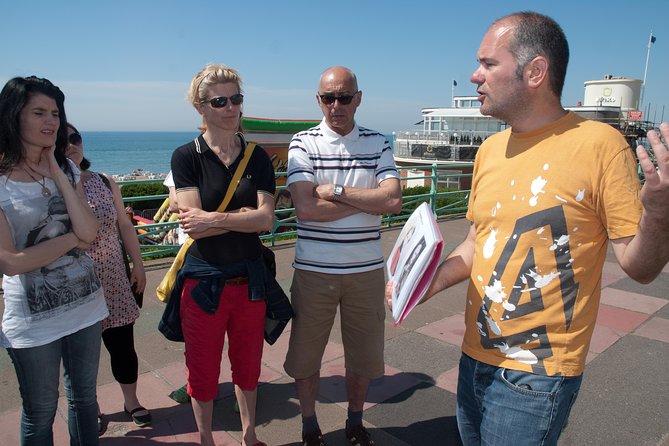
The first stop is along Brighton Beach, where you walk the seafront with the beach and nearby hotels as your backdrop. This is where the tour leans into atmosphere: seaside Brighton isn’t just scenery here. The guide connects what you see now to historic people and events tied to this part of town.
You’re there for about 30 minutes, and the admission for the stop is listed as free. That’s a good sign for value. You’re paying for the guided experience and the storytelling, not for entry fees.
Why I like this stop: it teaches you to look beyond the promenade photo. Instead of just thinking seafront equals views, you start noticing how the setting could shape social life—who gathered, what the coastal environment made possible, and how the city’s identity formed in public places.
Practical note: the seafront can feel chilly even when the streets inland feel mild. If you’re going in a cool or windy stretch of weather, layers are your best friend.
The Lanes: narrow alleys, old buildings, and a few key landmarks
Next you head inland into The Lanes, Brighton’s older town area with 18th and 19th century buildings and narrow alleyways. This part feels like a change of pace. The seafront is open; The Lanes are tight and close, with the kind of lanes where you can imagine conversations echoing off brick and shopfronts.
You spend another 30 minutes here, and again the listed admission is free. That matters because it keeps the tour accessible without forcing you into a ticketed site. You’re learning from what’s around you—streets, facades, and a few specific points the guide uses as anchors.
The guide points you toward sights including a historic pub, a theatre, and Brighton Town Hall. Even if you’ve passed these places before, the value comes from context. The tour connects the physical landmarks to LGBTQ stories you might not get from a general walking route.
One consideration: The Lanes involve narrow passages. If you’re traveling with bulky items, or you’re someone who doesn’t like cramped spaces, plan to keep things light. The tour is only 90 minutes total, but The Lanes still ask you to move through tighter urban corridors.
Kemptown: finishing in Brighton’s most queer-focused district
The final stop takes you to Kemptown, described as the queerest district in Brighton—and the country. That line is bold, and it’s also exactly why Kemptown makes a strong ending: it’s where the themes of the tour start to feel concentrated rather than scattered.
You get about 30 minutes here, with admission listed as free. Since the tour ends in Kemptown, the guide’s stories typically land with extra weight. You’re not just hearing history in theory; you’re closing with a district identity tied to the LGBTQ past.
I like finishing here because the tour doesn’t treat LGBTQ history as something locked in museums. It frames it as something connected to neighborhoods, streets, and the way people found community.
The flip side: if you’re the type who likes a lot of time at the final stop, 30 minutes can feel quick. The trade-off is that the whole tour stays focused and keeps energy up across three distinct areas.
How Ric’s local storytelling makes the walking tour work
A lot of walking tours just show you places. This one does more: it uses a Blue Badge guide and a local perspective to connect what you see with what happened.
In the tour experience, Ric uses both verbal storytelling and visual prompts. You’ll see how a flip folder of pictures helps bring characters and scenes into focus while you’re standing nearby. That combination makes it easier to remember names and details, and it also turns the walk into more of a guided conversation than a one-way lecture.
The small-group size is part of why this works. With a maximum of 12 travelers, you’re not stuck in a crowd where questions get drowned out. You’re more likely to feel like the guide is speaking to your pace and interests, not just pushing a schedule.
And because it’s a short loop—central meeting point, three timed walking segments, and then a finish in a different neighborhood—it’s a tour that fits into a real day. You can do this and still enjoy other Brighton plans without feeling like you lost the entire afternoon.
Price and value: what $53.50 buys you here
At $53.50 per person, this tour sits in a mid-range spot for guided walks. The value comes from a few things that add up:
- Small-group format (max 12) gives you a more personal feel than big-coach tours
- Blue Badge guide + local guidance means you’re paying for interpretation, not just direction
- Three distinct areas (seafront, The Lanes, and Kemptown) in about 90 minutes gives you breadth without overload
- Stops are listed as free admission, so your cost is mainly the guiding itself
If you’re trying to get a focused introduction to LGBTQ history in Brighton without spending money on multiple individual entry tickets, this pricing makes sense. The tour is structured so you’re learning from the streets and landmarks themselves, which keeps the experience efficient.
You can also look at it as a time-saver. Brighton’s streets are easy to roam on your own—but it’s harder to find the right stories and the right angles without local help. This tour gives you that route in one shot.
Getting there, what to wear, and how to plan your afternoon
The meeting point is easy to find for central Brighton walks: Regency Square / Kings Road at the Boer War Memorial. The tour ends on Prince’s Street (Prince’s St). That end location is practical because it sets you up for continued wandering without backtracking across town.
Because the tour is near public transportation, you don’t need a car plan. If you’re using buses or trains, plan to arrive a few minutes early so you can start on time without stress.
What to wear: comfortable walking shoes. You’ll be moving through areas including narrow lanes and the seafront. Bring layers if it’s cool, and a light rain layer if weather looks iffy.
The tour also requires good weather. If conditions are poor, you’ll be offered a different date or a full refund. In plain terms: pick a day where you’re not stuck with only one rigid schedule.
Finally, this experience is commonly booked in advance (on average about 17 days). If you want a particular date, don’t wait until the last minute.
Who this tour suits best (and who might want a different option)
I think this tour is a great fit if you want:
- a guided introduction to LGBTQ history in Brighton
- a route that covers three different neighborhoods in a tight timeframe
- a guide who uses pictures and anecdotes to help the stories stick
- a relaxed group size (max 12) where you can actually pay attention
It’s also a good choice if you’re a local who wants to see the city differently. You’re not just walking landmarks—you’re connecting them to people and events you might not have encountered in a standard overview.
You might want to reconsider if you:
- don’t do well with outdoor walking for about 90 minutes
- strongly prefer barrier-free accessibility routes or need very specific accommodations (the tour does list a moderate physical fitness level)
- are traveling with only one possible date and don’t have flexibility for weather
Should you book this LGBTQ History Tour in Brighton?
Yes, if you want a focused, human-scale walk that combines seafront, old-town lanes, and Kemptown with guided storytelling from Blue Badge Ric. The price feels fair for what you get: a compact 90-minute route, a small-group feel, and visuals that help history stay in your head.
Book it especially if you’re the kind of traveler who likes learning through streets, not just through standalone monuments. The tour is designed for that. If you’re ready to see Brighton as more than postcard views, this one gives you the missing context without turning your day into a long slog.
FAQ
How long is the LGBTQ History Tour in Brighton (semi-private)?
It runs for about 1 hour 30 minutes.
What time does the tour start?
The start time is 2:00 pm.
Where is the meeting point?
You meet at the Boer War Memorial at Regency Square, Kings Rd, Brighton and Hove, Brighton BN1 2FJ, UK.
Where does the tour end?
The tour ends on Prince’s Street (Prince’s St), Brighton and Hove, Brighton.
How many people are in the group?
The maximum group size is 12 travelers.
Is the tour offered in English?
Yes, it is offered in English.
What is the price per person?
The price is $53.50 per person.
Do I need to buy tickets for the stops?
Admission tickets for the listed stops are free.
What should I do if the weather is poor?
This experience requires good weather. If it’s canceled due to poor weather, you’ll be offered a different date or a full refund.
Can I get a full refund if I cancel?
Yes. You can cancel up to 24 hours in advance for a full refund, as long as you cancel at least 24 hours before the experience’s start time.