REVIEW · ROME
Rome: Colosseum Arena, Roman Forum & Palatine Hill Tour
Book on Viator →Operated by Nicom Tours · Bookable on Viator
Rome’s ancient drama starts in the Colosseum. This guided arena access tour pairs three must-see sites—Colosseum tiers plus the Forum and Palatine Hill—into one efficient half-day loop, with time slots that help you fit it in. I especially like the chance to walk through the Gladiator’s Gate and get onto the Arena Floor area that usually feels off-limits.
Second, I like that you’re not just staring at ruins. A live guide brings the stories down to street level, like how seating worked by social class, and how power games played out right in the Forum. One possible drawback: it’s a lot of movement (stairs, uneven ground, and sun), and some guides can be hard to follow if your English comfort is limited.
In This Review
- Key things I’d bet on before you book
- How This 3-Site Tour Turns Rome Into a Story
- Entering The Colosseum With Gladiator’s Gate Access
- Colosseum First and Second Tiers: Social Class, Not Random Seats
- Palatine Hill: Emperor Palaces and One of Rome’s Best Viewpoints
- Roman Forum: From Temple Stops to Power and Backstabbing
- Walking, Stairs, Heat, and Crowd Timing
- Price and Value: What You’re Really Paying For
- Live Guide vs Audio Option: Don’t Mix Them Up
- What Guides Do Right Here (And What Can Go Wrong)
- Tips That Make This Tour Feel Easier
- Who Should Book This Tour, and Who Should Skip It
- Should You Book This Colosseum, Forum, and Palatine Hill Tour?
- FAQ
- How long is the Rome Colosseum, Forum and Palatine Hill tour?
- Where does the tour start, and where does it end?
- Is the Colosseum arena access included?
- Is a live guide included?
- Do I need headphones?
- What app do I need for the audio guide option?
- How physically demanding is the tour?
- Can I bring a large backpack or suitcase to the Colosseum?
- Do I need to bring ID?
- Is this a small group tour?
Key things I’d bet on before you book
- Arena Floor access with a guided route, including the Gladiator’s Gate experience
- Colosseum first and second tiers plus context that explains how it functioned, not just what you see
- Roman Forum + Palatine Hill in one go, so you don’t spend your limited time bouncing between tickets
- Small group size (max 24) with headsets available on the standard guided option
- Hot-weather reality check: steep grades and stairs mean you should plan for a workout, not a stroll
How This 3-Site Tour Turns Rome Into a Story
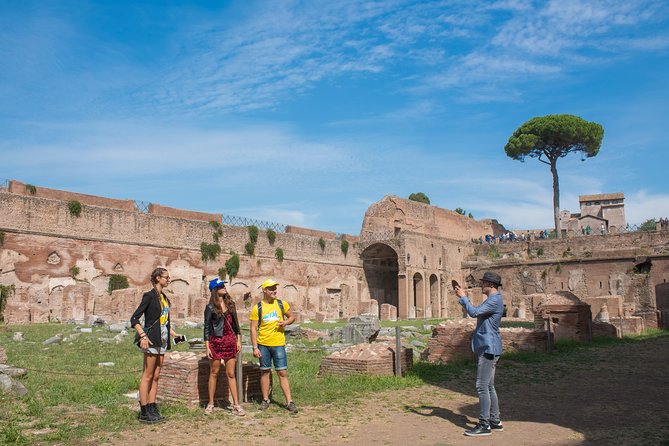
This is a tight, well-focused half-day: Colosseum first, then Palatine Hill, then the Roman Forum, and you end back near the Colosseum. Each stop is about an hour, so you get enough time to see the major highlights without letting the day swallow you.
I like tours like this because they solve a real Rome problem: the city is massive, and ancient Rome can feel like a bunch of famous stones scattered around. Here, your guide links it all—amphitheater spectacle, imperial power, then political life and betrayal—so the ruins make sense as a system.
The cost is $71.20 per person, and it’s not just for walking into buildings. Your price includes a Colosseum entrance ticket with arena access, plus the Colosseum reservation fee. In other words, you’re paying for a timed entry setup and access that’s hard to replicate on your own without careful planning.
You can also read our reviews of more tours and experiences in Rome.
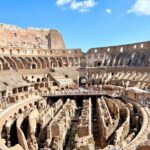
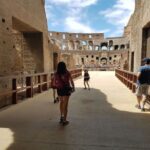
Entering The Colosseum With Gladiator’s Gate Access
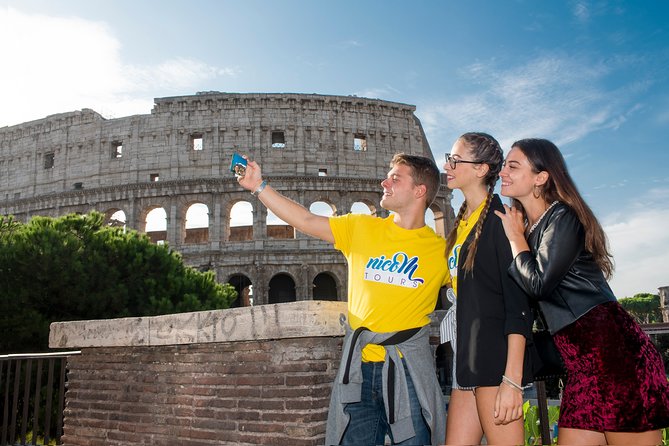
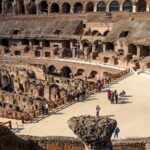
The tour starts at Via delle Terme di Tito, 93. From there, you head to the Colosseum and meet your guide. Then comes the highlight move: you walk with your guide through the Gladiator’s Gate and into the Arena Floor area, which is typically restricted.
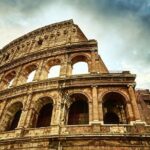
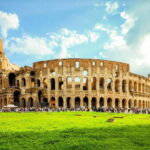
This matters. The Colosseum is impressive in photos, but the Arena Floor shifts it into something physical. You’re low, the scale feels real, and you can picture the theater of it: crowds gathered for entertainment, and performers prepared for the spectacle.
You also learn the brutal-but-fascinating background of the gladiator games. The goal isn’t to romanticize violence; it’s to understand why the games were staged, who benefited, and why it held attention for centuries.
Tip: if you’re thinking, I’ll just do it on my own, remember that the best moments here depend on access and timing. Skip-the-line tickets help, but the guided route is what turns access into meaning.
Colosseum First and Second Tiers: Social Class, Not Random Seats
After the arena moment, the tour moves up into the Colosseum’s first and second levels. This is where the building stops being a single attraction and becomes an old machine for controlling crowds.
One of the most useful bits of explanation you get here is how seats were assigned by social class. That detail changes how you look at the structure. Instead of thinking, Where would I sit?, you start asking, Who sat where—and why?
You’ll also hear stories tied to the architecture and operation of the amphitheater. Guides often point out how the building funnelled movement and how sections separated people. If you like history that feels practical and human, this part tends to land well.
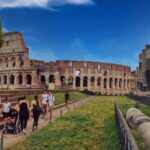
Heads-up on photos: crowds can be thick in peak periods. The value is still there, but if you need lots of quiet photo time, you’ll want to be patient and keep your phone ready when the group shifts.
Palatine Hill: Emperor Palaces and One of Rome’s Best Viewpoints
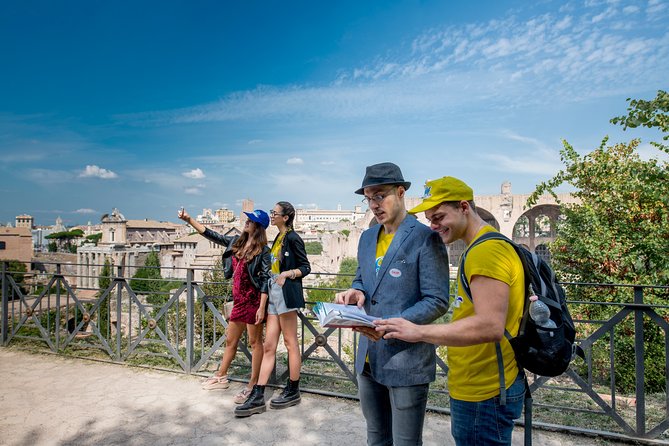
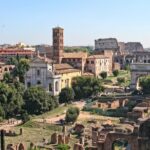
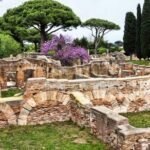
Next stop is the Palatine Hill. Your guide takes you through the ruins of imperial palaces on the hill, where Rome’s power brokers once built their upper-class lifestyle in stone.
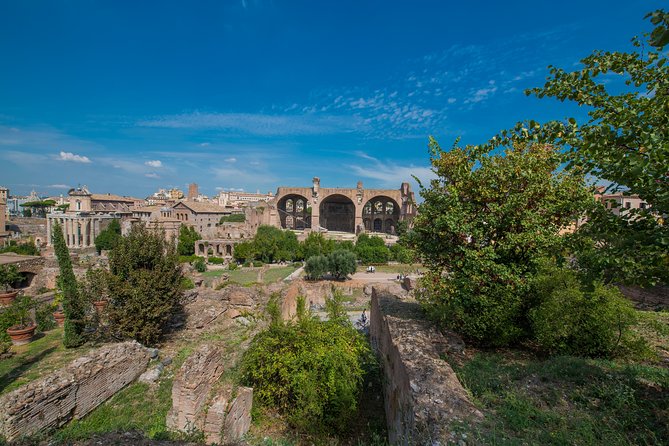
Palatine Hill is a funny place. From street level, it can look like rubble and grass. From the right angles, it suddenly becomes a view machine. The tour gives you the context, then you get the payoff: you end up with one of the best vantage points over Rome’s core.
There are also a lot of steps and uneven surfaces. This is where the review pattern becomes real: even fans of the tour say it feels like exercise. If you plan to visit in summer heat, don’t treat this as a casual walk. Bring water and dress for sweating.
Roman Forum: From Temple Stops to Power and Backstabbing
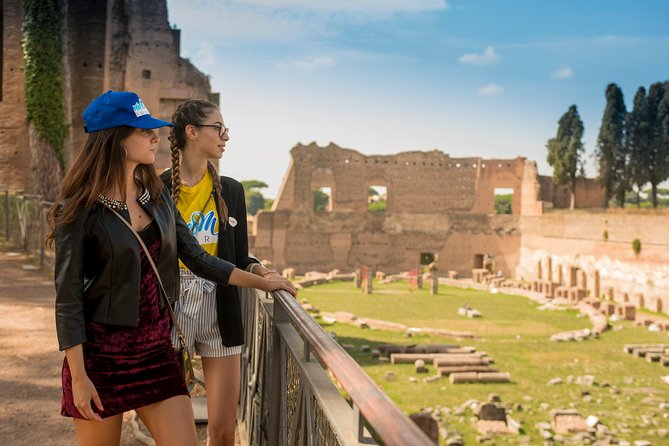
Then you move into the Roman Forum, which is the political and civic heart of ancient Rome. Here the tone shifts from entertainment to government and ambition.
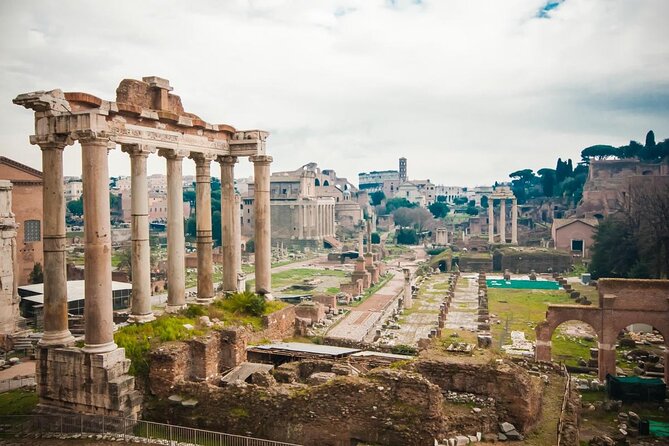
You’ll see well-known ruins like the Temple of Caesar, and you’ll hear stories about the power struggles and betrayal that played out in this space. The Forum can feel chaotic if you’re wandering alone, because so much overlaps visually. With a guide, you start to spot the logic: ceremonies, courts, speeches, and the places where decisions were staged.
The tour also highlights other major sites such as the Temple of Saturn and the Curia. Those names matter because they connect you to the roles of the people who ran Rome. It stops being random and starts becoming a map of influence.
One thing to plan for: the Forum portion can feel fast if your group pace is pushing for timing. If you tend to ask questions and linger, you’ll need to accept that this tour keeps moving. You can still get value, but you should go with the mindset of seeing highlights, not mastering every square meter.
Walking, Stairs, Heat, and Crowd Timing
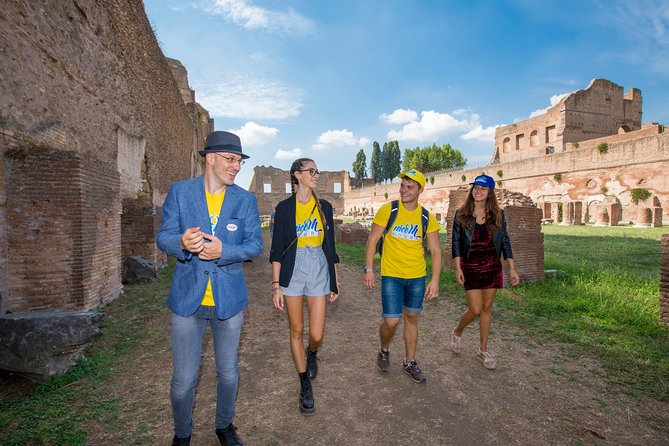
This tour is about 3 hours total, and it often packs in a surprising number of changes in elevation. You should expect steep grades, stairs, and uneven pavement. The Colosseum area is also where you feel the crowd pressure the most.
The heat factor comes up again and again. If you’re going on a hot day, you’ll feel it fast—especially when standing still in the sun. Bring a hat and water. Good news: there are water fountains at multiple points where you can refill.
A practical approach:
- Start hydrating before you arrive.
- Wear shoes you trust on uneven ground.
- Take a pause the moment you feel overheated. You’ll be moving again soon.
Another realistic note: the tour is capped at 24 travelers, which helps, but the Colosseum itself can still feel overcrowded. It’s not a magic bubble. What the guide can do is keep you moving efficiently so you spend less time stuck.
Price and Value: What You’re Really Paying For
At $71.20 per person, the big value is that your ticket includes arena access plus reserved entry. The Colosseum ticket value is listed at €24, and the reservation fee at €2, with the rest of the cost covering services like guiding and support.
If you’re the type who likes reading signs and going at your own pace, you might think, I could do this cheaper. Possibly. But replicating arena access, timed entry, and a structured route across Colosseum + Palatine + Forum is where most DIY attempts get stressful and time-consuming.
I see this tour as best for two traveler types:
- You want the major sites done in one half-day, with guidance so the ruins click.
- You want access that feels hard to secure without careful planning.
It’s less ideal if you hate walking or if you’re sensitive to long waits for audio clarity, because your experience can be shaped by communication quality and equipment.
Live Guide vs Audio Option: Don’t Mix Them Up
This tour offers an English option and also mentions an AUDIOGUIDE approach with the POP GUIDE app. If you choose the audio option, you’ll need your own headphones and a fully charged smartphone.
Here’s the key point: some people end up disappointed because they expected a live guide when they selected audio-only. Make sure the version you’re booking matches your expectations.
On the live guided format, groups get headsets, which can make a big difference in the Colosseum crowd noise. Still, you should be prepared for the fact that some guides can have an accent that’s harder to follow. When it works, the guide quality is a major part of why the reviews are so positive.
What Guides Do Right Here (And What Can Go Wrong)
The most praised aspect is the human one: guides can turn ancient Rome from names into scenes. I’ve seen strong mentions of guides such as Patricia, Nancy, Amir, Ian, George, and Alessandro for being organized, friendly, patient, and entertaining.
A great guide does two things:
- Helps you move through the right places without getting lost.
- Gives you the context that makes each stop feel connected, not separate.
But there are also common friction points:
- Timing pressure. Some guides need to keep the schedule tight, and that stress can bleed into the group pace.
- Language clarity. Several people say an English accent made parts hard to follow.
- Duration surprises. A few reviews mention the tour running longer than expected.
None of that cancels the value, but it’s why I tell you to choose this tour with a realistic mindset: you’re buying a structured experience, not a private museum walkthrough.
Tips That Make This Tour Feel Easier
If you want this to go smoothly, focus on the practical stuff that Rome always demands:
Colosseum security rules are strict. Metal detectors are part of entry, and there’s no bag check service. Avoid bringing prohibited items like glass bottles, spray cans, alcohol, large bags/backpacks, suitcases, pointed-tip umbrellas, tripods, drones, knives, scissors, and other sharp or dangerous objects. Small bags are permitted, but they must be inspected.
Bring what you can comfortably carry. If you have an audio option, bring headphones. If you’re using a live guide, you’ll likely be fine, but having your own headphones can still help if you want personal control over volume.
Also: bring ID. You may need to show it multiple times, and entries can be denied if your legal name doesn’t match the reservation. Use your legal name when booking.
Who Should Book This Tour, and Who Should Skip It
This tour is a strong fit if:
- You want Colosseum arena access and the main site levels.
- You like a guide to explain what you’re looking at, including seat assignment by social class and political stories in the Forum.
- You want an organized route that saves you from route-planning stress.
You might consider skipping (or booking a different format) if:
- You have trouble with stairs and uneven surfaces.
- You need a slower pace with lots of quiet time on-site.
- You’re very sensitive to language clarity and you worry you’ll struggle with an accented English delivery.
If you’re traveling with a toddler, the schedule and stair-heavy route can become a problem quickly, especially if your party needs to lag behind.
Should You Book This Colosseum, Forum, and Palatine Hill Tour?
Yes—if you want a high-impact half-day and you’re okay with active walking. The arena access through Gladiator’s Gate, the chance to see the first and second tiers, and the structured jump to the Palatine Hill and Roman Forum make this a smart value for limited time in Rome.
My final advice: book it with the right expectation. You’re not buying solitude. You’re buying access, structure, and a guide to turn scattered ruins into a story you’ll remember. If you go in warm shoes, hydrated, and ready for stairs, you’ll feel the payoff fast—starting the moment you step into the Colosseum’s arena space.
FAQ
How long is the Rome Colosseum, Forum and Palatine Hill tour?
It’s about 3 hours.
Where does the tour start, and where does it end?
It starts at Via delle Terme di Tito, 93, 00184 Roma RM, Italy and ends at the Colosseum, Piazza del Colosseo, 1, 00184 Roma RM, Italy.
Is the Colosseum arena access included?
Yes. The ticket included includes arena access.
Is a live guide included?
On the standard guided option, a professional guide is included. If you choose the audio guide option, the live guide is not included.
Do I need headphones?
If you choose the AUDIOGUIDE option, you’ll need to bring your own headphones.
What app do I need for the audio guide option?
You need to download the POP GUIDE app in advance.
How physically demanding is the tour?
It requires moderate physical fitness. You should expect lots of walking, steep grades, uneven pavement, and stairs.
Can I bring a large backpack or suitcase to the Colosseum?
No. Large bags or backpacks, suitcases, and many other items are forbidden under Colosseum security restrictions. Only small bags are permitted and must be inspected.
Do I need to bring ID?
Yes. You should have your ID with you, and your legal name must match the reservation, or entry can be denied.
Is this a small group tour?
Yes. It has a maximum of 24 travelers.