REVIEW · KATHMANDU
Kathmandu World Heritage Full Day Culture Tour
Book on Viator →Operated by Himalayan Planet Adventures · Bookable on Viator
Four UNESCO stops in one Kathmandu day—without the chaos. This Kathmandu Valley culture tour strings together big spiritual landmarks with clear commentary, so you’re not just looking at buildings, you’re understanding them. I like that it’s built around a private guide and hotel-to-site convenience.
Two standouts for me are the personal pace and the guidance quality. In particular, this company’s guides get praised for knowing the details and keeping things friendly, including Rabina and Rishi. You also get enough time at each main stop to take photos and actually register what you’re seeing, instead of speed-walking through history.
One drawback to plan around: entry fees aren’t included (the tour estimates about $20 per person), and you should also budget for food and drinks. Plus, Swayambhunath involves a lot of stairs, so wear shoes you trust.
In This Review
- Key things to notice before you go
- A One-Day UNESCO Loop in the Kathmandu Valley
- Getting Started: Hotel Pickup, Private Vehicle, and Timing
- Swayambhunath Monkey Temple: Stairs, Views, and What to Watch For
- Kathmandu Durbar Square and Kumari Chowk: Royal Temples and a Living Goddess
- Kaal Bhairab: The Black Statue Stop You Might Skip
- Pashupatinath Temple: Nepal’s Major Hindu Pilgrimage Site
- Boudhanath Stupa: Tibetan Buddhism on a Big Scale
- Price and Value at $105: Where Your Money Goes
- Your Guide Makes It Personal: Rabina and Rishi’s Impact
- Practical Tips for Your Day: Tickets, Stairs, and Comfort
- Who This Tour Fits Best
- Should You Book This Kathmandu World Heritage Tour?
- FAQ
- How long is the Kathmandu World Heritage full day culture tour?
- What UNESCO sites are included in the tour?
- Is hotel pickup and drop-off included?
- Is this a private tour?
- Is the guide private and professional?
- Are entry tickets included in the price?
- What is included besides the guide and transport?
- Do I need good weather for this tour?
- What are the cancellation rules?
- How far in advance is this tour commonly booked?
Key things to notice before you go
- Four UNESCO World Heritage sites covered in one full day
- Private vehicle and private professional guide for your group
- Hotel pickup and drop-off included from within Kathmandu’s ring road
- Swayambhunath and Durbar Square give you the quick Kathmandu orientation
- Boudhanath and Pashupatinath balance Tibetan Buddhism and Hindu pilgrimage energy
- Entry fees are extra, so budget for tickets on the day
A One-Day UNESCO Loop in the Kathmandu Valley
This tour is the kind of day that helps you get your bearings fast. Kathmandu can feel layered and overwhelming at first, with temples everywhere and landmarks tucked into neighborhoods. This route gives you a structured way to see the Kathmandu Valley’s most important heritage in one shot.
The big value is the mix of sites. You’ll hit royal-era Kathmandu at Kathmandu Durbar Square, then shift to monkey-temple Swayambhunath for atmosphere and views. After that comes Boudhanath, one of the world’s most famous Buddhist stupas, followed by Pashupatinath, Nepal’s most sacred Hindu temple complex. That change of spiritual lens is what makes the day click.
Also, you’re not relying on your own guesswork. The tour is designed around a guide who explains religious and historical meaning at each stop. When you understand what you’re looking at, your photos improve too. You start photographing the right details instead of only the widest scenes.
You can also read our reviews of more historical tours in Kathmandu
Getting Started: Hotel Pickup, Private Vehicle, and Timing
You’ll get hotel pickup and drop-off from inside the ring road, with private transport. That matters more than it sounds. In Kathmandu, traffic and parking can swallow your day. Starting with a direct pickup helps you stay on schedule and keep the day comfortable.
The duration is listed as 7 to 8 hours. That usually means you’ll be out long enough to feel like you truly toured, not just “checked off” a couple highlights. It also means you should plan your expectations accordingly. This isn’t a quick drive-by culture sampler. It’s a day where you’ll walk, look up, and spend real time at major religious spaces.
Your group stays private. The tour notes it’s a private tour/activity, so it’s just your group in the vehicle. You’ll avoid the stop-and-go confusion that comes with mixing strangers. It’s easier for a guide to tailor pacing and answer questions when the group is small and consistent.
Swayambhunath Monkey Temple: Stairs, Views, and What to Watch For
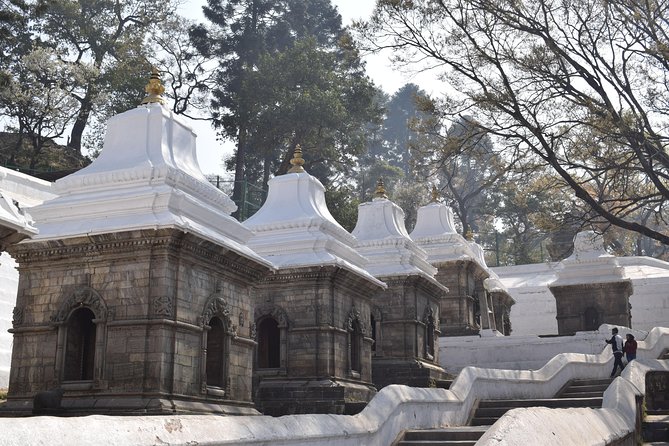
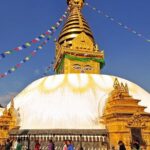
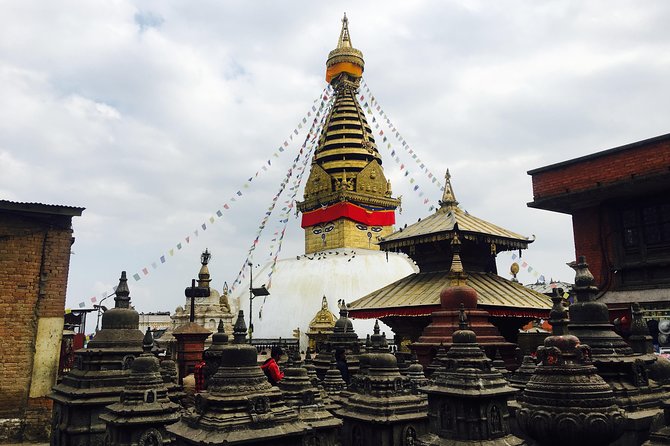
Swayambhunath starts the day at about 1 hour on-site. This is the place people call the Monkey Temple, and the tour description points to rhesus monkeys that live nearby. The monkeys are part of the vibe here, but the real reason to come is the temple complex overlooking the city.
What I like about making Swayambhunath the first stop is momentum. You get your first big viewpoint early, so later landmarks feel less chaotic. Plus, you’re arriving while you’re fresh and before you’ve drained your energy on walking.
Practical note: the route involves “up to the long stairs” to reach the top. So bring comfortable, supportive shoes and keep your pace steady. If you want photos, assume you’ll be stopping and adjusting your footing as you go.
Admission tickets aren’t included for this stop, so consider that as part of your day budget. The guide’s commentary matters here too. You’ll get more out of the visit if you know what the structures represent and what you’re meant to notice while you’re up on the hill.
Kathmandu Durbar Square and Kumari Chowk: Royal Temples and a Living Goddess
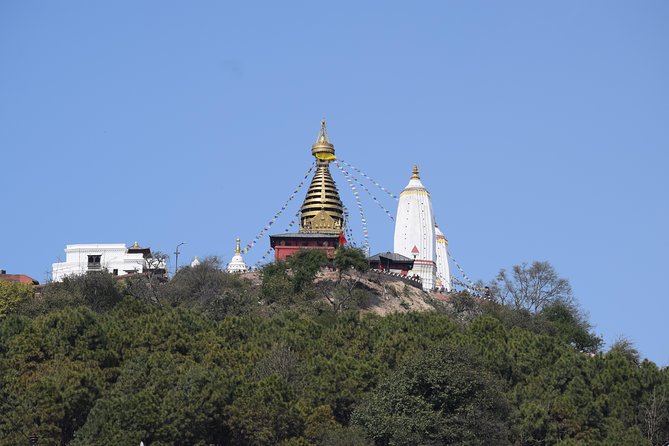
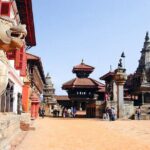
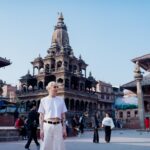
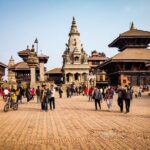
Next comes Kathmandu Durbar Square, also listed as about 1 hour. This is one of the most visually intense heritage zones in Kathmandu: dozens of temples and a sense that you’re walking through an older royal center. The tour describes it as home to almost 60 temples plus the old royal palace and a museum.
The best part of a guided visit here is sorting out what’s sacred, what’s historical, and what’s simply visually impressive. If you arrive without context, Durbar Square can turn into a lot of stone patterns and crowded angles. With a guide, you’re more likely to understand why particular spaces matter.
Then you’ll have a short stop at Kumari Chowk, the courtyard and residence of the Royal Kumari of Kathmandu. This is a unique cultural moment. The tour plans it as a brief guided visit (listed at about 5 minutes), and that short timing is actually useful: you get the key encounter without turning it into a long wait. If you’re the kind of person who likes tiny, meaningful stops, this is one of the day’s most interesting “blink and you’ll miss it” moments.
Also worth noting: some parts of Kathmandu Durbar Square have free admission for specific segments, while others require tickets. The tour overall estimates an entry fee around $20 per person, so don’t be surprised if you’re paying for certain zones while others are free.
Kaal Bhairab: The Black Statue Stop You Might Skip
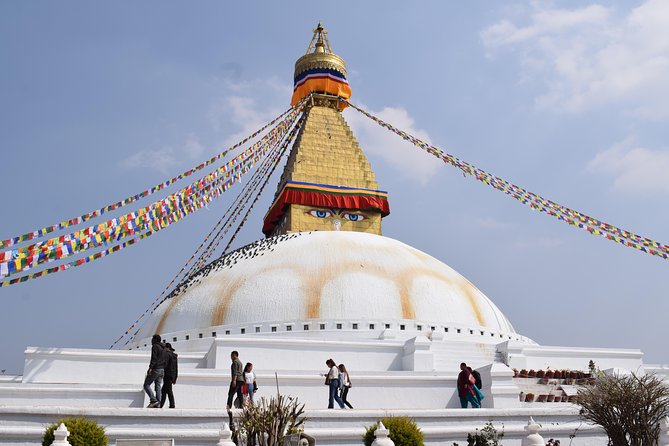
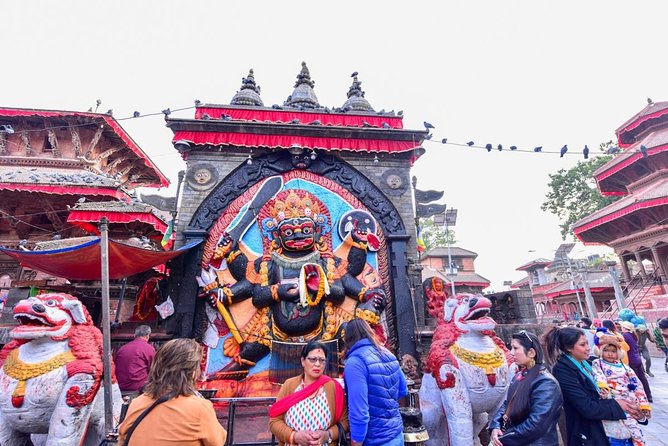
Within Durbar Square, Kaal Bhairab is scheduled for about 15 minutes, and it’s described as a massive open-air statue of Kala Bhairav, the Black… (the tour description frames it as powerful and impressive). This is the sort of attraction people can overlook when they’re chasing bigger-name temples, but it’s the kind of stop a good guide makes worthwhile.
Here’s why it can be a highlight: Bhairav figures are tied to specific religious ideas, and seeing the scale in person changes how you read the place. A statue like this isn’t just decoration. It’s meant to communicate authority, protection, and belief.
Fifteen minutes is enough time to absorb what it is, take a few photos, and move on. If your feet feel tired, this stop is ideal because it doesn’t demand a long stretch. You can still walk away feeling like you didn’t miss the “weird cool” part of Durbar Square.
A few more Kathmandu tours and experiences worth a look

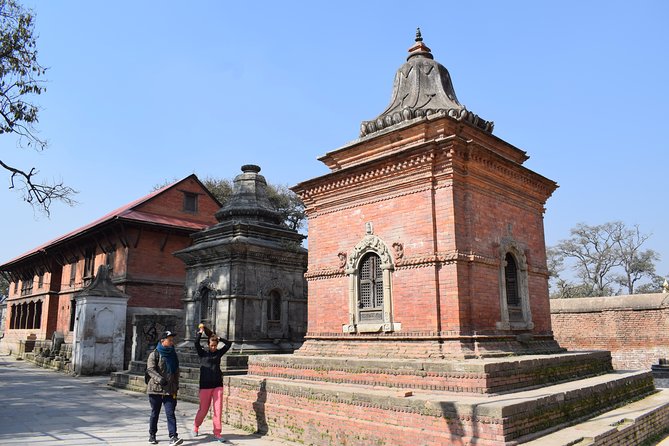
Pashupatinath Temple: Nepal’s Major Hindu Pilgrimage Site
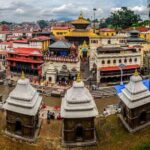
Pashupatinath is one of those places where visitors naturally slow down. The tour includes time at Pashupatinath Temple (listed around 1 hour for the guided visit, plus an additional entry marked as free in the itinerary). In practice, that means you get guided time with enough duration to observe without feeling rushed.
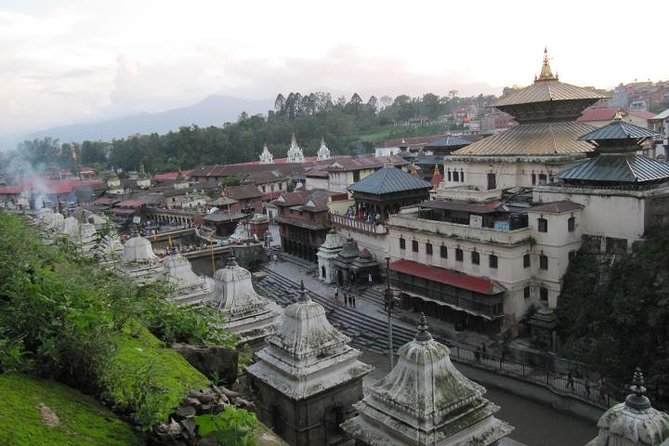
This is Nepal’s most sacred Hindu site, and the tour describes it as a powerful UNESCO World Heritage landmark and a major pilgrimage destination for Hindus worldwide. You’re not just sightseeing. You’re visiting a living religious environment. That’s why a guide helps. They can explain what you’re seeing and how the site functions culturally, instead of leaving you to guess what rituals are and what people are doing.
Because it’s sacred, you’ll likely want to keep your behavior respectful and low-key. Bring patience for crowds or moments when people are moving in organized ways. The tour structure here is helpful: you get focused time for understanding the site rather than treating it as a photo obstacle course.
As with the other major stops, admission details can vary by segment. The tour estimates an overall entry fee around $20 per person, so expect some paid entry components.
Boudhanath Stupa: Tibetan Buddhism on a Big Scale
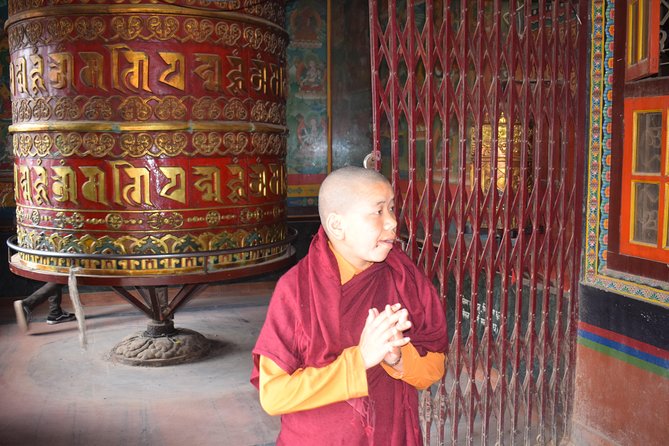
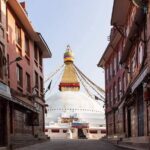
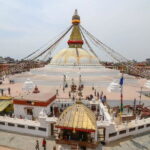
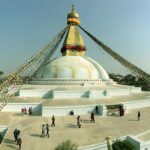
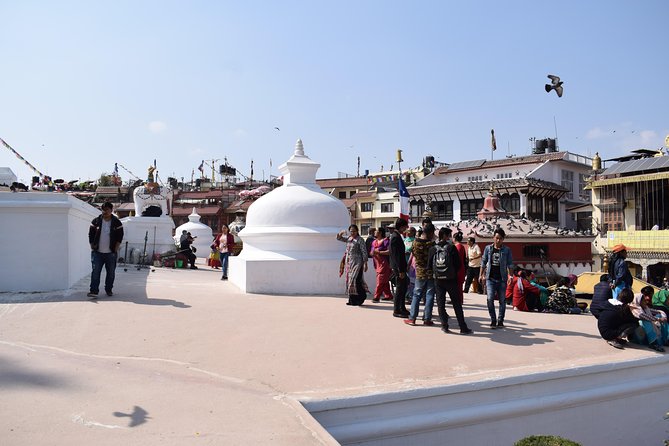
Boudhanath Stupa is scheduled at about 1 hour. It’s described as Nepal’s largest Buddhist stupa and one of the largest stupas in the world. That’s not exaggeration in spirit. Boudhanath feels massive even before you fully understand its layout.
This stop is the perfect contrast to Pashupatinath. You’re shifting from a Hindu pilgrimage center to Tibetan Buddhism’s strong visual and devotional style. If you’ve ever wanted one day that explains how different belief systems shape daily life and architecture, Boudhanath is a strong answer.
The tour frames it as a “powerful, peaceful” place and a must-see for people visiting Kathmandu for the first time. I’d agree with the first-timer angle, because Boudhanath is one of the landmarks that anchors your sense of Kathmandu’s broader religious story.
Admission is not included for this stop in the listing, so again: plan for tickets on the day. Still, even with fees, it’s hard to beat the combination of time spent plus the guide’s explanation, since a stupa can look straightforward until someone explains what you’re meant to notice.
Price and Value at $105: Where Your Money Goes
The price is $105 per person for the day. On paper, that may sound like it could be “just a drive to temples.” In reality, you’re paying for three things that matter in Kathmandu:
1) A private guide who can explain what you’re seeing
2) Private transportation and hotel pickup/drop-off inside the ring road
3) A routing plan that hits four UNESCO sites in a single day
If you were to try piecing this together on your own, you’d spend time figuring out timing, entry points, and getting a coherent explanation. This tour buys you that clarity.
Also, it’s noted that group discounts may be available, which can reduce the per-person cost if you’re traveling with friends or family.
One more thing: food and drinks are not included. That’s normal for tours, but it’s worth saying out loud so you don’t get surprised. Your best move is to plan where you’ll eat later in the day based on where the route ends up, since it’s a fixed UNESCO itinerary.
Your Guide Makes It Personal: Rabina and Rishi’s Impact
This is one of the best parts of the experience data you provided. Guides aren’t just present for logistics. They show up as the reason people rate the tour highly.
Rabina is mentioned as being friendly, knowledgeable, and especially good at explaining everything. One standout detail from feedback: she’s described as one of the best guides the reviewers had on their trip, and the company specifically highlights the idea of promoting a female guide in Kathmandu, which they note is not always common.
Rishi is another guide name tied to high praise. The feedback describes him as amazing, extremely knowledgeable, and attentive with personal touches like taking plenty of pictures. That matters because UNESCO sites are photo magnets. If you’re going to bring your camera or phone, you benefit from someone who knows where to stand and when to move so you get good angles without blocking others.
The bigger lesson for you: choose this tour when you want more than a list of sights. If you’re the type who likes context, ask questions at each stop. With a private guide, the day becomes yours.
Practical Tips for Your Day: Tickets, Stairs, and Comfort
Here’s how to set yourself up for an easier day, using what’s specified and what the route naturally requires.
- Bring a budget for entry fees. The tour notes an entry fee of about $20 per person, and not all stops are marked as free.
- Wear shoes for stairs. Swayambhunath includes long stairs, so choose footwear that won’t punish you later in the day.
- Plan for food and drinks. They aren’t included, so your comfort depends on your own choices during breaks.
- Expect a full day outdoors. Even with a private vehicle, you’ll be walking through temple and heritage zones.
- Good weather matters. The tour requires good weather. If conditions are poor, you’ll either be offered a different date or get a full refund.
If you want the best photos, start with your expectations: don’t try to capture everything. Capture the meaningful bits. A guide explanation helps you decide what’s worth the shutter time.
Also, after booking, the tour notes that you should contact the local operator to confirm your pickup location, and the operator contact info will be on your confirmation voucher. That’s a small step that saves time on the day.
Who This Tour Fits Best
This tour is ideal for:
- First-time visitors to Nepal who want an efficient introduction to Kathmandu’s major UNESCO sites
- Travelers who prefer a private guide and private transport over shared groups
- People who like spiritual and cultural context, not just photos
- Anyone who wants a structured one-day route that avoids the guesswork of sequencing major landmarks
It’s also listed as suitable for most travelers, which suggests the main requirement is basic walking comfort. If you struggle with stairs, consider that Swayambhunath’s ascent is a real part of the day.
Should You Book This Kathmandu World Heritage Tour?
If your goal is a fast, meaningful overview of Kathmandu Valley UNESCO highlights, this is a strong pick. The day is thoughtfully arranged so you experience Hindu and Buddhist landmarks, royal-era Kathmandu at Durbar Square, and a viewpoint-heavy start at Swayambhunath. With a private guide and hotel pickup, you avoid a lot of friction.
If you’re tight on budget for entrance fees and food, you’ll want to factor those extra costs in advance. If stairs are a major concern, think carefully before choosing Swayambhunath as part of your day.
Overall: for first-timers who want context and convenience, I’d book this.
FAQ
How long is the Kathmandu World Heritage full day culture tour?
It runs about 7 to 8 hours.
What UNESCO sites are included in the tour?
The tour includes Kathmandu Durbar Square, Swayambhunath, Boudhanath Stupa, and Pashupati Temple.
Is hotel pickup and drop-off included?
Yes. Pickup and drop-off are included from inside the ring road in Kathmandu.
Is this a private tour?
Yes. It’s described as a private tour/activity, so only your group participates.
Is the guide private and professional?
Yes. You get a private professional tour guide.
Are entry tickets included in the price?
No. Entry fees are not included, and the tour estimates about USD 20 per person.
What is included besides the guide and transport?
The tour includes hotel pickup and drop-off (inside the ring road), a private professional tour guide, and private transportation. Food and drinks are not included.
Do I need good weather for this tour?
Yes. The experience requires good weather. If it’s canceled due to poor weather, you’ll be offered a different date or a full refund.
What are the cancellation rules?
Free cancellation is offered up to 24 hours in advance for a full refund. If you cancel less than 24 hours before the start time, the amount you paid is not refunded.
How far in advance is this tour commonly booked?
On average, it’s booked about 26 days in advance.