REVIEW · DA NANG
Marble Mountains – Hoi An Ancient Town Sunset Daily Ingroup Tour
Book on Viator →Operated by Dacotours Co.,Ltd · Bookable on Viator
Lantern light in Hoi An hits different. This half-day-style tour links Marble Mountains and the ancient town in one smooth loop, with Japanese, Chinese, and Vietnamese landmarks packed into a sunset-to-night schedule.
I like the way the tour keeps it small (up to about 22–25 people) so you actually hear your guide and don’t feel like a human wave. I also love that the price covers the key basics: hotel transfers, bottled water, entrance fees for Marble Mountains and Hoi An Ancient Town, and a Vietnamese dinner with a vegetarian option.
One thing to consider: Marble Mountains involves lots of steps and uneven areas, so if you’re not into stair climbs (or it’s wet), you’ll want proper shoes and a slower pace.
In This Review
- Key things I’d circle on your plan
- Marble Mountains to Hoi An in one evening: why this format works
- Pickup timing and what your afternoon-to-night schedule will feel like
- Marble Mountains: caves, pagodas, and the stair-and-safety reality
- Expect stairs, and plan for wet weather
- The Water Mountain cave vibe
- Hoi An Ancient Town at night: lantern streets, key bridges, and river views
- Japanese Covered Bridge (17th-century symbolism)
- Cantonese Assembly Hall (Quang Triệu), built by immigrants
- Old House of Phung Hung
- Free time: night market wandering
- Dinner in Hoi An: included Vietnamese food, with a smart expectation
- The guide makes it click: what you can realistically expect
- If you’re sensitive to explanations
- Price and value: what $33 really buys you
- Practical tips: shoes, photos, and how to avoid frustration
- Who this tour suits best (and who should pick something else)
- Should you book the Marble Mountains and Hoi An sunset-style tour?
- FAQ
- How long is the tour?
- What is the price per person?
- Does the tour include hotel pickup in Da Nang?
- Is dinner included?
- What does the tour include for entrance fees?
- How big is the group?
- Do I need to print tickets?
- What if the weather is poor?
- Where is the meeting point?
- Is there an elevator option at Marble Mountains?
Key things I’d circle on your plan
- Small-group size keeps the experience from turning into a race.
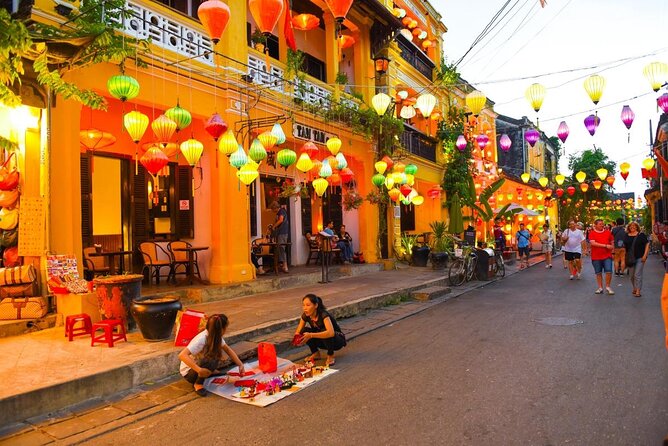
- Hoai River and lantern streets make Hoi An feel magical after dark.
- Marble Mountains caves and pagodas give you more than just views.
- Japanese Covered Bridge + Chinese assembly hall show how this port town blended cultures.
- Dinner is included, but you should treat it as a convenient bonus, not a top-tier meal guarantee.
Marble Mountains to Hoi An in one evening: why this format works
This tour is built for people who want big sights without giving up a whole day. You get the natural-and-spiritual contrast of Marble Mountains, then you shift into Hoi An’s night atmosphere where lanterns take over the streets.
The best part of this setup is pacing. Six hours (give or take) is long enough to see real highlights, but short enough that you’re not still walking when you’re already exhausted. It’s also the kind of plan that helps you “get your bearings” fast—especially if you’re new to central Vietnam and want context before you wander on your own.
You can also read our reviews of more evening experiences in Da Nang

Pickup timing and what your afternoon-to-night schedule will feel like
The tour starts in the late afternoon. There’s a start time listed at the Da Nang tour office, and you’ll also have hotel pickup in Da Nang city center. Either way, you should plan to leave your place around the time the group is moving, not as an optional “maybe.”
If you’re counting minutes, here’s the reality: Marble Mountains requires walking, climbing, and time inside caves and temple areas. Then Hoi An Ancient Town is full of photo stops, heritage buildings, and street wandering. The schedule packs a lot in, so if your ideal travel style is slow and deliberate, go in with the mindset that this is a curated route.
A small group helps here. With fewer people, your guide can adjust pace a bit, keep everyone together, and answer questions without you disappearing into the crowd.
Marble Mountains: caves, pagodas, and the stair-and-safety reality
Marble Mountains is not just scenic cliffs. It’s a whole cluster of cave systems and Buddhist-style monuments, with spots tied to sacred beliefs and quiet spiritual practice. You’ll also get time to see a local stone carving village, where artisans shape blocks of marble into detailed work that’s been passed down through generations.
This stop is usually the “wow” moment for first-timers because it mixes three things:
- natural rock formations and viewpoints
- cave interiors with religious statues and altars
- the human craft of stone carving
Expect stairs, and plan for wet weather
Marble Mountains is famous for steps—and that’s exactly where you’ll feel it. Even if you’re fit, you’ll be going up and down. If it’s damp, the surfaces can be slick, and a few areas may feel less ideal than the postcard photos.
If you want to reduce the stair grind, note that an elevator is available as an optional way to climb and descend some sections. One useful tip: people have said it’s usually for under about $1, so it can be a practical cost if your legs want a break.
The Water Mountain cave vibe
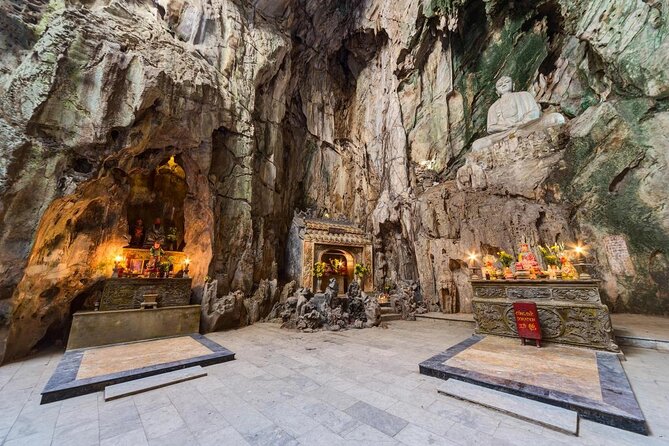
The tour specifically includes cave time at Water Mountain (with Buddhist monuments and sacred places inside). This is where Marble Mountains shifts from “a place you see” to “a place you experience.” The cave layout can make you slow down instinctively, because the lighting and surfaces naturally change how you move and look around.





Hoi An Ancient Town at night: lantern streets, key bridges, and river views
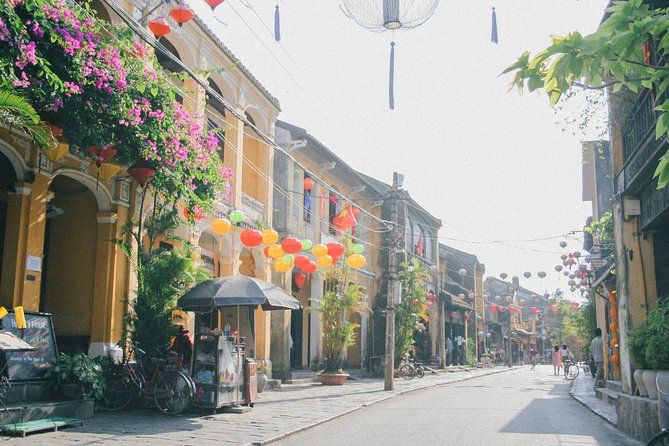
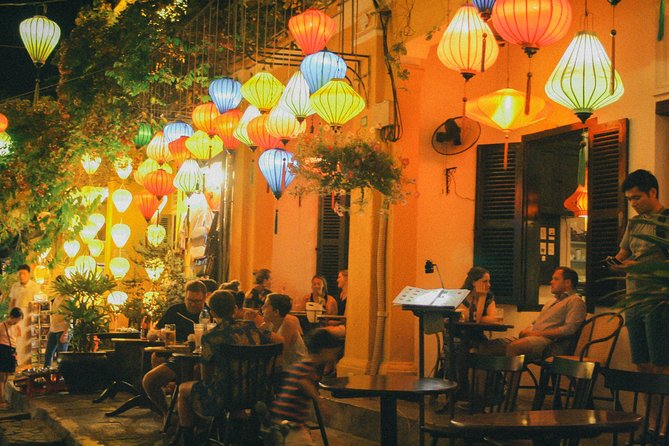
Hoi An is the reason you’re taking this tour in the first place. Once the light changes, the old streets turn into a living photo set—lanterns overhead, shop lights glowing, and the city feeling like it’s on a different clock.
Your route through Hoi An focuses on the town’s layered identity—Japanese, Chinese, and Vietnamese influences you can literally see in the architecture. You don’t just pass by buildings; you get a guide to connect the dots so the place feels less like a collection of pretty walls and more like a story.
Japanese Covered Bridge (17th-century symbolism)
The Japanese Covered Bridge is a signature landmark tied to the Japanese community’s presence in Hoi An. It also connects to the broader history of the Chinese quarters in the same trading-area culture. It’s one of those spots where your guide’s explanation can make the visuals click fast.
Cantonese Assembly Hall (Quang Triệu), built by immigrants
Next up is the Cantonese Assembly Hall, also referred to as Quang Triệu Assembly Hall. The tour describes it as an architectural marvel built in 1885 by Chinese immigrants from Guangdong (Canton). If you like old buildings, this is a great stop because the details are the point—ornament, structure, and the sense of organized community life behind the scenes.
Old House of Phung Hung
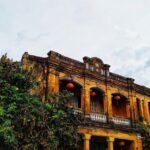
You’ll also visit the Old House of Phun Hung, a traditional home in the heart of town with history reaching back over two centuries. This kind of stop is valuable because it shifts you from “street view” tourism to “how people actually lived” context.
Free time: night market wandering
Later, you get time at the Hoi An night market—about 45 minutes. This is your chance to browse at your own pace and snack your way through the atmosphere. It’s also when you can test your bargaining skills, follow your curiosity, and pick up small gifts that aren’t just mass-produced souvenirs.
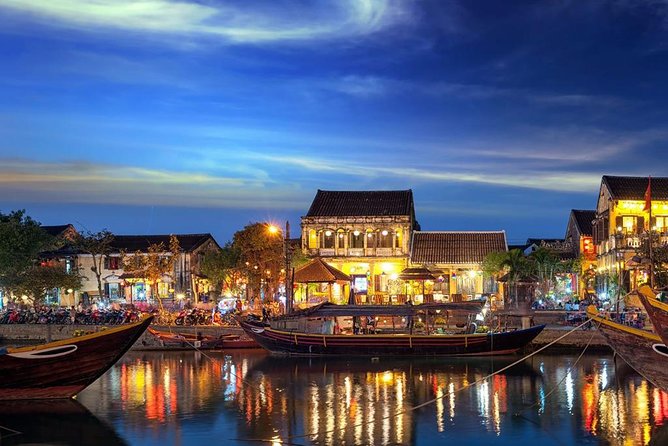
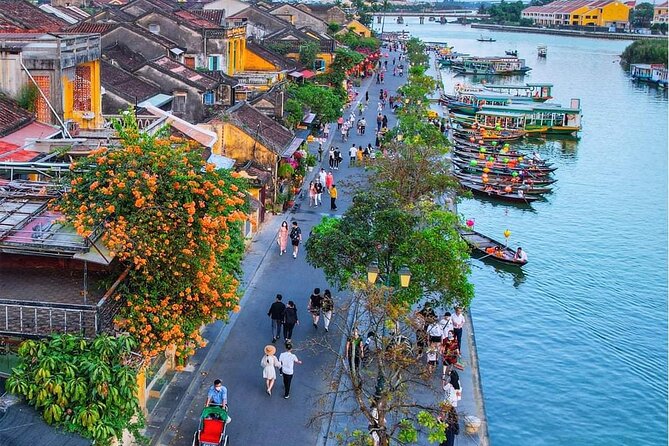
One more practical note: the tour includes time near the Hoai River, where you’ll see colorful boats and lanterns hanging along the streets. If you want to add a short river boat moment, it’s common for visitors to do a quick ride while they’re there—just keep in mind it’s an add-on, not part of the core guided heritage route.
Dinner in Hoi An: included Vietnamese food, with a smart expectation
The tour includes a typical Vietnamese dinner (with vegetarian food available). This is a real convenience if you’re doing Marble Mountains + Hoi An in one shot, because you’re not forced to hunt for a restaurant while your feet are already tired.
Now for the balanced take: dinner quality seems to be the most variable part of the overall experience. Most diners treat it as a solid included meal, but a couple people have said it wasn’t their favorite compared with how well they ate elsewhere in Vietnam.
So how should you handle it?
- If you love trying local food, go with an open mind and enjoy that it’s taken care of.
- If you’re a picky eater, keep your “final meal” plan flexible and consider grabbing a stronger dish later, after you finish the night market.
The guide makes it click: what you can realistically expect
This tour runs with an English-speaking local guide and uses a small-group format so you can actually hear the explanation at each stop. Many of the guides named in customer experiences include Coco, Châu, Duyen (Banana), and Oanh—and the common thread is personality plus clear storytelling.
You’ll also notice guides taking care of practical details like keeping the group together and managing timing so you don’t get stranded at the wrong entrance or end up missing key sights.
If you’re sensitive to explanations
One word of caution: English clarity can depend on the individual guide. If you care a lot about every detail, don’t be shy about asking for repetition, asking where to look, or requesting a slower explanation at the sites.
Price and value: what $33 really buys you
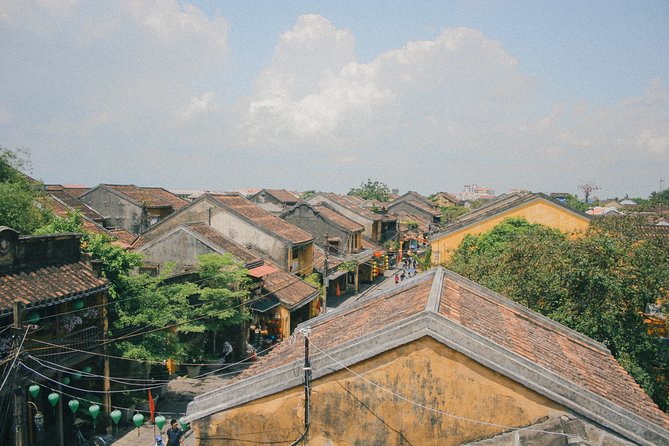
At $33 per person, the big value isn’t just that it’s affordable. It’s that most of the common costs are rolled in:
- round-trip transfers from Da Nang city center
- entrance fees for Marble Mountains and Hoi An Ancient Town
- an included Vietnamese dinner (vegetarian option available)
- bottled water
- English-speaking local guide
- air-conditioned transport
For me, the best way to judge the value is to compare it with doing this on your own without a guide. Marble Mountains + Hoi An aren’t “close-by quick stops.” You’ll spend money on transport, you’ll pay entry fees, and you’ll lose time figuring out routes and what matters at each place.
This tour is designed to reduce that decision fatigue. If you want a guided framework and don’t want to plan every step, this pricing can be a very fair deal.
Practical tips: shoes, photos, and how to avoid frustration
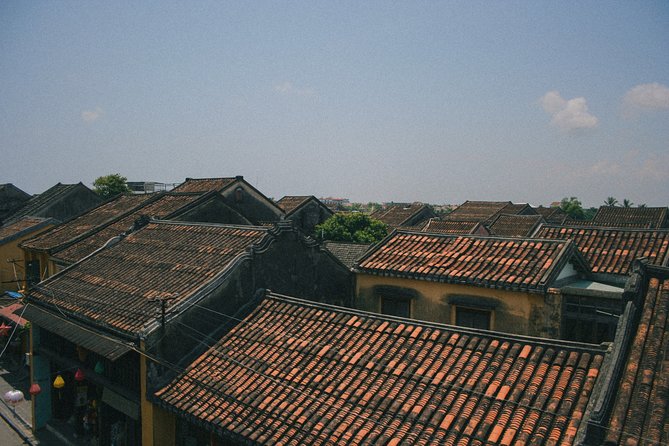
Here’s the stuff that keeps your evening smooth.
Wear shoes you trust. Marble Mountains can be step-heavy, and wet conditions can make surfaces feel less safe than you’d expect. If your footwear grips well, you’ll spend less energy worrying and more energy looking.
Bring a light layer. Late afternoon to night means temperatures can shift, and you’ll be moving between cave interiors, outdoor steps, and lantern-lit streets.
Give yourself permission to skip the rush mindset. This tour is structured, but the best photos usually come when you pause for a few seconds. If your guide is moving the group quickly, ask to take a moment at the key landmarks, especially for Japanese Covered Bridge and the assembly hall facades.
Who this tour suits best (and who should pick something else)
This is a great fit if you:
- have limited time in Da Nang and want Marble Mountains + Hoi An in one evening
- like heritage architecture and want the cultural context explained
- prefer a small group over larger bus chaos
- want a guided plan that handles entry fees and dinner
It may be less ideal if you:
- want a long, slow explore with lots of free wandering time at Marble Mountains or Hoi An
- struggle with stairs and uneven terrain
- expect dinner to be a standout “destination restaurant” experience
Should you book the Marble Mountains and Hoi An sunset-style tour?
If you want the highlights without planning headaches, I’d say yes. This tour’s biggest strength is that it combines two top Da Nang-area experiences—Marble Mountains and Hoi An Ancient Town—with enough structure to help you understand what you’re seeing and enough small-group time to still feel human.
Book it if your priority is efficient sightseeing with lantern-night atmosphere and cultural context. Skip it (or look for a more flexible option) if you hate stair climbs or if you need long stretches of free time to roam at your own pace.
FAQ
How long is the tour?
The tour duration is listed as approximately 6 hours.
What is the price per person?
The price is listed at $33.00 per person.
Does the tour include hotel pickup in Da Nang?
Yes. Two-way hotel transfers are included for pickups from Da Nang city center.
Is dinner included?
Yes. A Vietnamese local dinner is included, and there is a vegetarian option available.
What does the tour include for entrance fees?
Entrance fees are included for Marble Mountains and Hoi An Ancient Town.
How big is the group?
The tour is limited to a maximum of 22 travelers (and is described as a small group, up to about 25).
Do I need to print tickets?
You’ll receive a mobile ticket, and confirmation is received at booking time.
What if the weather is poor?
This experience requires good weather. If it’s canceled due to poor weather, you’ll be offered a different date or a full refund.
Where is the meeting point?
The meeting point is Dacotours – Da Nang Tours, 195 Đặng Vũ Hỷ, An Hải Đông, Sơn Trà, Đà Nẵng 550000, Vietnam.
Is there an elevator option at Marble Mountains?
An elevator fee is listed as optional. You can choose whether to use it.