REVIEW · DA NANG
5-Day Private Tour of Top Heritage Sites: Hue, Hoi An & More
Book on Viator →Operated by Asia Pacific Travel Vietnam · Bookable on Viator
Lantern streets and royal tombs, in five days. This private heritage loop strings together Da Nang, Hue, and Hoi An with smart stops like Hai Van Pass viewpoints and Thien Mu Pagoda, plus real time on the water at Cam Thanh.
I especially like the private guide-and-driver setup. It keeps the days smooth between cities, and you get someone who can shape the visits to what you care about. I also like the way the itinerary balances big-ticket sites (Hue’s Imperial Citadel and tombs) with hands-on local activity in Hoi An.
One thing to consider: the schedule is active. Between sightseeing blocks and travel days, you’ll likely feel the pace even though you’re not rushing every minute.
In This Review
- Key highlights on this Hue, Hoi An, and Da Nang heritage route
- Da Nang arrival day: airport pickup and a night to get your bearings
- Day 2 to Hue via Hai Van Pass: Thien Mu Pagoda and the Imperial Citadel
- Thien Mu Pagoda: a calm start in Hue
- The Imperial Citadel and the Nguyen story
- A real-world advantage: strong guiding helps you read the sites
- Day 3: Khai Dinh Tomb, craft villages, and the drive to Hoi An with Marble Mountains
- Khai Dinh Tomb: decorative mausoleum energy
- Handicraft villages: hats, bronze, incense
- En route stops: Linh Ung Pagoda and the Son Tra Peninsula area
- Marble Mountains: five hills, five elements
- Day 4 in Hoi An: Cam Thanh water-coconut village and bamboo basket boat racing
- Old-school Hoi An energy: walking around like a local
- Cam Thanh coconut village: boat rides and practical fishing fun
- Day 5: Free time in Hoi An for lantern nights, tailoring, and good food
- Price and value: what $626 buys you and where extras may show up
- Who should book this private Hue and Hoi An heritage tour
- Should you book this 5-day private heritage route?
- FAQ
- How long is the tour?
- Where does the tour start?
- Is this a private tour?
- What meals are included?
- Are entrance tickets included?
- Is there a vegetarian meal option?
- What happens if weather or tides affect the schedule?
Key highlights on this Hue, Hoi An, and Da Nang heritage route
- Hai Van Pass viewpoint time on the way to Hue with photo stops near Lang Co
- Thien Mu Pagoda and the Nguyen imperial sites in Hue
- Khai Dinh Tomb plus craft villages for a break from monuments
- Marble Mountains tied to the five elements (Kim, Thuy, Moc, Hoa, Tho)
- Cam Thanh water-coconut village by basket boat including a bamboo basket boat race
- Private timing with flexible free time to explore Hoi An on your own
Da Nang arrival day: airport pickup and a night to get your bearings
Day 1 is simple and useful: you get picked up from Da Nang Airport and taken to your hotel in Da Nang City. After check-in, you have free time to explore the city at night.
This matters more than it sounds. Central Vietnam can feel intense once you start moving the next day. Giving you an easy arrival window helps you avoid the classic travel problem: arriving tired, then trying to learn traffic, crossings, and where food is without any plan.
If you’re the kind of traveler who likes a first-night reset—coffee, a casual dinner, a quick look at the river or the main streets—this layout fits you well.
You can also read our reviews of more private tours in Da Nang



Day 2 to Hue via Hai Van Pass: Thien Mu Pagoda and the Imperial Citadel

Hue starts with a scenic drive. Your guide and driver meet you at your hotel, then you head toward Hue with photo stops en route, including Lang Co Beach and viewpoints from Hai Van Pass (the Sea and Cloud pass). If you’re into photos, this is the kind of stop that makes the whole trip feel more than a list of monuments.
When you reach Hue, the day focuses on the Nguyen Dynasty’s legacy.
Thien Mu Pagoda: a calm start in Hue
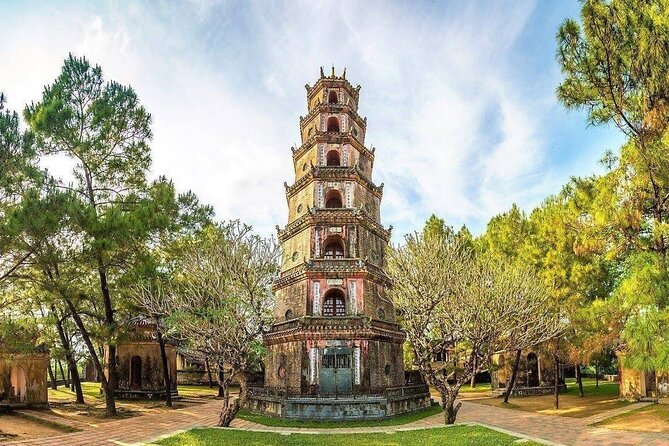
You visit Thien Mu Pagoda, described as the oldest pagoda in Hue. Even if you’re not a temple superfan, it’s a good anchor point because it sets a tone for Hue: spiritual, old, and grounded in daily life rather than just palace walls.
Wear something comfortable here. Pagoda areas often mean steps, shaded paths, and time spent looking uphill and across courtyards.
The Imperial Citadel and the Nguyen story
Next is the Imperial Citadel, the home of Vietnam’s last royal dynasty (the Nguyen Dynasty, 1802–1945). This is where you’ll understand the scale of what the emperors controlled and why Hue became such an important seat of power.
Two visits add extra texture:
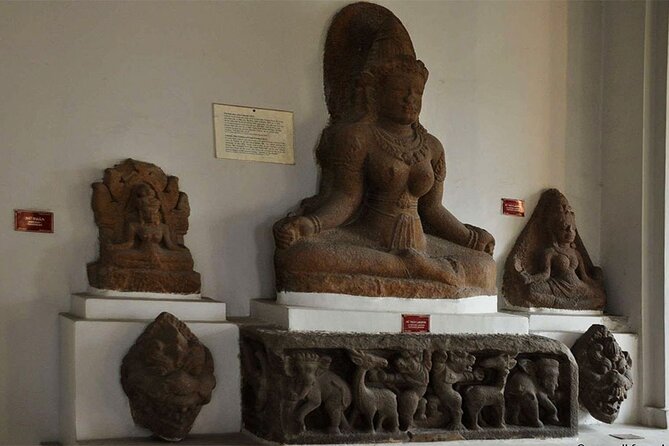
- Hue Royal Antiques Museum, with ornaments from the Nguyen dynasty and beyond
- Tuduc Tomb, the royal tomb of the fourth emperor of the Nguyen dynasty
This pairing works because it connects politics and power (the citadel) with personal artifacts and royal objects (the antiques museum), then finishes with the tomb setting. It gives you multiple angles on the same era instead of checking off buildings only.
After about 4 hours of included admission time, you continue to your Hue hotel for the night. Day 2 is big, but it’s structured so you’re not thrown into chaos.
A real-world advantage: strong guiding helps you read the sites
A recurring theme in guides for this route is going beyond walking you from gate to gate. Names like Ten and Lee come up in feedback for being friendly, helpful, and good at steering you toward the right spots for photos. For places like the Imperial Citadel, that small guidance difference can save you from spending half your time just trying to figure out what you’re looking at.
You can also read our reviews of more historical tours in Da Nang





Day 3: Khai Dinh Tomb, craft villages, and the drive to Hoi An with Marble Mountains
After breakfast, Day 3 continues the Nguyen theme before switching gears toward Hoi An.
Khai Dinh Tomb: decorative mausoleum energy
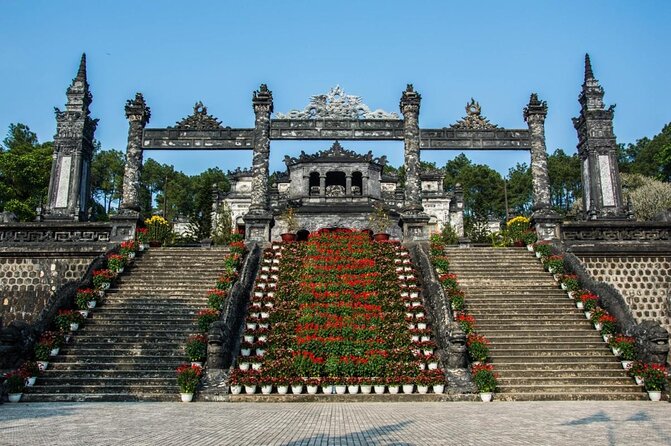
You visit the mausoleums of Nguyen’s kings, starting with Khai Dinh tomb. Mausoleums can feel repetitive if they’re all the same, but Khai Dinh tends to stand apart because it’s built as a major, detailed royal resting place—more than a simple structure.
Take your time here. Tombs like this reward slower looking: carvings, materials, and layout choices often tell you how the court wanted the site to be seen.
Handicraft villages: hats, bronze, incense
After the tomb, the itinerary shifts to handicraft villages like hat-making, bronze-casting, and incense-making. This isn’t filler. It changes the pace from monumental stone to everyday craft skills.
If you like souvenirs that actually reflect local work, this is where you’ll get that chance—without needing to guess where the best workshop streets are.
En route stops: Linh Ung Pagoda and the Son Tra Peninsula area
On the way to Hoi An, there’s a stop at Linh Ung Pagoda in the Son Tra Peninsula area, plus Marble Mountains.
Linh Ung Pagoda gives you a coastal-and-spiritual contrast before you reach Hoi An’s older trading-port atmosphere.
Marble Mountains: five hills, five elements
You then visit Marble Mountains, a cluster of five marble and limestone hills named after the five elements: Kim, Thuy, Moc, Hoa, Tho.
This is one of those sites where a guided or well-explained visit helps. Without context, it’s easy to see stairs and caves and move on too fast. With the context (elements + why the mountains are important), the place becomes more coherent.
You’ll have about 1 hour of included admission time here, so plan to focus on the parts you care about most—views, caves, or the temple areas—rather than trying to cover everything.
You’ll arrive in Hoi An and check in for the night.
Day 4 in Hoi An: Cam Thanh water-coconut village and bamboo basket boat racing
Day 4 is where this trip stops being mostly museums and starts being movement and hands-on culture.
Hoi An itself is your morning setting, then Cam Thanh takes over for the rest of the day.
Old-school Hoi An energy: walking around like a local
After breakfast, you take a walking excursion to Hoi An, once known as Faifo to early Western traders. This matters because Hoi An’s identity isn’t only about lanterns and Instagram alleys. It was a trading center, and walking through it helps you feel how the town grew around that role.
Keep your camera ready, but also bring patience. Hoi An rewards slow wandering more than speed-walking.
Cam Thanh coconut village: boat rides and practical fishing fun
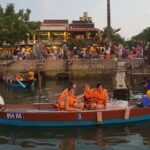
You go to Cam Thanh water coconut village (Bay Mau coconut village), about 5 km southeast of Hoi An Old Town. The day centers on time in the water-coconut palm forest area, where you’ll board a boat cruise along the river and then transfer to a bamboo basket boat.
On the bamboo boat portion, you’ll:
- learn how to row the basket boat
- take part in a bamboo basket boat race
- try fishing-style activities with local fishermen, including throwing nets and catching fish, mud-crabs, and coconut mussels (described as an indigenous species found here)
- make simple items from coconut leaves
There’s also time for coconut treats—ripe coconut is part of the experience, and the whole thing is designed to be participatory rather than just watch-and-leave.
Two notes if you’re planning your day:
- Bring shoes you don’t mind getting wet or scuffed.
- Plan your comfort level with sun and humidity. This is an outdoor-heavy day.
The itinerary lists included time for Hoi An activities and then additional free-standing activities at Cam Thanh. Either way, the focus is clear: you’re not just passing through Hoi An—you’re experiencing the nearby countryside rhythms.
Overnight is back at your Hoi An hotel.
Day 5: Free time in Hoi An for lantern nights, tailoring, and good food
Day 5 is lighter by design: you have free time to explore Hoi An. No rigid schedule is listed for this final day.
That freedom is a gift on a trip like this. After temples, citadels, and tombs, your brain will want choice. Use it for:
- wandering the old streets at your own speed
- eating in a way that matches your cravings (Hoi An is known for local dishes like Cao Lau and Banh Mi)
- shopping for tailor-made clothing if that’s your thing
One helpful tip from experience-based feedback on this kind of Hoi An trip: if you can time your visit around the middle of the month, you’re more likely to see more lantern life in town. If you also hit a weekend, Hoi An’s evening vibe can feel extra lively.
Price and value: what $626 buys you and where extras may show up

This tour costs $626 per person for a private 5-day heritage route from Da Nang through Hue to Hoi An.
Here’s why the price can make sense for the right traveler:
- Private setup means you’re not sharing a long route with strangers, and you have dedicated guide and driver time across multiple days.
- Meals are partly covered: the itinerary includes 4 breakfasts and 3 lunches.
- Admission time is built into the schedule: Hue’s major sites and the next wave of tomb/mountain stops are marked as included (not every hour of every day is paid separately on your own).
- Some activities are low-cost on the entry side: Hoi An Old Town time and Cam Thanh village entries are listed as free admission.
Where you may spend extra (because it’s not listed as included):
- snacks, drinks, and personal shopping
- any additional attractions you choose beyond what’s scheduled
- travel insurance, since it’s not included
Also, remember that flights aren’t part of this price. You’re starting with airport pickup in Da Nang, so you’ll still need to plan your travel into Vietnam.
If you hate surprise costs, this tour is fairly clear because it tells you exactly where admissions and meals sit.
Who should book this private Hue and Hoi An heritage tour

Book this if:
- you want a guided route that connects Da Nang to Hue and Hoi An without having to plan every transfer
- you like a mix of imperial sites and real local activity (not just temples and photos)
- you value photo stops like Hai Van Pass and scenic pauses before the big sightseeing days
- you want private comfort, especially after long travel days
This also suits couples and small groups. The itinerary is built like one continuous story: Hue’s imperial world in Day 2 and Day 3, then Hoi An’s trading-town vibe and water-coconut life in Days 4 and 5.
If you’re traveling with kids, there’s a stated policy: one child under 5 can be free and share the parents’ room.
Should you book this 5-day private heritage route?
I’d book it if your ideal Vietnam trip has both sides: royal architecture in Hue and hands-on river life near Hoi An. The price is easier to justify because meals and several key admission blocks are included, and you’re getting a private guide-and-driver rhythm across multiple days.
Skip it (or at least go in with eyes open) if you prefer a slow travel style with lots of unplanned downtime. This itinerary is not built for that. It’s built for momentum—plus smart breaks where you can breathe, eat, and wander on your own.
If you’re choosing between doing Central Vietnam yourself versus taking a plan, this tour is strongest when you want to remove the logistics stress and spend your energy on what you came for: Hue’s Nguyen sites and Hoi An’s countryside-by-boat experience.
FAQ
How long is the tour?
The tour is 5 days (approx.).
Where does the tour start?
It starts in Da Nang. On Day 1, you’ll be picked up from Da Nang Airport and taken to your hotel in Da Nang City.
Is this a private tour?
Yes. It’s a private tour/activity, and only your group participates.
What meals are included?
Breakfast is included for 4 days, and lunch is included for 3 days.
Are entrance tickets included?
Admission tickets are included for key sightseeing stops that are listed with admission included (including major Hue sites, Khai Dinh Tomb area, and Marble Mountains). Hoi An and Cam Thanh village time is listed as free admission.
Is there a vegetarian meal option?
Yes. A vegetarian option is available if you advise at booking.
What happens if weather or tides affect the schedule?
The itinerary is subject to change due to bad weather, tide levels, and operating conditions.