REVIEW · DA NANG
My Son Sanctuary And Hoi An Heritage Full-day Tour
Book on Viator →Operated by Hoi An Express Travel · Bookable on Viator
My Son hits you fast. This full-day tour links UNESCO My Son Sanctuary with Hoi An Ancient Town in one smooth plan, without you needing a car or a map marathon. I love how early pickup and hotel drop-off keep logistics simple, and I also like the small group feel that helps the day stay calm.
The best part is the pairing: My Son gives you a rare look at Champa-era red brick sanctuaries, then Hoi An slows things down with old streets, historic houses, and landmark stops on foot. I especially appreciated how the day is built around guided explanations, and several guides have stood out in the feedback, including Emily, Bí, and Tom, for keeping people on track while making the story clearer.
One possible drawback to plan for: it’s still a long day with walking, and Hoi An can feel crowded at peak times, so you’ll want solid shoes and a little patience.
In This Review
- Key things to know before you go
- Why this Da Nang day trip makes sense
- The early start: pickup, transfer, and getting to My Son
- My Son Sanctuary: Champa temples in a valley setting
- Lunch in Hoi An: refuel before the walking portion
- Hoi An Ancient Town: assembly halls, old houses, and the Japanese Covered Bridge
- The silk and craft option: seeing how the city makes textiles
- Pace and group size: what a max-15 setup feels like
- Price value: is $95 fair for two UNESCO stops?
- Who should book this tour, and who should think twice
- Should you book this My Son and Hoi An full-day tour?
- FAQ
- What time does the tour start and when do you pick me up?
- How long is the full day, and how is the time split between My Son and Hoi An?
- What is included in the $95 price, and what is not?
- How big is the group, and does that affect the pace?
- Is there an option related to silk-making in Hoi An?
- What happens if the weather is bad or I need to cancel?
Key things to know before you go
- Hotel pickup and drop-off from Da Nang City Center means you skip the meeting-point scramble.
- 4 hours at My Son gives time for a proper guided look at the 7th–13th century sanctuary complex.
- 5 hours in Hoi An on foot covers major sights, from assembly halls to the Japanese Covered Bridge.
- Lunch is included at a local restaurant, plus bottled water along the way.
- Group size max 15 keeps the pace easier than big bus tours.
- Optional silk-making stop may be available in Hoi An if you want to go beyond the main sights.
Why this Da Nang day trip makes sense
If you’re basing yourself in Da Nang, this is one of the smarter ways to get both UNESCO sites without juggling transport. My Son and Hoi An are close on a map, but getting between them on your own can be a hassle—this tour removes that friction.
The structure also helps your brain. My Son is about religion, architecture, and ancient power in a valley setting, while Hoi An is about everyday life in a historic trading port. You’ll finish the day with two very different kinds of Vietnam history, without needing to pack and re-plan for a second day.
You can also read our reviews of more historical tours in Da Nang

The early start: pickup, transfer, and getting to My Son
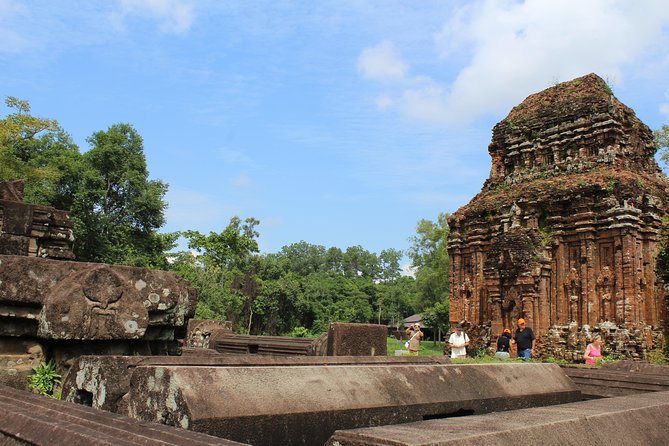
You start with pickup around 7:15am from your hotel, with the tour start noted as 7:00am. From there, it’s roughly 53 km (33 miles) to My Son in a comfortable vehicle, so you’re not spending your morning stressed about routes.
This first stretch matters more than it sounds. My Son is in a scenic valley area and you’ll be walking once you arrive, so being there earlier helps you avoid some of the worst heat and crowds. If you’re sensitive to morning commutes, the hotel pickup is a real win.
My Son Sanctuary: Champa temples in a valley setting
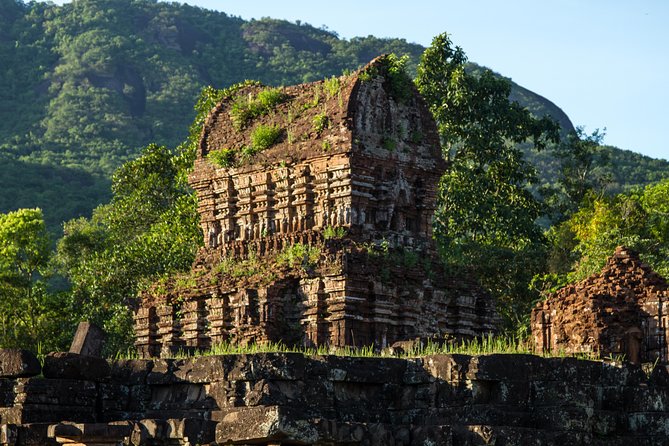
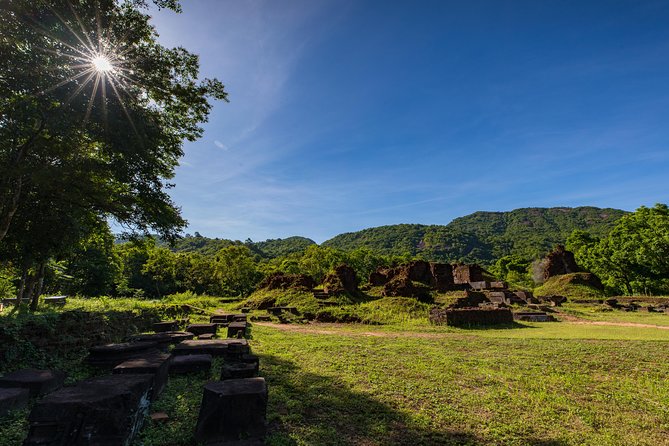
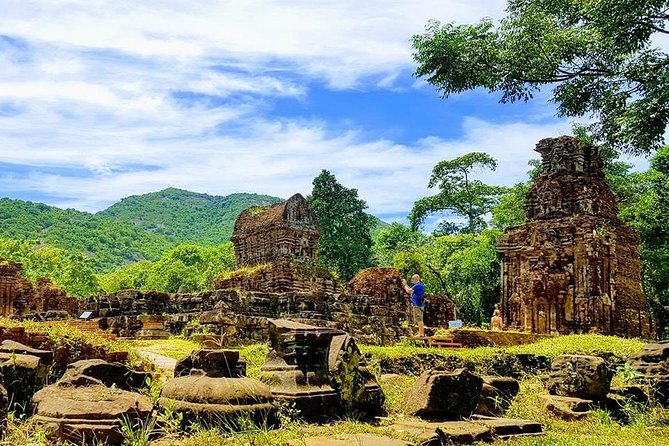
My Son Sanctuary was built between the 7th and 13th centuries, and it functioned as the capital and religious center for the former Champa Kingdom. The place is famous for its dozens of red brick towers and sanctuaries, laid out through the valley, so your photos will look like a story even before the guide starts explaining.
The tour includes a guided visit with admission included, and the My Son portion is listed as about 4 hours. That’s a good amount of time because My Son isn’t just one building; you’re moving between temple groups, viewpoints, and remnants where you can understand how the site worked.
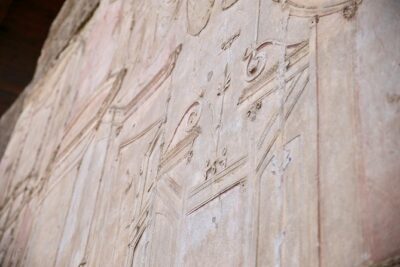
What I like here is the spiritual and cultural context. Many landmarks connect back to the Champa people’s Hindu beliefs, which adds meaning beyond the ruins looking old (they are, but it’s more than age). If your guide is strong, this becomes the most memorable stop of the day; guides like Bí, Vin, and Tran were repeatedly highlighted for explaining carvings and history clearly.
Practical note: there is walking at My Son. One review flagged it as manageable, so if you can handle uneven ground for a few hours, you should be fine.
Lunch in Hoi An: refuel before the walking portion
After My Son, you continue to Hoi An for lunch at a local restaurant. Lunch is included, along with bottled water, which keeps you from hunting for food while you’re on a tight schedule.
This pause is useful because the afternoon is mostly on foot. If you’re the kind of person who likes to sample a few things while sightseeing, you may not have time to turn lunch into a long food crawl—so make the meal count and save shopping for later.
Some diners also reported vegetarian meals were available and tasty, so if you eat differently, it’s worth checking with the operator when you book.
Hoi An Ancient Town: assembly halls, old houses, and the Japanese Covered Bridge
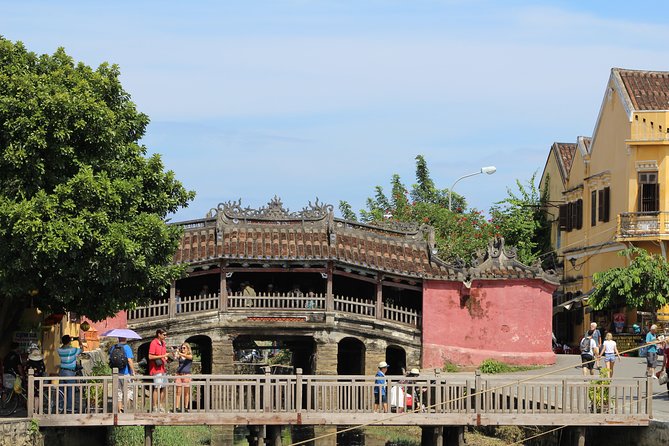
Hoi An is the second UNESCO stop on this day, and the afternoon portion is about 5 hours with a guided walking tour. The city was a thriving seaport from the 16th to 18th centuries, and walking lets you notice the details you’d miss if you stayed on one main road.
Your guide will take you past a lineup of classic Hoi An landmarks, including:
- Hoi An Museum
- Ancient Houses (traditional architecture)
- Fu Jian Assembly Hall (Chinese cultural influence)
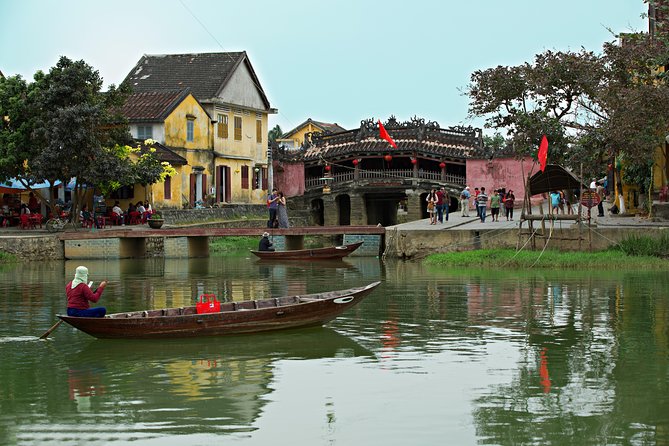
- An 18th-century Japanese-style covered bridge
A big reason this works is the way it mixes different layers of the city. The museum gives structure, the ancient houses show how families lived and built, the assembly halls reveal cultural connections, and the covered bridge ties it together as a visual icon.
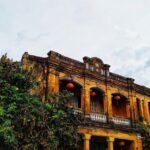
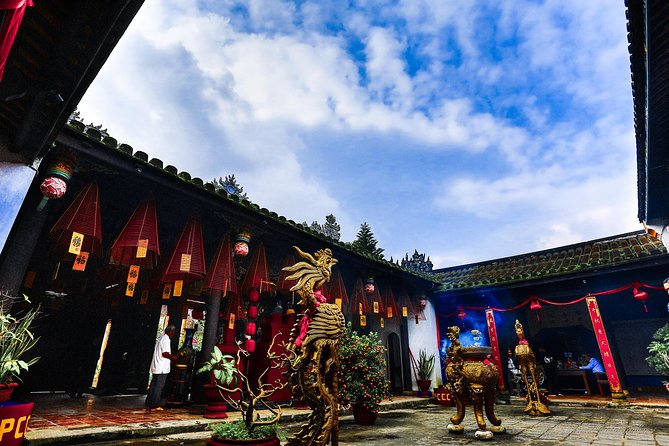
You’ll also have time to experience the feel of the place—historic streets, local market energy, and the sense that Hoi An still functions as a community, not just a photo set. One caution: Hoi An can get crowded, and the walking route means you’ll want to stay flexible if groups tighten up around popular sights.



The silk and craft option: seeing how the city makes textiles
Hoi An is also known as a hub for textile manufacture, and the day includes an option to see where locals raise silkworms and weave silk from the cocoons they produce. The idea is simple: you get a glimpse of how a major part of Hoi An’s economy turns into a real craft, not just a souvenir label.
This is the kind of add-on that’s worth it if you like process and hands-on context. If you’re more interested in pure sightseeing and photos, you can treat it as a short stop rather than a full extra activity.
Either way, this part of the tour helps explain why Hoi An looks the way it does in shops and workshops—textiles aren’t just a commodity here; they’re part of the city’s identity.
Pace and group size: what a max-15 setup feels like
This tour runs with a maximum of 15 travelers, and the whole concept leans into a small-group rhythm. That usually means less waiting, more back-and-forth, and a guide who can actually answer questions without repeating themselves for a crowd.
In the feedback, strong guides were a major theme—Emily, Tom, Huan, and Eric were called out for being friendly and for keeping people engaged and moving. That matters because your day is split between two very different environments: a temple complex with walking paths, then an old town with tight streets and frequent stops.
What to expect from the pace: it’s not rushed, but it also doesn’t “hover” in one place. The schedule is designed to give you time for the big highlights, then move you along so you don’t spend the afternoon stuck behind a bottleneck.
Price value: is $95 fair for two UNESCO stops?
At $95 per person, this day trip looks priced for convenience and included costs. You’re getting hotel pickup and drop-off, an English speaking guide (other languages may cost extra on request), entrance fees, and lunch, plus bottled water and travel insurance.
If you tried to stitch this together on your own, the expensive part wouldn’t just be tickets. You’d be paying for transport and spending time figuring out how to connect My Son and Hoi An without losing hours. Here, that time gets folded into a planned route.
The main “extra” costs you’re likely to face are personal expenses like shopping, phone use, and beverages, and tips. If you keep your spending tight and let the included sights do the heavy lifting, the $95 feels like a solid deal for a one-day UNESCO hit.
Who should book this tour, and who should think twice
This works best if you want a focused day: My Son plus Hoi An, guided, with transportation handled. It’s also a good match if you don’t want to rely on your own driving skills or if you’re short on time and want the big UNESCO stops without building a mini itinerary.
You might think twice if you hate walking or you need a slow, open-ended schedule. Hoi An includes several stops on foot and My Son involves walking around temple areas, so comfort matters. Also, if you’re very sensitive to crowded public areas, Hoi An can feel busy.
Should you book this My Son and Hoi An full-day tour?
Yes—if you want a well-organized UNESCO day that starts with convenient pickup and ends with you back at your hotel. The combo of My Son’s Champa-era sanctuaries and Hoi An’s market-and-heritage streets is one of the best “two-worlds” pairings in Central Vietnam.
Before booking, check your own priorities. If your main goal is seeing the big sights with solid explanations and minimal logistics stress, this is a strong pick. If you want total freedom, lots of spare time, or you prefer deep slow exploration with no set route, you may prefer a more flexible half-day plan.
FAQ
What time does the tour start and when do you pick me up?
Pickup starts around 7:15am from your hotel in Da Nang City Center, with the tour start time listed as 7:00am.
How long is the full day, and how is the time split between My Son and Hoi An?
The tour runs about 10 hours total. It includes about 4 hours at My Son Sanctuary and about 5 hours in Hoi An Ancient Town, with lunch between the two.
What is included in the $95 price, and what is not?
Included: bottled drinking water, an English speaking guide (other languages by request with a surcharge), entrance fees, lunch, transfer and transportation as per the itinerary, travel insurance, and hotel pickup and drop-off in Da Nang City Center. Not included: personal expenses like shopping, phone use, and beverages, plus tips and gratuities.
How big is the group, and does that affect the pace?
The group is capped at 15 travelers. The experience is described as small group with a relaxed pace, which typically helps you move smoothly between stops and spend adequate time at each place.
Is there an option related to silk-making in Hoi An?
Yes. The tour mentions an option to see where residents tend silkworms and weave silk fabric from the cocoons they produce.
What happens if the weather is bad or I need to cancel?
The experience requires good weather. If it’s canceled due to poor weather, you’ll be offered a different date or a full refund. You can cancel for a full refund up to 24 hours before the experience’s start time.