REVIEW · MELBOURNE
Melbourne: Aboriginal Heritage Walking Tour
Book on GetYourGuide →Operated by Koorie Heritage Trust Inc · Bookable on GetYourGuide
A short walk that tells a long story. This Melbourne Aboriginal heritage tour takes you from Federation Square down to the Birrarung Wilam (River Camp) Aboriginal art installations, then into the Koorie Heritage Trust for hands-on learning. I like that you don’t just hear facts—you get to understand meaning tied to place, and you can also engage with Aboriginal tools, shields, and possum-skin cloaks as part of the experience.
You’ll also spend time learning about Birrarung Marr (meaning Beside the river of mists) and how the Kulin Nation connects to this river area, plus what Birrarung Wilam represents as an important gathering place. One possible drawback: it’s only 1 hour. If you’re expecting a long, mileage-style walking tour, the route and time inside the trust may feel limited, and you should confirm you’re actually getting the Koorie Heritage Trust entry time you paid for.
In This Review
- What You’re Really Buying: Aboriginal place stories plus hands-on artifacts
- Start at Federation Square: quick orientation, easy meeting point
- Birrarung Wilam Aboriginal art installations: seeing the river’s meaning in public art
- Birrarung Marr and the Kulin Nation: how the guide ties meaning to geography
- The Koorie Heritage Trust stop: hands-on tools, shields, and possum-skin cloaks
- How much walking is actually in 1 hour?
- Price and value: $28 for a small group with guided entry
- Who this tour suits best (and who might want a different option)
- Tips to get the most from the guide and the clock
- Should you book the Melbourne Aboriginal Heritage Walking Tour?
- FAQ
- Where does the tour start?
- When does the tour run?
- How long is the tour?
- How big is the group?
- What language is the tour guide?
- What should I bring?
- What is included?
- Is it suitable for children or older visitors?
What You’re Really Buying: Aboriginal place stories plus hands-on artifacts
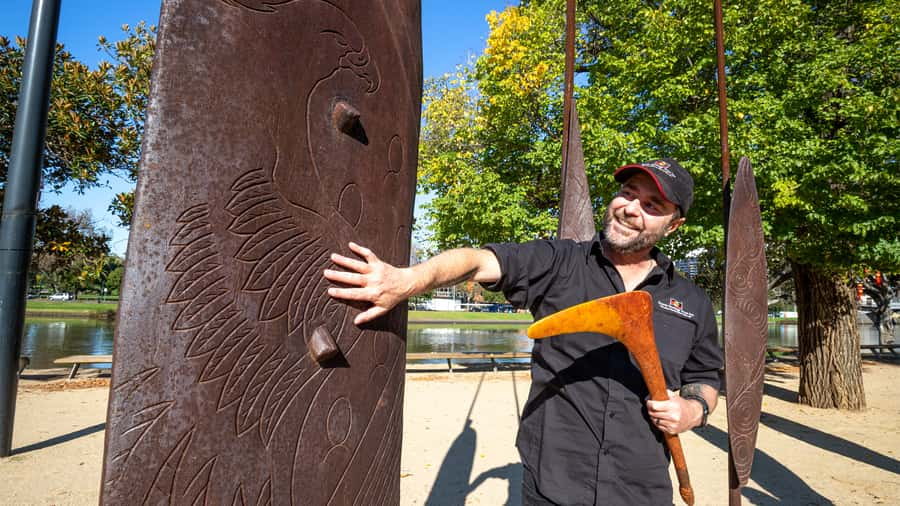
This is a guided, English-language walk-and-visit built around three ideas: Birrarung Wilam, Kulin Nation connections, and the cultural meaning of objects. It’s also designed for a small group (up to 10), which matters more than you’d think. In a group this size, you can actually ask questions while you’re moving between points.
The heart of the experience is the Birrarung Wilam walk. Birrarung Marr is tied to the river’s older name and stories, and Birrarung Wilam is presented as a sacred gathering place and meeting point. When guides talk about the art installations and then connect that to living knowledge and community, the “wow” isn’t just visual—it’s interpretive.
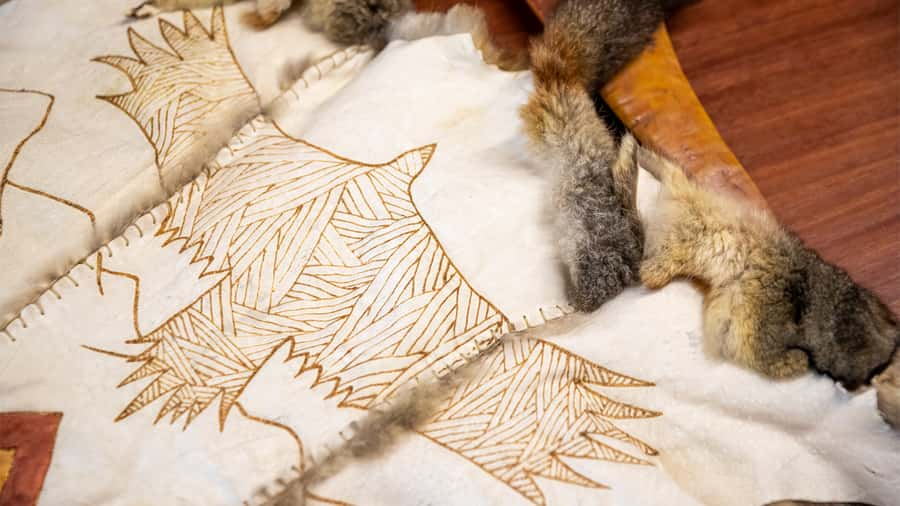
Then you shift from outdoors to the Koorie Heritage Trust for a practical, hands-on section. The tour includes tools and artifacts, including shields and possum-skin cloaks. Even if you’ve seen some Indigenous art before, handling culturally significant objects as part of a guided program changes how you understand them. It’s not about collecting facts; it’s about learning how knowledge is carried.
Start at Federation Square: quick orientation, easy meeting point
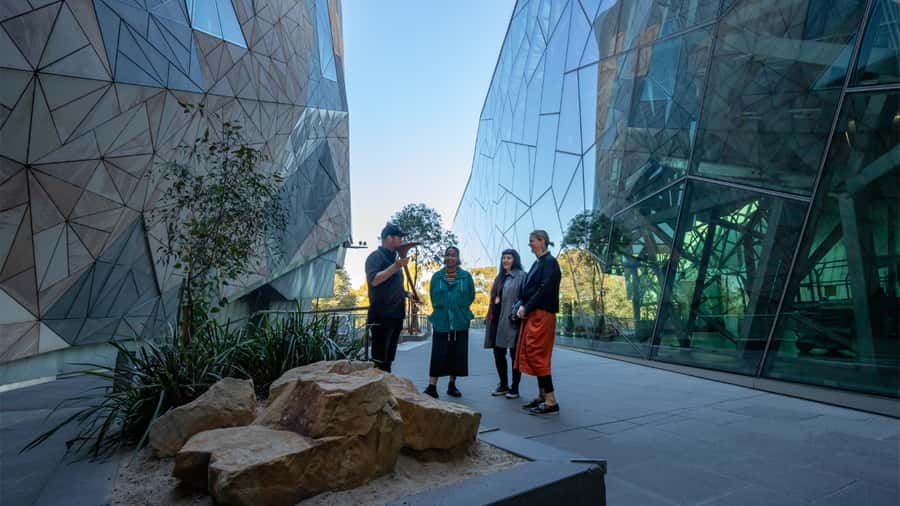
The tour begins at 1:00 PM daily at the Koorie Heritage Trust reception, Level 1 of The Birrarung Building, at Federation Square. If you’ve never been to Federation Square, it’s a good starting spot because it’s central and easy to find, and you’ll already be in the area where the walk begins.
Plan to arrive a few minutes early so you can settle in before you start walking. The tour is only 1 hour total, so there’s not much buffer. A practical tip: bring water and comfortable shoes, and expect you’ll be walking on city paths rather than through a park trail.
You can also read our reviews of more walking tours in Melbourne
Birrarung Wilam Aboriginal art installations: seeing the river’s meaning in public art
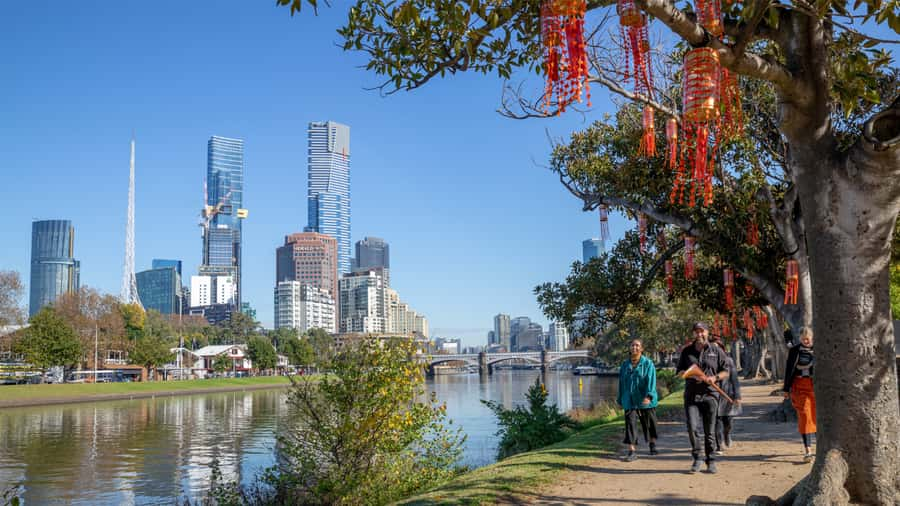
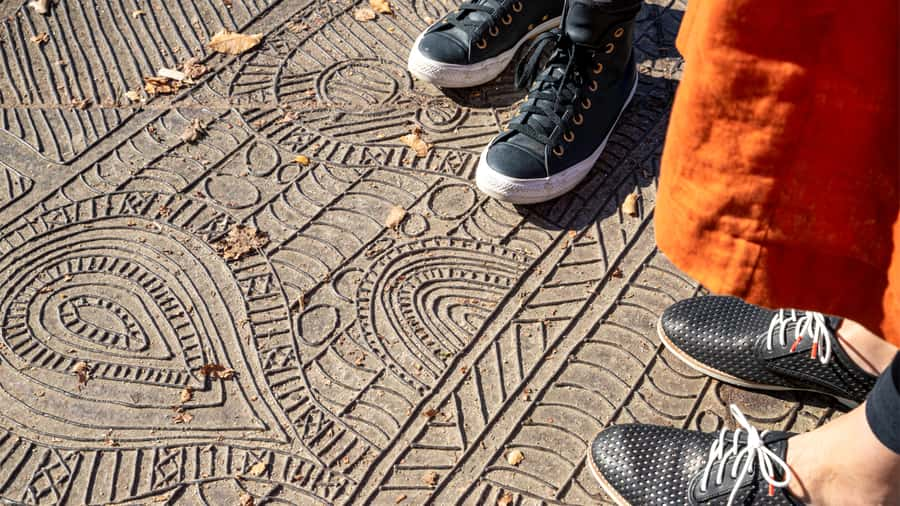
The main outdoor segment is the walk from Federation Square down to the Birrarung Wilam Aboriginal art installations. This is the part that tends to feel most “Melbourne” because it mixes an everyday river setting with cultural storytelling in artwork form.
What I like about this stop is the way it anchors the tour to place. Instead of treating Aboriginal heritage as a standalone lecture topic, the tour connects the story to the river area and to what Birrarung Wilam represents. You’re learning why the river camp matters, not just being shown images.
Because the tour is short, your time at the installations is your key moment. If you’re the type who takes photos constantly, try to still pause and listen first. The installations are your visual entry point, but the guide’s explanation is what turns it into a story you can carry.
Birrarung Marr and the Kulin Nation: how the guide ties meaning to geography
Along the way, you’ll hear about Birrarung Marr, which is explained as meaning Beside the river of mists. Names like this matter because they often point to lived experiences—how people read the land, water, weather, and seasonal rhythms.
You’ll also learn about the Kulin Nation and the ancient stories linked to the area where Melbourne now sits. On strong runs, the guide connects the local names and meanings in a way that makes questions feel welcome. On weaker runs, some people have felt the guide struggled to explain concepts clearly or didn’t set expectations at the start. That doesn’t change the value of the topic, but it does affect whether you leave feeling informed or just mildly puzzled.
My practical takeaway: if you’re going to ask questions, do it early. Ask something simple like how the guide understands the connection between Birrarung Marr and the present-day river area. In a small group, you’re more likely to get a thoughtful answer.
The Koorie Heritage Trust stop: hands-on tools, shields, and possum-skin cloaks
The final phase is inside the Koorie Heritage Trust, and it’s where the experience becomes more than a walk. Entry to the Koorie Heritage Trust is included, and the tour includes a hands-on, guided component featuring Aboriginal tools and artifacts such as shields and possum-skin cloaks.
This part is valuable for a few reasons:
- You’re not only learning what objects are called—you’re learning how they fit into traditional knowledge and daily life.
- You get to see how materials and design choices carry meaning and function.
- The guide can place these objects in a cultural context tied to land, survival skills, and community roles.
One caution based on real-world feedback: the Koorie Heritage Trust entry is supposed to be part of what you get. If you start the tour and you’re not led inside, speak up right away. Don’t wait until the end of the hour, because the schedule is tight.
If you want the most from this stop, slow down. Ask what you’re allowed to handle, and pay attention to how the guide explains use, care, and cultural significance. The point isn’t to rush through everything; it’s to understand what the objects represent.
How much walking is actually in 1 hour?
Here’s the honest expectation-setting: this is a guided walk plus a guided indoor activity, not a long-distance trek. The duration is 1 hour, and the meeting point and stops are close enough to fit everything in.
So if you love walking tours where you cover lots of ground and you finish with sore feet, this may feel like it doesn’t match that style. Some participants have described it as more of a cultural hands-on activity than a big walking route. That doesn’t make it bad—it just means your joy likely comes from the learning moments, not the miles.
Think of it like a focused cultural briefing that happens to include walking between points. You’ll see Birrarung Wilam art installations, then you’ll spend your final stretch engaging with tools and artifacts indoors.
Price and value: $28 for a small group with guided entry
At $28 per person for 1 hour, the price is trying to land in the practical mid-range for guided experiences in Melbourne. What makes it potentially good value is the combination of things that often cost extra when booked separately: a guided walk, access to the Birrarung Wilam installations as part of the route, and included entry to the Koorie Heritage Trust with a hands-on session.
What can reduce perceived value is mismatch of expectations. If you expect a long, content-heavy walking tour but what you get feels like a quick stop plus a workshop-style session, you might feel the price doesn’t match your idea of value. And if the guide’s communication style is unclear, you can end up spending the hour trying to piece together meaning rather than receiving it.
My “pay attention” approach: decide what you’re paying for. If your priority is Aboriginal heritage interpretation tied to place, plus a hands-on artifact segment, $28 can be fair for the time you’re given. If your priority is lots of walking distance and extended storytelling on the street, you might want to look for a longer-format tour instead.
Who this tour suits best (and who might want a different option)
This tour suits you if you:
- want a short, central experience in Melbourne
- like guided storytelling tied to specific locations (especially Birrarung Wilam)
- enjoy hands-on cultural learning, including tools and artifacts
- prefer small groups (up to 10) where you can ask questions
It might not suit you as well if:
- you’re hunting for a long walking route with lots of city sights
- you get frustrated when explanations are rushed or introductions are missing
- you strongly need lots of time inside the trust beyond the 1-hour window
If you’re bringing kids, the tour is listed as suitable for all ages. Just remember the session includes active listening and a hands-on element, so bring the same patience you’d bring to any short cultural program.
Tips to get the most from the guide and the clock
Because the tour runs for 1 hour and starts at 1:00 PM, your best move is to come ready to pay attention.
- Wear comfortable shoes. You’ll be walking on city surfaces.
- Bring water and sunscreen. Outdoors time plus time in the sun can add up fast.
- Arrive a few minutes early at Federation Square so you don’t burn your first minutes.
- If you care about the Koorie Heritage Trust portion, confirm early that you’ll be going inside and that you’ll have time for the hands-on component.
Also, if you’re the type who likes to learn by asking questions, do that. A small group format gives you more chances to get answers than a large bus-style group tour.
Should you book the Melbourne Aboriginal Heritage Walking Tour?
I’d book it if you want a compact, guided experience focused on Birrarung Wilam, the Kulin Nation connection, and a hands-on stop at the Koorie Heritage Trust. The structure makes it easy: you start at Federation Square, walk to the Birrarung Wilam art installations, then you finish with tools and artifacts like shields and possum-skin cloaks. At $28 and with a group capped at 10, it can be good value for the specific mix of walk + indoor cultural learning.
Skip it or reconsider if your main goal is a long walking circuit or if you expect a lot of time inside the Koorie Heritage Trust. In a 1-hour format, pacing matters, and you’ll feel it.
If you do book, go with the right mindset: listen closely on the river-side stops, then let the hands-on section do the heavy lifting for you.
FAQ
Where does the tour start?
The tour starts at the Koorie Heritage Trust, Level 1 The Birrarung Building, Federation Square. Go to reception.
When does the tour run?
It starts at 1:00 PM daily.
How long is the tour?
The duration is 1 hour.
How big is the group?
The group is limited to 10 participants.
What language is the tour guide?
The tour guide provides the experience in English.
What should I bring?
Bring comfortable shoes, sunscreen, and water.
What is included?
The tour includes a guided walking tour, cultural experience, visit to Birrarung Wilam Aboriginal art installations, a hands-on experience with Aboriginal tools and artifacts, and entry to the Koorie Heritage Trust.
Is it suitable for children or older visitors?
The tour is listed as suitable for all ages.