REVIEW · NEW YORK CITY
Wall Street Inside with a Trader Walking History Tour
Book on Viator →Operated by Vibe Tours · Bookable on Viator
Wall Street feels like a movie set of money. This 1-hour 15-minute walk turns iconic landmarks into a real-world story about trading, investing, and how shocks move markets. I love that it’s led by a working-inside-the-world perspective, not just a statue-and-sight facts stroll, and I like the pace—short enough for an afternoon, with plenty of time to keep exploring after.
You’ll also get a guide who can explain markets in plain language, with humor and energy that makes finance feel less like a locked room. The big consideration: it focuses on famous exteriors and monuments more than entering buildings, so if you’re hunting for inside access, you’ll want to set your expectations early.
In This Review
- Why this Wall Street trader walk feels different
- Price and value: what $32 buys you on Wall Street
- The route rhythm: from Conwell Coffee to Fosun Plaza
- Charging Bull: more than a bronze photo spot
- NYSE exterior: history of markets without pretending it’s open
- Fearless Girl: how a statue became a message
- Federal Hall: when politics and finance share walls
- Federal Reserve Bank area: monetary policy and gold reserves in plain terms
- Who this tour suits best (and who should think twice)
- The guide factor: why the explanation style matters
- Should you book this Wall Street Inside with a Trader walking history tour?
- FAQ
- What is the duration of the Wall Street Inside tour?
- How much does the tour cost?
- Where does the tour start and when?
- Where does the tour end?
- Is the tour offered in English?
- How big is the group?
- Does the tour include admission tickets?
- Are mobile tickets used?
- Is there free cancellation?
Why this Wall Street trader walk feels different
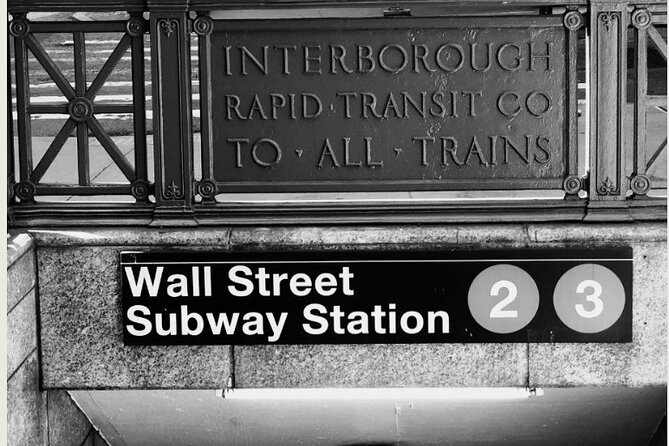
- Trader-led insight: you’re hearing how trading and investing connects to major events, not just dates and names.
- Small group size (max 15): it stays interactive, so questions don’t get lost.
- Free sights that you’ll recognize instantly: Charging Bull, Fearless Girl, NYSE exterior, Federal Hall, and the Federal Reserve area.
- Built for short schedules: about 1 hour 15 minutes, starting at 11:30 am.
- Clear, human explanations: the best moments are when the story clicks—especially around financial crises and landmark trades.
Price and value: what $32 buys you on Wall Street
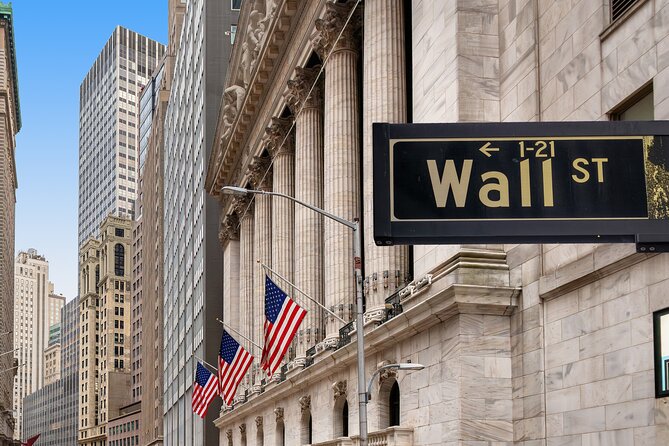
At $32 per person for roughly 1 hour 15 minutes, the value comes from the type of guide and the layout of the route. You’re not paying mainly for time in a van or for a long museum day. You’re paying for a focused walking tour that uses Wall Street landmarks as visual “chapters” in the story of markets.
Two practical perks matter here. First, the stops are admission-ticket-free, so you’re not stacking extra costs on top of the ticket price. Second, the tour’s structure is tight: it’s short, targeted, and designed to fit into a day in New York without swallowing your whole afternoon.
Also, this tour tends to fill in advance (about 13 days on average), so if your calendar is firm, it’s smart to reserve early. This is one of those tours where showing up last-minute can mean settling for a different day—or missing the time window that works best for your schedule.
You can also read our reviews of more tours and experiences in New York City.



The route rhythm: from Conwell Coffee to Fosun Plaza
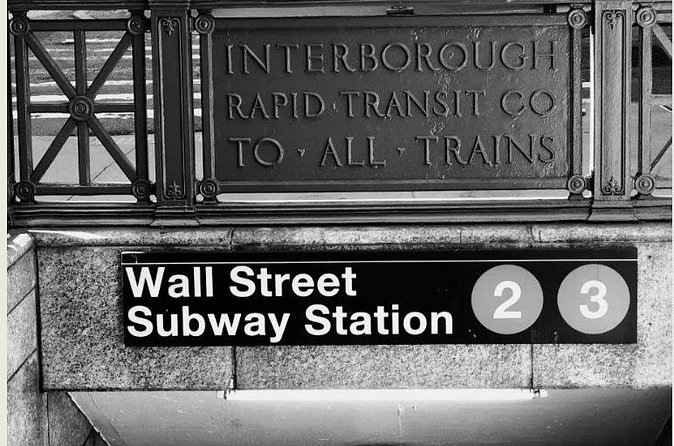
The walk starts at Conwell Coffee & Cocktail Hall at 6 Hanover St (start time 11:30 am). You end at the Federal Reserve Bank of New York area, near the corner of Liberty and Nassau—around Fosun Plaza on the backside of the building.
That “start near the action, end near the action” setup is useful. You can build it around other nearby plans: a Statue of Liberty day, a Financial District museum visit, or simply a wander through Lower Manhattan afterward. The group stays small, so you’re generally not doing that long, slow “everyone stop, everyone catch up” thing you get on big bus tours.
The route is also straightforward for visitors who want an overview without committing to a full-day itinerary. You’ll be outside, seeing key markers in sequence, which makes it easier to understand how Wall Street developed its public face—bull, girl, trading exchange, and then the institutions behind the curtain.
Charging Bull: more than a bronze photo spot

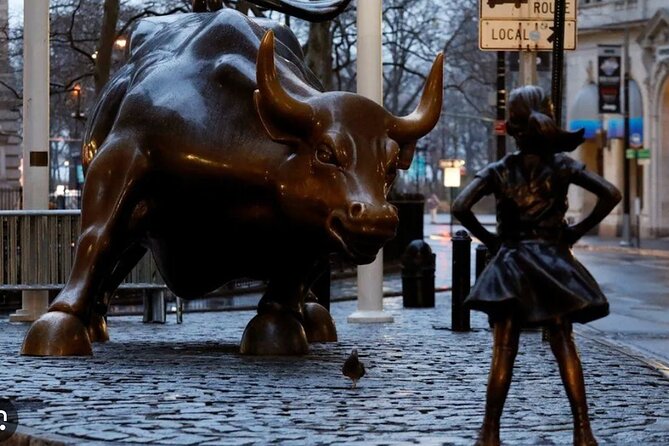
The first stop is the Charging Bull, the bronze icon that has become shorthand for Wall Street itself. This is a great opening because the statue is instantly recognizable, even if you don’t know anything about trading. The tour frames it with the story behind its creation and why it became a beloved piece of New York’s financial-district identity.
What I like about starting here is how it pulls you into the symbolism before the heavy topics show up. The bull isn’t just decoration—it’s a visual metaphor people use when they talk about risk, momentum, and the psychology of markets. It’s also a reminder that Wall Street isn’t only spreadsheets; it’s human behavior, branding, and crowd energy.
One thing to keep in mind: it’s a famous stop. That means you’ll want to be ready for typical landmark buzz and keep your timing flexible with photos. The tour’s visit is short, so use that time to watch what the crowd gravitates toward—then listen for what the guide says is behind the meaning.
NYSE exterior: history of markets without pretending it’s open
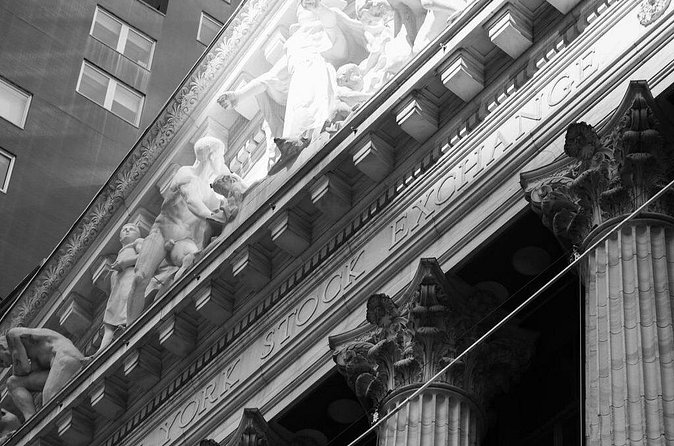
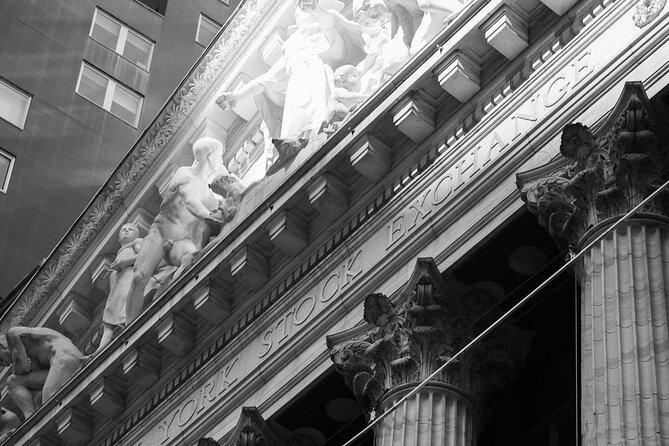
Next you’ll visit the exterior of the New York Stock Exchange (NYSE). This matters because the building has been closed to the public since 9/11, so the exterior view becomes part of the lesson. You get perspective on what the trading floor era felt like, before the world ran on digital screens.
This is where the “trader walking history” angle really earns its name. The tour doesn’t treat market history like trivia. It connects big moments—major trades, financial crises, and how the global economy gets shaped—to what people were trying to do in the market at the time.
You’ll also hear about trailblazing women who broke barriers in finance, and that’s a meaningful inclusion. Wall Street stories often get flattened into a single type of character. Bringing women’s breakthroughs into the narrative helps you see finance as something shaped by many people, not just a few stock-market stereotypes.
A practical consideration: this is an exterior stop, and the time on it is focused. So don’t treat it like a sightseeing detour. Treat it like an in-between chapter—one that sets up why the later stops carry so much meaning.
Fearless Girl: how a statue became a message
Then you’ll reach Fearless Girl, the bronze statue that became a global emblem of women’s strength and equality. The tour explains its story and why it took on power beyond its original placement across from Charging Bull.
This stop is especially useful if you’re the kind of traveler who likes understanding what you’re actually seeing in public space. Fearless Girl doesn’t just sit there. It communicates—often to people who are walking past fast, taking photos, and only half-paying attention. That’s exactly why it works as a teaching tool on this tour: it’s symbolism people react to in real time.
The guide also ties the message to the workplace and beyond, so you’re not left with a “cute photo, next stop” feeling. You’ll understand how modern finance can’t separate itself from culture, expectations, and power dynamics—because markets respond to society as much as society responds to markets.
Again, timing is short. Use your visit to get the full composition in your head—Charging Bull’s swagger versus Fearless Girl’s stance. Then listen for how the guide explains the significance of that contrast, and why it landed so strongly.
You can also read our reviews of more historical tours in New York City



Federal Hall: when politics and finance share walls
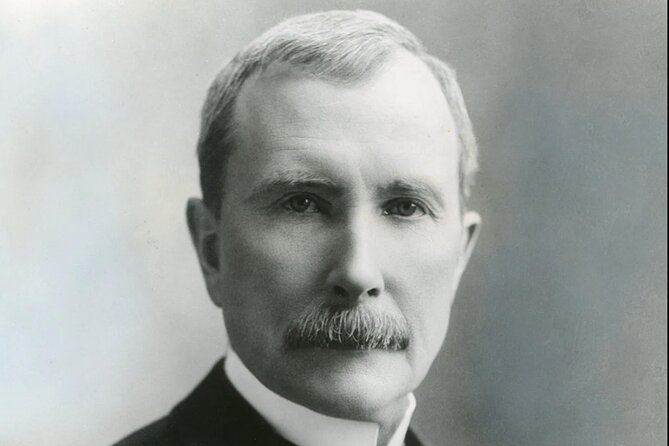
Stop four is Federal Hall, a historic landmark that connects colonial-era government to later financial lessons. The tour frames its past across multiple chapters: it was Colonial New York’s first seat of government, and it also ties into the story of the Great Financial Crisis era, including 2009.
This stop can feel like a curveball at first because you’re walking past a building and learning about the way power structures evolve. But it’s actually a smart inclusion. Markets don’t exist in a vacuum. Policy, governance, and public decisions shape what investors can do and what institutions can survive.
The benefit for you: even if you’re new to investing, Federal Hall gives you a bigger picture. You start to see that Wall Street’s drama has roots in legal frameworks, public trust, and government responses to economic stress.
A small drawback: because the time here is limited, you won’t get a deep historical museum experience. If you love architecture and long-form history, you may want to spend extra time in the area after the tour ends. But as a walking-story stop, it does its job—fast context that helps the rest of the tour make sense.
Federal Reserve Bank area: monetary policy and gold reserves in plain terms
The final stops bring you to the Federal Reserve Bank of New York area, including the area behind Fosun Plaza near the corner of Liberty and Nassau. This is a strong finale because it shifts from the public face of finance to the institution-level engine that helps guide the economy.
The tour highlights the Fed’s role in shaping the U.S. economy through monetary policy and its responsibility for overseeing the nation’s gold reserves. It also points you toward the behind-the-scenes operations that most people never get to picture.
Here’s what’s valuable for a regular visitor: it translates big economic power into understandable parts. You don’t need to be an investor to learn how monetary policy can influence markets, sentiment, and the cost of capital. And because the tour keeps the pacing walking-friendly, you get the concepts without getting buried in jargon.
Just note what you can and can’t expect. The tour focuses on what you can see and discuss around the building area; it’s not described as a full inside visit. So treat it as an explanatory stop—one last chance to connect the “why” behind Wall Street to the institution that helps steer the broader system.
Who this tour suits best (and who should think twice)

This tour is ideal if you want a Wall Street experience that’s more than photo ops. It’s also a good fit if you’re curious about investing and trading but don’t want to start by reading technical books.
You’ll get the most out of it if you:
- like learning stories tied to real places (not only abstract finance)
- enjoy walking tours with a short, clear timeline
- appreciate guides who can explain concepts in an easy way with humor and momentum
You might think twice if you’re expecting museum-style depth at every stop or inside access to the NYSE or government buildings. Based on the format, the tour is designed around exteriors and landmark interpretation, with free admission at each stop.
The guide factor: why the explanation style matters
One detail that really lifts this tour is how the guide teaches. The standout feedback points to a trader with insider knowledge who explains trading and investing in a fun, easy-to-understand way. In one example, the guide’s name was Dana, and the tour’s tone leaned into clarity and humor.
That teaching style matters on Wall Street because the subject can get intimidating fast. When someone can translate market behavior into everyday language, you leave with better mental hooks. You’ll remember why the stories matter: why certain moments shook markets, why people react the way they do, and how policy and institutions influence the signals everyone watches.
It’s also a small-group format, so you’re more likely to get answers to the kind of questions you actually care about, whether that’s about trading psychology or why certain landmarks became global symbols.
Should you book this Wall Street Inside with a Trader walking history tour?
If you want a high-impact Wall Street overview in only 1 hour 15 minutes, this is a smart booking. The route is packed with instantly recognizable landmarks, and the value comes from a trader-led explanation that turns history and finance into something you can hold onto.
I’d especially recommend it if you’re visiting for the first time and want to understand what you’re looking at. After this, the Financial District won’t feel like a list of famous statues. It’ll feel like a map of how markets show up in public life.
If your top priority is entering buildings, or you need long-form history at each location, you may prefer other formats. But for a short, guided, finance-meets-architecture walking tour with a strong teaching style, this one is worth your time.
FAQ
What is the duration of the Wall Street Inside tour?
The tour lasts about 1 hour 15 minutes.
How much does the tour cost?
The price is $32.00 per person.
Where does the tour start and when?
It starts at Conwell Coffee & Cocktail Hall, 6 Hanover St, New York, NY 10005 at 11:30 am.
Where does the tour end?
It ends at the Federal Reserve Bank of New York area, near Fosun Plaza on the backside of the Federal Reserve Bank of New York, near the corner of Liberty and Nassau.
Is the tour offered in English?
Yes, it is offered in English.
How big is the group?
The maximum group size is 15 travelers.
Does the tour include admission tickets?
Each listed stop shows admission ticket free.
Are mobile tickets used?
Yes, the tour uses a mobile ticket.
Is there free cancellation?
Yes. You can cancel up to 24 hours in advance for a full refund. If you cancel less than 24 hours before the start time, the amount paid is not refunded.