REVIEW · PARIS
Paris Jewish Heritage: Le Marais & Montmartre Guided Walking Tour
Book on Viator →Operated by Walks In Europe · Bookable on Viator
Jewish Paris tells two stories in one walk. You’ll stitch together community life in Le Marais and the art-driven chapter of Montmartre into one guided route with real landmarks and clear context. Expect a small-group pace and a route built around what you can see outside the big sites.
I like the way this tour balances street details with meaning: Rue des Rosiers isn’t treated like a postcard street, and the stories connect daily Jewish life to wider French and European events. I also like that you get an architectural surprise: the exterior of the Agoudas Hakehilos Synagogue is a rare Art Nouveau highlight you can spot without needing an indoor ticket.
One thing to consider: synagogue interiors and monument entries are not included, so it’s a look-from-the-street style tour. If you want full interior access, plan that separately.
In This Review
- Key highlights to look forward to
- Why this tour works: Jewish Paris, two neighborhoods, one story
- Meeting at L’Elephant du Nil and setting expectations
- Le Marais: narrow streets, community rebuilds, and Rue des Rosiers
- The exterior stop at Agoudas Hakehilos Synagogue (Hector Guimard)
- The Mémorial de la Shoah exterior stop: heavy context without slowing the whole day
- Rue des Rosiers: where the community’s pulse still shows
- The public transport transfer: a small reset between two worlds
- Montmartre: artists, migration, and the warning signs in Europe
- Sacré-Cœur steps and Square Louise-Michel: finishing with a view
- Price and value: is $102.12 worth it?
- Group dynamics and guide style: what to expect from the experience
- Practical tips so you don’t lose time or comfort
- Who should book this tour?
- Should you book Paris Jewish Heritage: Le Marais & Montmartre?
- FAQ
- How long is the Paris Jewish Heritage: Le Marais & Montmartre Guided Walking Tour?
- How much does it cost?
- What language is the tour offered in?
- Where do I meet, and where does the tour end?
- Is the public transport transfer between Le Marais and Montmartre included?
- Are synagogue interiors included?
- Are entry tickets to monuments or historical sites included?
- What’s the cancellation policy?
Key highlights to look forward to
- Le Marais + Montmartre in one outing: two neighborhoods, two eras, one guided thread
- Agoudas Hakehilos Synagogue exterior: Art Nouveau architecture by Hector Guimard
- Mémorial de la Shoah from the outside: remembrance context without rushing an entry
- Rue des Rosiers stop: classic Jewish commerce and community life in Paris
- Included public transport transfer: a short ride to reset before Montmartre
- Small group size: up to 9 guests, with a maximum of 12
Why this tour works: Jewish Paris, two neighborhoods, one story
This is the kind of walk that helps you stop seeing Paris as separate “attractions.” Le Marais and Montmartre feel different on the map, but the guide connects them like chapters in the same book: community institutions in one area, artistic experimentation and migration in the other.
I especially like how the tour leans on what you can actually stand in front of. You’re not just told things in the abstract. You’re walking streets shaped by Jewish presence, then looking at exterior landmarks that anchor the stories.
You can also read our reviews of more walking tours in Paris

Meeting at L’Elephant du Nil and setting expectations
You start at L’Elephant du Nil, 125 Rue Saint-Antoine (near public transit). The tour begins at 2:30 pm and ends at Square Louise-Michel in the 18th arrondissement.
Plan to arrive 5 to 10 minutes early. The tour can’t be joined once it starts, and it moves at a guided pace that’s meant for the whole group.
This format matters because it’s not a slow “wander whenever you want” stroll. It’s a guided route with short, planned transitions, including a public transport transfer.
Le Marais: narrow streets, community rebuilds, and Rue des Rosiers
The Le Marais portion is about Jewish Paris as a lived neighborhood—not just a historical footnote. You’ll walk through streets that once formed a medieval Jewish enclave and hear how the community rebuilt after wartime destruction.
This is where the tour earns its relevance. Even if you already know bits of French Jewish history, seeing the street layout and hearing how institutions clustered in this area helps the story land in your feet.
The exterior stop at Agoudas Hakehilos Synagogue (Hector Guimard)
One of the most interesting stops is the Agoudas Hakehilos Synagogue exterior. It’s a rare example of Art Nouveau synagogue architecture by Hector Guimard.
Why it’s worth your time: you get an architectural hook early, then the guide ties it to immigration waves from Eastern Europe in the late 1800s and early 1900s. That’s how the neighborhood’s institutions, schools, and culture took shape.
A key limitation: interior visits aren’t included. If you’re hoping to see the sanctuary space, you’ll need to plan that on a different day.
The Mémorial de la Shoah exterior stop: heavy context without slowing the whole day
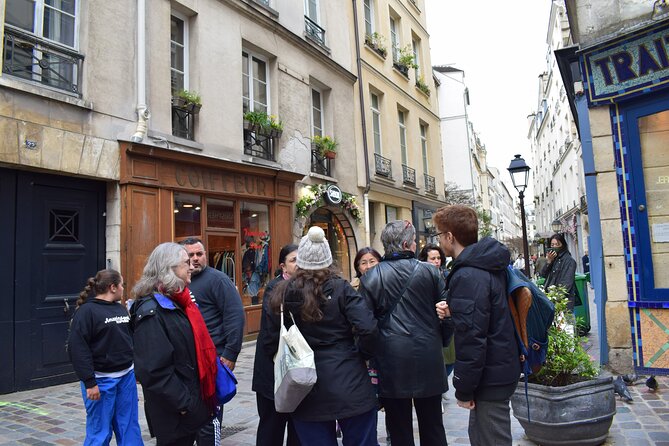
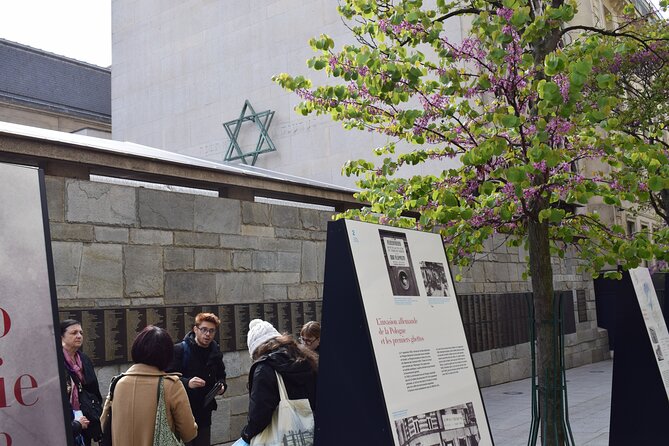
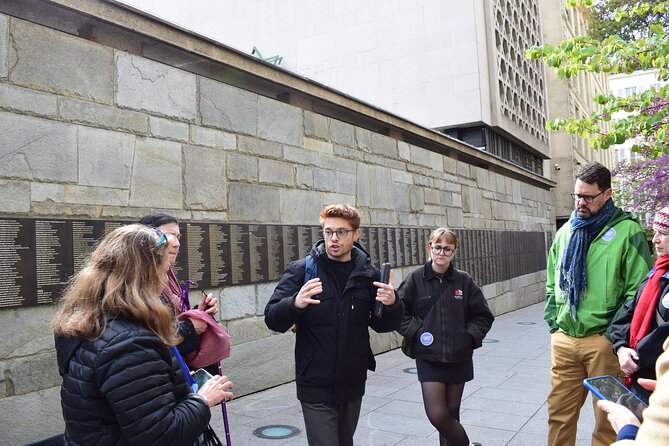
Next you’ll see the Holocaust Memorial, the Mémorial de la Shoah, from the exterior. Your guide provides the historical context of occupation, resistance, and remembrance, and explains why this memory still matters for Jewish identity in Paris.
This stop can be emotionally intense, so it helps that it’s handled as part of a guided story rather than a rushed photo-op. I like this approach because the memorial sits in the “middle” of the walk, where the guide can connect past events to the living neighborhood you’ve been moving through.
Possible drawback: if you’re expecting only neighborhood life details, some people may feel the emphasis leans heavier toward WWII-era remembrance. If that would bother you, consider pairing the tour with extra time afterward in places that show day-to-day Jewish culture.


Rue des Rosiers: where the community’s pulse still shows
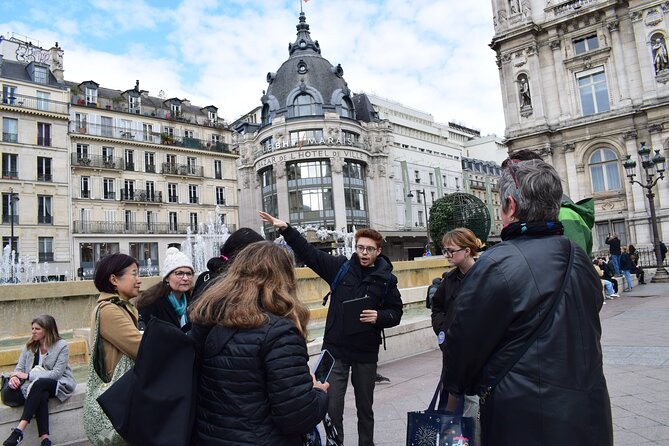
From there, you head along Rue des Rosiers, historically the heart of Jewish commercial and community life in the Marais. Bakeries, delis, and specialty shops line the street, and your guide connects the area’s development, changes, and rebuilding across the 20th century.
This stop is a great “real-world translation” moment. It helps you understand why people still point to Rue des Rosiers when they talk about Jewish Paris. It’s not only history; it’s ongoing presence.
If you enjoy pairing stories with snacks, keep in mind you may have a chance for a quick falafel tasting stop depending on the guide and the day’s flow. (The tour format suggests the guide may add small food moments, but it’s not guaranteed as a formal monument entry.)
The public transport transfer: a small reset between two worlds
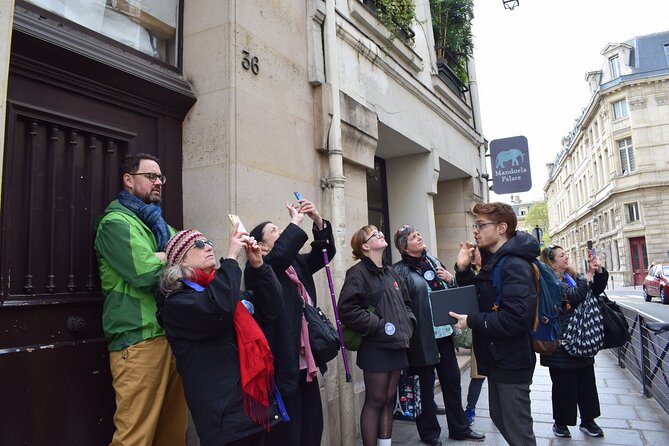
After finishing near Hôtel de Ville in the Marais, you continue to Montmartre by public transport. Public transport tickets are included, and the short journey gives you time to catch your breath.
This break is more than convenience. It’s also a mental switch: you’re leaving the more tradition-grounded, institution-heavy atmosphere of the Marais for a district tied to artistic mythmaking and early modernism.
Montmartre: artists, migration, and the warning signs in Europe
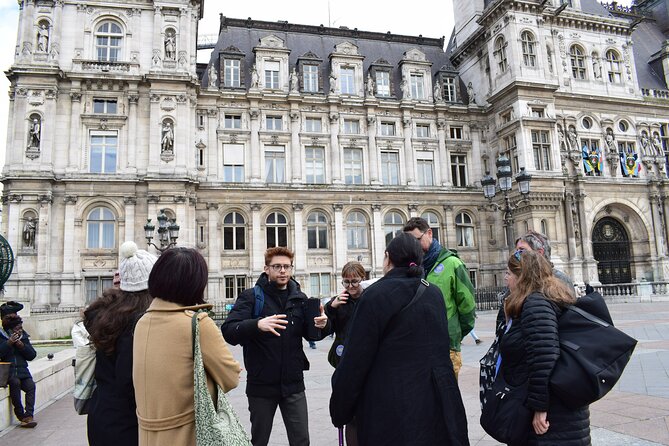
Montmartre is where the tour expands from community life into creative reinvention. You’ll hear stories about immigrant artists, writers, and musicians who found group energy in cafés, studios, and literary circles.
The names mentioned—Amedeo Modigliani, Max Jacob, and Marc Chagall—help give the stories a face. The guide places them in the context of rising nationalism and antisemitism across Europe, which turns the district’s early modernist glow into something more complicated and heartbreaking.
What I like here: the tour doesn’t treat Montmartre like a fun detour. It frames the creativity as real community, then acknowledges that many of these figures later faced exile, persecution, or disruption during the Second World War. You end up looking at “Paris mythology” with sharper eyes.
Sacré-Cœur steps and Square Louise-Michel: finishing with a view
The tour wraps on the steps of Basilique du Sacré-Cœur with one of the city’s iconic views. You’ll also stop at Square Louise-Michel as the final point, with the guide bringing the day back to Jewish themes of history, creativity, and resilience.
This ending works because you’ve been moving through streets with meaning, then you get a visual payoff over the city. It’s a good moment to let the connections settle, even if the emotional weight of parts of the tour has been high.
Price and value: is $102.12 worth it?
At about $102.12 per person for roughly 3 hours 30 minutes, you’re paying for three things: expert storytelling, a tight route, and a guided transition between districts.
The group size is part of the value. The experience is designed for intimacy—up to 9 persons, with a maximum of 12—so it’s not the kind of tour where you spend the whole time craning your neck to hear.
You’re also getting included public transport tickets between Le Marais and Montmartre. That detail sounds minor, but it saves you the hassle of coordinating your own ride mid-tour, especially when you’re trying to keep everyone together.
One cost-note to keep in mind: there are no indoor visits and no monument entries included. That’s not a dealbreaker for many people, but it means you’re buying context and guidance for outdoor landmarks and neighborhood streets—not ticketed interiors.
Group dynamics and guide style: what to expect from the experience
This tour is set up to be interactive, with a local expert guide dedicated to pace and questions. In past runs of this exact tour, guides such as Benjamin, Pierre Louis, Thomas, Adrian, and Boniet/Benoi(t) have been praised for strong storytelling and handling sensitive material with care.
If you’re someone who asks questions as you go, this format tends to reward you. If you’re the type who wants a very structured stop-by-stop timeline from minute one, you’ll want to arrive on time and be ready for the guide to set the storyline as you walk.
Also, there’s a pacing consideration. Some people found the start slow before the theme fully clicks. It’s not a reason to skip, but it can help to mentally frame the first segment as setup.
Practical tips so you don’t lose time or comfort
Wear shoes you can handle on uneven sidewalks and cobblestones. You’re doing a guided walking route plus a short transit ride, and the day’s comfort depends mostly on footwear.
Bring water and check the weather. One guide handled cold and rainy conditions without letting it derail the experience, which tells me the route can go on even when Paris refuses to cooperate.
Most important: if you care about specific topics—like daily life in the Marais versus WWII memory—tell the guide at the start. This kind of tour works best when the guide knows what you want to emphasize.
If you want synagogue interiors, build a separate plan. Since interior access isn’t included, your schedule should allow for an extra stop if that’s a must for you.
Who should book this tour?
Book it if you want:
- A guided connection between Le Marais and Montmartre through Jewish community life and creative culture
- A walk that uses exterior landmarks like Agoudas Hakehilos and the Mémorial de la Shoah
- A small-group experience where you can ask questions and slow down when needed
Consider a different option if you:
- Want indoor access to synagogues or paid monument entries during this outing
- Prefer a heavy focus on everyday neighborhood institutions over WWII remembrance
- Need flawless English pacing; the tour is offered in English, but one participant noted English quality could vary
This tour can also suit families. It’s been described as good for children, which suggests the pace and storytelling can be kept understandable.
Should you book Paris Jewish Heritage: Le Marais & Montmartre?
If you like history that shows up on the street—signs, streetscapes, architecture, and how neighborhoods evolve—this tour is a strong choice. The route connects tradition in the Marais to art and political tension in Montmartre, which is a rare pairing in one outing.
I’d recommend it especially if you want structure without museum fatigue. You get clear anchors (Agoudas Hakehilos exterior, the memorial exterior, Sacré-Cœur steps) and a guide who can tie them into a coherent story.
Skip it only if interior access is your priority, or if you strongly dislike tours that include heavier WWII context. For many people, that context is exactly the point—and the guide’s job is to keep it respectful and understandable.
FAQ
How long is the Paris Jewish Heritage: Le Marais & Montmartre Guided Walking Tour?
It lasts about 3 hours 30 minutes.
How much does it cost?
The price is $102.12 per person.
What language is the tour offered in?
The tour is offered in English.
Where do I meet, and where does the tour end?
You start at L’Elephant Du Nil, 125 Rue Saint-Antoine, 75004 Paris. You end at Square Louise Michel, 6 Pl. Saint-Pierre, 75018 Paris.
Is the public transport transfer between Le Marais and Montmartre included?
Yes. Public transport tickets are included, and the tour includes a short transfer between districts.
Are synagogue interiors included?
No. You’ll visit synagogue exteriors only, and interior visits are not included.
Are entry tickets to monuments or historical sites included?
No. Entry to monuments & historical sites is not included.
What’s the cancellation policy?
Free cancellation is available. You can cancel up to 24 hours in advance for a full refund.