REVIEW · BERLIN
Berlin‘s Jewish Heritage Private Tour With Jacob
Book on GetYourGuide →Operated by Nadav Jacob's Berlin Experience · Bookable on GetYourGuide
Jewish Berlin tells stories you can walk through. This private heritage tour connects pre-war community life, Nazi persecution, and today’s Jewish presence at major stops like the Holocaust Memorial and the New Synagogue. It’s built to help you understand how a community was pushed out of public life, yet kept finding ways to survive and rebuild.
I also like that it’s not a rigid script. With your guide, Nadav Jacob, the pacing can feel human and the route may flex, including places you might not expect from a fixed checklist. One possible drawback: at 150 minutes, it’s moving, so if you’re looking for a very deep lecture on every topic, you may want more time than this tour allows.
In This Review
- Key highlights worth your attention
- A private, story-driven walk through Jewish Berlin
- How the route connects past persecution to present community
- Pickup and the quick transport gap between stops
- Holocaust Memorial: starting with memory, not sightseeing
- Bebelplatz and the Block of Women: history in public spaces
- Hackescher Markt and Haus Schwarzenberg: seeing the modern city around old stories
- Otto Weidt Workshop for the Blind: a different angle on survival and work
- Grosse Hamburger Strasse Cemetery: a quiet pause with guidance
- New Synagogue Berlin – Jewish Centre: the story doesn’t end with the Holocaust
- Who this tour is best for (and who may want something longer)
- Value check: what $314 per group gets you
- Booking smart: how to get the most from your guide
- Should you book this Jewish Heritage Private Tour with Jacob?
- FAQ
- How long is the tour?
- Is this a private tour?
- What language is the guide?
- What major sites are included?
- Do I need a public transport ticket?
- Can the tour be modified to reduce walking?
Key highlights worth your attention
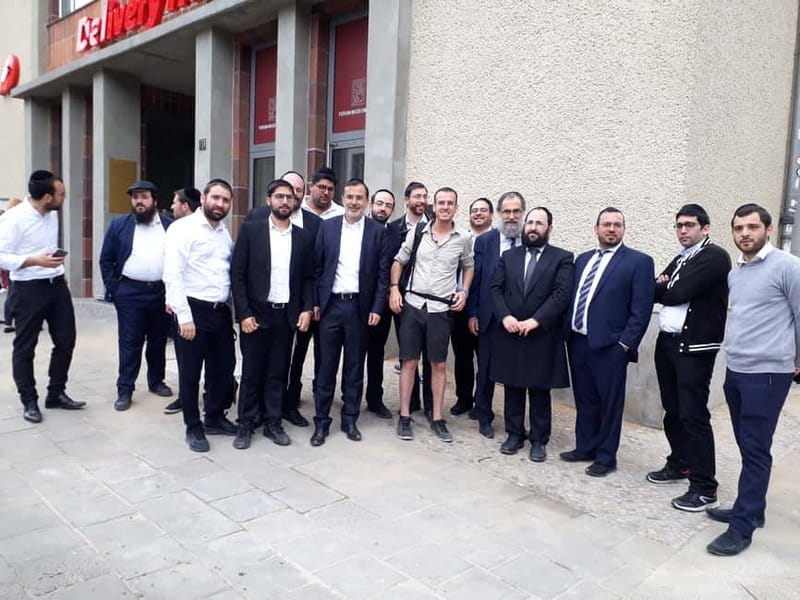
- Private guide, private pace: you’re not stuck in a crowd, and the story can match your questions.
- Holocaust Memorial at the start: you begin with memory, not trivia.
- A walk through the old Jewish quarter: the route threads between key Jewish sites and the modern city.
- Bebelplatz and the Block of Women: public places where history is written in plain sight.
- New Synagogue Berlin – Jewish Centre: you end with community life, not just tragedy.
- A flexible guide with practical tips: your experience can include extra stops and on-the-ground recommendations.
A private, story-driven walk through Jewish Berlin
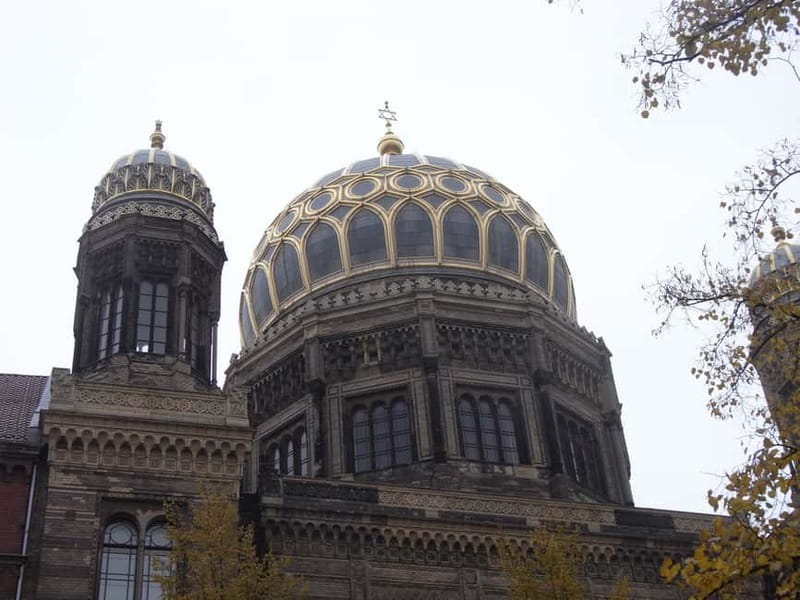
Berlin’s Jewish story is not one straight line. It’s a series of chapters—migration, community building, hardship, exclusion, mass murder, and then the slow work of rebuilding Jewish life. What I like about this tour is that it doesn’t treat those chapters like separate history units. Instead, it moves you from place to place so the timeline feels physical.
You’ll be with a live English guide, in a private group (priced for groups up to 6). That matters because Jewish history in Berlin is emotionally heavy, and everyone processes that differently. A private format lets you pause, ask, and keep going at a pace that feels manageable rather than rushed.
Your guide for this experience is Nadav Jacob, and the overall tone comes across as careful and personable. One review noted how he was especially flexible and added extra suggestions for what to do and see next—exactly the kind of practical help that turns a tour into a useful day plan.
You can also read our reviews of more private tours in Berlin

How the route connects past persecution to present community
Before you even reach the first big stop, the tour frames the bigger story: Jewish communities spread widely after being exiled from their land, settling across Europe while holding onto faith and customs under pressure. In Germany, including Berlin, Jews were excluded from normal life for long stretches. Then, eventually, they gained full citizenship rights and moved into visible roles in fields like economy, science, culture, and democratic politics.
Then came the rupture: the Nazis took power. The tour’s through-line follows that rise and fall and focuses on the attempt to revive contemporary Jewish life after the Holocaust—because Berlin isn’t only a museum. It’s also home to living institutions and neighborhoods.
That narrative structure is valuable for you because it gives meaning to what you see. Without it, it’s easy to treat memorials and synagogues like isolated landmarks. With it, the stops start to feel like chapters in the same book.
Pickup and the quick transport gap between stops
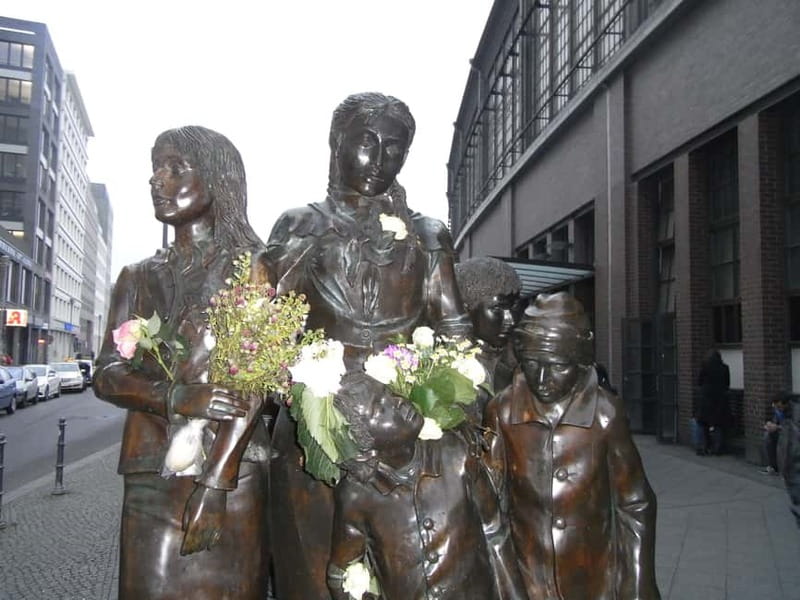
The experience includes hotel pick-up from your Berlin hotel reception. That’s a small detail, but it helps you avoid the most annoying part of history days: spending time hunting for meeting points while your mind is already tired.
There’s also a short public transport segment built into the flow (about 15 minutes). If you’re used to Berlin’s transit, that part feels straightforward. If you prefer a more relaxed pace, plan to bring a little patience—history tours often move in bursts, and the schedule is designed around getting from one meaningful location to the next.
One more practical point: public transport ticket costs are not included (listed at 3–6 €). If you’re traveling on the same day anyway, you may already be buying transit tickets. If not, budget for them so the tour doesn’t turn into an awkward scramble.
Holocaust Memorial: starting with memory, not sightseeing
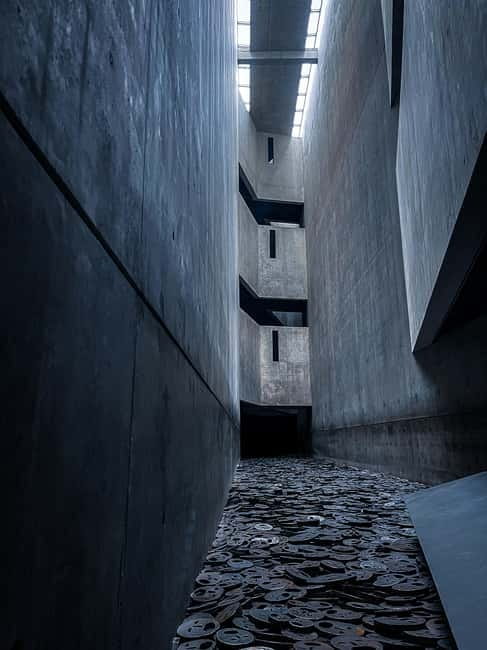
The itinerary begins with a guided stop at the Holocaust Memorial (about 20 minutes). Starting here is intentional. This isn’t a tour that waits for a dramatic moment later—it brings you straight into the weight of the subject early, and then the rest of the walk can act like context.
For you, that starting point changes the way the day lands. Later stops about Jewish life and community don’t feel like a separate story. They feel like what the memorial is warning you not to forget.
At the same time, this can be emotionally intense. If you tend to get overwhelmed by heavy memorial spaces, plan to give yourself a few quiet breaths during the guided portion. A private group helps, because you can step out for a minute if needed and your guide can respond to your pace.
Bebelplatz and the Block of Women: history in public spaces
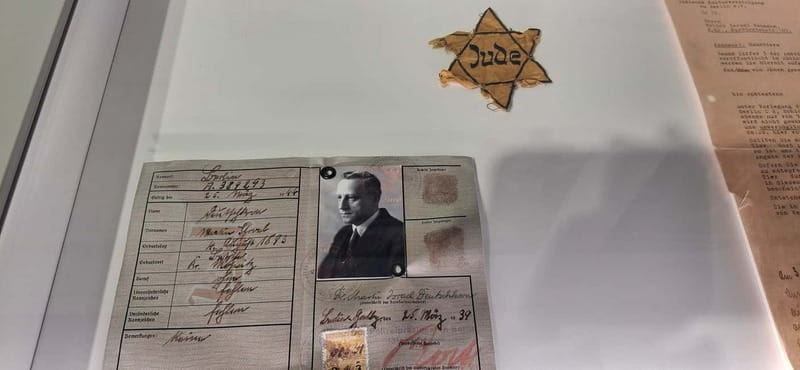
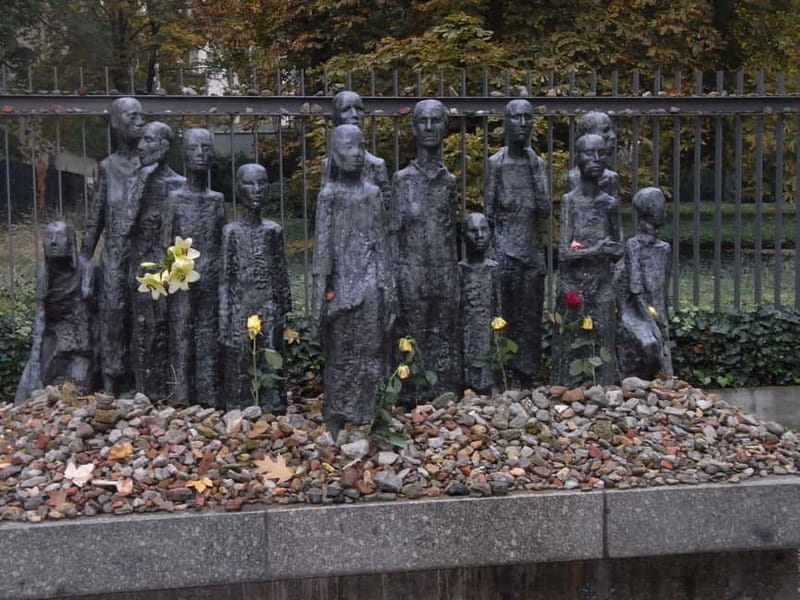
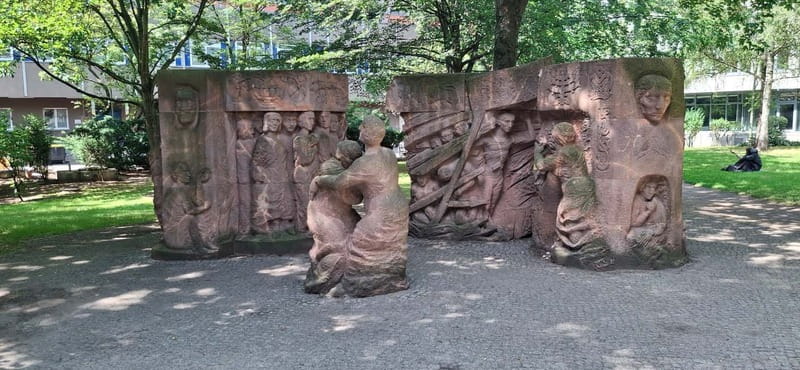
Next up are two guided stops that bring the past into Berlin’s public landscape: Bebelplatz (about 15 minutes) and the Block of Women (about 10 minutes).
These are the kind of places where you can easily miss the meaning if you’re only skimming. With a guide, the point is to help you connect what you’re seeing to the larger story of persecution and what it did to everyday life. Think of them as anchors: places where the narrative gets sharper.
Practical tip for you: bring steady walking shoes. These stops are short but dense in meaning. Even if you’re standing still, your brain is working hard, and the day moves from one emotionally loaded place to another without long breaks.
You can also read our reviews of more historical tours in Berlin




Hackescher Markt and Haus Schwarzenberg: seeing the modern city around old stories

After the memorial-heavy stops, you’ll have time to walk through Hackescher Markt (about 20 minutes). This part matters because it stops the day from feeling like a straight line of tragedy. You’re in central Berlin, moving through a lively area where the modern city is right next to older historical layers.
Then you’ll visit Haus Schwarzenberg (about 10 minutes). The value here is the transition: your guide uses the neighborhood setting to connect Jewish life to the city’s evolution. You’re not just looking at a single building; you’re learning how Jewish presence was shaped by the wider urban world around it.
One note from a review is that the guide’s flexibility helped some guests see places they had not been before. That kind of adjustment can make the walk feel less like a checklist and more like a lived route through Berlin.
Otto Weidt Workshop for the Blind: a different angle on survival and work
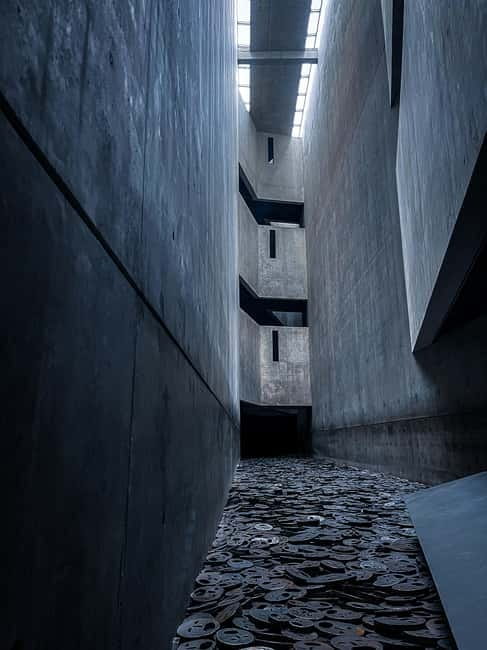
The tour then includes a visit to the Otto Weidt Workshop for the Blind (about 15 minutes).
This stop is important because it shifts the lens from broader political events to what life looked like on the ground—how communities navigated danger, opportunity, and daily needs. Even when you only have a short visit, the guided context helps you understand why this site is part of Berlin’s Jewish narrative rather than just another museum stop.
For you, the workshop visit is also a reminder that history is not only about dates and policies. It’s also about human choices—what people did, how they supported one another, and how communities tried to keep functioning under pressure. That emotional texture is often what makes a tour stay with you longer than a list of landmarks.
Grosse Hamburger Strasse Cemetery: a quiet pause with guidance

You’ll then walk to Grosse Hamburger Strasse Cemetery (about 15 minutes). Cemeteries can feel like a pause button in the middle of an active walking itinerary, and this one fits that role.
Guidance here is key. Without it, you might just see the location and miss the deeper meaning your guide is tying to the overall story of Jewish life and memory in Berlin. With a guide, the visit becomes part of how the tour explains continuity—how community identity persists even after catastrophe.
If you’re sensitive to emotional spaces, this is one stop where you’ll likely appreciate the short duration and the ability to just take it in. Don’t rush it.
New Synagogue Berlin – Jewish Centre: the story doesn’t end with the Holocaust
The final guided stop is New Synagogue Berlin – Jewish Centre (about 15 minutes). Ending here matters. Many history tours stop after the worst parts of a story. This one uses the end of the route to point toward the attempt to revive contemporary Jewish life.
That can change your whole takeaway. Instead of leaving Berlin with only tragedy, you leave with evidence that Jewish institutions and community life are present in the city today. It’s a reminder that history is not just something that happened to people. It also shapes what people are doing now.
From a practical standpoint, ending with a guided stop is also helpful. It lets you get last questions answered, and you can walk away with ideas for what to see next around this neighborhood if you want to continue the day.
Who this tour is best for (and who may want something longer)
This is a strong match if you:
- Want a private, guided path through major Jewish sites in Berlin.
- Like the structure of a narrative that links pre-war life, Nazi exclusion, the Holocaust, and post-war revival.
- Are comfortable with a walking tour on top of a short transit segment.
You might want a different format if you:
- Crave a very long, layered lecture with lots of time to sit and go deep on each topic. The route is designed to cover key stops in 150 minutes, so it doesn’t spread out into multiple half-days.
- Prefer to avoid memorial-heavy mornings or afternoons. This one starts with the Holocaust Memorial and continues with other sites of remembrance.
If you have mobility concerns, it’s still worth considering. The tour is described as wheelchair accessible, and walking during the tour is generally manageable. If you want to minimize walking, arrangements can be made to travel by taxi, van, or subway between stops at additional cost.
Value check: what $314 per group gets you
The price is listed as $314 per group up to 6, for a total duration of 150 minutes. That’s private time, plus hotel pick-up, plus guided visits at multiple major Jewish sites.
Here’s the quick value math. If you fill the group with 6 people, the cost is about $52 per person for 2.5 hours. If you only have 2 people in your group, it’s closer to $157 per person—so value depends on how many people you can split it with.
What makes the pricing feel more reasonable is that it isn’t just a walk. You’re getting:
- a live English guide
- guided time at multiple stops (including Holocaust Memorial and New Synagogue)
- hotel pick-up to simplify your day
If you’re comparing to self-guided walking routes, the price makes sense when you want context. Jewish Berlin without a guide can turn into a set of important places you recognize but don’t fully understand. With a guide, those places start speaking to each other.
Booking smart: how to get the most from your guide
Because this is a private tour, you can get more than the standard script if you show up ready to steer the conversation. A few practical strategies:
- Decide what you want more of: community history, persecution under the Nazis, or the post-Holocaust revival story.
- Bring a short list of questions. If you’re the type who reads everything, your guide can slow down. If you’re more visual, ask for the route to be explained in a way that matches what you’re standing next to.
- If you want fewer walks, ask about between-stop transportation options early (taxi/van/subway at additional cost).
Also, based on how Nadav was described by guests, flexibility seems to be part of the experience. If you have a preference—more time at a single stop, or a quieter pace—mention it. A guide can only adjust what they know you care about.
Should you book this Jewish Heritage Private Tour with Jacob?
I’d book it if you want a focused, well-paced route through the most important Jewish-history touchpoints in Berlin, with a private guide who can adapt to your needs. It’s especially worth it if you value narrative context—how pre-war rights, Nazi exclusion, the Holocaust, and post-war revival connect across real places.
Skip or choose a longer alternative if you know you want deeper detail at each stop. This experience is built to cover a lot in 150 minutes, and that’s a feature for many people, but not for those who need long, slow stops to feel satisfied.
FAQ
How long is the tour?
The tour duration is 150 minutes.
Is this a private tour?
Yes, it’s a private group tour.
What language is the guide?
The tour is offered with a live guide in English.
What major sites are included?
The tour includes the Holocaust Memorial, Bebelplatz, the Block of Women, Otto Weidt Workshop for the Blind, Grosse Hamburger Strasse Cemetery, and the New Synagogue Berlin – Jewish Centre, with walking through areas like Hackescher Markt.
Do I need a public transport ticket?
Public transport tickets for the tour are not included, and they’re listed at 3–6 €.
Can the tour be modified to reduce walking?
Yes. While it’s a walking tour, you can request arrangements to travel by taxi, van, or subway between stops at an additional cost.