REVIEW · ATHENS
Athens: Be an Ancient Sculptor: Craft Your Greek Masterpiece
Book on GetYourGuide →Operated by Ancient Greek Symposium · Bookable on GetYourGuide
Ancient wine meets clay artistry. This 2-hour experience at Ancient Symposium in Kallithea pairs a story-led tour of ancient Greek art with patient, hands-on sculpting help. I like that it feels more like a guided studio session than a lecture, with the atmosphere of a Greek symposium setting the tone.
Two things I’d put at the top: you get step-by-step instruction that helps you shape details without rushing, and you leave with a real, small sculpture you made yourself. One instructor name comes up often (Manos), and people highlight how calm and careful he can be while explaining what to do.
One consideration: it’s not suitable for wheelchair users, and you’ll be working at a hands-on workshop that calls for comfortable clothes and shoes you don’t mind getting a bit messy.
In This Review
- Key Takeaways Before You Go
- Ancient Symposium in Kallithea: a studio you can actually picture
- The Ancient Room: wine stories that explain the art
- The Gallery Walk: how sculpture ties ancient motifs to modern ideas
- The clay workshop: facial shaping, detailing, and texture
- What you take home: your souvenir with meaning
- Price and value: why $58 can feel worth it
- Who should book this, and who might reconsider
- Should you book Ancient Sculptor: Craft Your Greek Masterpiece?
- FAQ
- Where is the meeting point?
- How long is the experience?
- What will I create?
- What languages are available?
- What should I wear or bring?
- Is smoking allowed?
- Is it wheelchair accessible?
Key Takeaways Before You Go
- Symposium-style start: you begin in a space built to feel like an ancient Greek drinking-and-gathering scene.
- Wine, art, and daily life links: you connect pottery design and sculpture ideas to how wine shaped social rituals.
- Gallery tour with ancient-and-modern inspiration: you see recreations and contemporary works tied to Greek mythology.
- Real sculpting skills in 2 hours: you practice basic clay techniques like facial shaping, detailing, and texture.
- A take-home keepsake: your finished small sculpture becomes your souvenir, not just a photo.
- Often led with patient guidance: if your instructor is Manos, he’s repeatedly praised for being engaged and steady.
Ancient Symposium in Kallithea: a studio you can actually picture
Ancient Symposium sits in Kallithea, at Doiranis 39, just a few minutes from the Acropolis Museum. It’s on the first parallel street of Syngrou Avenue, which runs between central Athens and the coast, so it’s straightforward to reach.
The area is described as quiet and easy to find, and it connects well by public transport (bus stops and the metro nearby). This matters because you’re not spending your time wrestling through a maze of old streets—you’re heading to a place designed for workshop focus.
Also, this is not a giant, impersonal tourist factory. It’s set up like a gallery-to-studio flow, so you can take your time absorbing what you’re seeing before you start making. If you like learning by doing, you’ll probably enjoy the pacing.
You can also read our reviews of more tours and experiences in Athens.

The Ancient Room: wine stories that explain the art
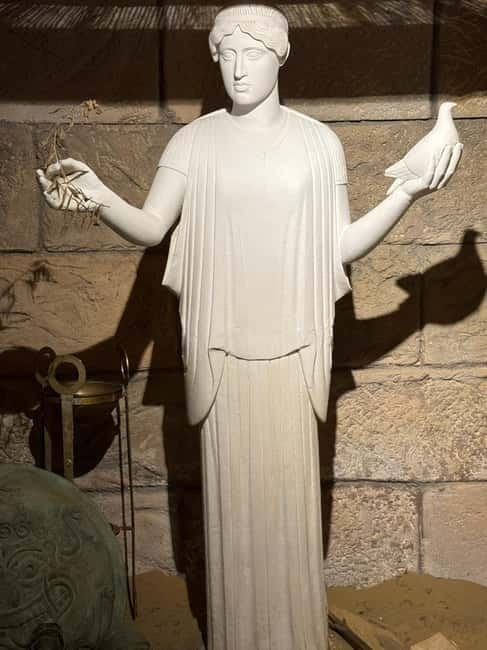
Your session starts in the Ancient Greek Room, a specially designed space that recreates the feel of an ancient Greek symposium. Instead of just looking at objects, you get the context: the history of ancient Greek wine, how it was produced, and why it mattered in social and religious ceremonies.
You’ll also see replicas of pottery connected to the symposium world, including pieces like kraters and kylixes. The goal is to notice how much design goes into everyday objects—how decoration, scenes, and shapes weren’t just decoration, but part of communication and identity.
This stop is valuable because it gives you a reason to care about form. When you later sculpt, you’re not copying randomly—you’re building something inspired by the types of visual language ancient artists used to express stories, rituals, and status.
The Gallery Walk: how sculpture ties ancient motifs to modern ideas
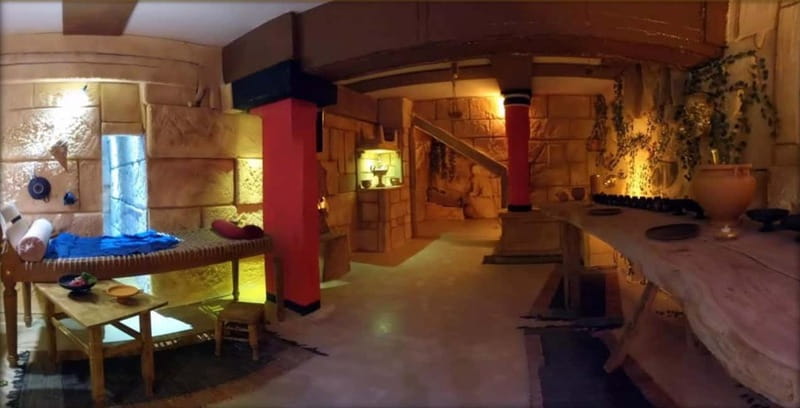
After the Ancient Room, you move into the Ancient Symposium Gallery. This is where ancient and modern Greek art share the same space, and it helps you see that the symbolism didn’t stop with antiquity.
You can expect recreations of ancient statues along with contemporary works inspired by Greek mythology. That mix matters: it shows you how artists keep borrowing from the same character types, themes, and visual habits—just with different tools and styles.
You’ll also talk about sculpting techniques used by ancient Greek artists and why sculpture was used for religious, decorative, and historical purposes. The practical benefit for you is clarity: you understand what the craft was for, not just what it looks like. That makes it easier to choose what to emphasize when you’re shaping your own clay piece.
The clay workshop: facial shaping, detailing, and texture
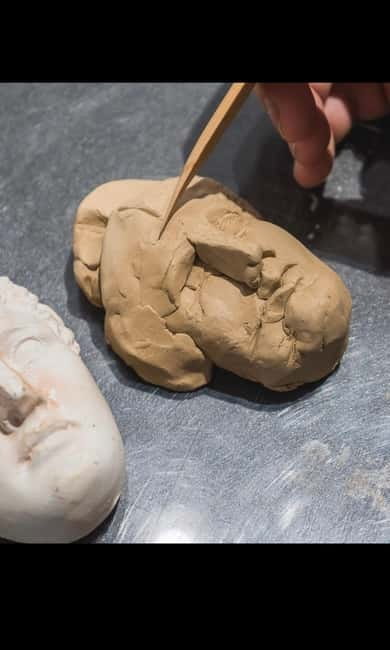
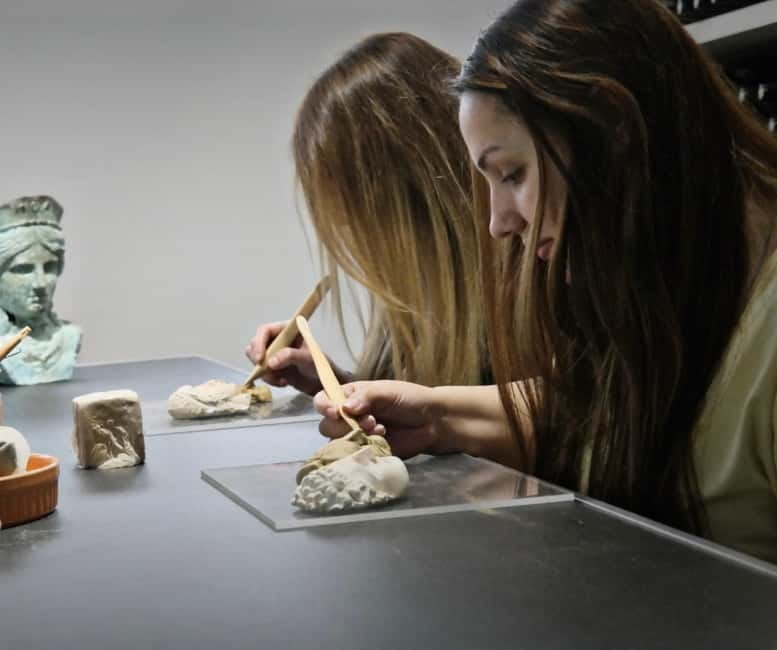
This is the main event: the hands-on sculpting workshop. You’re given clay plus professional tools, and then your instructor guides you through the basics. The techniques you’ll focus on include facial shaping, detailing, and texture—exactly the kind of steps that help a lump of clay turn into something readable.
The structure of this part is important. You start with basics, then refine. That’s why people tend to describe the instruction as calm and patient: when you know what to do next, you stop worrying about making a perfect sculpture and start enjoying the process.
You’ll also get personalized guidance, so you’re not left guessing if your proportions look off. And because the end result is a small sculpture, you’re working at a scale that fits the 2-hour timeframe.
One more detail: wearing the right outfit helps. Clay work is physical in a small way—comfortable shoes and clothes keep you focused on sculpting, not on adjusting your stance every five minutes.
What you take home: your souvenir with meaning
You do get a keepsake, and it’s not just a token. Your sculpture is something you made during the workshop, under guidance, so it carries the memory of the decisions you made—shape, texture, and the overall look you aimed for.
That’s the difference between a generic souvenir and a studio-made piece. You’ll likely remember the moment you got the facial structure right, or when you added surface detail and suddenly the sculpture started reading like a figure.
And if you’re the type who collects travel memories you can hold, this is a good match. It’s also a fun option for couples or friends, because you share the learning curve and compare your different interpretations of ancient-inspired form.

Price and value: why $58 can feel worth it
At $58 per person for about 2 hours, this is priced like a guided cultural workshop, not a quick ticketed stop. What makes the value click is the mix: you pay for a guided tour plus structured sculpting instruction plus all materials and tools.
You’re also getting more than “craft time.” The tour component ties the workshop to specific themes: ancient wine culture, symposium life, pottery design, and how sculpture served social and ceremonial roles. That context helps you feel like you’re learning something, not only creating something.
Finally, the format is efficient. In two hours you go from viewing replicas and gallery ideas to producing your own clay sculpture you can take home. If you have limited time in Athens and want an activity that isn’t just sitting in a bus or queuing, this hits that sweet spot.
Who should book this, and who might reconsider
You’ll probably love this if you want a hands-on Athens experience that’s still grounded in art and history. It’s a strong fit for people who like small-group energy, guided steps, and working with their hands while learning context.
It’s also a good choice if you’re traveling with someone who gets bored by standard museum pacing. The tour keeps things moving, and the workshop gives you a concrete finish point.
If you’re expecting a fast, casual activity with no learning component, you might find it more structured than you want. Also, plan for the practical side: you’ll be standing and working in a studio setting, and it’s not suitable for wheelchair users.
If you’re a wine fan, you may especially enjoy the opening focus on ancient Greek wine and how it connects to social life. Some people also mention planning to do a wine tasting next time, which suggests this theme continues beyond what you see in the room.
Should you book Ancient Sculptor: Craft Your Greek Masterpiece?
Book it if you want an Athens activity that combines ancient-inspired art with real instruction and a take-home result. The best sign is the consistent focus on patient guidance, calm pacing, and step-by-step help—exactly what you want when you’re trying something new.
Skip it if accessibility needs make a studio workshop difficult for your group, or if you only want passive sightseeing. For most people, though, this is a smart way to spend a couple hours: you learn why Greek art looked the way it did, then you make something in that spirit with your own hands.
FAQ
Where is the meeting point?
The Ancient Symposium is located in Kallithea, at Doiranis 39, a few minutes away from the Acropolis Museum.
How long is the experience?
It lasts 2 hours.
What will I create?
You’ll make a small clay sculpture inspired by ancient Greek art, with tools and materials provided.
What languages are available?
Instruction is available in Greek and English.
What should I wear or bring?
Wear comfortable shoes and comfortable clothes suitable for sculpting.
Is smoking allowed?
Smoking is not allowed.
Is it wheelchair accessible?
No. The experience is not suitable for wheelchair users.