REVIEW · OSAKA
Osaka Traditional Performing Arts Heritage Night
Book on GetYourGuide →Operated by Yamamoto Noh Theater · Bookable on GetYourGuide
One night. Ten traditions. That is what makes this Osaka heritage arts show such a good bet for first-timers. You’ll get an omnibus mix of Noh, Kyogen, Bunraku, Rakugo and more, plus multilingual explanations and subtitles that keep you oriented. The one real catch to plan around is simple: no video recording or photography inside.
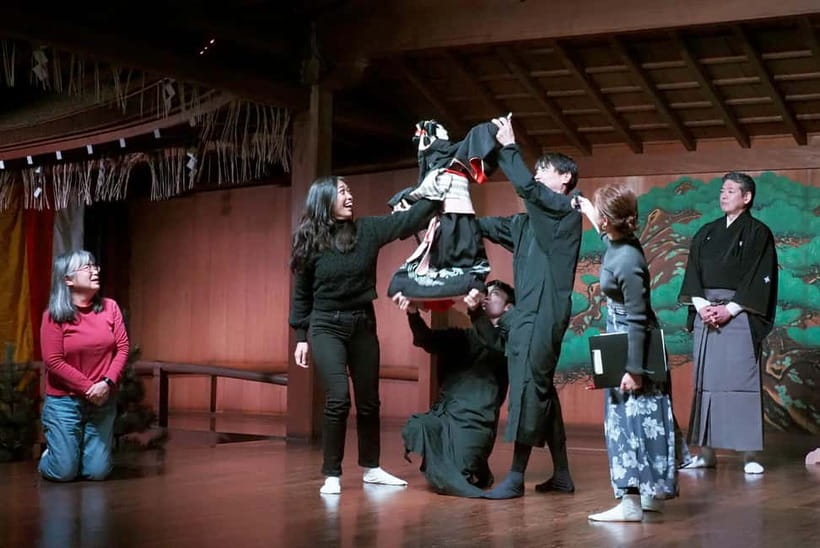
I especially like how it gives you both the watching and the trying. The program includes hands-on experiences, and a couple of audience members (yes, in white socks) even get invited up to the Noh stage to participate. If you’re traveling with kids, note the stated guidance: it’s not designed for children under 7.
This takes place at Yamamoto Noh Theater and runs about 2 hours. You’ll hear English or Japanese from the host/greeter, and you’ll use the provided materials to connect the dots between the different performing arts.
In This Review
- Key things I’d plan around
- What You Actually See: Noh, Kyogen, Bunraku, Rakugo and the Rest
- How the Evening Moves at Yamamoto Noh Theater (and Why 2 Hours Works)
- The Hands-On Part: What You Can Try Without Being an Expert
- English Subtitles and Materials: The Real Key for Foreign Visitors
- Audience Participation on the Noh Stage: White Socks and Big Learning
- No Photos or Video Inside: Why That Rule Can Help You
- Who Should Go: Families, Teenagers, and Culture-Lovers
- Price and Value: Is $32 Worth Two Hours of Traditions?
- Should You Book the Osaka Traditional Performing Arts Heritage Night?
- FAQ
- How long is the Osaka Traditional Performing Arts Heritage Night?
- What is the price per person?
- Where does the event take place?
- Which traditional performing arts are included?
- Is there multilingual support for foreigners?
- Is there a hands-on component?
- Can I record video or take photos inside?
- Is it suitable for young children?
- Is the venue wheelchair accessible?
- Is free cancellation available?
Key things I’d plan around
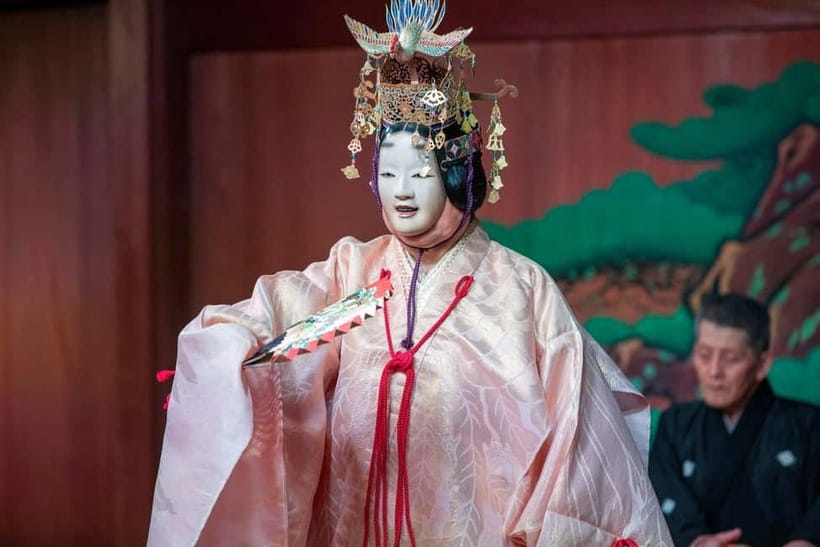
- A true Osaka multi-art sampler in 2 hours, not a single show stretched too long
- English/Japanese support with explanations, subtitles, and materials so you can follow along
- Hands-on moments, including audience participation on the Noh stage (white socks)
- A mix of theatre, puppetry, storytelling, dance, and court-music style pieces in one program
- Strict no photo/video rules inside, so bring your curiosity, not a camera
What You Actually See: Noh, Kyogen, Bunraku, Rakugo and the Rest
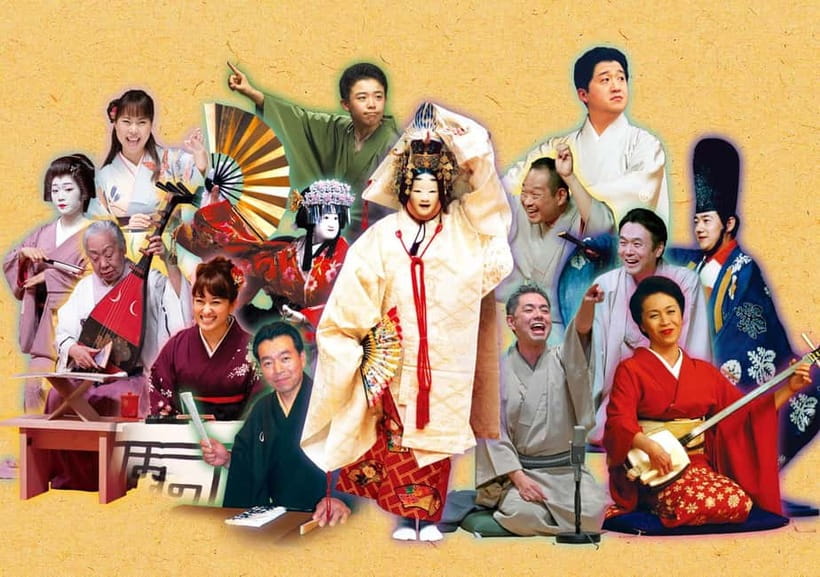
The heart of the Osaka Traditional Performing Arts Heritage Night is variety. Instead of making you choose between one art form and one ticket, you’ll sit through a lineup that covers a wide range of traditional performance styles.
You can expect to see highlights from: Noh, Kyogen, Bunraku, Rakugo, Rokyoku, Kodan, Kamigata Mai, Gagaku, Onna Doraku, and Chikuzen Biwa. The point isn’t to turn you into a scholar by intermission. It’s to give you a workable, beginner-friendly map of what each tradition feels like and where it fits in Japanese performing culture.
For me, that kind of “sampler platter” format is value-packed in Osaka, because you’re not stuck committing to one niche interest for an entire evening. It also helps when you’re traveling with a group where people’s tastes vary—one person likes theatre, another likes storytelling, someone else wants something more visual. This show tries to meet all of those tastes in one sitting.
One more thing that matters: it’s designed as an omnibus performance. That means the transitions and ordering are built to move you from one tradition to the next, with context supplied along the way. You’re not left guessing what you’re watching.
You can also read our reviews of more tours and experiences in Osaka.

How the Evening Moves at Yamamoto Noh Theater (and Why 2 Hours Works)
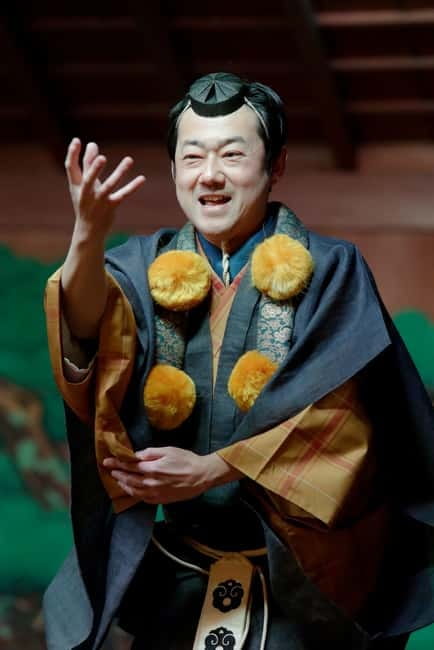
At Yamamoto Noh Theater, the night is paced like a guided experience. There are short segments, then explanations before the smaller performances. That structure is exactly what you want when you’re not fluent in Japanese and when you have no prior background in these art forms.
The whole show clocks in at about 2 hours, which is the sweet spot for an introduction. Long enough to feel like you actually experienced multiple traditions. Short enough that you don’t burn your whole evening when you still have Osaka to explore.
The multilingual layer is part of this pacing. You’ll get multilingual explanations, plus subtitles and materials to keep you from getting lost. That matters because these traditions can rely on cues—timing, mood shifts, and stage-language—that you won’t catch just by listening to sound alone.
And then there’s the audience participation piece. A couple of audience members wear white socks and are invited up to the Noh stage to experience traditional performing arts firsthand. That moment usually changes the energy in the room. Even if you’re just watching from your seat, it helps you understand that this isn’t only a distant performance—it’s a practiced craft that people learn by doing.
The Hands-On Part: What You Can Try Without Being an Expert
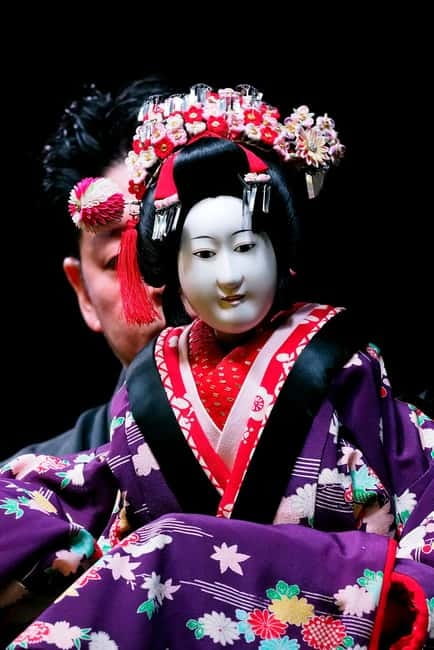
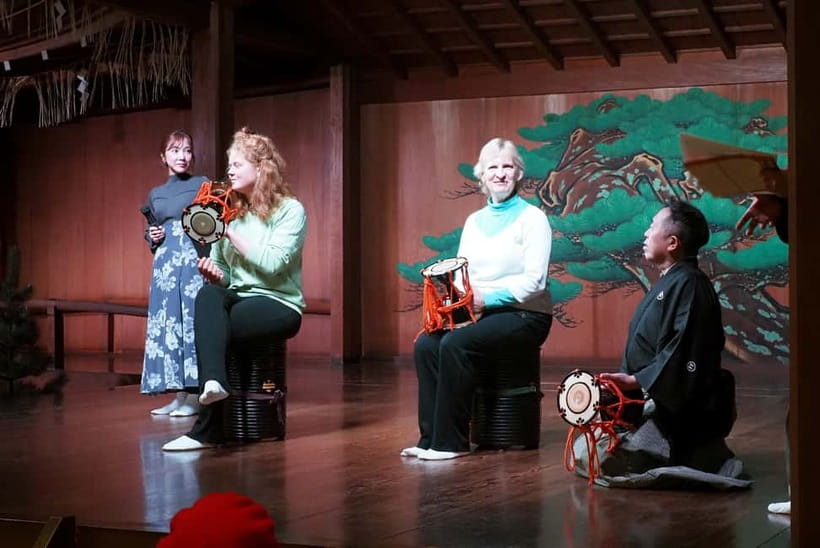
Hands-on experiences are built into the experience, and that’s a big reason the show lands well with beginners and foreigners. It turns the evening from passive watching into active learning.
Here’s how to think about it in practical terms: the “try it” moments are there to teach you the basics of presence—how performers occupy the stage, how movements and timing connect, and how much intentionality goes into even small actions. You don’t need technical skill. You need to follow directions, listen carefully, and be game.
If your name gets called for participation, you’ll see that this format is welcoming and structured. The fact that it uses clear visual cues (white socks and stage invitation) suggests they’re set up to include audience members without chaos. Still, go in with the right mindset: treat it like a short guided workshop inside a performance, not a random stunt.
Also, remember the show has strict rules about phones and cameras inside. If you want to capture the moment, plan to do it with your memory. It’s also smart to jot a couple of notes during the explanations so the hands-on part snaps into place later in your head.
English Subtitles and Materials: The Real Key for Foreign Visitors
The best part of this show for many non-Japanese speakers isn’t just that English support exists. It’s how it’s integrated—multilingual explanations, subtitles, and materials are provided during the night.
That combination is important. Explanations keep you oriented before each section. Subtitles let you follow along during the performance itself. Materials give you something to reference when the lineup jumps from one art form to another.
One of the most useful details from the experience feedback is that there are English-subtitled formats where some performances are fully in English. That means you aren’t only relying on translation; in certain segments you may get actual English language delivery as well. That’s a major confidence boost if you worry you’ll be stuck reading cues while missing the spoken meaning.
Practical tip: when you’re using subtitles and materials together, don’t try to read everything at once. Let the performance carry you, then use the materials to reinforce what you noticed. This is how you walk out feeling like you learned something, not like you survived a dense program.
Audience Participation on the Noh Stage: White Socks and Big Learning
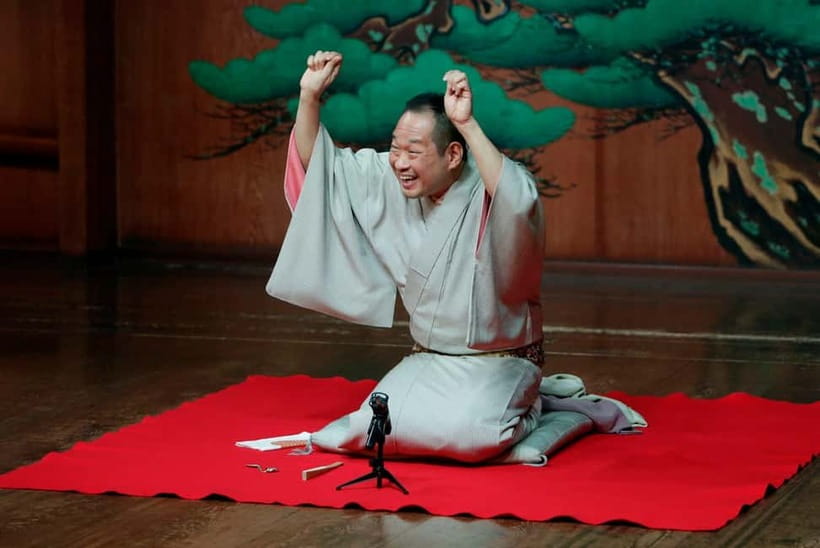
The most distinctive moment is the Noh-stage participation. A couple of people from the audience, identifiable by wearing white socks, go up to the Noh stage to experience traditional performing arts.
Even if you never get called, it still helps you as a viewer. You see the boundary between performer and audience shrink. You watch how instruction gets delivered in a way that works for non-performers. And you get a clearer sense of what “traditional” actually means in practice: it’s shaped by rehearsal, discipline, and a specific kind of communication.
If you want to maximize your chance of being mentally ready for that moment, come in paying attention during the explanation segments. The show is set up so those explanations aren’t filler—they’re preparation.
And if you do get selected, keep it simple: follow the host’s directions, stay aware of where you’re stepping, and focus on participating rather than performing. That’s the attitude that turns the moment into a genuine memory instead of an awkward one.
No Photos or Video Inside: Why That Rule Can Help You
You can’t take video recordings or photographs inside. That’s a clear rule, and it’s a real planning point.
From a practical standpoint, this rule helps keep the performance clean and distraction-free. No phones glowing in your face, no constant attempts to find the best angle. It also means you won’t be spending the show trying to capture it instead of experiencing it.
What I recommend is preparing your brain before you arrive. Decide that your phone stays away during the performance. If you want to remember details, take a few quick notes before the no-recording segments start, using whatever materials you receive. This style of show doesn’t ask you to document it. It asks you to watch and learn.
If you’re the kind of traveler who likes a “one photo per stop” habit, you might find this rule annoying. But if you’re here for the arts, you’ll likely appreciate the calmer atmosphere it creates.
Who Should Go: Families, Teenagers, and Culture-Lovers
This is the kind of activity that tends to work across age ranges, as long as the age guidance fits your group.
- The stated note says it’s not suitable for children under 7. So if you’re traveling with younger kids, double-check whether this fits your family.
- The show is also described as enjoyable even for young audiences with attention for performances, especially when the explanations and subtitles keep things understandable.
I also think it’s a strong fit for teenagers and older students because the format is varied and explained. One family experience highlighted that teens enjoyed it for being both educational and entertaining, with clear insight into Japanese culture.
For adults, it’s ideal when you want something more authentic than a generic culture show. For visitors, it’s ideal when you want to sample several traditions without needing prior knowledge. And for anyone who’s been to one Japanese performance type before, it’s a chance to compare how different traditions handle storytelling, rhythm, and stage presence—without paying for multiple separate evenings.
Price and Value: Is $32 Worth Two Hours of Traditions?
At $32 per person for about 2 hours, this activity is priced like an efficient introduction rather than a deep, single-discipline immersion.
The value comes from three things you actually get:
- a broad set of traditions in one evening (Noh, Kyogen, Bunraku, Rakugo, and more)
- hands-on experiences for at least part of the audience
- multilingual explanations plus subtitles and materials
If you were to try to cover these in separate tickets and separate venues, you’d usually spend more time coordinating and likely more money overall. Even without comparing to other specific shows, the lineup here is built as a “best-of Osaka traditions night.”
Still, be honest about the tradeoff: because you’re seeing many arts, each one is presented in a highlighted way. This isn’t designed to be a full-length masterclass in one tradition. It’s an overview that helps you decide what you might want to seek out next time in Osaka.
If your goal is to learn what’s out there and feel confident enough to choose later, $32 feels fair. If your goal is a long, detailed, one-art evening, you might want something else.
Should You Book the Osaka Traditional Performing Arts Heritage Night?
If you’re in Osaka and you want one evening that gives you a real taste of traditional performing arts—without language barriers slowing you down—this is an easy yes.
Book it if:
- you want multiple traditions in one night (not just Noh, not just storytelling)
- you appreciate English/Japanese support that keeps you following what’s happening
- you like experiences where you can participate, not just sit and watch
Consider a different option if:
- you’re uncomfortable with the rule that no video or photos are allowed inside
- you’re traveling with children who fall under the listed suitability guidance for kids under 7
My bottom-line advice: this show is best when you treat it like orientation. You’re not trying to master everything. You’re trying to learn what these traditions are, how they connect, and what you want to follow up on later. Done that way, it feels like a smart, memorable use of a couple hours in Osaka.
FAQ
How long is the Osaka Traditional Performing Arts Heritage Night?
The experience lasts about 2 hours.
What is the price per person?
The price is $32 per person.
Where does the event take place?
It’s hosted by Yamamoto Noh Theater in Osaka (Honshu, Japan).
Which traditional performing arts are included?
The lineup can include Noh, Kyogen, Bunraku, Rakugo, Rokyoku, Kodan, Kamigata Mai, Gagaku, Onna Doraku, and Chikuzen Biwa.
Is there multilingual support for foreigners?
Yes. Multilingual explanations, subtitles, and materials are included, with English and Japanese languages.
Is there a hands-on component?
Yes. The experience includes hands-on opportunities, and a couple of audience members may be invited up to the Noh stage (white socks).
Can I record video or take photos inside?
No. Video recording and photography inside are not allowed.
Is it suitable for young children?
It is not suitable for children under 7 years.
Is the venue wheelchair accessible?
Yes, the experience is wheelchair accessible.
Is free cancellation available?
Free cancellation is available up to 24 hours in advance for a full refund.