REVIEW · PIRAEUS
Paul’s Biblical and Ancient Corinth Half-Day Tour
Book on GetYourGuide →Operated by Kostantinos Kourgialis · Bookable on GetYourGuide
Paul’s story in Corinth is still easy to picture. This half-day tour strings together the places tied to his time in 51 A.D., from the Corinth Canal to Ancient Corinth, then up toward Akrocorinth, where the Church of Paul sits high above the plain. You’re not stuck on big-bus routes either, since the vehicle and timing help you see the key sites with room to breathe.
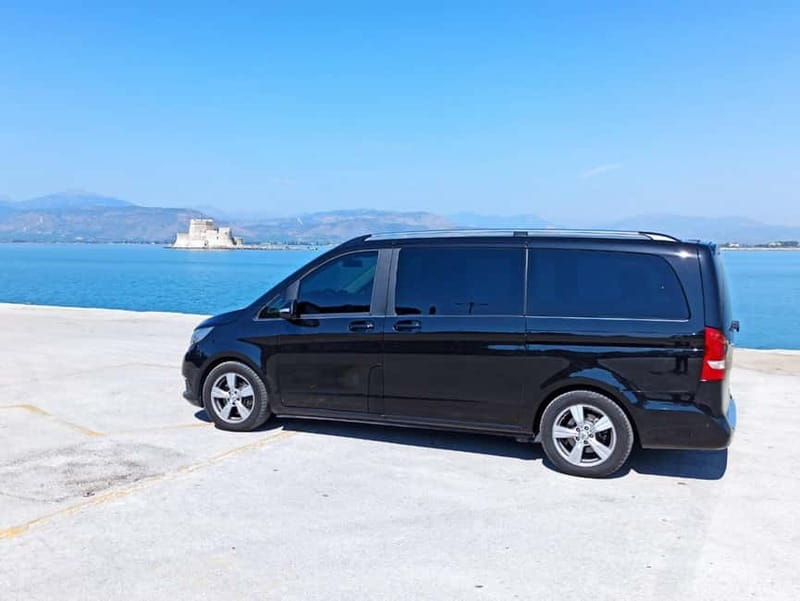
What I like most is the mix of faith and hard geography: the stops connect Paul’s travels to the physical city—bridge crossroads, the ancient harbor of Kechries, and the places where early Christians were shaped. Second, I like the way the day flows in a small group (limited to 11) with a driver-guide in an immaculate Mercedes electric limousine or mini van, plus photo stops and enough free time to actually look.
One thing to consider: monument tickets and lunch are not included, so you’ll want to plan for those costs and keep your walking comfort in mind during ruin time.
Key points worth knowing
- Mercedes electric limousine/mini van pickup from multiple Athens-area locations
- Paul-focused route through Corinth, Kechreai, and Akrocorinth
- Scheduled photo stops + free time at each site, so you’re not rushed
- Small-group feel (max 11 people) with lots of personal attention
- A guide-led blend of biblical context and real layout on the ground
- Easy logistics with a sign pickup at a black vehicle
In This Review
- Paul’s Footsteps Feel Close in Corinth Canal to Akrocorinth
- The Mercedes Pickup System Makes This Day Trip Feel Effortless
- Corinth Canal Photo Stop: Where Travel Got Easier and Stories Got Shared
- Ancient Corinth and the Temple of Apollo: The City Where Paul Spoke
- The Archaeological Museum Time Makes Ruins Readable
- Kechries (Kenchreai): Corinth’s Ancient Harbor and the Paul Connection
- Akrocorinth and the Church of Paul: The View, the Fortress Feeling, the Tents
- The Sign of Erastus and Other Small Details That Make It Real
- Timing, Walking, and What to Bring (So the Day Feels Good)
- Price and Value: What You Get for $145 Per Person
- Who This Tour Fits Best (and Who Might Want a Different Day)
- Should You Book This Paul’s Biblical and Ancient Corinth Tour?
- FAQ
- How long is Paul’s Biblical and Ancient Corinth Half-Day Tour?
- Where does pickup take place?
- Is the guide available in English?
- What is included in the price?
- What isn’t included?
- Is the tour wheelchair accessible?
- What size is the group?
Paul’s Footsteps Feel Close in Corinth Canal to Akrocorinth
Corinth is one of those places where the past refuses to sit quietly in a museum. Even if you only know the story in broad strokes, the landscape helps you “read” it: a commercial hub, a strategic location, and a city that pulled people in from everywhere. This tour leans into that. You’ll trace Paul’s path in a way that feels practical, not preachy—more like getting the map of his day, then walking it.
You also get a strong sense of why Paul’s message spread here. Corinth’s mix of travelers, trade, and ports created the kind of audience that could turn up in town quickly. Then your stops keep tying that idea back to concrete places: the canal, the ancient harbor at Kechreai, and the high fortress grounds of Akrocorinth.
The best part is the balance. You’re not just looking at stones. You’re getting story-and-setting together—how the site worked, what people likely did there, and how Paul’s preaching connected to real neighborhoods and movement.
The Mercedes Pickup System Makes This Day Trip Feel Effortless
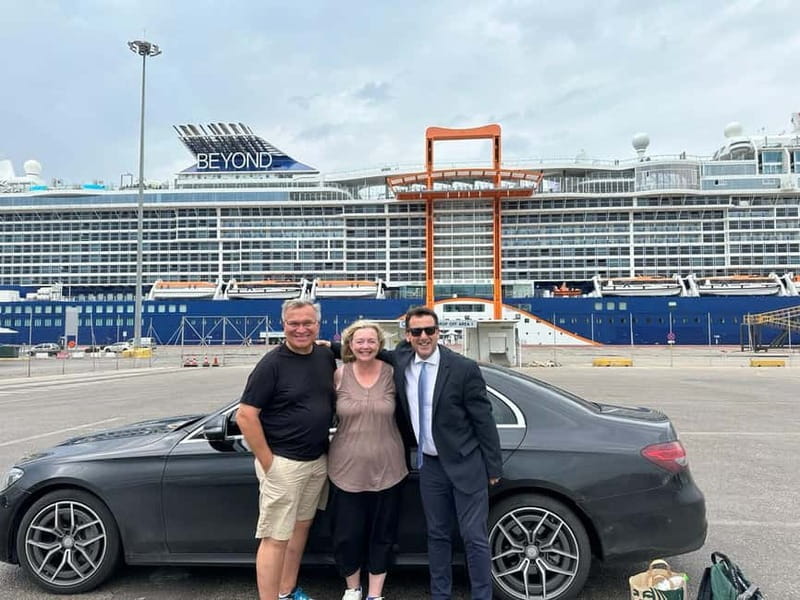
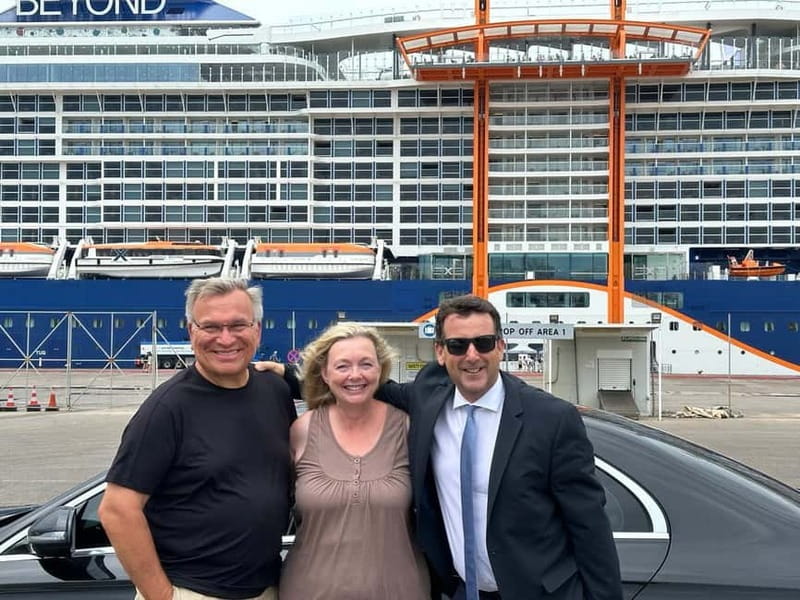
Logistics matter on a half-day tour. You want the driving handled and your time protected. Here, pickup is built around convenience: you can start from options like Piraeus, Attica, Spata, Laurium, and Rafina. The driver meets you with a sign showing your name at a black Mercedes vehicle, which reduces that early-morning guesswork.
Most days also include a comfortable stretch of highway riding between Athens-area pickup points and Corinth. That matters because you’re going out for a focused script of stops and you want your energy for ruins and views, not for constant transit stress.
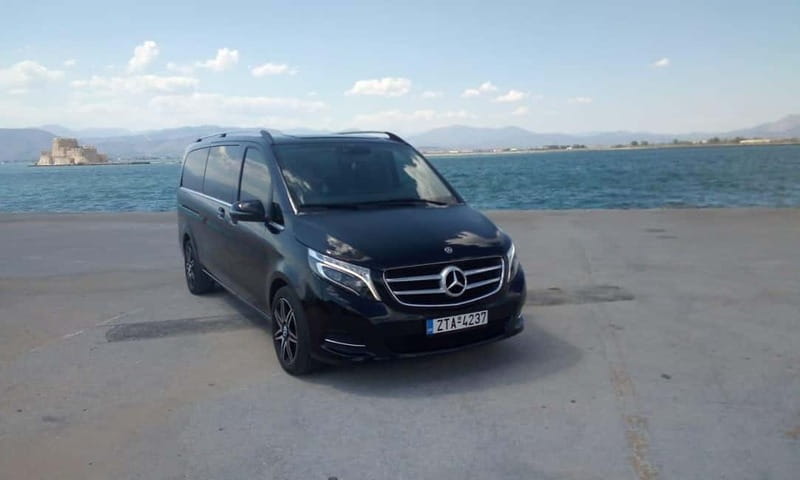
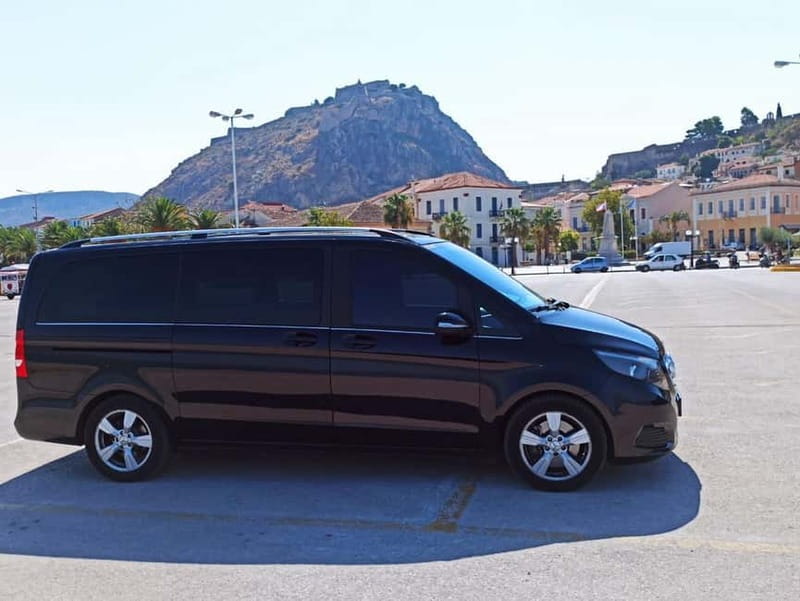
What you’re paying for is not just a car. It’s the full package: an English-speaking driver-guide plus comfortable transport in a Mercedes electric limousine or mini van for a small group (up to 11). In the field, this usually means you get faster “get set, go” handling at each stop—fewer delays, more time on-site.
One practical note: you will need to ask your operator about the exact pickup time for your chosen location. Also, the tour isn’t designed around long, slow museum marathons. It’s a guided circuit with photo windows and walk time.
Corinth Canal Photo Stop: Where Travel Got Easier and Stories Got Shared
The day often begins with the Corinth Canal. It’s short, but it’s a smart first stop. You get to orient yourself to the geography: Corinth isn’t just a city, it’s a corridor. The canal underscores how movement shaped the region—boats threading the narrow passage, trade and travel moving efficiently through an otherwise complicated landscape.
Expect a photo stop with a bit of time to walk and look around. This is also where your guide can set the tone—explaining why Paul’s audience wouldn’t be limited to locals. In a place like this, people arrived, talked, worked, and moved on. That same mobility is part of why Paul’s message could travel.
Potential drawback: you’re not spending a long time here. If you’re the type who loves canals and engineering viewpoints for hours, you might wish for more time. But as a kickoff stop, it does its job: it gets your head in the right place.
Ancient Corinth and the Temple of Apollo: The City Where Paul Spoke

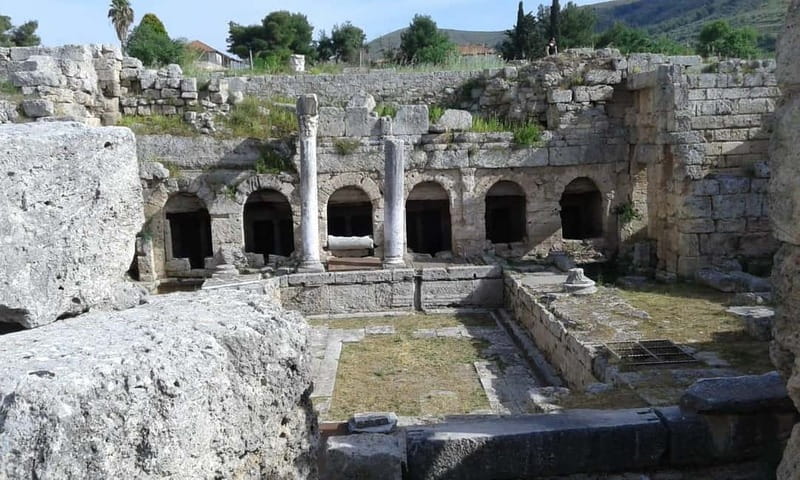
Once you reach the Ancient Corinth area, the tour shifts from orientation to interpretation. Ancient Corinth is where you can feel the weight of everyday life: marketplaces, streets, and public spaces where conversations could happen naturally.
You’ll have time to visit and wander with guidance. The guide’s job isn’t just to identify features, but to help you understand how this part of Corinth worked during Paul’s era. The point is to stop seeing it as ruins-only and start seeing it as a stage.
From there, you move toward the Temple of Apollo area. Even if you’re not a dedicated classical-stone person, this stop helps you grasp the city’s religious environment. A city with major cult sites also shapes the everyday beliefs and social habits of the people living there.
Photo stop plus a shorter sightseeing window works well here. You get enough time to recognize the space and relate it back to the story, without the day dragging.
The Archaeological Museum Time Makes Ruins Readable
Ruins become easier when you’ve seen artifacts close up. That’s why the Archaeological Museum of Ancient Corinth is a key part of the circuit. Museum time here is usually about guided viewing plus free time—enough to connect what you saw outside with what people actually held, built, and used.
Because tickets aren’t included, you’ll want to be ready to pay museum monument admission separately if needed. But even for travelers who usually skip museums, this one tends to help you connect dots fast.
What I appreciate is that your guide can point you toward what matters for the Paul connection—objects and context that make the city feel less abstract. And since you’ve already been walking around the site, the museum doesn’t feel like a detour. It feels like your decoder ring.
Kechries (Kenchreai): Corinth’s Ancient Harbor and the Paul Connection
One of the most meaningful stops is Kechries, also tied to the name Kenchreai. This is presented as the ancient harbor where Paul’s travels intersected with the life of the region. A harbor stop changes your perspective instantly. It stops being only about preaching spaces and starts being about routes, arrivals, departures, and the daily rhythm of maritime life.
You’ll usually get a visit with some free time and a short walk. Even if you don’t have all the details of Corinth’s port history in your head before you arrive, the location helps you understand how people moved. And that’s exactly what you want for a Paul itinerary: the movement tells you why communities could form, grow, and stay connected.
If you love coastal geography, this is a highlight. If you prefer only the biggest ruins, you might find this stop a little more atmosphere-based. Still, it’s an essential part of making Paul’s Corinth feel like a living network rather than a single city block.
Akrocorinth and the Church of Paul: The View, the Fortress Feeling, the Tents
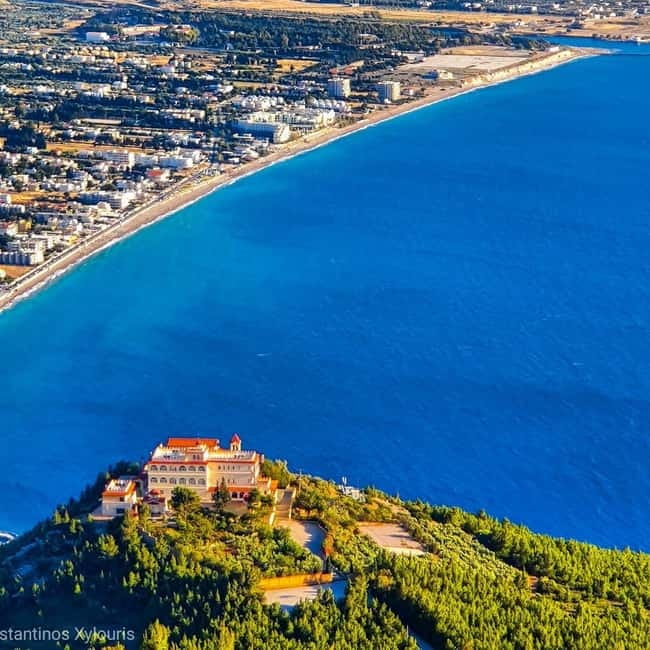
Next comes the big elevation: Akrocorinth. This is where the story gains dramatic physical context. You’re going from the city’s plane to the fortress grounds, and that height changes how everything feels—distance, visibility, defense, and the sense that this place mattered.
The tour highlights the Church of Paul on the Akrocorinth grounds and also connects the area to Paul’s practical work, including the reference to him making tents. Even when you treat the story respectfully and not literally, the point lands: this was a real person working, teaching, and living in a place where daily survival and public witness had to coexist.
You’ll likely also get one of the day’s best moments for photos: the views across the region. Bring the right expectations here. The view is great, but the visit is also about the sense of place—why someone could preach, teach, and still see the city layout below like a living map.
If you have mobility limits, plan your pace. Ruins-and-views days are rarely stroller-friendly, even when a vehicle is wheelchair accessible.
The Sign of Erastus and Other Small Details That Make It Real

Paul itineraries often get the big names right: Corinth, Akrocorinth, major sites. What makes this tour feel better is the attention to details that turn “textbook place” into “I can point at that.”
A highlight mentioned repeatedly is the Erastus inscription. Seeing an inscription in person changes how you think about early Christianity. It’s no longer only letters and sermons. It’s evidence that real individuals left traces in Corinth’s public space.
You may also hear guidance that helps you connect modern place names with older locations, so you can avoid that frustrating moment where you wonder if you’re standing in the right exact spot. The guide’s job is to keep you oriented, and the best guides do it without drowning you in trivia.
Timing, Walking, and What to Bring (So the Day Feels Good)
This tour is built as a guided circuit over about 6 hours. That includes driving time and multiple stops with photo windows and walking. In practice, it means you’ll spend most of your time outside—some on walkways, some on uneven ground.
Here’s what I recommend you plan for:
- Comfortable shoes with grip. Ancient surfaces can be slippery or uneven.
- Sun and water management. The day includes several outdoor stretches, so plan accordingly.
- A plan for tickets. Since monument and museum tickets aren’t included, keep cash/card ready for admissions.
- A lunch plan. Lunch isn’t included, so either eat during allotted free time if there’s a convenient option or plan to handle it after the tour.
Another note: alcohol and drugs aren’t allowed. If you’re traveling with a group that likes to bring wine for the road, this tour is not that vibe.
Price and Value: What You Get for $145 Per Person
At $145 per person for a 6-hour, small-group tour, you’re paying for four things:
- Transportation in a Mercedes electric limousine or mini van with multiple pickup locations
- A live English-speaking driver-guide who provides context at each stop
- Built-in time for photos and short walks, so you don’t feel chained to a schedule
- Access to the Paul-focused route across key Corinth sites and viewpoints
You’re not paying for everything under the sun. Monument tickets and lunch are not included. That’s the main “extra” you’ll budget for.
Still, the value is strong if you care about understanding the sites instead of just collecting photos. Many independent self-guided approaches end with you using your phone to decode everything, which can work, but it’s slower and less coherent. Here, the guide helps you connect each stop back to Paul’s timeline in 51 A.D., when he spent about 16 months in Corinth before leaving by boat for Ephesos.
Who This Tour Fits Best (and Who Might Want a Different Day)
This is a good fit if you:
- Want a Paul’s Corinth itinerary without juggling buses, parking, and multiple admissions
- Like guided storytelling tied to real geography
- Prefer a small group where you can ask questions and get photo help
- Travel with teens or family members who still want context, not just sightseeing
It may be less ideal if you:
- Want a long, slow museum day with lots of indoor time
- Need very low walking or zero-steps access at ruins
- Are counting on tickets and lunch being included in the base price
The wheelchair accessibility note is helpful. Still, the sites themselves have outdoor terrain and uneven ground, so plan with realism.
Should You Book This Paul’s Biblical and Ancient Corinth Tour?
If your goal is to understand Paul’s Corinth story in a way that feels grounded—canal geography, ancient harbor context, city ruins, then the fortress views—this tour is worth your attention. The biggest reason to book is the structure: you get multiple key Paul-related locations packed into one day with an English-speaking guide who keeps you oriented.
If you’re the kind of traveler who likes doing your own reading at home, you can still appreciate this. If you’re the kind of traveler who wants the story explained in the moment while you stand in the right place, you’ll probably enjoy this even more.
The practical side is strong too: pickup is organized, the vehicle is comfortable, and the group is small. Just remember to budget for monument tickets and plan your lunch, and you’ll be set for a smooth half-day.
FAQ
How long is Paul’s Biblical and Ancient Corinth Half-Day Tour?
The tour duration is listed as 6 hours, and starting times depend on availability.
Where does pickup take place?
Pickup is available from multiple locations in the Athens/Peloponnese area, including Piraeus, Attica, Spata, Laurium, and Rafina.
Is the guide available in English?
Yes. The tour includes a live English-speaking driver-guide.
What is included in the price?
You get an English-speaking driver-guide and transportation in a luxury Mercedes electric limousine or mini van.
What isn’t included?
Lunch and tickets for the monuments are not included.
Is the tour wheelchair accessible?
Yes, the tour is described as wheelchair accessible.
What size is the group?
The tour is limited to a small group with a maximum of 11 participants.