REVIEW · YEREVAN
Private Day Trip from Yerevan to UNESCO World Heritage Sites
Book on Viator →Operated by Explora Armenia · Bookable on Viator
UNESCO sites in one smooth day is rare. This private 6–7 hour route from Yerevan ties together Armenia’s Christian roots and older pagan world in a way that actually makes sense on a clock. You hit major UNESCO World Heritage stops with a guide who keeps the story clear, not just a list of names.
I love the hour-per-stop rhythm. You get time to look, ask, and take it in, without feeling like you’re speed-walking through history. I also like the cost setup: several stops have free admission, so most of what you pay upfront stays predictable.
One thing to plan for: you’ll pay extra entry at Zvartnots and Garni (each listed as 1500 AMD). If you’re the type who hates any add-ons, that’s the main catch, and the day is full enough that you won’t have long solo detours.
In This Review
- Key things that make this day trip work
- Why this UNESCO loop from Yerevan feels efficient
- Price and what you really get for $89.36
- The ride: hotel pickup, Wi‑Fi, and AC that actually help
- Stop 1: Etchmiadzin Cathedral and Armenia’s early Christianity
- Stop 2: Saint Hripsime Church and the martyr legend
- Stop 3: Zvartnots ruins and why the 7th century still lands
- Stop 4: Charents’ Arch and the Mount Ararat viewpoint
- Stop 5: Geghard Monastery and its rock-cut feel
- Stop 6: Garni Temple, the pagan thread in the story
- How to get the most out of a tight 6–7 hour schedule
- Who should book this private day trip
- Should you book it?
- FAQ
- What is the duration of the private day trip?
- What is the price per person?
- Are hotel pickup and drop-off included?
- What language is the tour offered in?
- Which site entrance fees are included and which are not?
- Is lunch included?
- Is this a private tour?
Key things that make this day trip work
- Only your group goes. It’s a true private format with hotel pickup and drop-off.
- A guide who explains, not recites. Reviews highlight precise information and a friendly, engaging approach.
- A logical UNESCO chain. Christian-era sites and medieval ruins connect through the same day.
- A real photo stop for Mount Ararat. Charents’ Arch is built for the view, not just a quick glance.
- Most admissions are free. You only need to budget for Zvartnots and Garni tickets.
- Comfort on the road. Air-conditioning, bottled water, and Wi‑Fi help when the schedule stays tight.
Why this UNESCO loop from Yerevan feels efficient
This isn’t one of those tours where you spend half the day in traffic and the other half standing in lines. The pacing is built around short, meaningful stops. You typically get about an hour at each major site, so you can read, look around, and still stay on schedule.
What makes the route extra satisfying is the way it moves through time. You start at Etchmiadzin, the heart of the Armenian Apostolic Church, then shift to Hripsime’s martyr story and 7th-century architecture. After that, you shift again to the medieval world of Zvartnots and Geghard. Then the day ends with a different worldview at Garni, one of the few preserved pagan temples in the Caucasus.
If you want a day trip that gives you context, this works. The guide isn’t just pointing at stones. You’ll understand why these places matter, including the stories and the architecture people built around faith and power.
And yes, the drive is part of the experience. You’re in a comfortable, air-conditioned vehicle with Wi‑Fi and bottled water, so you don’t arrive frazzled.
You can also read our reviews of more private tours in Yerevan
Price and what you really get for $89.36
At $89.36 per person, you’re paying for more than transportation. You’re paying for a private guide-led day, the hotel transfer, and a set route that targets several top UNESCO-listed sites without you having to plan the logistics.
Here’s the practical side: several stops are marked with free admission. Etchmiadzin Cathedral and Saint Hripsime Church are listed as free. Charents’ Arch and Geghard are also free in the details provided. That keeps your day from turning into a surprise-cost marathon.
Two places are the exception. Zvartnots has an entrance fee of 1500 AMD, and Garni is also 1500 AMD. So figure out your budget for those two tickets. In exchange, you get ruins and a pagan temple that most visitors would struggle to fit in if they were traveling independently.
Also note that lunch is optional, not included. If you prefer to eat slowly, you may want to plan that extra time carefully. If you’re the type who likes to keep the day moving, you can keep lunch simple or skip it until later.
Value-wise, the biggest win is the “attention per hour.” You’re not just buying access to places; you’re buying time with an English-speaking guide to connect the dots.
The ride: hotel pickup, Wi‑Fi, and AC that actually help
This tour includes hotel pick-up and drop-off, which is honestly the difference between a relaxing day and a stressful one. Starting from your hotel means you don’t waste time figuring out meeting points or chasing buses.
Once you’re on the road, the vehicle has Wi‑Fi and is air-conditioned, plus bottled water. That matters because the schedule is tight enough that you’ll want to stay comfortable between stops, especially in warmer or cooler weather.
One more small plus: it’s offered in English. In real terms, that means you can focus on understanding rather than trying to piece together information from signs. In the past, guides like Mari or Marya have earned strong praise for explaining not just monuments, but also the broader situation of the country and its culture.
If you’re traveling as a couple, friends, or family group, private format is also the easiest way to manage your pace. Want to linger at a church moment longer? You can usually do it without holding up a large group.
Stop 1: Etchmiadzin Cathedral and Armenia’s early Christianity
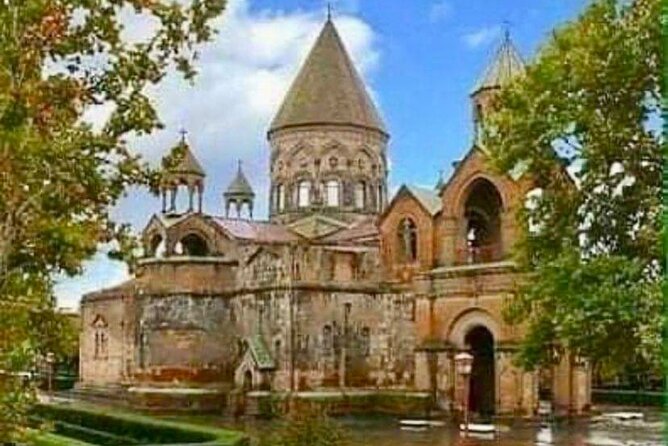
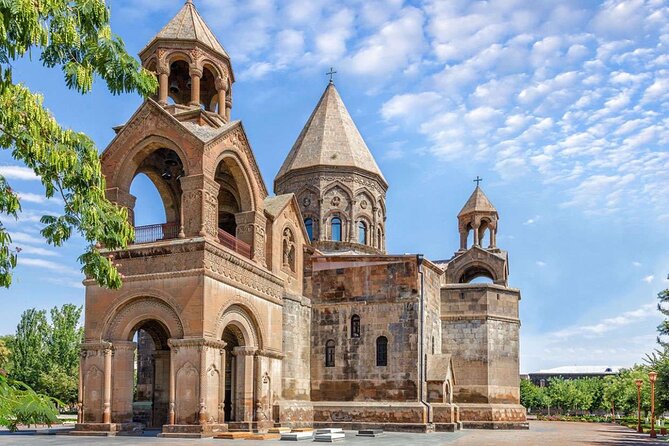
Etchmiadzin Cathedral is the religious center for the Armenian Apostolic Church. Armenia, according to the tour details, was the first country in the world to adopt Christianity as a state religion in 301. Standing there, you get the sense that this isn’t only a building. It’s a symbol of continuity.
You’ll spend about an hour here, and the admission is listed as free. That’s a rare perk on a UNESCO-heavy day. It also gives you breathing room to take your time with what you’re seeing: religious architecture, the idea of a national spiritual hub, and the way modern Armenian identity grew from early Christian roots.
This is also a UNESCO-listed stop (the cathedral was listed by UNESCO in 2000). UNESCO recognition can feel abstract until you understand what makes a place significant. In this case, the significance is both historic and spiritual: a site tied to the early Christian era and the ongoing religious life of Armenia.
Practical tip: because this is a church, keep your expectations respectful and dress appropriately. If you’re unsure what that means for you, bring something that covers shoulders and knees just in case you want to avoid any awkward moments.
Stop 2: Saint Hripsime Church and the martyr legend
Next comes Saint Hripsime Church, another UNESCO World Heritage site. You’ll spend about an hour, and the admission is listed as free.
The story here is the kind that explains why churches in Armenia feel so tied to legend. The details provided trace Hripsime as a devoted follower of Christ who fled persecution by the Roman Emperor Diocletian. She refuses to marry Trdat III, described as a pagan Armenian king, and chooses martyrdom instead. After her death, a small chapel was erected over the spot where she was murdered.
Later, in the 7th century, a church described as a masterpiece of Armenian architecture was built in its place by order of Catholicos Komitas. That blend is what I like: you’re seeing the physical result of a legend that shaped religious meaning and community memory.
When you’re looking at the church itself, try not to rush past the details. The point isn’t only that it’s old. It’s that the architecture was built to carry a story forward.
Also, don’t skip the chance to ask your guide about how these martyr narratives function in Armenian Christian tradition. Good guides connect the dots quickly, and you’ll likely walk away with a clearer sense of why this site became one of the key names in Armenian religious history.
You can also read our reviews of more historical tours in Yerevan
Stop 3: Zvartnots ruins and why the 7th century still lands
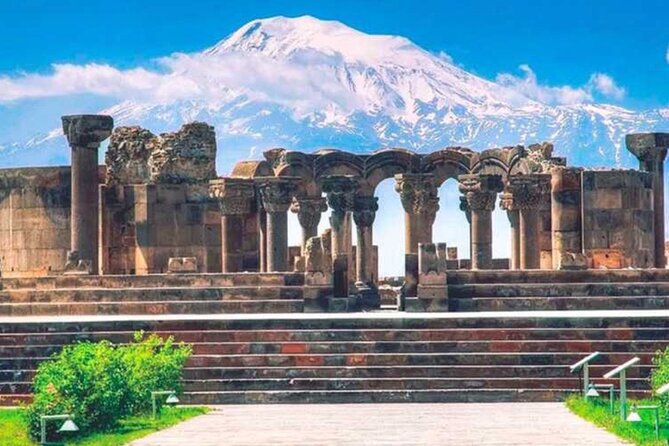
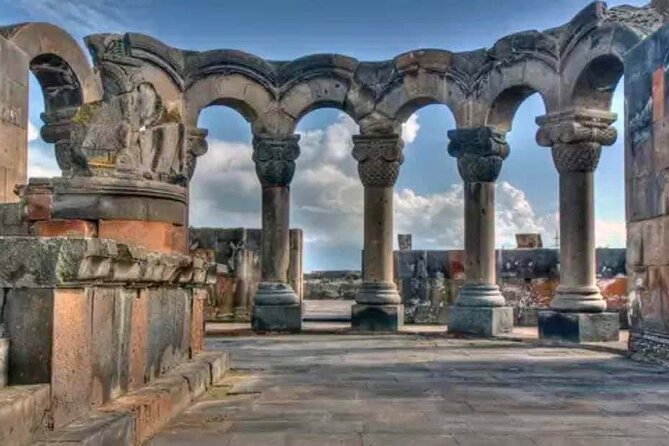
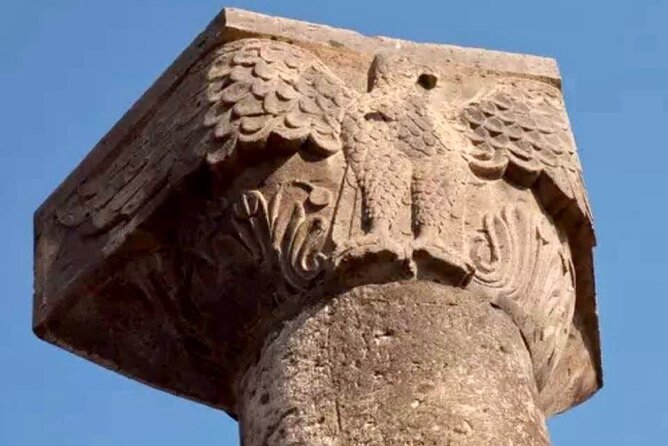
Zvartnots Temple is one of those places where ruins are still powerful. You’re visiting Zvartnots Cathedral, a medieval Armenian cathedral built in the seventh century, and you’ll see the designated UNESCO ruins.
The tour details list about one hour here, and the entrance is not included (1500 AMD). Because this is paid separately, I recommend keeping cash or card ready so you don’t lose time at the counter.
Even without being fully intact, Zvartnots tells you a lot. The architecture of 7th-century Armenian church design is part of what UNESCO recognized. Standing near the remains, you can imagine the scale and form, and you start to see how medieval religious architecture served as both spiritual symbol and civic statement.
One way to make this stop feel rewarding: use the guide to translate what you’re seeing. Instead of just asking what the ruins are called, ask what made the site important in its day and how it relates to other churches you’ve visited today.
This is also a good stop for photos, but don’t let your camera become the only reason you look. Take a moment first to understand the layout and the structure, then photograph. Your pictures will look better when you’ve actually grasped what you’re framing.
Stop 4: Charents’ Arch and the Mount Ararat viewpoint
Then you get a much lighter, more scenic stop at Charents’ Arch. It’s about an hour, and admission is free.
Why it matters: it’s built around a view of Mount Ararat. You could treat it like a quick photo pit stop. Or you can treat it like a mental pause in a history-heavy day. After churches and ruins, the view gives your brain somewhere to reset.
If Ararat is visible, it can totally change your sense of place. Armenia’s identity isn’t only made of monuments. It’s also tied to geography and the way mountains show up in culture, stories, and national imagery.
Practical tip: bring sunglasses and plan on wind. Viewpoints often act like weather amplifiers. Also, if you’re someone who hates waiting for perfect light, accept that the weather decides that. Use the time to talk to your guide about why this viewpoint is so symbolic, and then take the photos you can.
This stop is a nice reminder that you’re traveling through a real country, not a museum route.
Stop 5: Geghard Monastery and its rock-cut feel
Geghard Monastery is a UNESCO World Heritage site and one of the most atmospheric stops in the day. You’ll spend about an hour here, and admission is listed as free.
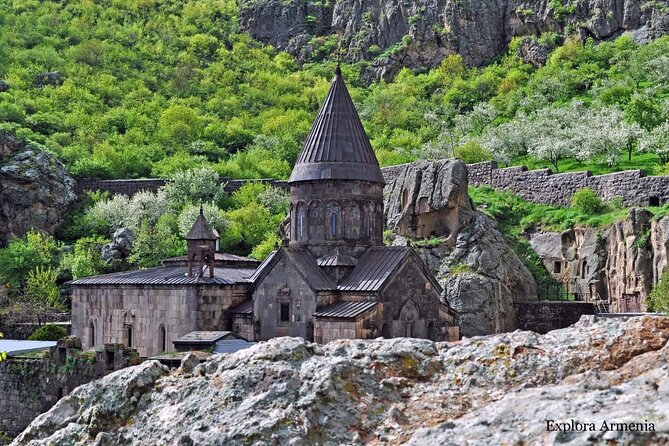
The tradition behind Geghard goes back early Christianity. According to the details provided, it was founded in the 4th century by Saint Gregory on the site of a sacred spring. What you see today includes constructions that date to the 13th century, and part of the monastery is partially excavated in rock.
That rock-cut element is the draw. The tour description points to austerity and the way the monastery is shaped by its dramatic canyon setting, with precipices and curved cliffs around it. In plain terms: Geghard doesn’t feel like it was built in open space for convenience. It feels like it was built where the terrain forced a certain kind of architecture and spiritual focus.
To get more out of this stop, slow down when you’re near the rock structures. It’s easy to rush because it’s scenic, but the carvings and the shape of the spaces are part of the story.
This is also a good place to ask your guide how the sacred spring idea ties into the monastery’s layout and religious meaning. When guides explain that connection well, the site stops being just impressive and starts being understandable.
Stop 6: Garni Temple, the pagan thread in the story
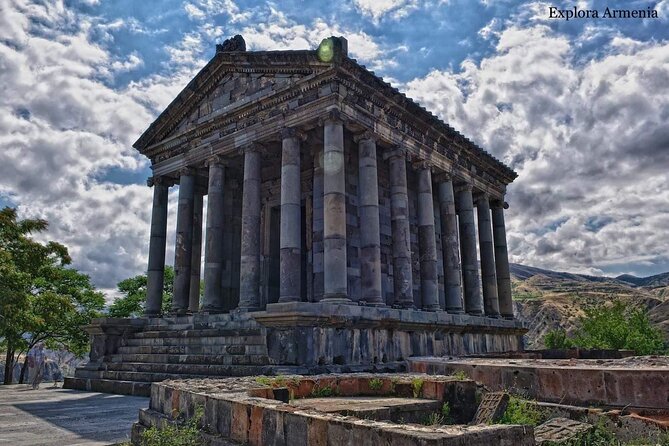
The day closes with Garni Temple, described as the only preserved pagan temple in the entire territory of the Caucasus. That’s a big claim, and it’s exactly why it’s worth the trip: it gives you a contrast to the Christian sites you’ve already seen.
Garni is dated to the second half of the 1st century and was dedicated to the Sun God. After Armenia’s Christianization, the temple was reportedly used as a royal residence. You’re basically seeing how power and belief change over time without completely erasing the old.
You’ll spend about an hour here, and the entrance is not included (1500 AMD). Like Zvartnots, that’s a place to budget for ahead of time.
What I like about Garni in this specific day plan is the “dialogue” it creates. Instead of ending on another church, the tour forces you to notice that Armenia’s past holds multiple layers. You get a sense of how older traditions survived, changed roles, and remained visible even as Christianity became dominant.
If you’re a history person, you’ll enjoy connecting Garni’s timeline to what you learned at Etchmiadzin and Hripsime. If you’re more of a visual traveler, you’ll still appreciate the temple’s distinct style and the way it shifts the mood of the final hour.
How to get the most out of a tight 6–7 hour schedule
The biggest thing to know is that this is a full day. With about an hour at each main stop, plus driving between them, you won’t have time for long wandering loops.
So your best strategy is to decide what you want most:
- If you love architecture, ask your guide to point out specific design features at churches and ruins.
- If you love stories, focus on Hripsime and the martyr narrative. It’s one of the most memorable threads in the day.
- If you want photos, plan for Charents’ Arch and Garni, then stop taking pictures long enough to actually look first.
You’ll also appreciate having comfortable shoes. The stops involve walking on uneven ground and uneven transitions between viewpoints and buildings. That’s true for many heritage sites, and it’s especially true when you’re moving between churches and ruins.
If you’re sensitive to crowds, private format helps. There’s no larger tour group built into your day beyond your own party. That doesn’t erase all foot traffic, but it can make the experience feel easier to manage.
Also, the tour provides bottled water, which is a small detail that pays off. You’ll still want to drink, especially if you’re taking photos and spending time outdoors at viewpoints.
Who should book this private day trip
This is a strong choice if you want:
- UNESCO sites without complicated planning
- A private day where you can move at your group’s pace
- Clear English explanations (and guides with a track record of strong communication)
- A balanced day that mixes religious sites, medieval ruins, scenic viewing, and a pagan temple
It may be less ideal if you dislike paying additional entrance fees or if you need lots of free time to roam without a schedule. The itinerary is built to cover a lot, so you’re trading spontaneity for structure.
If you’re short on time in Armenia and want a “best of” day that still feels coherent, this fits the bill.
Should you book it?
I’d book this if you want a well-paced, story-based UNESCO day trip with real variety. The value is strongest when you’re happy with a guided format and you’re okay budgeting for the two extra sites: Zvartnots and Garni.
The real reason I’m comfortable recommending it is the way the day hangs together. Etchmiadzin sets the Christian anchor, Hripsime adds the martyr legend, Zvartnots and Geghard bring in medieval architectural power, Charents’ Arch gives you a geographic reset with Ararat views, and Garni finishes with the pagan thread. You end the day with more understanding than you started with, and that’s the goal of any good day trip.
FAQ
What is the duration of the private day trip?
The tour lasts about 6 to 7 hours.
What is the price per person?
The price is $89.36 per person.
Are hotel pickup and drop-off included?
Yes. Transfer is included with hotel pick up and drop off.
What language is the tour offered in?
The tour is offered in English.
Which site entrance fees are included and which are not?
Etchmiadzin Cathedral, Saint Hripsime Church, Charents’ Arch, and Geghard are listed as free. Zvartnots entrance is 1500 AMD and Garni entrance is 1500 AMD, and both are not included.
Is lunch included?
Lunch is not included, but it’s optional with an additional fee.
Is this a private tour?
Yes. It’s private, and only your group participates.