REVIEW · YEREVAN
Private tour to UNESCO heritage Echmiadzin churches, Zvartnots and Sardarapat
Book on Viator →Operated by Hyur Service · Bookable on Viator
UNESCO churches in one day? This private Yerevan tour strings together Etchmiadzin, Hripsime, Gayane, Zvartnots, and Sardarapat, with UNESCO stops that show how Armenian faith and national memory overlap. I like the private setup because the schedule feels designed for your questions, not a crowded group shuffle.
You’ll also get pickup and drop-off from your Yerevan hotel, so you lose very little time to logistics. One thing to know up front: reconstruction work may limit what you can see at the Mother Cathedral, so expect an outside look in some cases.
In This Review
- Key highlights at a glance
- A private UNESCO route you can actually manage in one day
- Etchmiadzin Monastery: Mother Cathedral with a realistic view plan
- Hripsime Church: a shorter stop with a big spiritual anchor
- Saint Gayane Church: another UNESCO site that reinforces the theme
- Zvartnots Temple ruins: 50 minutes for one of the most impressive payoff views
- Sardarapat memorial: Armenian 1918 history in sculpture and symbolism
- Price and logistics: what $116.10 per group really buys
- How the timing works across 6–7 hours
- Guides and driving: why organization matters on a route like this
- Who should book this day trip
- Should you book this tour to Echmiadzin, Zvartnots, and Sardarapat?
- FAQ
- What is the group size for this private tour?
- How long does the tour take?
- Are hotel pickup and drop-off included?
- Is a guide included, and what languages are offered?
- Are UNESCO site entrance fees included?
- What happens if weather is bad?
Key highlights at a glance
- Private group up to 3 means a more personal pace across multiple sites
- Five major heritage stops in one day saves you from piecing together separate tours
- A guide who links religion to Armenian history helps the churches make more sense
- Reconstruction at Etchmiadzin can mean Mother Cathedral views are outside only
- Zvartnots ruins for the big view in a tight time window
- Sardarapat memorial in the Ararat valley mixes 1918 history with strong visual symbols
A private UNESCO route you can actually manage in one day
This is the kind of Armenia day trip you do when you want maximum meaning per hour. You’re not just hopping between churches. You’re moving through UNESCO heritage sites that connect architecture, early Christianity, and how later events are remembered in stone and sculpture.
The best part for you is how the day is paced. Etchmiadzin, Hripsime, Gayane, Zvartnots, and Sardarapat are all grouped closely enough that you can see a lot without feeling like you’re sprinting from one far-flung region to another. And because it’s private, your guide can slow down when you want more explanation, or speed up if your priority is quick site time.
If you book this early, you’ll likely have an easier time choosing your exact timing. This tour is commonly reserved about 86 days in advance, which tells me it’s popular for a reason: it’s efficient and it covers the right stops for a first serious heritage day.
You can also read our reviews of more private tours in Yerevan

Etchmiadzin Monastery: Mother Cathedral with a realistic view plan
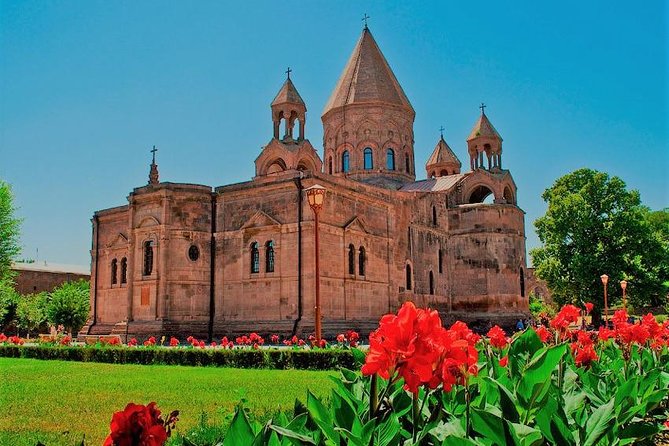
Your first stop is Etchmiadzin Monastery, home to the Mother Cathedral of Armenia. The cathedral is a UNESCO heritage site and is described as the 1st Christian church in the world—an attention-getter even before you start looking closely at the grounds.
Here’s the practical twist: due to reconstruction works, you may only be able to see the Mother Cathedral from outside. That doesn’t make the visit pointless. Often, an outside-focused visit forces you to notice the bigger layout, how the complex sits in the monastery area, and how the church functions as a living religious center, not just a photo stop.
You get about an hour here. Admission is not included, so you should plan for a bit of extra spending on top of the base tour price. If you want to make the most of a possible outside-only scenario, I’d treat this as your orientation stop. Walk slowly through what you can access, let your guide explain what would normally be visible, and then use the rest of the day to see how the other churches’ details add texture to the story.
Hripsime Church: a shorter stop with a big spiritual anchor
Next comes Saint Hripsime Church. This UNESCO site has a special claim to attention: the tomb of St. Hripsime is located here.
The time window is shorter—about 40 minutes—and that’s actually helpful. In a day packed with heritage, you don’t always need long visits. What you do want is focus. Hripsime is the kind of place where your guide’s explanation can turn a quick stop into a memorable one, because the tomb connection gives the architecture and atmosphere weight.
Admission is free here, which is nice for two reasons. First, it keeps your budget predictable. Second, it encourages you not to rush out of cost anxiety; you can simply take the time the site needs.
If you’re into the intersection of early Christian tradition and Armenian cultural identity, Hripsime is one of your strongest “meaning-per-minute” stops.
Saint Gayane Church: another UNESCO site that reinforces the theme
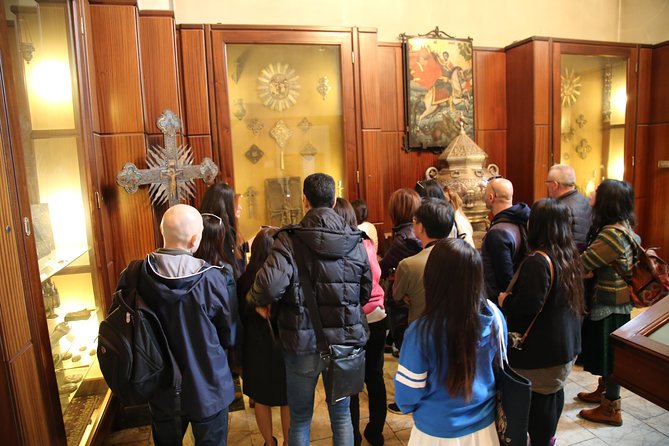
After Hripsime, you’ll head to Saint Gayane Church, also a UNESCO heritage site. Like Hripsime, it’s scheduled for about 40 minutes and admission is free.
Gayane works well right after Hripsime because the day’s theme becomes clearer. You start to see the pattern: these aren’t random church visits. They’re part of a set of heritage places that build a coherent picture of Christian history in Armenia.
Your guide will likely help you compare details and context. Even when time is tight, you can still look for differences in structure, setting, and the way the churches relate to the surrounding monastery area. This is the kind of stop where good commentary matters more than extended wandering.
Zvartnots Temple ruins: 50 minutes for one of the most impressive payoff views
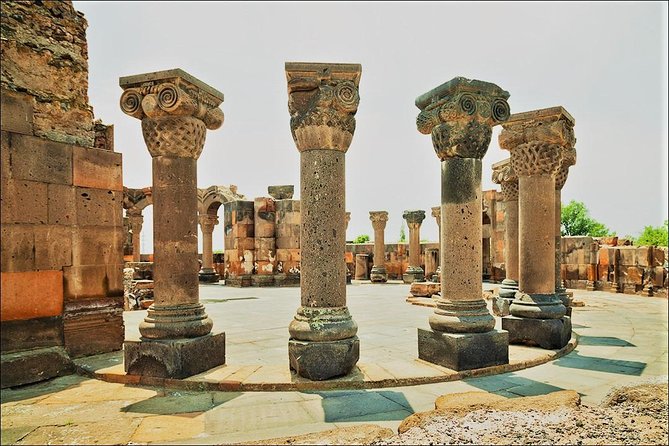
Then it’s on to Zvartnots Temple, where you’ll visit the ruins of the temple. This UNESCO site is known for an incredible view, and the ruins themselves are a major draw if you like early architecture and how it has survived over time.
You’ll have about 50 minutes. For ruins, that’s a realistic amount of time. You need just enough time to walk the space, orient yourself, and take in how the structure reads from different angles.
Admission is not included for Zvartnots, and there’s also an additional entrance fee mentioned for Zvartnots (listed together with Sardarapat). Plan on paying 2300 AMD per person, roughly $6. I like seeing clearly stated extra costs like that because it helps you budget without last-minute stress.
If you’re the type who gets satisfaction from seeing what’s left of something grand, Zvartnots is one of those stops where your patience pays off.
Sardarapat memorial: Armenian 1918 history in sculpture and symbolism
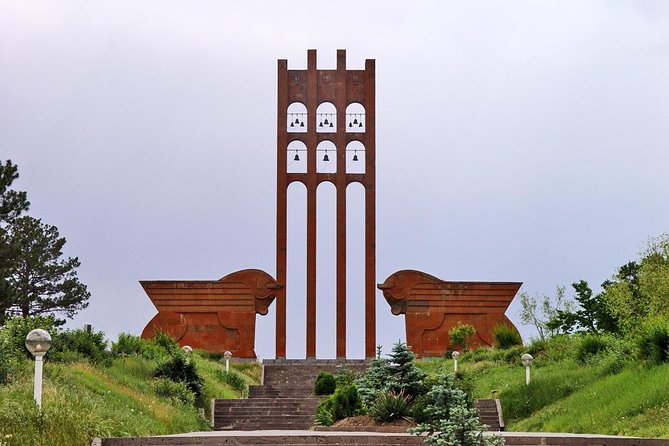
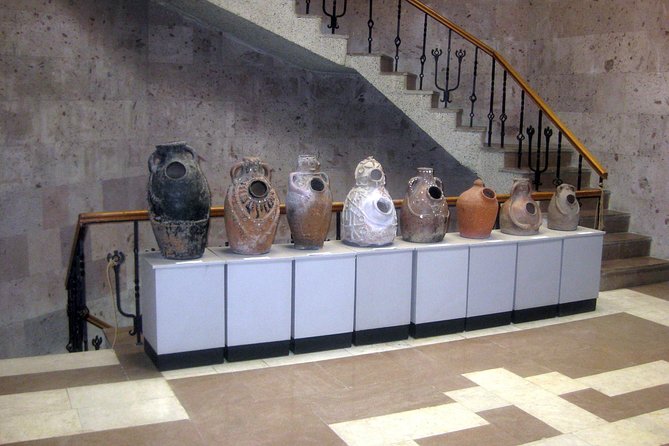
Your final stop is the Sardarapat Memorial. This one is built in the sunny Ararat valley, and it’s designed to be more than a plaque-and-walk site. The memorial uses allegories to represent the Armenian–Turkish battle in 1918 and to glorify the Armenian victory.
The standout details are visual. Near the entrance, you’ll see two huge winged bulls symbolizing the persistence of the Armenian nation. Then there’s an alley fringed by five eagles, which leads toward an ethnography museum area with exhibitions of Armenian culture, trades, and crafts.
You’ll have about an hour here. Admission is not included, and this is also where the entrance fee applies (again listed as 2300 AMD per person for Zvartnots and Sardarapat together). So by the time you reach this stop, you’re effectively paying for two of the day’s biggest “experience” moments: the ancient ruins and the national memorial complex.
If you want your trip to connect faith history to later national history, Sardarapat does that job well. It also gives you a change of pace from churches without breaking the overall theme.
Price and logistics: what $116.10 per group really buys
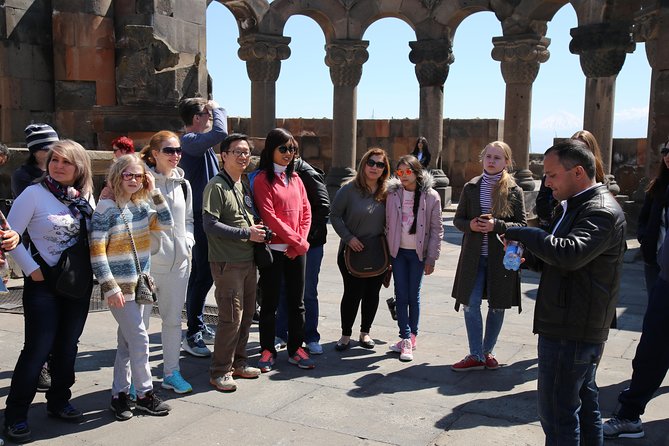
The tour price is $116.10 per group, up to 3 people. That’s the headline, but the real value is what’s handled for you.
What’s included:
- a professional English or Russian-speaking guide service (if you choose the with-a-guide option)
- an air-conditioned vehicle and professional driver
- free pickup and drop-off within Yerevan
- bottled water
- vehicle and passenger insurance
- extra stops on the route upon request
- a mobile ticket
What’s not included:
- lunch, estimated at 6500–7000 AMD (about $17–$18)
- entrance fees for Zvartnots and Sardarapat at 2300 AMD (about $6 per person)
Here’s the practical way to think about value. If you’re traveling as a pair or small group, private transportation plus a guide for 6–7 hours can be the best use of your time. You’re getting a stitched-together heritage day where the driving is handled and the sites have a narrative thread.
Where you need to be ready is with the extras. Admission for Zvartnots and Sardarapat is a clear add-on, and lunch is also on you. Also, the Mother Cathedral’s reconstruction note can affect what you see, but that’s something the tour can’t fully control, and it’s better to know than to be surprised mid-day.
One more detail I appreciate: this is offered in English, and you can get confirmation at booking time. That reduces the usual “will it work out?” stress.
How the timing works across 6–7 hours
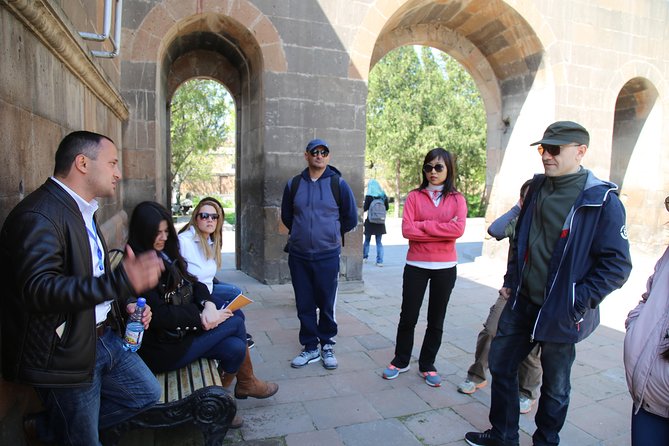
This is a 6 to 7 hour experience, and the site order matters. You start with Etchmiadzin, which sets the religious foundation. Then you move into Hripsime and Gayane to reinforce the pattern of heritage churches. After that, you switch to Zvartnots ruins for an archaeological feel and a major view payoff. You finish with Sardarapat, which adds the 1918 history layer and visual symbolism.
Each stop includes its own time block:
- Etchmiadzin Monastery: about 1 hour
- Saint Hripsime: about 40 minutes
- Saint Gayane: about 40 minutes
- Zvartnots Temple: about 50 minutes
- Sardarapat Memorial: about 1 hour
That structure works well if you like seeing a lot but still want enough minutes to notice details. If your style is “I want to spend hours in one place,” you may find this schedule a little full. But if you want a compact heritage day that doesn’t eat your whole vacation, it’s nicely balanced.
Guides and driving: why organization matters on a route like this
On a tour like this, good guiding isn’t about reciting facts. It’s about helping you connect what you’re looking at with why it matters. The tour includes a professional guide service (English or Russian, depending on your choice), and that guide time is what turns a series of buildings into a story.
In the real-world operation of this tour, guides such as David, Airpin, Meline, Tamara, Elizabeth, and Hamas have been part of past trips. The common thread from those experiences is clear communication and a respectful pace. Drivers named Hamik, Artur, Ararat, Arthur, Joseph, and Gregory have also been mentioned for careful, polite service.
I can’t promise you’ll get any specific person, but the pattern is useful: the service is designed for smooth movement, and that matters when you’re packing multiple UNESCO sites into one day.
Who should book this day trip
This tour is a strong fit if:
- you’re in Yerevan for a short time and want a first big heritage day
- you care about early Christianity and how Armenian history evolved over time
- you prefer private pacing over joining a larger group
- you want hotel pickup and a driver to handle the time-consuming parts
It may not be the best match if:
- you’re expecting full cathedral interior access at Etchmiadzin Monastery (reconstruction can limit viewing)
- you dislike paying separate site entrance fees for Zvartnots and Sardarapat
- you want an unhurried day with long stays at fewer sites
Should you book this tour to Echmiadzin, Zvartnots, and Sardarapat?
I think this is an easy yes if you want one efficient day that covers the key UNESCO sites tied to Armenian Christianity, then ends with national history in a striking memorial setting.
Book it if you like guided context and you want the pickup-and-drop-off convenience. The private group up to 3 is also a good value lever: it can stretch your money further than trying to assemble separate taxis and separate tickets.
I’d pause and reconsider if interior access at the Mother Cathedral is a top priority for you, since reconstruction can mean an outside-only look. If that matters, still consider booking because the rest of the day is thoughtfully structured: Hripsime and Gayane (free), Zvartnots (ruins and view), and Sardarapat (sculpture, symbols, and 1918 history) give you plenty to feel satisfied by.
FAQ
What is the group size for this private tour?
It’s a private tour/activity, and the price is per group up to 3 people, so only your group participates.
How long does the tour take?
The duration is about 6 to 7 hours.
Are hotel pickup and drop-off included?
Yes. Free pick-up and drop-off within Yerevan is included. You share your pick-up address when booking.
Is a guide included, and what languages are offered?
The tour includes a professional English or Russian speaking guide service if you choose the option with a guide. The tour is offered in English.
Are UNESCO site entrance fees included?
Not all of them. Admission is not included for Etchmiadzin Monastery and Zvartnots Temple, and Zvartnots and Sardarapat have entrance fees listed as 2300 AMD per person. Lunch is also not included.
What happens if weather is bad?
This experience requires good weather. If it’s canceled due to poor weather, you’ll be offered a different date or a full refund.