REVIEW · LISBON
Queer Lisbon History Tour: scene/history
Book on GetYourGuide →Operated by Alex's Lisbon Tours and Events · Bookable on GetYourGuide
Lisbon hides queer stories in plain sight. This 3.5-hour Queer Lisbon History Tour connects centuries of Portugal’s LGBTQ past to the streets where you can still feel the scene today. You’ll walk with Alex, a local guide who tells lively stories, then points you toward practical places to go after the tour.
I especially like the way this tour pairs history with on-the-ground context in Principe Real and Bairro Alto—not just names, but meaning. I also love that you get Alex’s LONG LIST Guide to LGBTQ Lisbon & Portugal, updated monthly and usable on your phone or as a PDF, so you can turn stories into a plan for your nights out.
One thing to consider: it’s a 4 km walk (about 2.5 miles) and it’s not suitable for kids under 16, so come ready for steady walking and bring comfortable shoes.
In This Review
- Key highlights worth your time
- Finding the Rainbow Umbrella in Principe Real
- The Lisbon trick: how queer history changes what you see
- Walking the stories: the route through queer past and present
- Principe Real stops: Inquisition shadows and older codes of cruising
- Bairro Alto: censorship, police pressure, and the beginnings of drag
- The most useful part: modern queer venues make history actionable
- Alex’s LONG LIST: 150 pages you’ll actually use
- Price and pace: what $58 buys you in Lisbon time
- Practicalities that make the tour easier
- Who should book this tour, and who might skip it
- Should you book Queer Lisbon History Tour?
- FAQ
- How long is the Queer Lisbon History Tour?
- Where do I meet for the tour?
- Is the tour in English?
- What’s included?
- Is food or drinks included?
- What should I bring, and can I bring luggage?
- Is there an age limit?
Key highlights worth your time
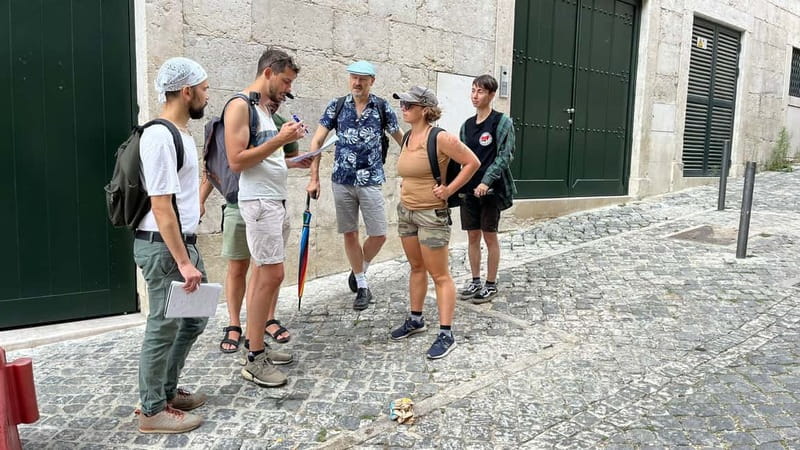
- Rainbow Umbrella meetup: easy to spot at Praça/Jardim do Príncipe Real, outside number 18, by the children’s play corner.
- Two scene neighborhoods in one route: Principe Real and Bairro Alto, where you’ll see the modern LGBTQ venues and hear their context.
- Real historical storylines, not just dates: from the Inquisition and 1950s police pressure to 19th-century sex work and early drag.
- A guide who answers questions: you get time to ask, and the tour is built around curiosity and conversation.
- A month-by-month go-out guide: Alex’s LONG LIST is 150 pages, updated every month, and covers venues plus maps and events.
- Solo-friendly energy: it’s set up so you can meet fellow travelers and still feel comfortable asking questions.
Finding the Rainbow Umbrella in Principe Real

Your tour starts in Principe Real, one of Lisbon’s most recognizable districts for modern queer life. You meet outside number 18, Praça/Jardim do Príncipe Real, right by the children’s play corner, and you’re told to look for the Rainbow Umbrella—a very practical detail when you’re in a new city.
The setting matters here: Principe Real is the bridge between old Lisbon and the current nightlife. So instead of starting with a lecture, you start where the city’s queer energy is still visible, then you work backward through time as you walk.
You can also read our reviews of more historical tours in Lisbon



The Lisbon trick: how queer history changes what you see
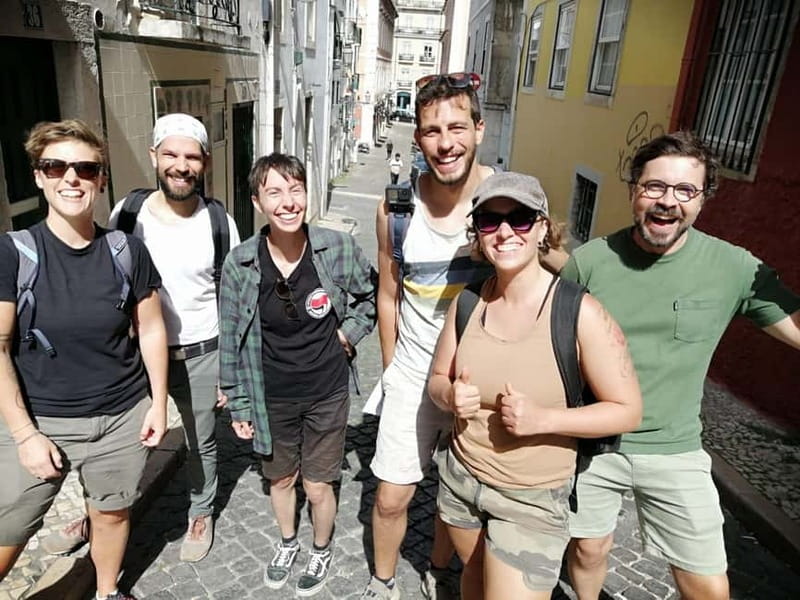
This isn’t a generic “pink landmarks” tour. What I like about the approach is that queer history is treated as part of Lisbon’s wider story—politics, policing, censorship, religion, love, and work. You hear scandalous anecdotes that range across centuries, then you watch how the city’s rules and pressures shaped queer lives.
Expect stories that connect directly to social change and repression, including how the Inquisition dealt with gay men and how lesbians battled 1960s censorship. You’ll also hear why Fado is queer, which is less about a single fact and more about understanding how identity and expression show up in art and performance.
The tour also doesn’t keep its feet in only one era. You’ll hear about 17th-century cruising sites, 19th-century sex-work, and a Trans love story from the 1800s, then shift forward into stories about Pride in Portugal and how gay men dodged the 1950s police.
Walking the stories: the route through queer past and present

The structure is built around moving between two main areas: Principe Real and Bairro Alto. The walk is about 4 km total over roughly 3.5 hours, so you’re not sprinting, but you are continuously moving and learning.
I like this format because it mirrors what you’ll actually do on your own in Lisbon. You’ll get your bearings fast, learn which streets and squares matter, and leave with a mental map. And because the tour passes by main queer scene venues, you can also connect what you hear with what you see outside the group.
Principe Real stops: Inquisition shadows and older codes of cruising
Principe Real is where the tour’s “rules and secrecy” themes feel especially relevant. You’ll hear about how the Inquisition dealt with gay men, which sets a tone for Lisbon’s long history of surveillance and punishment. That context helps you understand why so much queer life historically had to hide, code itself, or find alternative spaces.
As you move, you also pick up stories about 17th-century cruising sites—and that matters because cruising wasn’t just about romance or sex. It was also about access: where people could meet when mainstream society wouldn’t allow it. Listening to these stories while you’re physically in the neighborhood makes the past feel less abstract and more human.
Principe Real also acts like a “present-day anchor.” The tour doesn’t end with punishment stories; it keeps pace with Lisbon’s evolution and eventually brings you back toward the modern bars, clubs, and cafes you can still use to explore the scene.
Bairro Alto: censorship, police pressure, and the beginnings of drag

Then you shift toward Bairro Alto, a district strongly associated with nightlife, performance, and public/private contrasts. The stories move from the heavy past into the messy middle where queer life still existed, even when the system fought it.
You’ll hear about 19th-century sex-work and lesbian nuns, which adds nuance to the idea that queer life in Lisbon wasn’t a single stereotype—it could be complicated, intersecting with religion, work, and community. From there, the tour keeps layering in other pressures, including straight censors and disgraced politicians, so you understand that queer rights weren’t just slow progress; they were political battles.
And you’ll get the cultural turning points too: how the first drag shows started, stories about gay writers, and references to queer pop stars. Even if you only know Lisbon’s modern drag scene as nightlife, this tour frames drag as part of a longer tradition of performance, defiance, and visibility.






The most useful part: modern queer venues make history actionable
One reason this tour earns such high marks is that it doesn’t treat today’s LGBTQ scene as an afterthought. You’re walking through the neighborhood where people still go out, so the stories become practical: where you’ll want to spend time, and what kind of vibe each area tends to carry.
The guide also covers the modern scene venues in Principe Real and Bairro Alto, and you’ll learn about the types of spots you might like—bars, clubs, cafes, and more. From the experience data provided, the guide also shares tips that can include current club and bar info such as fit and party hours, which helps if you’re trying to plan a first night without guessing.
This is where the “history tour” label becomes more than marketing. When you know the background—policing, censorship, and community organizing—you start noticing how certain places become social shelters. That gives you a better read on Lisbon’s queer geography than just following a random list online.
Alex’s LONG LIST: 150 pages you’ll actually use

The free takeaway is a big deal: Alex’s LONG LIST Guide to LGBTQ Lisbon & Portugal. It’s 150 pages and updated every month, and you can read it on mobiles or download it as a PDF. That makes it useful even if you’re the kind of traveler who plans nights out last-minute.
What I like about this guide is that it’s not only “where to go.” It’s also organized around information that helps you go where you’ll feel comfortable—maps of queer Lisbon/Portugal, queer and Trans spaces, community and social groups, women’s venues and services, health services, and a guide to gay beaches and how to get there.
It also includes a monthly events angle, which matters because Lisbon’s scene changes. If you like your nightlife choices tied to what’s happening right now, having a live-updated guide is a real advantage.
Price and pace: what $58 buys you in Lisbon time
At $58 per person for 3.5 hours and about 4 km of walking, the value comes from three places:
First, you’re paying for a live English guide who connects queer history to Lisbon’s streets, not just a standalone lecture. Second, you’re covering two key nightlife districts—Principe Real and Bairro Alto—so your orientation and “where to go next” knowledge is built into the tour itself. Third, the guide includes a free 150-page, month-updated resource, which can easily replace the cost of buying separate city-nightlife info.
Compared with tours that only scratch the surface, this one is built for understanding plus planning. You leave with stories in your head and a roadmap in your hands.
The pace is friendly enough that reviews mention shade management on hot days, but you should still treat it as a walking tour. Wear comfortable shoes, and plan to stay engaged because the tour is designed around Q&A and questions.
Practicalities that make the tour easier
A few details can help you enjoy it more:
- You’ll meet by the children’s play corner at Praça/Jardim do Príncipe Real, outside number 18, and look for the Rainbow Umbrella.
- The tour is English and is designed for adults and mature teens: not suitable for children under 16.
- Bring comfortable shoes and avoid bringing luggage or large bags, since that’s not allowed.
- If weather shifts, you’re told the guide will alter tours to accommodate, but the tour still goes ahead.
- Alex’s operation is insured and registered with Turismo de Portugal.
One small “traveler win”: since it’s solo-traveler friendly, you can show up alone without feeling like you’re on a group babysitting assignment. The tour is set up so meeting fellow travelers and asking questions is part of the point.
Who should book this tour, and who might skip it
This is a great fit if you want Lisbon to feel personal and specific. If you care about LGBTQ history, political context, and how communities carve out space—this tour lines up well with your interests. It also works nicely as an early-to-mid trip activity because it gives you a base plan for exploring the scene afterward.
It’s also smart for you if you like practical guidance: the guide passes by modern queer venues and helps you understand what might fit you. And if you’re the type who prefers learning through real places—squares, streets, and neighborhoods—this format delivers.
You might skip it if you don’t want a walking tour, or if you’re not comfortable with a storyline that includes repression, policing, censorship, and discrimination. The tour covers it because it’s part of the actual history.
Should you book Queer Lisbon History Tour?
If you’re choosing between a quick nightlife walk and a “history only” lecture, I’d book this one. You get centuries of queer Lisbon stories tied directly to two of the most important neighborhoods for the scene, plus a take-home guide—Alex’s LONG LIST—that can help you plan nights long after the walking stops.
Book it if you want your Lisbon experience to have context, not just a checklist. If you want to understand why certain places matter, and then use that knowledge to explore in a way that feels right for you, this tour is an excellent first move.
FAQ
How long is the Queer Lisbon History Tour?
It lasts about 3.5 hours, and the total walking distance is about 4 km (around 2.5 miles).
Where do I meet for the tour?
Meet outside number 18, Praça/Jardim do Príncipe Real, by the children’s play corner. Look for the Rainbow Umbrella.
Is the tour in English?
Yes, the tour guide provides the tour in English.
What’s included?
You get the guided walk with stories and anecdotes, a tour of LGBTQ scene venues in Principe Real and Bairro Alto, opportunities to meet fellow travelers and ask questions, and a free copy of Alex’s LONG LIST Guide to LGBTQ Lisbon & Portugal (150 pages).
Is food or drinks included?
No. Food and drinks are not included.
What should I bring, and can I bring luggage?
Bring comfortable shoes. Luggage or large bags are not allowed.
Is there an age limit?
Yes. The tour is not suitable for children under 16.