REVIEW · AVIGNON
Roman Heritage & Wine Legacy
Book on Viator →Operated by Provence with Gordana · Bookable on Viator
Wine and Roman ruins in one afternoon. This is a tight, story-packed way to see Châteauneuf-du-Pape and finish at Pont du Gard, guided by Gordana in a small group. You’ll get a real feel for Rhône wine country and Roman feats without juggling multiple tours.
I especially like how the Châteauneuf-du-Pape stop is built around tasting and context, so you can connect grape choices to what’s in your glass. I also like that Pont du Gard gets real walking time, not just a photo stop. It’s UNESCO-listed Roman architecture, and you’ll feel the scale.
One thing to consider: the day includes a decent chunk of road time between the wine area and Pont du Gard. If you dislike long drives, this combo can feel a bit much.
In This Review
- Quick hits before you go
- A 2:30 pm start that still feels like a full afternoon
- Châteauneuf-du-Pape tastings: where the wine talk becomes real
- What to keep in mind at the wine stops
- Pont du Gard: UNESCO Roman engineering you can actually walk on
- Wear-for-the-walk reality check
- Gordana’s guide style: why small-group tours feel different
- Air-conditioned comfort and real logistics
- Price and value: what $113.84 buys you in the real world
- The one drawback to plan around: road time between wine and Rome
- Who this tour fits best (and who should think twice)
- Should you book Roman Heritage & Wine Legacy in Avignon?
- FAQ
- What is the duration of the tour?
- What time does the tour start?
- Where do I meet the guide?
- How many people are in the group?
- Is the tour offered in English?
- Is Pont du Gard admission included?
- Is lunch included?
- What is the cancellation policy?
- When will I get confirmation after booking?
Quick hits before you go
- Small group size (max 8) means more questions and less rushing
- Gordana as guide brings both wine and Roman context, with a friendly, upbeat style
- Two vineyard stops in Châteauneuf-du-Pape so you can compare wines and styles
- Pont du Gard (UNESCO) includes a proper on-foot stretch, not just a drive-by
- Air-conditioned vehicle helps on hot afternoons in Provence
- Lunch isn’t included, so plan your food break before or after
A 2:30 pm start that still feels like a full afternoon
This tour runs about 5 hours, starting at 2:30 pm and returning to the meeting point. That start time matters. You’re not fighting the morning crowds in Avignon, and you’ll likely arrive at the wine area with enough daylight to slow down and actually pay attention.
The flow is simple: you meet at the Office de Tourisme d’Avignon (41 Cr Jean Jaurès), then you’re taken out to wine country and later to the Roman site. The total duration includes travel time, so you’re not stuck guessing how long everything will take once you’re on the road.
Also, this tour keeps the group small: up to 8 travelers. That changes the whole vibe. When there’s room to talk, you get better answers. It’s not a lecture you escape as fast as possible. You can ask why certain wines taste the way they do, or how Roman engineering solved real problems with water.
One more practical point: the tour uses a mobile ticket, and it’s offered in English. That makes it straightforward if you’re traveling without paper tickets.
You can also read our reviews of more historical tours in Avignon

Châteauneuf-du-Pape tastings: where the wine talk becomes real
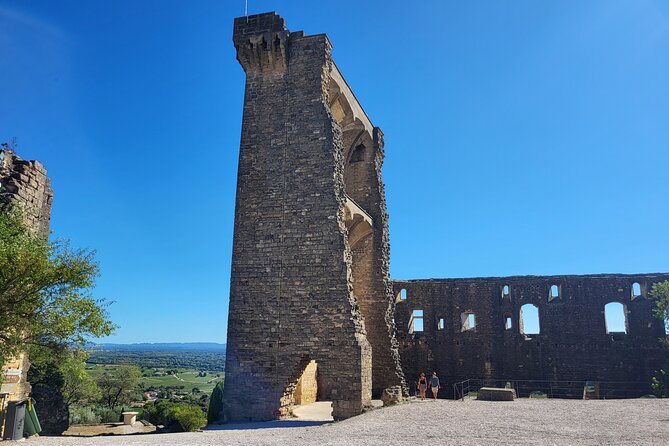
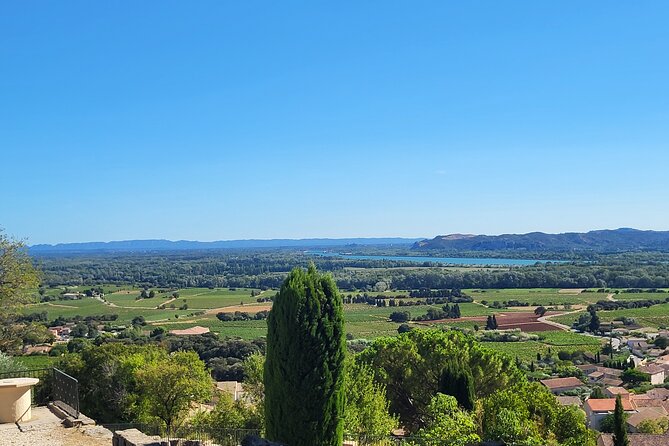
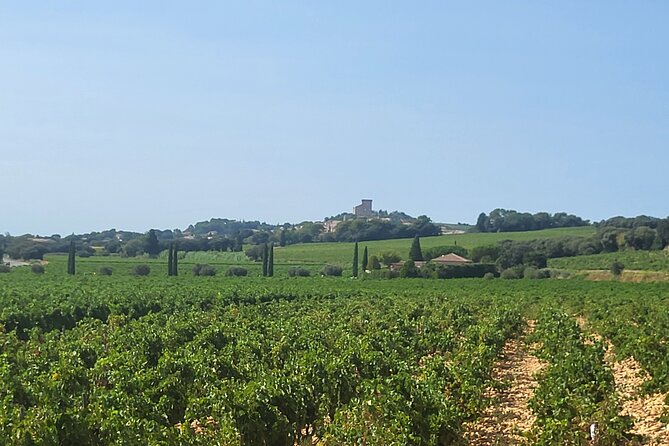
Châteauneuf-du-Pape is one of those names that feels bigger than it is. You hear it, you see it on shelves, and then you show up in the sun and the vines make sense. This stop is built around 2 hours in the Châteauneuf-du-Pape area, with free admission ticket for the visit.
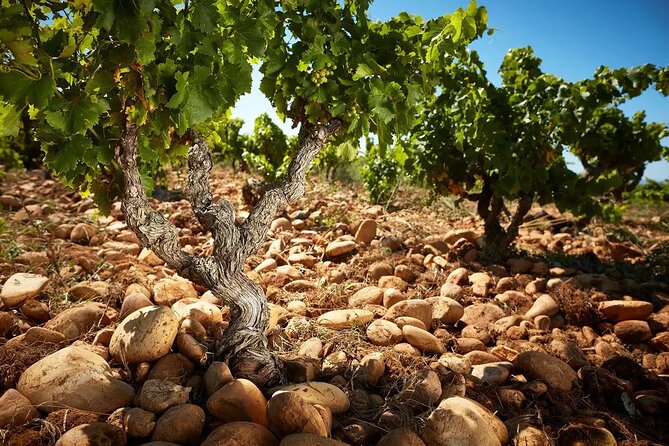
What I like about this setup is that it doesn’t just drop you into a tasting room. You get context for the place itself—dry, sun-baked surroundings, stony soils, and vines that are part of a long system of growing and winemaking. Even if you’re not a wine expert, you can follow the logic.
In practice, you’ll taste wines from two different winery stops. Some days focus on multiple pours at the first stop, then you go to another producer for a second tasting experience. That second stop helps you compare. You’re not just tasting one viewpoint. You’re learning how winemakers interpret the same famous terroir in different ways.
And you’ll likely notice the guide’s role here. Gordana’s style shows up in the details: how growing practices connect to the wine in your glass, and how the region developed the reputation it has today. In several descriptions, people call out her passion for both the wine and the surrounding area. That combination is what keeps tastings from feeling like a checklist.
What to keep in mind at the wine stops
Wine country visits are naturally a bit slower. If you’re hoping to spend most of the afternoon walking through towns, this part will feel more structured. You’re here to taste and learn. That’s the point.
Also, lunch isn’t included. Since Châteauneuf-du-Pape is where the time can move, eat earlier or plan a snack strategy. You’ll want energy for the later walk at Pont du Gard.
Pont du Gard: UNESCO Roman engineering you can actually walk on
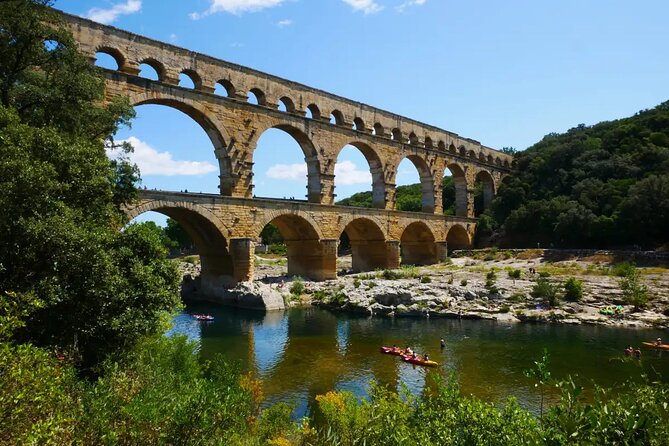
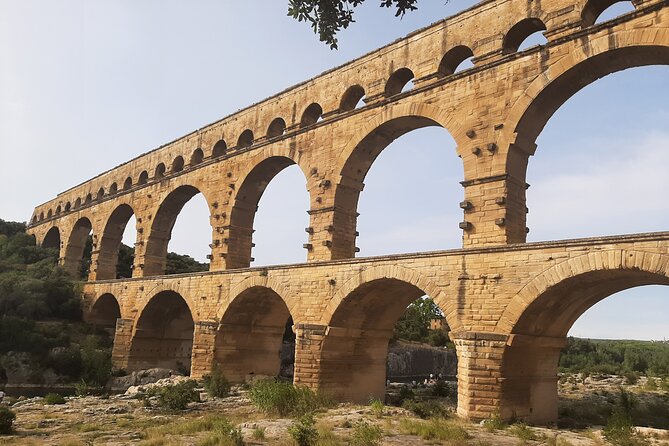
Pont du Gard is the reason a lot of people book a Roman heritage tour in the first place. It’s described as the highest Roman bridge in the world, and it’s a UNESCO World Heritage Site. You’ll get about 1 hour here, and the experience is designed to include time on foot, so you can take in the scale.
This is where the tour becomes more than wine. Roman architecture is one of those topics where photos often fail you. The structure is too big, too precise, and too functional. Walking on-site helps your brain scale it correctly.
It also tends to land well in the late-day light. In the descriptions people share, Pont du Gard is often remembered as a sunset or evening-sun finale. Even without perfect lighting, the site delivers. It’s the kind of place where you stop talking for a minute just to take it in.
Wear-for-the-walk reality check
You should expect a real walking moment here. It’s not just standing near a railing. If you have foot or mobility limits, it’s worth thinking ahead about comfort, but the tour notes that most travelers can participate.
Gordana’s guide style: why small-group tours feel different
The biggest reason this tour keeps scoring 4.9 out of 5 is the human factor. Gordana is repeatedly called out for being friendly, energetic, and genuinely into what she’s showing you.
What that looks like on the ground:
- She ties wine to how the region works, instead of treating tastings like separate events.
- She adds historical context alongside the Roman site, so Pont du Gard doesn’t feel like random ancient stuff.
- She creates a relaxed pace where people can ask questions.
That’s also why the small-group size matters. When you’re in a group of 8 or fewer, questions don’t get buried. You can ask something as simple as how to taste better or what to look for in a glass, and you’re more likely to get a specific answer.
There’s also a practical side that comes up in people’s notes: on very hot days, Gordana has been thoughtful about comfort, even bringing cold water from the vehicle. That kind of detail doesn’t show up on a brochure, but it changes how you remember the day.
Air-conditioned comfort and real logistics
The tour includes an air-conditioned vehicle, which is a big deal in Provence heat. This is one of those regions where late afternoons can turn intense fast, especially when you’re doing road time and then walking.
You’re also not left to figure out the schedule yourself. The total 5-hour duration includes travel time, so you know you’re buying a complete afternoon block, not just a couple of stop-and-go items.
The meeting point is easy to find for most visitors:
- Office de Tourisme d’Avignon
- 41 Cr Jean Jaurès, 84000 Avignon, France
And the tour ends back at the same place. That matters if you’re planning dinner downtown afterward.
Also, the tour is listed as near public transportation, and service animals are allowed. If you’re trying to travel smoothly without a complicated transfer day, that’s a real plus.
Price and value: what $113.84 buys you in the real world
The price is $113.84 per person for an about 5-hour small-group outing. That number is easier to judge when you look at what you actually get.
From what’s included:
- Air-conditioned vehicle
- Pont du Gard admission included
- Châteauneuf-du-Pape admission ticket free for the visit component
- English-speaking guide
- Mobile ticket
What’s not included:
- Lunch
So your money is doing three main jobs: transport, guide expertise, and entry costs for the Roman site. Wine tastings are a key part of the experience, and people mention tasting at two Châteauneuf-du-Pape vineyards as part of the day. Even if you treat the tastings as the centerpiece, the overall cost still makes sense because Pont du Gard isn’t free, and you’re paying for a guided day out of Avignon with limited group size.
Where value can slip:
- If you wanted mostly sightseeing and very little driving, the combo might feel like too much transit.
- If you’re hungry, you’ll need to handle lunch yourself, because it’s not provided.
The one drawback to plan around: road time between wine and Rome
The most honest caution is this: you’re combining two big hits—Châteauneuf-du-Pape and Pont du Gard—with time in between. One note points out that the drive can feel long, around 45 minutes between the stops.
How to handle that:
- If you’re the kind of traveler who likes “stop, soak it in, stop again,” you’ll be fine.
- If you hate sitting in a car even briefly, you might prefer a wine-focused version of the trip on its own.
To be clear, the winemaking stops are a highlight for most people, and Pont du Gard is unforgettable. The issue is not the quality. It’s the balance of time spent traveling versus time spent tasting and walking.
Who this tour fits best (and who should think twice)
This is a great match if you want an afternoon that blends:
- Avignon area convenience (you don’t have to figure out transport)
- Châteauneuf-du-Pape wine tastings
- Roman architecture you can walk and understand
- English guidance
- Small-group interaction
You’ll also like it if you enjoy guides who can connect dots—wine growing choices, regional reputation, and Roman engineering as a practical solution to water and distance.
Consider thinking twice if:
- You want lots of free time for independent wandering.
- You dislike road time and would rather stay put in one area.
- You’re traveling at a time when the heat is intense and you really need to control your own breaks. (You can still manage it, but this is a packed afternoon.)
Should you book Roman Heritage & Wine Legacy in Avignon?
If your ideal day is wine country plus a major Roman site, this tour is an easy yes. The mix is rare. Most tours do one thing well. This one connects both worlds, and it does it with a guide like Gordana who brings energy and details.
Book it when:
- You want a small group and real conversation.
- You’re excited about Châteauneuf-du-Pape tastings.
- Pont du Gard is on your must-see list and you want time to walk it.
Skip or reconsider if:
- You’d rather minimize driving.
- You need a fully unstructured day with lots of downtime.
One last tip for your planning brain: eat something before you go, because lunch isn’t included, and you’ll want good energy for the Pont du Gard walk.
FAQ
What is the duration of the tour?
The tour runs for about 5 hours.
What time does the tour start?
The start time is 2:30 pm.
Where do I meet the guide?
You meet at the Office de Tourisme d’Avignon, 41 Cr Jean Jaurès, 84000 Avignon, France.
How many people are in the group?
This experience has a maximum of 8 travelers.
Is the tour offered in English?
Yes, it is offered in English.
Is Pont du Gard admission included?
Yes, Pont du Gard admission is included.
Is lunch included?
No, lunch is not included.
What is the cancellation policy?
You can cancel for a full refund if you cancel up to 24 hours in advance of the experience start time.
When will I get confirmation after booking?
Confirmation is received within 48 hours of booking, subject to availability.