REVIEW · SIEM REAP
Banteay Srei and Grand Circuit Heritage Tour from Siem Reap
Book on Viator →Operated by Journey Cambodia · Bookable on Viator
Carvings here feel like a secret lesson. I like the small-group size (max 15) because you get time to ask questions, and I love the air-conditioned vehicle plus cool towels and bottled water between temple stops.
One thing to plan for: the temple pass is not included. You’ll pay about $37.00 per person on top of the tour price, and the dress code means you’ll want shoulders and knees covered before you arrive.
In This Review
- Why This Grand Circuit Day Feels Different From the Big-Angkor Route
- Price and Temple Pass Math: Where the Real Value Shows Up
- Getting Picked Up in Siem Reap at 8:00 and Staying Comfortable
- Pre Rup: A Khmer State Temple Morning Start
- Neak Pean: An Artificial Island and a Buddhist Temple Break
- Preah Khan: Jayavaraman VII’s Family Temple Contrast
- Banteay Srei: The Carving Masterclass That Many People Miss
- Phnom Bakheng: Sunset Vantage and the Reality of Weather
- Guide and Driver Impact: Names I’d Watch For (and One Red Flag)
- Who This Tour Fits Best (and Who Might Want Something Else)
- Quick Tips to Get More From Every Stop
- Should You Book This Banteay Srei and Grand Circuit Heritage Tour?
- FAQ
- What time does the Banteay Srei and Grand Circuit Heritage Tour start, and how long is it?
- Is hotel pickup and drop-off included?
- How large is the group?
- Are temple entrance fees included in the tour price?
- What is the dress code for this tour?
- What is the minimum age for children?
Why This Grand Circuit Day Feels Different From the Big-Angkor Route
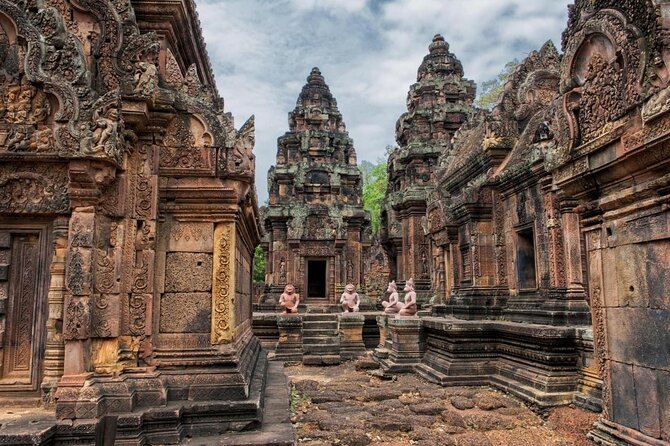
This is a temple-focused circuit that mixes major names with lesser-frequented stops, so the day doesn’t feel like a repeat of what everyone photographs from the same angles. You’ll start at Pre Rup, then move outward into the countryside toward Banteay Srei, with Neak Pean and Preah Khan as key middle points.
The practical win is pacing. You’re not just hopping from one monument to another; you’re traveling through villages on the way to Banteay Srei, then taking a more gradual shift in scenery as the architecture changes.
Price and Temple Pass Math: Where the Real Value Shows Up
The tour price is $24.00 per person, and the big add-on is the temple pass at $37.00 per person paid directly to the sites. So you should budget roughly $61.00 per person total before meals and personal costs.
What you’re getting for that combined spend is not just entry points. You’re paying for an experienced English-speaking guide, hotel pickup and drop-off, and transport in a climate-controlled vehicle all day long. For many visitors, that’s where value shows up in Angkor: the guide helps you make sense of what you’re looking at, and the vehicle keeps you comfortable when the heat builds.
Also note the tour uses a mobile ticket, which can be convenient if you’re traveling light and already managing other reservations in your phone.
You can also read our reviews of more historical tours in Siem Reap

Getting Picked Up in Siem Reap at 8:00 and Staying Comfortable
You start at 8:00 am, and the trip runs about 8 hours. Pickup and drop-off are offered at your Siem Reap hotel, which is a big deal in a place where tuk-tuk negotiations can eat time and energy.
Transport is air-conditioned, and the tour includes bottled water and cool towels to help you handle the long day. That matters because the stops involve real walking on uneven temple paths, plus climbing stairs at at least one location.
Come in with comfortable walking shoes. Also check the dress code before you go—knees and shoulders must be covered, and it’s easiest to do that the moment you leave your hotel rather than scrambling at the gate.
Pre Rup: A Khmer State Temple Morning Start
Pre Rup is your first major stop, and it sets the tone for the whole day. The site is described as a Hindu temple built as the state temple of Khmer king Rajendravarm, so it’s a reminder that Angkor didn’t grow in one single style or single century.
The upside of starting here is timing. You’re not forced to fight the later-day crowds right away, and you get a strong introduction to how Khmer kings used temple-building as political storytelling.
The only real consideration at Pre Rup is what it means for your body: you’ll want shoes that grip, because these places aren’t polished walkways. If you’re sensitive to stairs, take your time and plan short pauses.
Neak Pean: An Artificial Island and a Buddhist Temple Break
After Banteay Srei, you go to Neak Pean, an artificial island with a Buddhist temple. This stop changes the mood, because it’s less about massive stone mass and more about a calmer setting tied to water and devotion.
The value here is variety. Your day goes from Hindu state-era architecture into a Buddhist context, so you start seeing Angkor as a shifting set of beliefs and styles—not one “type” of temple.
Practical note: the time at Neak Pean is shorter (about 40 minutes), so keep your questions ready for your guide and use the time to understand what you’re actually looking at rather than rushing for photos.
Preah Khan: Jayavaraman VII’s Family Temple Contrast
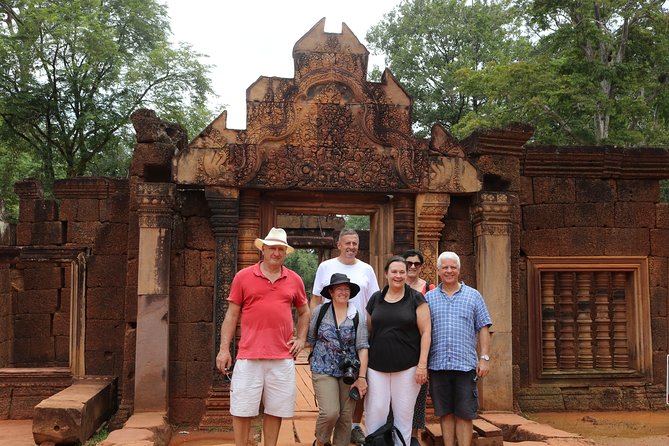
Preah Khan is an excellent contrast stop if you’ve mostly seen Angkor Wat style compositions. Construction is commissioned by Jayavaraman VII in honor of his father, and the visit to this smaller site helps you compare scale and design without feeling overwhelmed.
This is where I like having a guide more than I expected. When you know the basic story behind the site—who commissioned it and why—it becomes easier to read the layout and appreciate the craftsmanship rather than just snapping pictures and moving on.
The consideration is the same as everywhere: plan for walking. Even when a stop is listed as about an hour, temples can stretch longer once you start going up steps, circling viewpoints, and checking reliefs up close.

Banteay Srei: The Carving Masterclass That Many People Miss
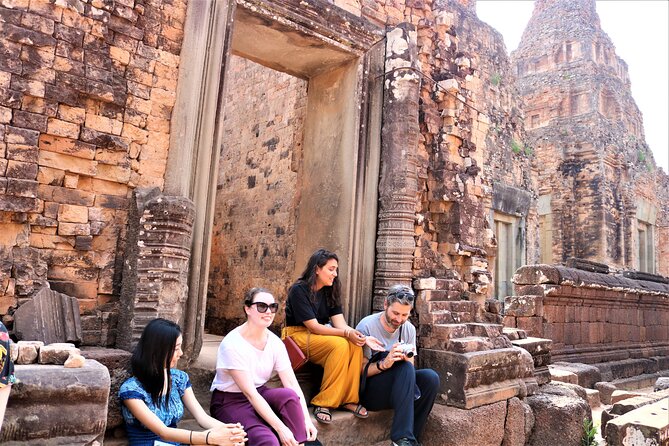
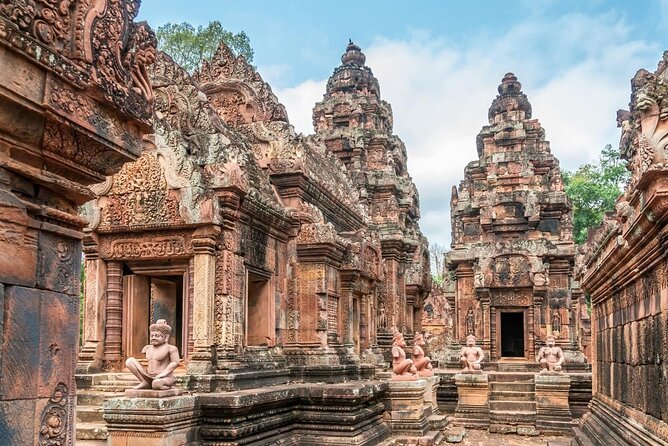
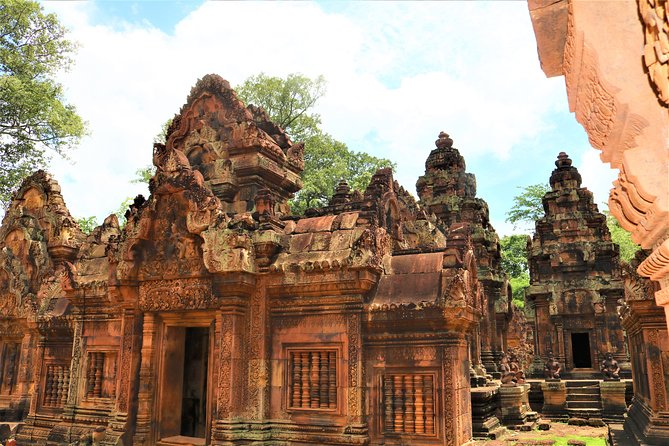
Banteay Srei is the heart of this day, and it’s also the place that justifies taking a second Angkor temple tour. The sandstone reliefs here are considered among the finest and most skillfully crafted in Cambodia, and the site is smaller than the biggest names—so details feel more readable.
What you’ll like: the reliefs. The day gives you a chance to slow down, look closely, and notice textures and scenes that are harder to appreciate when a site is huge and time is tight. You’ll also travel through local villages on the way, so you get more than “temple bubble” scenery.
The only drawback is planning your energy. Because Banteay Srei is detail-heavy, it can tempt you to keep looking longer than you planned. Wear breathable clothing, bring water in your mind even though the tour provides it, and don’t try to speedrun every carving.
Phnom Bakheng: Sunset Vantage and the Reality of Weather
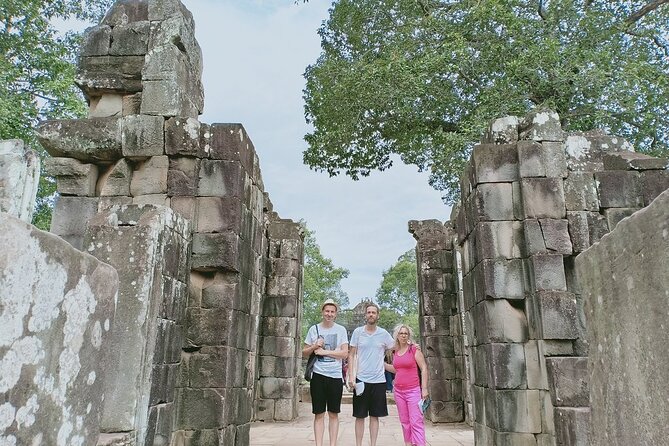
You wrap up at Phnom Bakheng, a temple ruin with one of the classic Angkor sunset-view angles. The day ends late afternoon, and return to town comes after.
Now the honest part: this depends on weather. One participant noted that clouds interfered with the sunset view, so if the sky doesn’t cooperate, you may get a softer sunset than you hoped for. Still, it’s worth going for the viewpoints, and you’ll have an easier time appreciating the site because you’ve seen several different temples already that day.
Also, consider timing. When you’re chasing a sunset, wear shoes you can trust on steps, and keep your attention on footing first, pictures second.
Guide and Driver Impact: Names I’d Watch For (and One Red Flag)
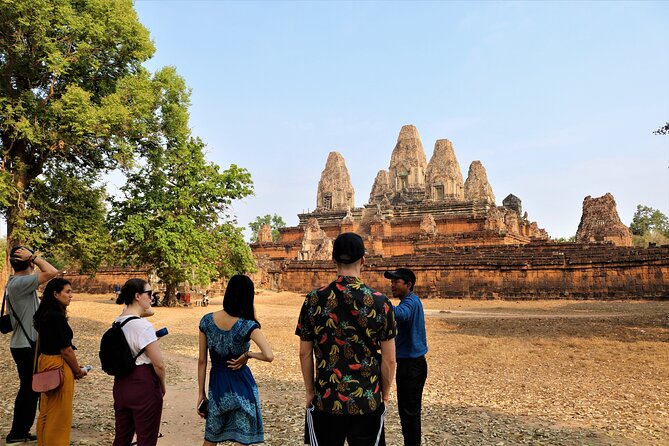
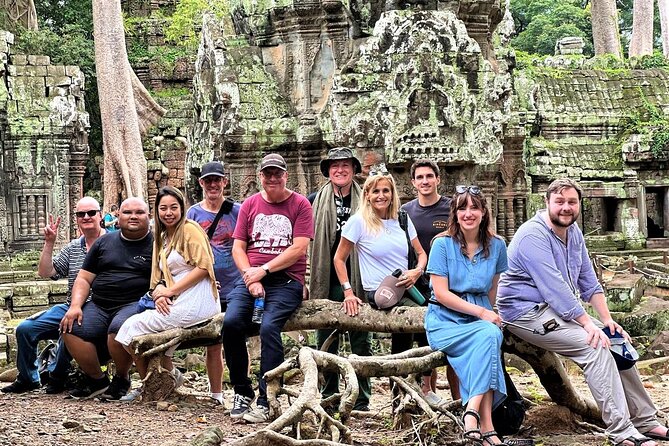
The tour experience is strongly guided by the people in the vehicle. I’ve seen frequent praise for guides like Sak, who not only shares history and architecture details but also acts as a photographer—helping with good spots for pictures. Another name that came up is Pi, described as able to answer many questions and keep the group engaged.
The driver also matters for comfort and safety on a long temple circuit. Black was mentioned for a safe, welcoming approach, and you can feel the difference when the ride stays smooth during long stretches.
One caution: in a rare case, a participant reported an insisting request for 5-star reviews and reminders after the tour. That’s not the norm from the overall pattern, but it’s worth knowing you always have the right to say no to any on-the-spot pressure. If you’re someone who hates awkward review talk, you can politely keep it simple and focus on enjoying the temples.
Who This Tour Fits Best (and Who Might Want Something Else)
This tour fits you if you want Angkor beyond the usual “main-site only” box. The mix of Pre Rup, Neak Pean, Preah Khan, and especially Banteay Srei gives you different styles and moods in one day.
It’s also a strong choice if you value comfort. Air-conditioned transport, bottled water, and cool towels are built into the day, and pickup/drop-off at your hotel reduces hassle.
You might want to compare options if you hate temple entry fees. With a $24 tour price plus a $37 temple pass, your budget needs to include that total. You’ll also want to be comfortable walking and climbing because the stops don’t stay flat and easy.
Quick Tips to Get More From Every Stop
These are the small moves that help the day feel rewarding instead of rushed:
- Wear the right clothes before pickup. Shoulders covered, knees covered.
- Bring patience for walking. Even the shorter stops take time on temple terrain.
- Ask the guide one question per stop. You’ll remember the answers more than the photo poses.
- Plan for weather. If clouds roll in, treat sunset as an extra, not the main goal.
Should You Book This Banteay Srei and Grand Circuit Heritage Tour?
I’d book this if you want a second Angkor temple day that feels more like archaeology and craftsmanship than just hitting the biggest postcard locations. The small group size (max 15) and hotel pickup make it efficient, and Banteay Srei is the kind of place that rewards slower attention.
I’d think twice only if your budget is tight after adding the $37 temple pass, or if you’re not comfortable with uneven temple walking and stairs. If that sounds fine, this is a well-tuned way to see Angkor’s broader range—especially the detailed stonework that many people miss.
FAQ
What time does the Banteay Srei and Grand Circuit Heritage Tour start, and how long is it?
It starts at 8:00 am and runs for about 8 hours (approx.).
Is hotel pickup and drop-off included?
Yes. You get convenient hotel pickup and drop-off in Siem Reap.
How large is the group?
The tour has a maximum group size of 15 travelers, which helps keep the experience more personal.
Are temple entrance fees included in the tour price?
No. Temple entrance fees are not included. You’ll need to pay a temple pass of $37.00 per person directly to the sites.
What is the dress code for this tour?
You must have knees and shoulders covered. Comfortable walking shoes are also recommended.
What is the minimum age for children?
The minimum age is 8 years old, and children must be accompanied by an adult.