REVIEW · PARIS
Paris: Khéops VR Experience – Explore Ancient Egypt
Book on GetYourGuide →Operated by Eclipso · Bookable on GetYourGuide
A pyramid tour in a headset. The Khéops VR Experience turns Giza into a walkable, 360° world—right in Paris. You start with context, then step inside Khufu’s pyramid in a way that’s hard to replicate with screens back home.
What I like most is the chance to step into hidden chambers and corridors that the public doesn’t usually get to see. I also appreciate how the experience builds from a short archaeological intro into a smooth, guided-feeling exploration where you can look up close at the structure and “walk” around the plateau.
One key consideration: it uses a VR headset and smooth motion, so it’s not suitable if you have epilepsy or certain medical concerns, and it also isn’t recommended for kids under 8.
In This Review
- Key Takeaways Before You Put On the Headset
- Khufu’s Pyramid Comes Indoors in 60 Minutes
- From Intro to 360° Giza: What Happens at the Start
- Walking the Plateau Like You’re There
- Inside Khufu’s Pyramid: Corridors and Hidden Chambers
- VR Lighting and Sound: Why It Feels More Than Tech
- Who This Works For (and Who Should Skip It)
- Price and Value: Why $37 Can Make Sense
- How to Plan Your Day Around It
- Practical Notes That Affect Your Comfort
- Should You Book the Khéops VR Experience?
- FAQ
- How long is the Khéops VR Experience in Paris?
- What is the price?
- Is it indoors and weather-proof?
- What languages are available?
- Who is it not suitable for?
- What’s included in the ticket?
Key Takeaways Before You Put On the Headset
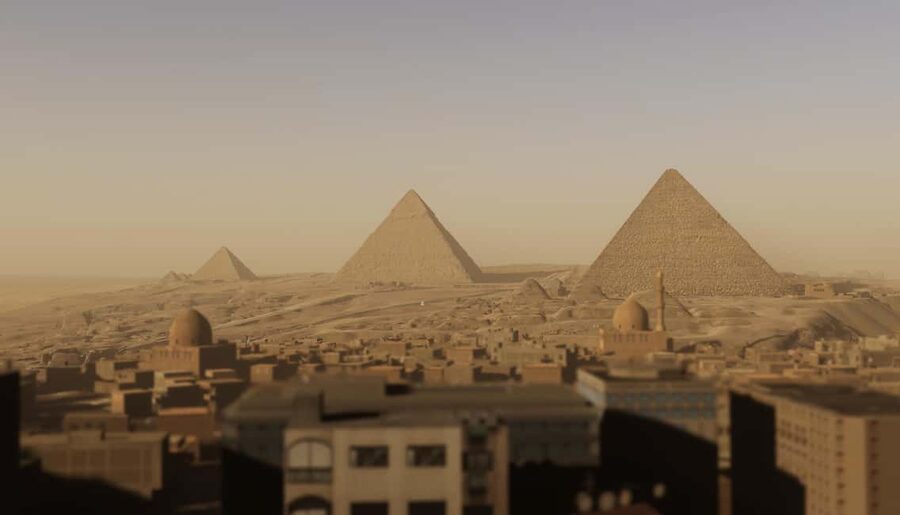
- 360° reconstruction of the Giza Plateau as it may have looked about 4,500 years ago
- Access to interior spaces of Khufu’s pyramid, including corridors and chambers usually off-limits
- Historical expert support shaping what you see and how you understand it
- Cinematic sound and dynamic lighting to make the experience feel convincing
- Designed for all audiences within the stated age and health limits
Khufu’s Pyramid Comes Indoors in 60 Minutes
Paris is packed with great things to do, but finding an indoor, culture-forward activity that still feels like an adventure can be tricky. This one is built for that moment when you want something original without changing your whole day around it.
The total visit runs about 1 hour, and the VR portion is 45 minutes. That timing matters. It’s long enough to feel like more than a quick novelty demo, but short enough that you won’t feel like you sacrificed your evening just to wear a headset.
The big promise is simple: you’ll travel around 4,500 years back to a key place in Ancient Egypt—Khufu’s Great Pyramid—while staying fully indoors. And because it’s weather-proof, it plays nicely with any Paris itinerary, especially on rainy days or in colder months.
You can also read our reviews of more tours and experiences in Paris.


From Intro to 360° Giza: What Happens at the Start
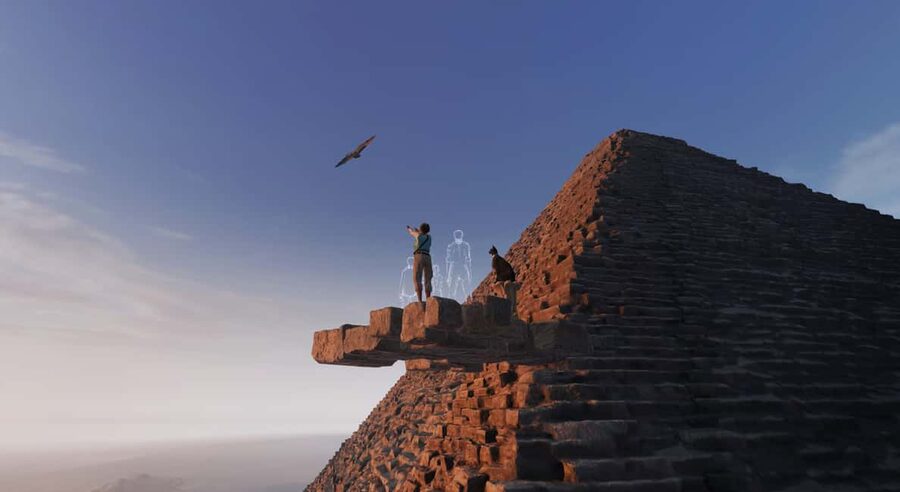
The experience begins with a short setup that gives you the “why” before the “wow.” You’ll get an intro about the archaeological context and the mysteries tied to Egyptian architecture. That framing helps the visuals land better, because you’re not just watching a CG reenactment—you’re learning how people understood and built monumental architecture.
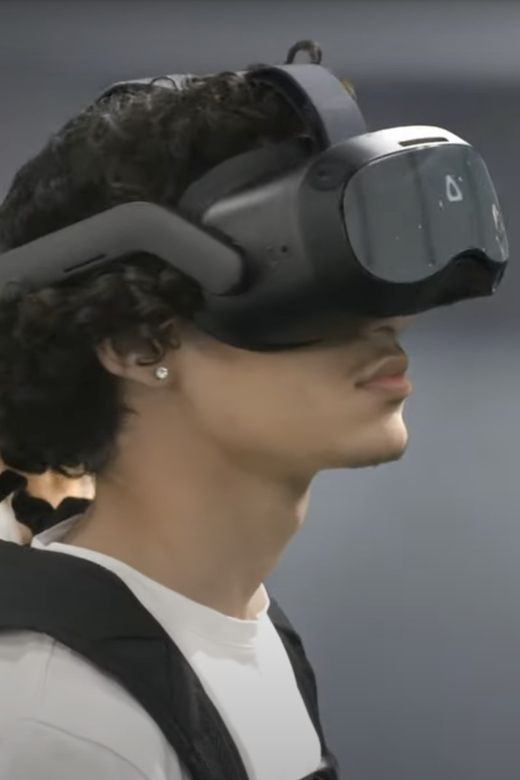
Then it’s headset time. You’re transported to the foot of the pyramid, surrounded by a vivid 360° reconstruction of the site. The key here is not only where you’re standing—it’s how you’re allowed to move your attention.
Instead of being forced to look one direction, the design encourages exploration. You’ll be able to examine the monumental structure up close and take in the site from different angles, which is where VR beats regular videos.
Walking the Plateau Like You’re There
Once you’re inside the scene, you can walk freely across the plateau. That’s a major part of what makes this feel like a journey rather than a “look-at-this-clip” show.
For visitors, this is where the experience becomes surprisingly practical for your brain. You naturally orient yourself: you look at scale, you notice how the pyramid dominates the space, and you start understanding the geometry of the complex rather than treating it like a single iconic shape.
It also helps that the experience uses smooth motion. Smooth motion can be the difference between VR that feels like exploration and VR that feels like a frustrating ride. Here, the intention is clear: you should feel steady enough to keep looking around.
And the sound design matters too. Cinematic sound cues support what you’re seeing, helping you “track” what’s happening as the environment unfolds.
Inside Khufu’s Pyramid: Corridors and Hidden Chambers
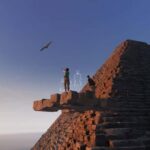
The most talked-about part of any pyramid experience is the interior. The Khéops VR Experience delivers by taking you into corridors and chambers that are normally inaccessible to the public.
This is where VR earns its keep. In museums, you might see artifacts and photos, plus some interpretive models. Here, you get spatial understanding—what it feels like to be inside long, tight pathways and larger internal spaces. You’re not just imagining them from pictures; you’re surrounded by the space.
You also get to examine details at your own pace. You can take a closer look, turn around, and re-check what you noticed the first time. That flexibility is something most guided walks can’t offer—your attention is usually pulled forward by the group.
Keep in mind one design choice: the tour balances guided commentary with the visuals. If you like absorbing facts line-by-line, you may want to slow down your attention when the visuals are especially striking.
VR Lighting and Sound: Why It Feels More Than Tech
Some VR experiences are impressive because they look modern. This one aims to convince you it’s a real place from the past. Dynamic lighting plays a big role here—shadows, brightness, and contrast help you read the surfaces of the structure and interior spaces.
Cinematic sound does something similar. It provides a sense of place and continuity, so you don’t feel like you’re “watching” a series of scenes. You feel like you’re inside an environment that’s responding to your presence.
For history lovers, that combination is a good match. You’re not only learning facts; you’re seeing how the environment might have felt. For families, it tends to be fun in a very direct way: you’re doing, not just observing.
Who This Works For (and Who Should Skip It)
This is a culture activity designed for all audiences, with clear limits. It’s listed as not suitable for children under 8, and it’s also not recommended for people with heart problems or epilepsy.
So who is it best for?
- Families with kids old enough for the age guidance and comfortable with VR headsets.
- History fans who want more than a museum look at Egypt.
- People who want something indoors in central Paris that still feels like an experience.
If you’re unsure whether VR motion or lighting might affect you, treat the health and suitability guidance as the priority. VR is powerful, but it’s not the right tool for every body.
Price and Value: Why $37 Can Make Sense
At about $37 per person for a total 1-hour outing (with 45 minutes of VR), this is priced like a premium attraction rather than a budget museum add-on.
So is it value? In my view, it can be—because you’re not only buying access to content. You’re buying an experience that changes how you understand scale and space. Being able to go inside chambers normally off-limits is the kind of “you can’t replicate this later” value that justifies a slightly higher ticket.
Also consider timing. Short, indoor activities are often the ones that save your schedule. If you’re trying to fit in something meaningful while the rest of your day is spent walking between neighborhoods, this one is a clean slot.
And the proof point: the experience holds a 4.9 rating across 39 reviews, which usually signals consistent design quality and a smooth participant experience.
How to Plan Your Day Around It
Because the VR portion is 45 minutes and the total visit is about an hour, it fits easily as a mid-day or late-afternoon choice. It can also act as a “reset” in your itinerary—especially if you’ve been walking a lot and want a change of pace without leaving central Paris.
The hosts or greeters speak French and English, so you should be able to follow the guided context comfortably in either language. The experience provider is listed as Eclipso.
If you’re trying to make the most of the learning side, plan for moments when you’ll want to listen carefully. The experience includes very rich commentary, and you can’t always split attention perfectly between narration and what’s happening visually. My advice: don’t multitask your focus. If you hear something important, pause your turning for a second and let the explanation land.
Practical Notes That Affect Your Comfort
- The experience uses a VR headset, so bring patience if you’re sensitive to headgear or if you need a couple of adjustments.
- It’s designed to run with smooth motion and dynamic lighting, which is part of the “this feels real” effect—but that same design explains why the health restrictions matter.
- It’s wheelchair accessible, so if mobility is part of your planning, you can treat this as a feasible indoor option.
Should You Book the Khéops VR Experience?
If you want a Paris stop that feels genuinely different from standard sightseeing, this is a strong pick. I’d especially recommend it if you care about:
- seeing the inside of Khufu’s pyramid spaces,
- learning with context instead of just watching images,
- and keeping your day flexible thanks to an indoor, weather-proof setup.
Skip it if you’re in any of the health categories listed (notably epilepsy or serious heart problems) or if your group includes kids under 8.
FAQ
How long is the Khéops VR Experience in Paris?
The total experience is about 1 hour, and the VR session is 45 minutes.
What is the price?
It costs about $37 per person.
Is it indoors and weather-proof?
Yes. It’s fully indoors, so it’s designed to work regardless of weather.
What languages are available?
The host or greeter provides French and English.
Who is it not suitable for?
It’s not suitable for children under 8, people with heart problems, or people with epilepsy.
What’s included in the ticket?
Your ticket includes the VR experience with a headset.