REVIEW · MADRID
Roots and Resistance: A Black History Tour of Madrid
Book on Viator →Bookable on Viator
Madrid hides Black history in plain sight. This tour connects street corners and major monuments to the Black presence in Spain, guided by Kwame, and I really like how he ties what you see today to the forced labor systems that shaped Madrid. I also love that you get admission tickets at several stops, not just talking from the sidewalk. One possible drawback: the subject matter is heavy, and it’s a lot to process in a short, mostly walking-focused 2-hour loop.
You’ll start at Plaza de Isabel II and end at Puerta del Sol, right at the city’s central meeting point (Km 0). It’s offered in English, uses a mobile ticket, and it’s set up as a private experience for just your group, which helps the pace and Q&A.
If you’re the type who wants the famous postcard Madrid and the stories underneath it, this is a strong fit. Also, it’s commonly booked about 24 days ahead, so I’d reserve early to lock in your preferred time.
In This Review
- Key Points That Make This Tour Worth Your Time
- Where the Story Begins: Plaza de Isabel II to Teatro Real
- Teatro Real Stop: Madrid’s Slave-Trade Traces in Plain Sight
- Royal Palace of Madrid: Seeing the House of the Blacks
- Almudena Cathedral: How a Congregation Shaped a Church
- Iglesia de San Ginés on Arenal Street: Old Foundations, New Context
- Plaza Mayor: The Center of Habsburg Madrid and the Market Story
- Puerta del Sol (Km 0): Finishing at Madrid’s Nerve Center
- Price and Timing: Does $42.10 Feel Fair for Two Hours?
- Guide Style with Kwame: Why This Tour Lands So Well
- Practical Tips Before You Go
- Who Should Book This Madrid Black History Walking Tour?
- Should You Book Roots and Resistance: A Black History Tour of Madrid?
- FAQ
- What’s the duration of Roots and Resistance: A Black History Tour of Madrid?
- Is the tour offered in English?
- Does the tour include admission tickets?
- Where does the tour start and end?
- Is there a mobile ticket?
- Can I cancel for a full refund?
Key Points That Make This Tour Worth Your Time
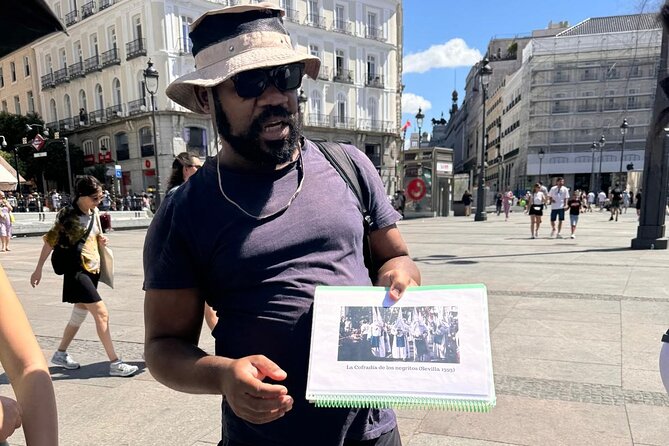
- Kwame’s storytelling connects the Black experience in Spain to wider global history, with a careful, research-driven approach.
- Included entry tickets at multiple stops make the tour feel like more than a lecture on streets.
- A tight, 2-hour route keeps you moving through the city’s core without turning it into an all-day slog.
- Start at Plaza de Isabel II, end at Puerta del Sol (Km 0), so you finish right where Madrid sightseeing naturally continues.
- Private-group format means you won’t feel like you’re getting rushed or blended into a large crowd.
- No drinks provided (so bring water), and the emotional weight of the topic is real—plan for that.
Where the Story Begins: Plaza de Isabel II to Teatro Real
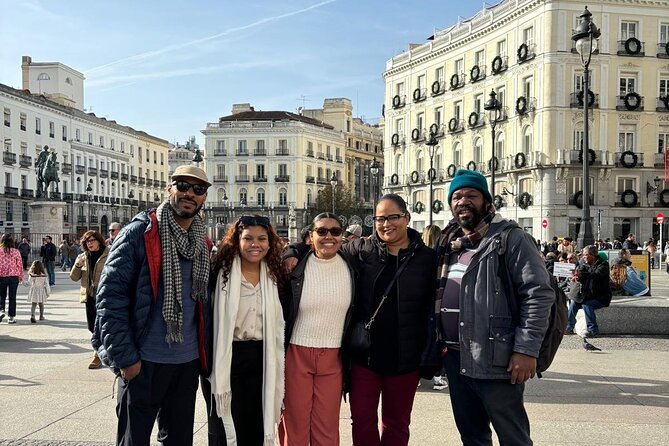
This tour kicks off at Plaza de Isabel II, a smart place to start because it puts you right in the middle of Madrid’s historic center. From here, the focus quickly turns to how slavery and the slave trade touched the city long before most tourists connect Madrid to that part of the world.
The opening sets the tone: this is not just “heritage sightseeing.” It’s a walk where the guide points out traces you might otherwise miss. You’ll also get an orientation to the idea that Madrid’s layout and famous streets didn’t come out of nowhere—people connected to the transatlantic slave trade helped shape what you see.
Then you move into Stop 1 at Teatro Real, and this is where the tour’s central goal shows up. The “hidden” part isn’t that the information is impossible to find—it’s that it’s easy to overlook. I like that the tour keeps pointing you back to recognizable landmarks and asks you to look again.
Expect the first segment to set context fast: slavery isn’t treated as a footnote, and it’s not handled like distant history. Instead, it’s framed as part of Iberian reality—something that shaped people’s lives and the city’s development.
You can also read our reviews of more historical tours in Madrid



Teatro Real Stop: Madrid’s Slave-Trade Traces in Plain Sight
Stop 1 is Teatro Real, and it’s more than a pretty building to pass on your way to something else. The tour uses this area to connect Plaza de Isabel II with the broader historic core around Puerta del Sol.
Here’s what makes this stop useful: you learn to see the city as a record. The tour points you toward how enslaved people influenced the configuration of Madrid, especially in the area around Puerta del Sol. That’s the key shift. Instead of treating the city like a museum of kings and churches, you start reading it like a map of labor, commerce, and human exploitation.
You’ll also cover some well-known Madrid touchpoints and connect them directly to the slave-trade story. The tour references Calle Alcalá as playing a major role in the transatlantic slave trade, and it brings in the equestrian statue of Carlos III—a king associated with owning more than 20,000 enslaved people. You’ll also spend time around the famous Plaza Mayor, tied to the slave market.
I appreciate that the guide doesn’t throw names at you and move on. The goal is for you to leave with a mental web: street → power → economy → human lives. That way, Madrid’s landmarks stop feeling like separate “attractions” and start acting like evidence.
Stop 1 also includes admission ticket time, so you’re not just outside looking in. If you want the tour to feel concrete, this first stop helps.
Royal Palace of Madrid: Seeing the House of the Blacks
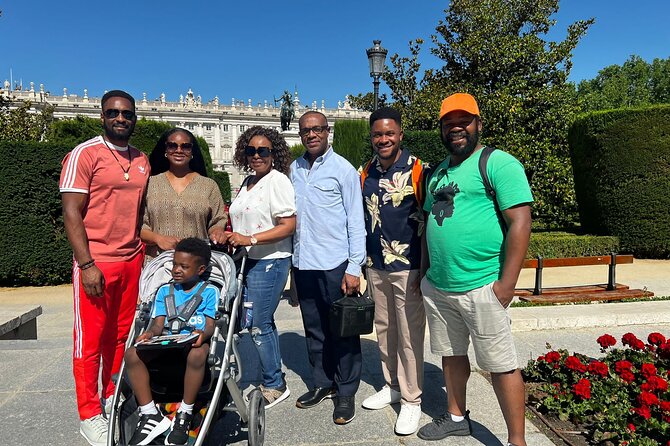
Stop 2 takes you to the Royal Palace of Madrid, one of Europe’s biggest and best-preserved royal sites. This is a major shift in tone because the palace is what many first-time visitors already want to see. The tour smartly uses that magnet to talk about something uncomfortable and important.
The headline here is that the palace houses the House of the Blacks. That phrase alone should make you pause. You’re standing inside a symbol of monarchy and power, and the story connected to it centers on Black presence within Spain’s history—not as a side note, but as part of royal life and the palace’s human history.
The tour gives about 15 minutes for this stop, and admission is listed as free for this segment. That matters for value. You’re paying tour money to get access and context, and you’re not forced to decide whether to add more tickets later.
One practical tip: if you tend to get museum fatigue, mentally prepare now. This is a short stop inside a big building experience. You’ll get enough to understand the point, but you won’t have hours to wander. If you fall in love with the palace (you might), you’ll have to come back on your own time for the extra layers.
Almudena Cathedral: How a Congregation Shaped a Church
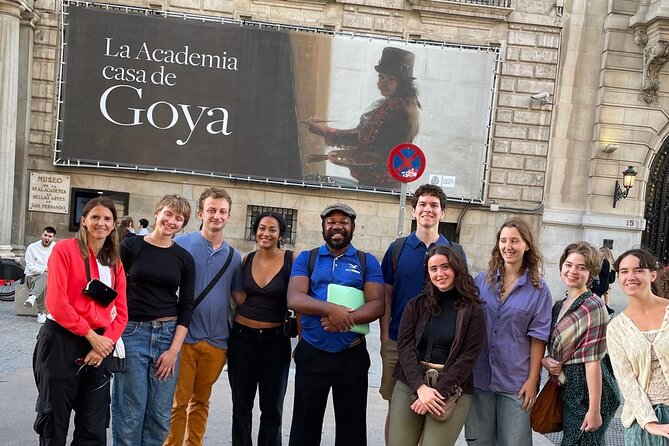
Stop 3 is Catedral de Sta María la Real de la Almudena, and it links faith, community, and power in a way that’s easy to miss if you only think of cathedrals as architecture.
The tour points out that construction began on 22 December 1868 after the Congregation of Slaves of the Virgin of Almudena asked permission to build another church. The context matters: there had been earlier demolition in the 1868 revolution, and the congregation’s request shows how organized religious communities connected to slavery maintained a place in the city’s rebuilding.
You’ll spend about 25 minutes here, and admission is included. This is one of the stops that helps you understand that slavery history isn’t only about plantations and ships. It also shows up in institutions, names, and civic permission—real-world systems that people could navigate, maintain, and, at times, defend.
One thing I like about this stop is the emotional logic it creates. You’re not just learning a chronology—you’re seeing how communities formed around survival, worship, and identity even within oppressive structures. That’s a complicated idea, and the guide’s job is to keep it clear.
If you prefer tours that keep moving and don’t linger too long, this 25-minute window is a good match. If you’re the type who loves reading inscriptions and details for extra time, you might want to budget some solo time in this area afterward to revisit what catches your eye.
Iglesia de San Ginés on Arenal Street: Old Foundations, New Context
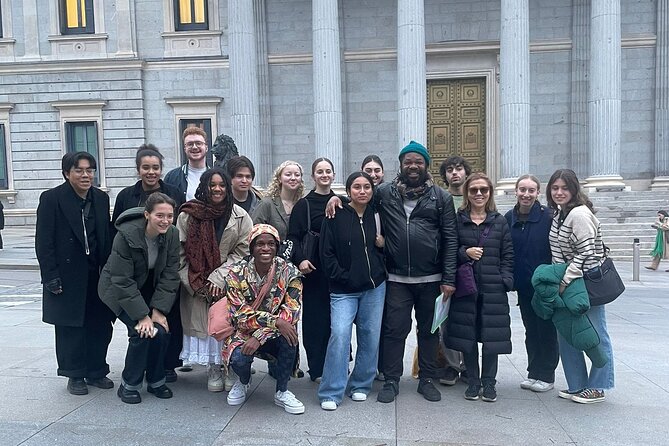
Stop 4 is Iglesia de San Ginés, on Arenal Street, dedicated to the French saint San Ginés de Arles. The tour notes that it’s one of the oldest churches in Madrid, built in 1645 on the remains of what’s believed to have been a Mozarabic hermitage.
This stop is shorter, about 15 minutes, with admission included. So, think of it as a “context checkpoint” rather than a deep architectural essay. What the tour does well is connect layers: older sacred sites, later building phases, and the way the city repeatedly redeveloped around faith.
The slavery theme is still present through the tour’s overall framing, but this stop adds something else: a reminder that Madrid’s story is built on centuries of transformation. You’re standing inside a structure with a long timeline, and the guide uses that timeline to broaden the way you interpret “history in plain sight.”
Practical note: if you enjoy churches for art and calm, this can be a welcome pause between louder city squares. But if churches aren’t your thing, keep in mind it’s included as part of a bigger narrative, not just for sightseeing points.




Plaza Mayor: The Center of Habsburg Madrid and the Market Story
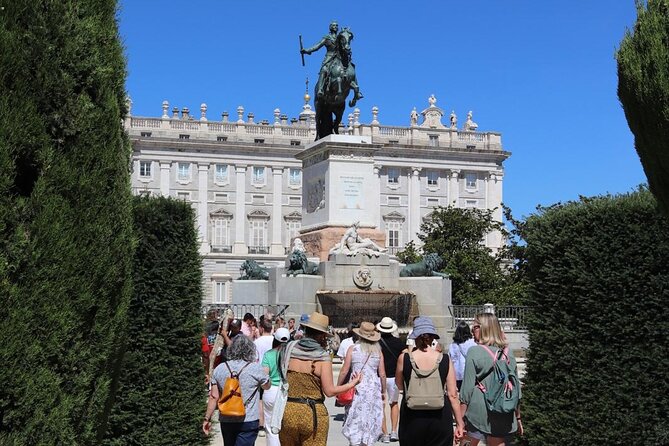
Stop 5 returns to Plaza Mayor, Madrid’s grand central square and the heart of old-city Habsburg Madrid. The tour frames it as both charming and historically significant—the perfect place to start thinking like an urban historian.
This is also where the narrative turns toward commerce, including the slave market connection near the area. When you hear that, Plaza Mayor stops feeling like only a backdrop for photos and coffee. It becomes a place where official power and everyday movement overlapped.
You’ll spend about 15 minutes here, and admission is listed as included for this stop. If you’re wondering what admission means in a big open square, it likely refers to guided entry-related access tied to the stop plan. Either way, the important part is that the guide anchors the story to a space you’ll recognize, even later when you’re on your own.
I like that this stop gives you a second chance to process what you learned at Teatro Real. You’re in the same city, looking at another iconic landmark, but the focus changes. That repetition helps the message stick.
Puerta del Sol (Km 0): Finishing at Madrid’s Nerve Center
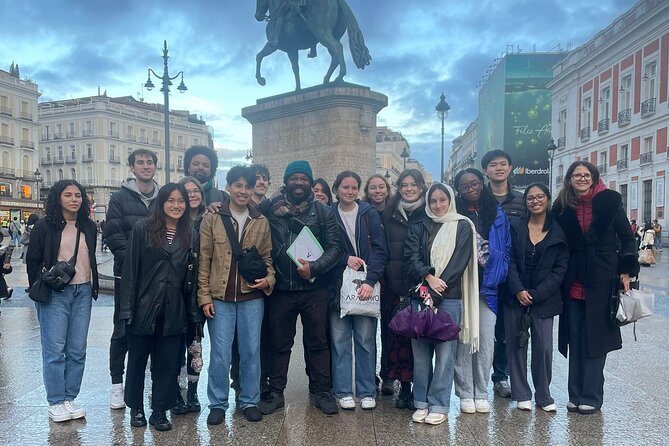
Stop 6 is Puerta del Sol, and it also marks the end of the tour. You’ll spend about 15 minutes here, and it’s one of Madrid’s most famous sites because it sits at the center of the city’s historical and busy street network.
Puerta del Sol has a semi-circular shape and acts like a junction, linking key streets like Calle Mayor and Calle del Arenal. The tour also makes a point about its origins being shaped by Spanish families strongly linked to the slave trade—again, tying city design to human economic systems.
Finishing here is a real convenience. Since Puerta del Sol is described as Km 0 and the central point of Spain’s radial roads, you’re set up for the next leg of your trip. You can hop into transit or simply wander to your next must-see without having to relocate first.
If you’re the kind of traveler who hates feeling trapped at the end of a tour, this is a good finish line. The ending location is famous for a reason: it’s a hub.
Price and Timing: Does $42.10 Feel Fair for Two Hours?
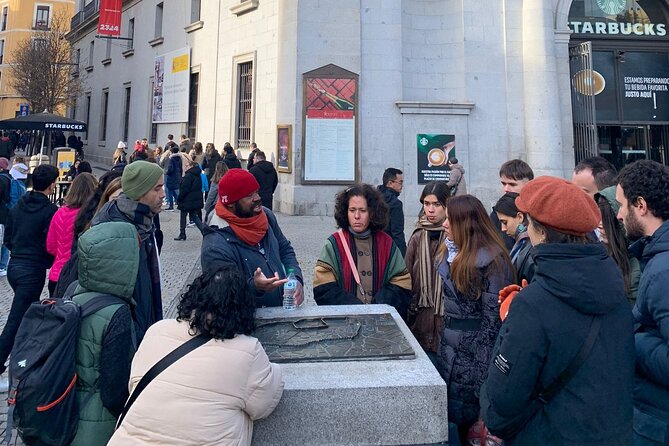
At $42.10 per person for about 2 hours, this tour isn’t cheap in the way free walking tours can be. But it’s also not overpriced given what’s included.
Here’s the value angle I’d use:
- You get a private-group format, so you’re not competing for the guide’s attention in a huge pack.
- You receive a mobile ticket, which is practical and reduces hassle.
- Multiple stops include admission time, and at least one segment is listed as free entry (Royal Palace).
- The route concentrates on the city core, so you spend your time on the story instead of moving around Madrid’s outer neighborhoods.
Also, it’s commonly booked about 24 days in advance. That tells me the schedule is popular. If you’re traveling in a busy season or want a specific time, don’t wait until the last week to book.
One caution on timing: the tour is about 2 hours, so you’ll be getting highlights rather than having unlimited time at each site. If you like to read and linger, plan to come back to a site you really care about.
Guide Style with Kwame: Why This Tour Lands So Well
This tour is guided by Kwame, and the biggest thing I’d expect from his approach is clarity. The way the tour is set up, he has to do more than explain facts. He has to connect visible landmarks to people’s lived reality, including the brutal part.
The tone, based on what the tour emphasizes, is engaging and strongly narrative-driven. The guide’s job here is to connect the dots between the Black experience in Spain across time—treating it as a continuous story rather than isolated snapshots. That makes a difference for your takeaway. You’re not just leaving with names; you’re leaving with a framework for understanding.
Another strong point: pacing. A 2-hour walking route can feel long if the guide is rambling. This tour is built like a structured path, with stops that each do a specific job in the story. When you have that structure and a patient guide, you get better retention.
If you’re worried about how emotionally heavy slavery-related content will feel, here’s how I’d think about it: the tour doesn’t dodge the topic, but it also doesn’t treat it like a scare tactic. It’s handled as history that belongs in the center of the city you came to see.
And yes, the guide matters. In my view, this kind of tour succeeds or fails based on how well the guide can turn a list of facts into something you can actually remember.
Practical Tips Before You Go
A few things make the experience smoother:
- Wear comfortable shoes. You’re doing multiple central-city stops over a short time.
- Bring a water bottle. The tour notes say no drinks are included (so plan ahead).
- Expect a serious theme. Even if the city is beautiful, the story is about slavery and its impacts.
- Use the mobile ticket on your phone to keep check-in easy.
- Service animals are allowed, and public transportation access is listed as nearby, so you can slot it into a broader Madrid day plan.
Also, since it’s private for your group, treat it like a conversation, not a performance. If you have questions—about terminology, how things connect, or what you should read next—this format makes it easier to ask.
Who Should Book This Madrid Black History Walking Tour?
I’d recommend this tour if you:
- Want Madrid’s highlights, but also want the context that most standard tours skip.
- Prefer an organized route with real stopping points, not just general sightseeing.
- Care about African diaspora history and how it connects to Iberian and European systems.
- Like learning with a strong guide narrative, especially from someone who explains the links between places.
I’d be a little cautious if you:
- Get overwhelmed easily by heavy subject matter in a short period.
- Prefer tours with a lighter tone and lots of free time for wandering.
- Want a long, slow museum-style experience; this one is focused and time-boxed.
Should You Book Roots and Resistance: A Black History Tour of Madrid?
If you’re choosing between this and a standard “only famous sights” walking tour, I’d lean strongly toward booking Roots and Resistance. The price is fair for what you get—especially the included entries—and the guide’s storytelling approach makes it more than a history lecture.
Also, the start and end points are ideal. You begin at Plaza de Isabel II and end at Puerta del Sol (Km 0), which means the tour slots neatly into your day and leaves you in the best possible place to keep exploring.
My final advice: book it early, wear good shoes, and bring water. Then let yourself take the story seriously. Madrid will look different after this walk—and in the best way.
FAQ
What’s the duration of Roots and Resistance: A Black History Tour of Madrid?
It runs for about 2 hours.
Is the tour offered in English?
Yes, it’s offered in English.
Does the tour include admission tickets?
Yes. Admission tickets are included at multiple stops, and the Royal Palace segment is listed as free.
Where does the tour start and end?
It starts at Plaza de Isabel II and ends at Puerta del Sol (Km 0).
Is there a mobile ticket?
Yes, the tour uses a mobile ticket.
Can I cancel for a full refund?
You can cancel up to 24 hours in advance for a full refund. If you cancel less than 24 hours before the start time, the amount paid is not refunded.