REVIEW · HOI AN
Hoi An Ancient Town Walking Tour with a Local
Book on Viator →Operated by Momo Travel · Bookable on Viator
Hoi An makes history walkable. This 3-hour guided stroll strings together Japanese and Cantonese influences across key UNESCO Ancient Town sights, then ends at the market for food and shopping. You also get a short look at how Hoi An survived major upheavals, including stories tied to the Vietnam War.
I like that the pace stays practical while you still get inside big-name buildings, not just street views. I also appreciate the included break—special herbal tea—and the way the walk finishes with real-world ideas for what to try in the market.
One heads-up: the UNESCO entrance ticket (120,000 VND per person) isn’t included, so plan for that extra cost, and remember the tour requires good weather.
In This Review
- Key things that make this tour worth it
- What $9.89 buys you in Hoi An (and what you’ll pay extra)
- Start at the Japanese Culture Gallery: the shortest way to understand Hoi An
- Japanese Covered Bridge: more than a photo stop
- Cantonese Assembly Hall: where community power shows up in wood and paint
- Quan Thang Ancient House: see how a prosperous family lived
- Hoi An Traditional Art Performance Theatre: culture you can hear, not just read
- Hoi An Central Market ending: eat, shop, and match tastes to your new knowledge
- Why this walk gives you more than landmarks
- How to make the tour fit your day (simple but effective)
- Should you book this Hoi An Ancient Town Walking Tour?
- FAQ
- How long is the Hoi An Ancient Town Walking Tour?
- How much does the tour cost, and is the UNESCO ticket included?
- What’s included in the tour?
- What’s not included?
- Where do I meet the guide, and where does the tour end?
- What if the weather is bad or I need to change plans?
Key things that make this tour worth it

- You stop at the places that explain the town’s mix of cultures, not just the postcard spots
- Time inside heritage buildings like the Japanese Covered Bridge area, Cantonese Assembly Hall, and Quan Thang Ancient House
- A built-in tea break helps you stay comfortable during the walk
- Traditional art performance shows how local culture lives on, not just how it used to be
- Small group (max 10) means you can ask questions and keep a steady pace
- Market ending gives you a smart place to eat and shop right after your sightseeing
What $9.89 buys you in Hoi An (and what you’ll pay extra)
At $9.89 per person for about 3 hours, this is the kind of tour that’s built for value: you’re paying for a guide and a route that hits major UNESCO-linked stops with sensible time windows. That matters in Hoi An because the old town can feel like a maze, and the difference between wandering and learning is huge.
The big extra cost is listed clearly: the Hoi An UNESCO Entrance Ticket is 120,000 VND per person and it’s not included. Also, admission tickets for the stops are marked as not included, so it’s smart to treat entrance fees as a normal part of the plan. If you’re budgeting tight, you’ll want that money ready before you start.
One more practical point: the tour is small, up to 10 travelers, and most people can join. Still, this is a walking tour in an old quarter, so wear comfortable shoes and be ready for uneven pavement and sun when it’s out. The tour also needs good weather, so keep your afternoon flexible.
You can also read our reviews of more walking tours in Hoi An


Start at the Japanese Culture Gallery: the shortest way to understand Hoi An
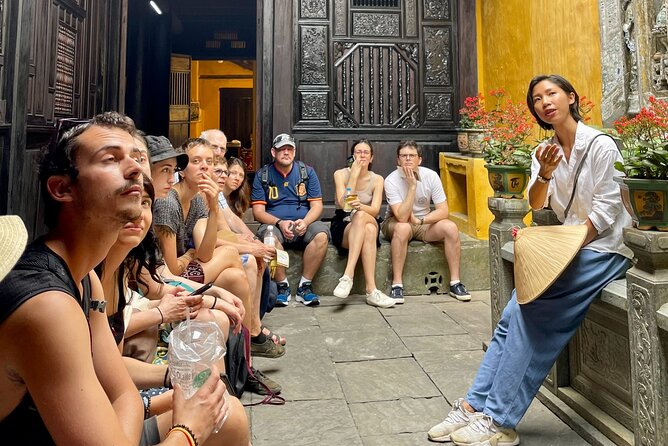
You begin at Nhà trưng bày Văn hóa Nhật Bản (Japanese Culture Gallery). The point here isn’t to see random objects—it’s to get the timeline in place first. The guide walks you through how Hoi An started, then focuses on why the Japanese were here and what that interaction left behind.
This is a smart opening. Once you know that Hoi An wasn’t shaped by one culture alone, the rest of the day clicks. The Japanese connection shows up in architecture you’ll see soon, and the guide’s explanations help you read details you might otherwise miss—like why certain design choices look the way they do.
You’ll spend about 25 minutes here. If you tend to rush museums, slow down for this one. The “why” they cover makes the later stops feel connected instead of separate.
Japanese Covered Bridge: more than a photo stop
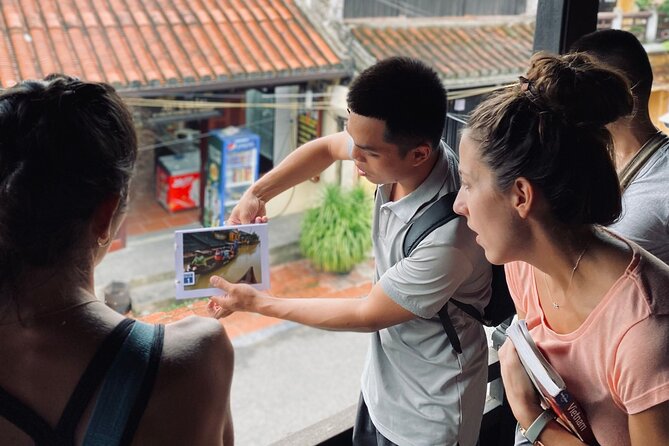
Next is the Japanese Covered Bridge, with around 20 minutes on-site. Yes, it’s the iconic bridge you’ve likely seen online. But the value is in the context your guide brings—how this bridge fits into the wider story of Japanese presence in Hoi An.
What you should do in this short window:
- Stand back for one clean view first, then move closer to see details
- Listen for what the guide says about symbolism and historical connections
- Use the short time to ask one question—like what part of the structure reflects Japanese influence
The bridge is also a good place to adjust your energy. After the gallery, this stop is visually satisfying without being exhausting, and it helps you settle into the walking rhythm of the day.
Cantonese Assembly Hall: where community power shows up in wood and paint
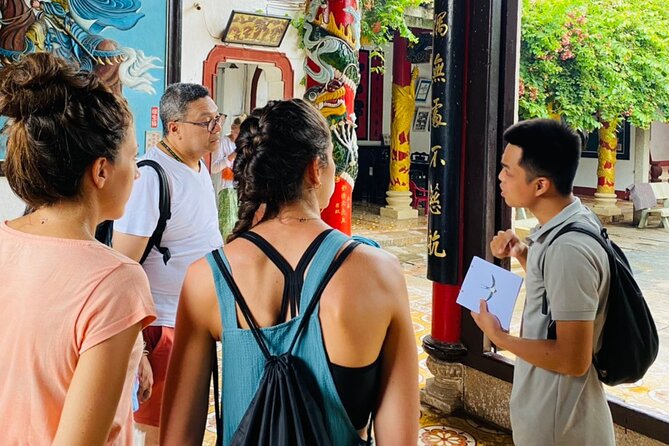
Then you head to the Cantonese Assembly Hall for about 25 minutes. This is one of those places where the decoration isn’t just pretty—it’s functional for the story. The guide points out the intricate design and the colorful features, tying them to Cantonese culture and the hall’s historical role.
If you like architecture, this stop rewards attention. If you don’t, it still works because you’re not only looking—you’re learning what the hall meant in daily life. Think of it as the kind of building where people gathered for community decisions, support, and identity.
Practical tip: don’t try to rush photos. Spend a few minutes looking for repeating patterns and paying attention to craftsmanship. It’s the sort of detail that becomes obvious once your guide frames it.
Quan Thang Ancient House: see how a prosperous family lived
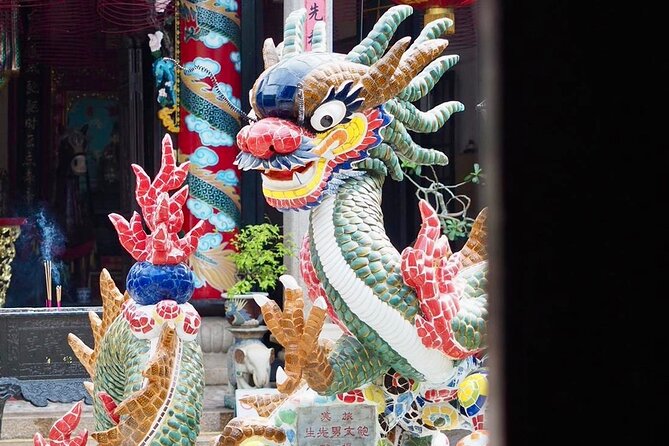
At Quan Thang Ancient House, you get about 25 minutes inside a preserved merchant home. This is where the tour becomes less about monuments and more about lived experience.
You’ll learn what kind of family lived here, what their status meant, and how the house reflects prosperity and design choices from that era. The best part of this stop is that you get a real sense of how indoor spaces worked—how rooms functioned as part of a household, not just as a backdrop.
One bonus you might encounter with certain guides: examples of behind-the-scenes perspective. In past experiences with guides such as Anh, there have been moments where visitors were taken through a back door of an older part of a house to see a working kitchen area, along with stories about how the house survived flooding across multiple generations. You can’t assume this will happen every time, but it’s a good sign of how some guides add texture beyond the standard route.






Hoi An Traditional Art Performance Theatre: culture you can hear, not just read
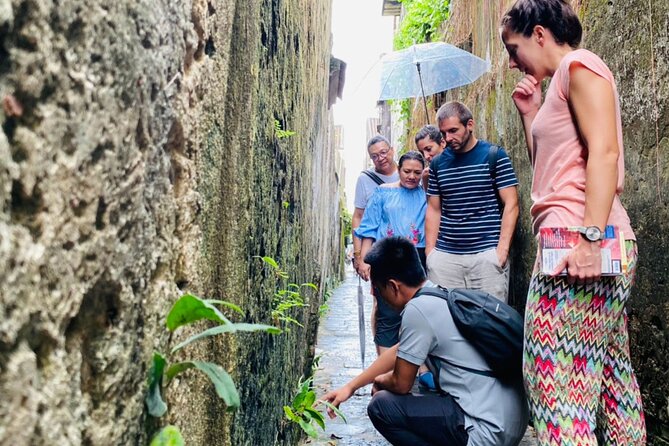
The tour then shifts to the Hoi An Traditional Art Performance Theatre for about 35 minutes. This stop is easy to underestimate because it’s not an architectural landmark. But it plays an important role: it shows how Hoi An’s traditions aren’t only preserved in buildings.
You’ll watch performances using traditional instruments, with music, dance, and theatrical elements. The timing is long enough to get into it, but not so long that it drags your whole afternoon down.
If you’re picky about performances, choose this like you would a short cultural show in any city: commit for the full segment, and then decide what you liked. The guide’s framing helps you understand what you’re hearing and seeing, so it doesn’t turn into background noise.
Hoi An Central Market ending: eat, shop, and match tastes to your new knowledge
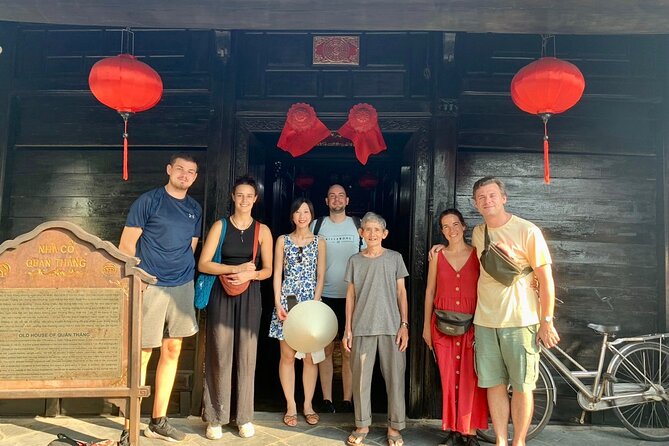
The final stop is the Hoi An Market at around 35 minutes. This is where the tour turns practical. Instead of only sightseeing, you get a route that guides you through stalls for local delicacies, handicrafts, and souvenirs.
The tour also hints at something locals talk about: the secret to Hoi An people’s longevity. Even if you don’t treat that as a scientific promise, it’s a fun way to tie food culture and lifestyle stories together as you walk through the market.
What I’d do with your time here:
- Start with one snack you can finish quickly, then keep moving
- If you want to buy souvenirs, look for practical items first (things you’ll actually use)
- If the guide provides recommendations at the end, use them immediately—this is the perfect moment to follow up
Also, since your tea break is included earlier, you’ll be less likely to run your energy low right when the market options multiply. That alone makes the ending feel smoother.
Why this walk gives you more than landmarks
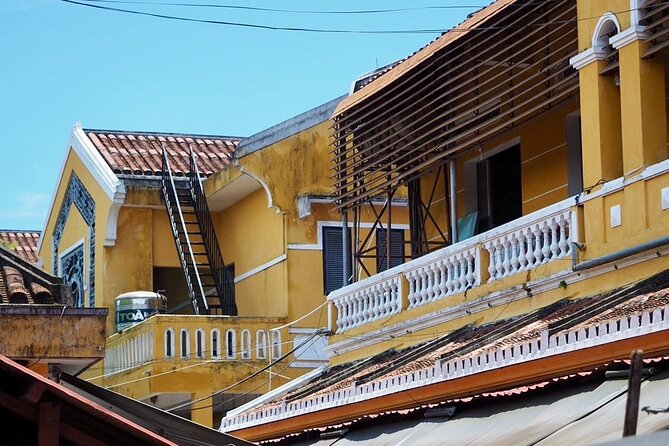
Hoi An is famous for its old town, but the value of this kind of guided route is how it interprets the pieces. The tour ties together multicultural influences—Japanese and Cantonese connections on display in specific architecture—while also touching preservation stories tied to the Vietnam War.
That combination changes how you experience the streets. You don’t just see colorful facades and old roofs; you start understanding the town as something people rebuilt, protected, and kept meaningful over time. And when you reach the market after that context, food and daily life feel less random.
One more thing: the guides’ style seems to matter. Names you may encounter include Kun, Trang, Nguyen, Karla, Anh, and June—each described as friendly and energetic, with English that makes the stories land. A good guide also keeps you moving at a reasonable pace, which is a big deal when you’re trying to see six stops without feeling sprinty.
How to make the tour fit your day (simple but effective)
This is a walking tour through the UNESCO old town, so small choices make a big difference.
Plan for the extra ticket. Bring the 120,000 VND per person for the UNESCO entrance ticket listed as not included. If you arrive without it, your afternoon can get awkward fast.
Wear shoes that handle old stone. You’ll be on foot for hours. Comfortable footwear beats stylish footwear here.
Use the guide to save time later. At the end, you’ll have a better sense of what kind of food and shops match what you just learned. If your guide gives a short list of what to try on your own, grab it and use it the same day.
Keep one question for each stop. When the group is small (up to 10), you can ask. Ask something specific like what detail to look for, or why the building is arranged the way it is. You’ll get more out of the photos too.
Should you book this Hoi An Ancient Town Walking Tour?
Book it if you want a smart, guided way to understand Hoi An in about three hours, especially if you like architecture plus culture you can experience directly (the performance stop) and food you can pick right at the end (the market).
Skip or reconsider if you hate walking, you don’t want to handle separate entrance fees (UNESCO ticket is extra), or your travel schedule can’t flex for weather. In those cases, you might prefer a shorter, more flexible option.
Overall, this is strong value: a small-group route through the big UNESCO-linked stops, with interpretation that helps you understand why Hoi An looks the way it does—plus an easy landing spot at the market.
FAQ
How long is the Hoi An Ancient Town Walking Tour?
It runs for about 3 hours.
How much does the tour cost, and is the UNESCO ticket included?
The price is $9.89 per person. The Hoi An UNESCO Entrance Ticket (120,000 VND per person) is not included.
What’s included in the tour?
Coffee and/or tea, including a special herbal tea, is included.
What’s not included?
Hoi An UNESCO Entrance Ticket (120,000 VND per person) is not included, and the itinerary notes that admission tickets for stops are not included.
Where do I meet the guide, and where does the tour end?
You start at 125 Đ. Phan Chu Trinh, Phường Minh An, Hội An. You end at Hoi An Market, 19 Trần Phú, Cẩm Châu, Hội An.
What if the weather is bad or I need to change plans?
The tour requires good weather. If it’s canceled due to poor weather, you’ll be offered a different date or a full refund. You can cancel for free up to 24 hours in advance for a full refund.