REVIEW · MARRAKECH
The Jewish Heritage in Marrakech
Book on Viator →Operated by Az-eddine Ben jouhra · Bookable on Viator
That walk through the Mellah feels like time travel. This Jewish heritage in Marrakech tour traces how a community shaped the city for about 2000 years, from walled quarter life to prayer-house details you can still read in tile and lettering. You also get a guide who knows the city well, with a route that links Jewish neighborhoods to the souks and landmark corners near the old palaces.
What I like most is the focus on real places you can stand in: the Mellah’s boundary walls and architecture, then the Slat Al Azama (Lazama) Synagogue with the mezuzah on the entrance frame. I also like the cemetery stop, which is described as dating to the 16th century and arranged in a way you won’t see elsewhere in Morocco. One drawback to consider: the experience depends heavily on guide timing and pacing, and I’d go in with a quick plan for questions around transport costs during the walk.
In This Review
- Key highlights you should care about
- Marrakech’s Jewish Heritage in 3 Hours: what you’ll actually see
- Mellah walls, balconies, and the 15th-century turning point
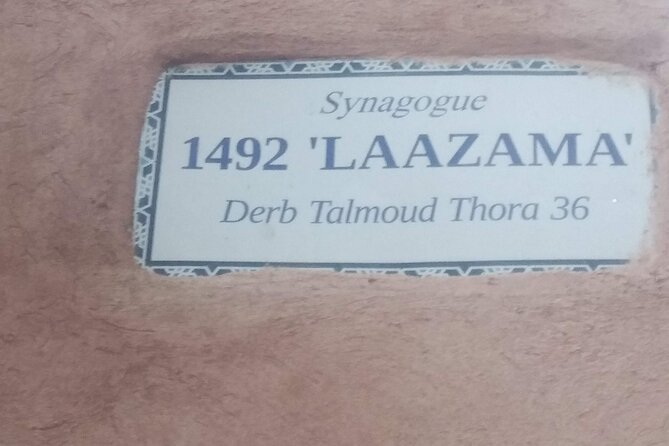
- Slat Al Azama (Lazama) Synagogue: tiles, Hebrew letters, and the mezuzah
- Marrakesh Jewish Cemetery: the 16th-century layout you’ll remember
- Tinsmiths’ Square, spice merchants, and souk corners near the old palaces
- Price and value: is $82 for 3 hours worth it?
- Guide quality matters more than you think
- Who this Jewish heritage tour in Marrakech is best for
- Should you book the Jewish Heritage in Marrakech tour?
- FAQ
- What is the duration of the Jewish Heritage in Marrakech tour?
- How much does the tour cost?
- Where does the tour start, and when?
- Is there a mobile ticket?
- What’s included in the price?
- Are tips included?
- How many people are in the group?
- Will I visit the Jewish cemetery on Saturday?
- Is the tour accessible or suitable for most people?
- What if the weather is bad?
Key highlights you should care about

- Mellah lanes and walls: walled quarter geography, plus the story of Jewish arrival after persecution in Spain
- Slat Al Azama (Lazama) Synagogue: hand-laid tiles, Hebrew letter details, and the mezuzah at the entrance
- Marrakesh Jewish Cemetery: 16th-century origin and a three-part layout for men, women, and children
- Souk edge after the monuments: Tinsmiths’ Square linking Badi Palace, spice merchants, and the Mellah Souk
- Small group feel (max 18): more workable than the big-bus style tours, especially for photo stops
Marrakech’s Jewish Heritage in 3 Hours: what you’ll actually see
This is a short, focused morning walk built around three big anchors: the Mellah, the Slat Al Azama (Lazama) Synagogue, and the Marrakesh Jewish Cemetery. From there, the route expands into the nearby historic souk zone, where spice shops and craft stalls sit close to the silhouettes of older palaces.
The best way to think about it: you’re not doing a museum day. You’re walking through the city’s layers, learning what the buildings used to mean, and what the spaces still suggest today. Marrakech has plenty of tourist sightseeing, sure. But this tour gives you a second set of eyes for the same streets.
It runs about 3 hours, starts at 9:00 am at Café Koutoubia, and ends back near the same starting point. The day is weather-dependent, so if conditions are poor, you’re offered a different date or a refund. That matters in Marrakech because heat and wind can change how comfortable (and how photo-friendly) the walk feels.
You can also read our reviews of more historical tours in Marrakech
Mellah walls, balconies, and the 15th-century turning point
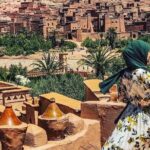
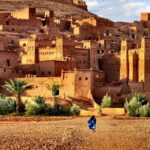
The Mellah is the star of the show, and not in a vague way. It’s a real quarter type: an area where Jewish residents lived, commonly surrounded by high walls that helped separate the community from other parts of the city.
In Marrakech, that walled-quarter setting matters because it tells you something important about how cities worked. When you understand separation by design, you start noticing details in the streets—how buildings face inward, how openings relate to courtyards, and how daily life had to fit inside firm boundaries.
The tour also ties this to a specific historical wave. After 1438, many Jewish families arrived in Morocco following immigration from Spain, fleeing persecution connected to the Reconquista period. The narrative is broader than one city: mellahs were created across the country—Fez and Meknès, Essaouira and Taroudant, Rabat and Sale—before Marrakech’s Mellah became one of the largest.
Then there’s the architectural clue you’ll likely notice while walking: the quarter’s buildings can show balconies and design lines that feel Spanish or European in influence. That doesn’t mean “Europe copied Morocco” or anything like that. It’s more that people brought patterns, tastes, and builders’ habits with them as they rebuilt lives far from home.
One more detail that adds weight: the Mellah of Marrakech is described as having gone through a recent renewal supported by King Mohamed VI. That’s relevant because it frames what you see today. You’re not just viewing ruins; you’re seeing part of a living urban fabric that has been maintained and re-shaped.
Practical note: this segment includes time to take photos and observe street-level life. But because you’re walking, wear shoes that handle uneven stones and sudden crowd pinch points near the souks.
Slat Al Azama (Lazama) Synagogue: tiles, Hebrew letters, and the mezuzah
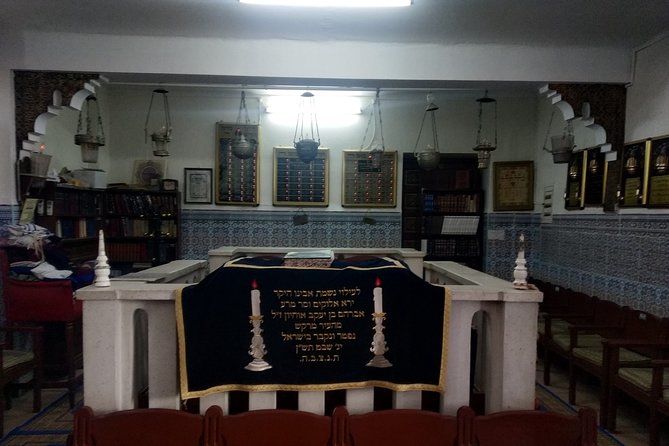
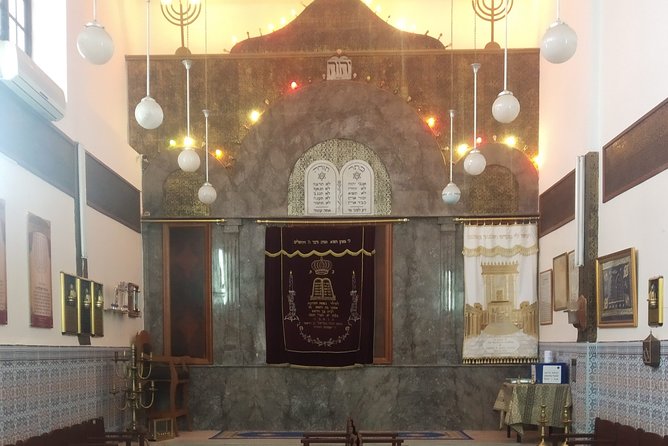
Next comes the Slat Al Azama (Lazama) Synagogue, and it’s the kind of stop where the details are the point. You enter a well-kept courtyard, with a surrounding setup that offers privacy for members—curtains along the edges keep the space from feeling like a public walkway.
Inside the visual language, you’ll spot hand-laid tiles covering walls, often between curtain lines. The color mood is mostly blues and whites, and the walls include Hebrew-letter elements along the upper sections. Even if you don’t read Hebrew, the lettering creates a rhythm: it signals sacred orientation and a sense of continuity.
Then there’s one object that anchors the meaning on a practical level: the mezuzah. It hangs on the doorframe at the synagogue entrance. A mezuzah is parchment in a decorative case inscribed with Torah verses. In Jewish homes, a mezuzah is typically affixed to doorways, and some people also wear a mezuzah charm—described here as worn around the neck for protection.
Why I find this stop valuable: it doesn’t only show you “a building.” It teaches you how sacred practice lives in small physical signals. When you leave, it’s easier to understand why doorframes, thresholds, and entrances matter so much across cultures.
One timing detail from the tour info: admission for this synagogue is included, and the visit is about 30 minutes. That’s a good length—long enough to look slowly, short enough that you’re not stuck in one place when the rest of the city is calling.
Marrakesh Jewish Cemetery: the 16th-century layout you’ll remember
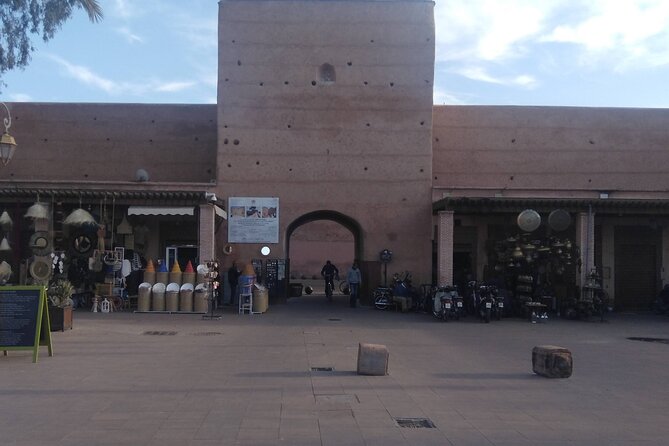
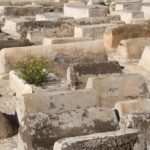
The Marrakesh Jewish Cemetery is described as dating from the 16th century and is said to be the largest Jewish cemetery in Morocco. Cemeteries can feel similar at first glance, but this one has a very specific layout detail: it’s divided into three distinct edges—men, women, and children—based on local practice (minhaggim) unique to the Jews of Marrakech.
That’s not a trivia fact. It changes how you experience the site. You don’t just walk among graves; you see how a community structured memory and respect. It’s also a reminder that religious customs can be expressed through space, not only through prayer.
Important scheduling note: the tour states there is no cemetery visit on Saturday. So if you’re planning a weekend itinerary, check your day against that condition. It’s the kind of detail that can matter for your expectations, especially if you’re only in Marrakech for a limited time.
The cemetery stop is about 30 minutes, and admission is free. That combination—short, meaningful, and free—makes it feel like the tour is using time wisely, not padding the walk with extra detours.
Tinsmiths’ Square, spice merchants, and souk corners near the old palaces
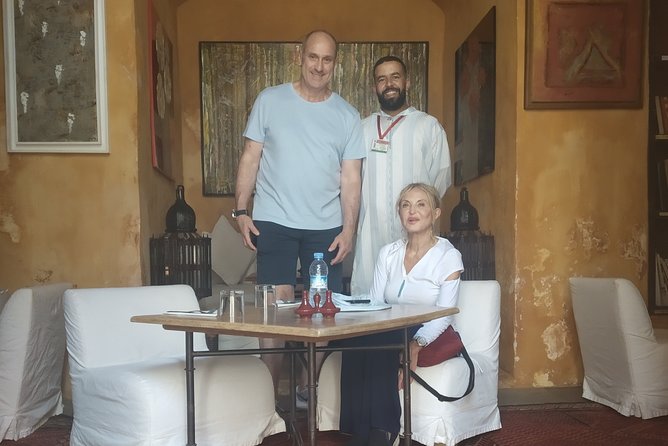
After the synagogue and cemetery parts, the route leans into the city’s trade zone. One of the focal points is the recently renovated Tinsmiths’ Square, known as Place des Ferblantiers.
From this square, you get a clever sightline: it overlooks the Badi Palace area by an arch. It also sits close to the entrance to the Spice Souk and the Mellah Souk on the left side, plus an alley leading toward the Bahia Palace. In other words, you get a cluster of old-power-meets-market energy in a relatively walkable footprint.
In the square itself, you’ll find shops, restaurants, snack bars, and in one corner, tinsmiths. That matters because it’s not only about history; it’s about ongoing craft. When you see working artisans nearby, the past stops feeling like a set of static photos.
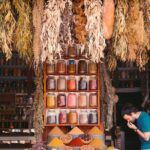
Then there’s the Spice Souk detail: the route describes you passing the entrance area for spice and herb merchants, including herbal tea shops. You’ll see lots of Moroccan spices and herbs in the marketplace context, which helps you connect everyday sensory experiences—smell, color, packaging—with the broader idea of Marrakech as a crossroads for caravans headed toward Europe.
Finally, near the end of the Tinsmiths’ Square area—toward the Bahia Palace—you’re directed toward the Kissaria of jewellers and goldsmiths. This is described as a Jewish creation that shifted into Muslim hands over time (the text doesn’t name an exact date, so I’d treat that as a broad historical transfer rather than a precise timeline).
This “market edge” segment is often where tours either feel rushed or feel alive. Here, it’s framed as an orientation walk: you learn what the entrances connect to and what each zone specializes in, so you can navigate later on your own.


Price and value: is $82 for 3 hours worth it?
At $82 per person for about 3 hours, value depends on two things: what you want from a guided walk and how much you trust the guide to bring it to life.
You do get clear inclusions: bottled water is included, and tickets for the synagogue and cemetery are covered (and the Mellah area is described as free admission). You also get a small group size limit of 18 travelers, which tends to help with attention and pacing.
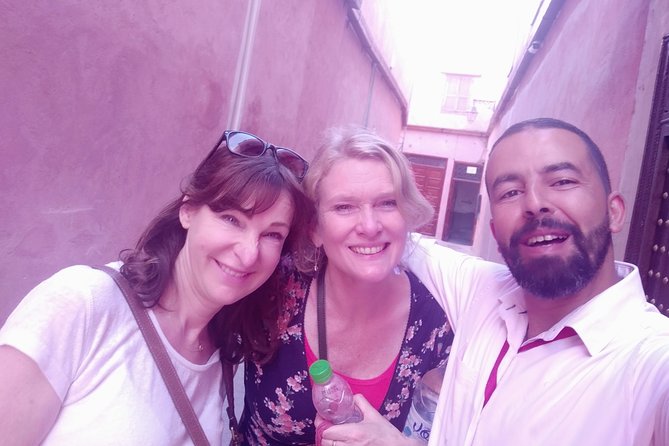
Where value can wobble is guide consistency. The overall rating is 3.3 from 7 reviews, and the written feedback includes both a strong positive note about a guide named Az-Eddine (experienced and friendly, with hours that felt well spent) and severe negative notes about punctuality and explanations on other occasions. I can’t promise which guide you’ll get, but I can tell you how to protect your day.
If you book, show up early at Café Koutoubia, then ask a simple question at the start:
- Who will be leading us?
- Are there any expected extra costs during the walk?
It’s a small move that can prevent a lot of frustration. This tour is priced as a guided heritage experience. If anything extra pops up that changes what you think is included, you’ll want to know fast.
Guide quality matters more than you think
This kind of tour lives or dies by interpretation. You can stand in the Mellah and see walls. But it’s the guide who turns those walls into a story about separation, migration, and identity—plus the link to why Jewish quarters formed in this shape.
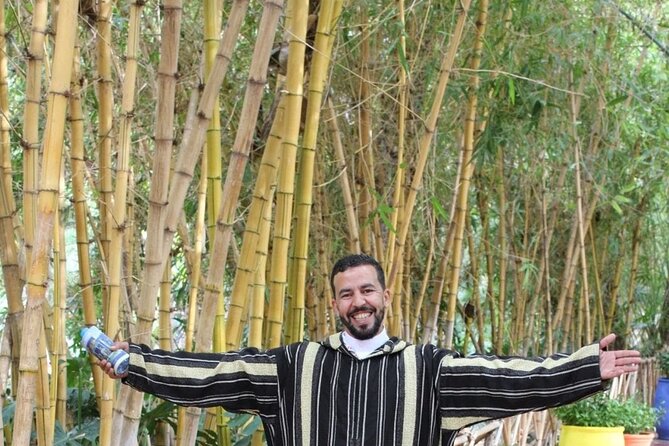
In the feedback you provided, the best outcomes are tied to guide personality and competence. One positive comment highlights Az-Eddine Ben jouhra by name: experienced, friendly, and able to make the hours feel genuinely worthwhile.
On the negative side, there are reports of a guide arriving late, not acknowledging the delay, and even starting the walking portion with a request tied to saving time via taxi. Another negative point says the guide didn’t arrive at all, and someone else had to step in without the same depth of Jewish history.
So here’s my practical guidance. When you meet, do a quick check-in:
- Confirm start time and your planned flow through Mellah → synagogue → cemetery.
- Ask what’s covered by the tour price versus what might require outside spending.
- Tell the guide what you’re most interested in: architecture, synagogue details, or the cemetery layout.
You’re not trying to manage the whole day. You’re just setting expectations early so you get the heritage focus you paid for.
Who this Jewish heritage tour in Marrakech is best for
This is a smart choice if you want something more than the usual Marrakech postcard circuit. It suits you if you:
- enjoy walking tours that teach you how a city was organized
- like architecture details you can connect to migration and community life
- want a morning activity that ends with you understanding more of the souk area around Badi and Bahia Palace
It’s also a good fit for small-group travel. With a maximum of 18 travelers, you’re less likely to feel like you’re being herded through stops.
If you’re visiting with limited time, the three-hour format is useful. But if you only want “big ticket” monuments with sweeping views, you might find the synagogue and cemetery stops more solemn and less photogenic. This tour is more about meaning than spectacle.
Should you book the Jewish Heritage in Marrakech tour?
If your priority is learning the Jewish story in Marrakech through specific sites—Mellah streets and walls, Slat Al Azama synagogue details, and the distinctive cemetery layout—then yes, it’s worth considering. The structure is tight, the price includes key admissions, and bottled water keeps the walk practical.
But because the quality feedback includes serious punctuality problems on some occasions, I’d only book if you’re comfortable doing a quick start-of-tour confirmation. Arrive on time, meet your guide, confirm coverage and any potential extra costs, and you’ll set yourself up for a far better day.
If you want a heritage walk that helps you see Marrakech with new context, this can do that fast—especially in the morning light, when the Mellah streets feel less crowded and easier to read.
FAQ
What is the duration of the Jewish Heritage in Marrakech tour?
It lasts about 3 hours.
How much does the tour cost?
The price is $82.00 per person.
Where does the tour start, and when?
It starts at Café Koutoubia (J2G4+2WQ, Marrakesh 40000) at 9:00 am.
Is there a mobile ticket?
Yes, the tour includes a mobile ticket.
What’s included in the price?
Bottled water is included, and entry tickets for the synagogue are included. Admission for the Mellah and the cemetery is listed as free.
Are tips included?
No. Tips are not included.
How many people are in the group?
The tour has a maximum of 18 travelers.
Will I visit the Jewish cemetery on Saturday?
The tour information says there is no cemetery visit on Saturday.
Is the tour accessible or suitable for most people?
The tour indicates that most travelers can participate.
What if the weather is bad?
The experience requires good weather. If it’s canceled due to poor weather, you’ll be offered a different date or a full refund.