REVIEW · POMPEII
Ancient Pompei in the afternoon
Book on Viator →Operated by Glauco Messina · Bookable on Viator
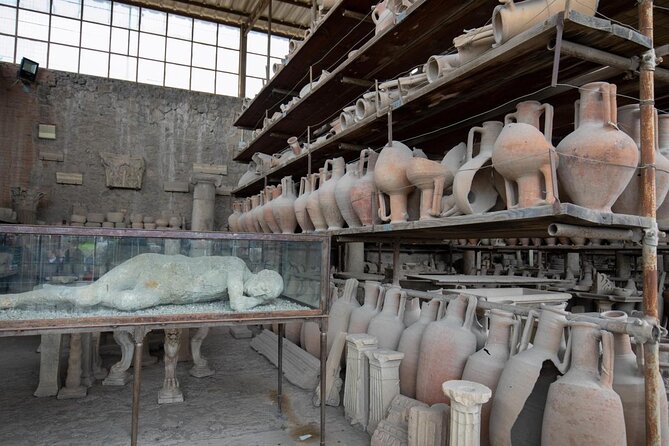
Pompei is a different story after lunch. This afternoon guided walk through Pompeii Archaeological Park, led by Glauco Messina, is built for a calmer visit once the morning pressure eases. Two things I like right away: the afternoon timing that often means more comfortable temperatures, and the way the guide keeps the explanation practical and easy to follow.
I also like the route itself—Gymnasium, Amphitheater, Forum, and the daily-life stops in between—so you’re not just staring at rocks. One consideration: Pompeii entry tickets are not included, so you’ll want to handle that in advance so you’re not scrambling.
This is an English small-group tour with a maximum of 10 travelers. It starts at 3:30 pm at Piazza Immacolata and ends near Piazza Porta Marina, with the overall duration listed at about 2 hours (and the main park segment described as up to 3 hours, so plan for a couple hours of walking).
In This Review
- Key highlights worth planning around
- Why an afternoon Pompeii guided tour feels smarter
- A small-group pace that doesn’t leave you behind
- Meet Glauco Messina and get your Pompeii story straight
- You’ll cover the big areas—without getting lost in Pompeii’s sprawl
- The route: what each stop adds to your understanding
- Gymnasium: the “public space” feeling
- Amphitheater: entertainment and crowd energy
- Abundance road and street-level context
- Tavern and Thermopolium: daily-life “food and drink” stops
- Public Spa: communal routines you can picture
- Forum: the civic center where everything connects
- Timing and pacing: how long you should plan for
- Price and value: what $254.07 means for your group
- Tickets, comfort, and what to bring
- Who this tour is best for (and who might want another option)
- Potential drawback: the “afternoon” trade-off
- Should you book Ancient Pompei in the afternoon?
- FAQ
- How long is the Ancient Pompei in the afternoon tour?
- What time does the tour start?
- Where do I meet the guide?
- Where does the tour end?
- Is Pompeii admission included in the price?
- What group size is this tour?
- Is the tour offered in English?
- When should I book if I want this time slot?
- Can I cancel for free?
Key highlights worth planning around
- Afternoon crowds tend to thin out and the day feels more manageable than peak morning hours
- Small group (max 10) means you get more human pacing and fewer “herd” moments
- Glauco Messina’s teaching style works well even with teenagers, with explanations shaped to what your group cares about
- A focused walk through major Pompeii areas like the Forum plus public and everyday sites
- Tickets aren’t included, so your planning should include the entry purchase
Why an afternoon Pompeii guided tour feels smarter
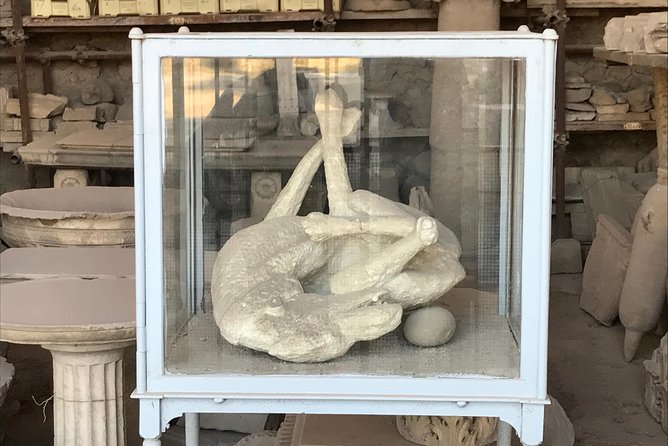
If you’ve only experienced Pompeii in the morning, you already know the vibe: crowds, noise, heat, and a lot of “look now, move now.” This afternoon schedule is designed to work against that. By starting at 3:30 pm, you’re aiming for the time when many tour groups have already come and gone, and the park can feel less like a conveyor belt.
That matters because Pompeii is not a place where speed is the best strategy. The “wow” moments—street corners, public spaces, doorways, and the layout of buildings—land better when you can slow down. In the afternoon, you’re more likely to actually connect the sites you’re seeing with the story your guide is telling.
The other reason I like the afternoon plan is practical: it usually feels more comfortable for walking. One review specifically called out a later afternoon slot (around 4:30 pm) as being less crowded and no as hot. Even if your exact start time is 3:30 pm, you’re still booking the same overall idea: go after the morning surge.
You can also read our reviews of more tours and experiences in Pompeii.
A small-group pace that doesn’t leave you behind
This is capped at 10 travelers, which changes the whole experience. In a big group, you get pulled along while you try to decode signage, maps, and your own footing. With a small group, the guide can pause for questions, keep attention from drifting, and adjust the pace if people need a breather. One of the strongest themes from the reviews was how the guide kept teenagers engaged, which usually only happens when the group is small enough to feel interactive.
Meet Glauco Messina and get your Pompeii story straight
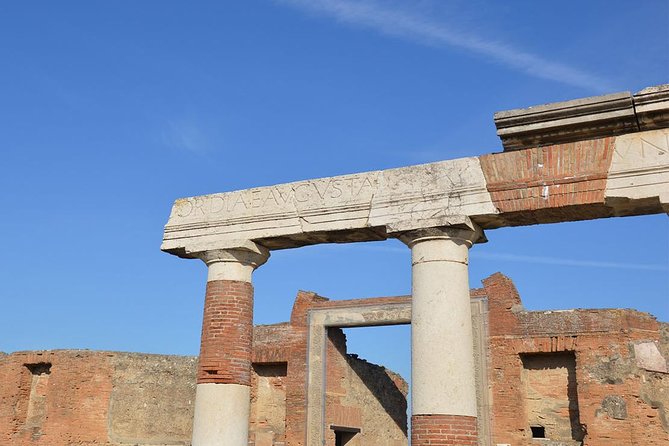
This tour is guided by Glauco Messina, and that’s a big deal because Pompeii is easy to misunderstand if you only look at the ruins. The site is full of interesting architecture and everyday spaces, but without a guide, you might miss the “how people lived” part—the why behind what you’re seeing.
The goal here is explanation that stays grounded. You’ll learn what happened to Pompeii from your guide, but the way it’s taught is what makes it work. In the feedback, the standout detail wasn’t just that the guide was good—it was that Glauco kept a group of teenagers engaged and tailored the facts and descriptions to their interests. That’s exactly the kind of flexible teaching style that helps adults too, because it means you’re not stuck with a single rigid script.
You’ll cover the big areas—without getting lost in Pompeii’s sprawl
The tour’s structure is helpful: you focus on a set route rather than roaming. That keeps your brain from turning into a confused pile of “I saw that somewhere” moments. Your stops are in the Pompeii Archaeological Park area, and the listed highlights include:
- Gymnasium
- Amphitheater
- Abundance road
- Tavern
- Thermopolium
- Public Spa
- Forum
Each one is a different slice of city life (public life, entertainment, street life, and daily routine). Even if you don’t know everything going in, the guide can connect the dots fast.
The route: what each stop adds to your understanding
Pompeii is best when you build a mental map while you walk. This tour does that for you by chaining together major spaces in a logical flow. Here’s what each listed stop tends to give you, plus what to keep in mind.

Gymnasium: the “public space” feeling
You’ll start with the Gymnasium, a major public area. This kind of stop sets the tone: Pompeii wasn’t just houses and streets. It had places where people gathered, worked out, met friends, and showed up as a community. The guide’s job here is to help you see the space as part of daily rhythm, not just an architectural shell.
Practical note: this is a good section to adjust your expectations. Pompeii can feel “open” and exposed, so this is where you’ll want to be sure your pacing and water are on track.
Amphitheater: entertainment and crowd energy
Next up is the Amphitheater. This is where you start thinking about gatherings at scale. It also helps you understand why Pompeii feels so theatrical in places: the layout pushes you to look outward and imagine movement of people, not just static ruins.
If your group likes stories, this is often a strong stop. Your guide can connect the site to what city entertainment and public gatherings meant back then.
Abundance road and street-level context
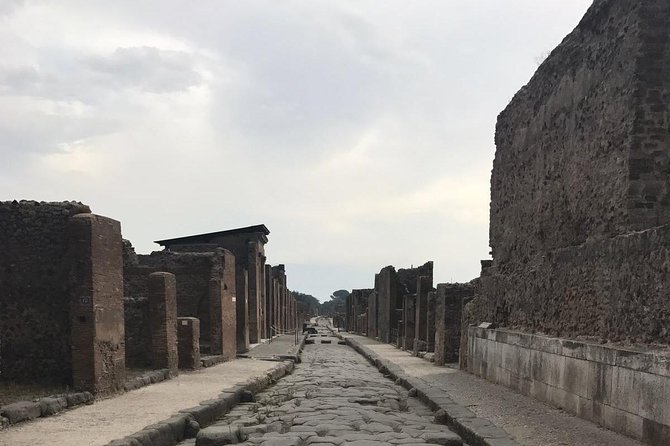
Then you move through Abundance road. Roads like this are what turn Pompeii from “a collection of buildings” into “a city with routes.” Street space is where you notice how people would move between key zones—public spaces, shops, and civic points.
If you like photography or you’re the type who enjoys city planning vibes, this is usually one of the more satisfying areas because the streets help you orient yourself.
Tavern and Thermopolium: daily-life “food and drink” stops
You’ll also stop at a Tavern and a Thermopolium. These names point to daily routine: places connected to eating, drinking, and quick stops. The big value isn’t memorizing a Roman vocabulary list; it’s using these areas to understand how ordinary life worked in Pompeii.
This is especially useful for families. Kids and teens often care less about big-picture dates and more about how people spent time. Food and daily stops are a natural way to keep attention focused.
Public Spa: communal routines you can picture
Next is the Public Spa. Even without going deep into specifics, this type of stop helps you visualize routine activities and how public spaces were built for comfort and use. It adds a human scale to the tour because it’s tied to everyday habits.
Forum: the civic center where everything connects
Finally, you’ll reach the Forum. This is where Pompeii becomes “city administration and public life.” The Forum is a great capstone because your earlier stops start to click: entertainment spaces, street routes, and daily needs all connect back to civic life.
If you’ve ever visited a big museum and felt like you need a “skeleton map” to understand where things fit, the Forum usually provides that. The guide can tie together what you’ve seen so far into a clearer picture.
Timing and pacing: how long you should plan for
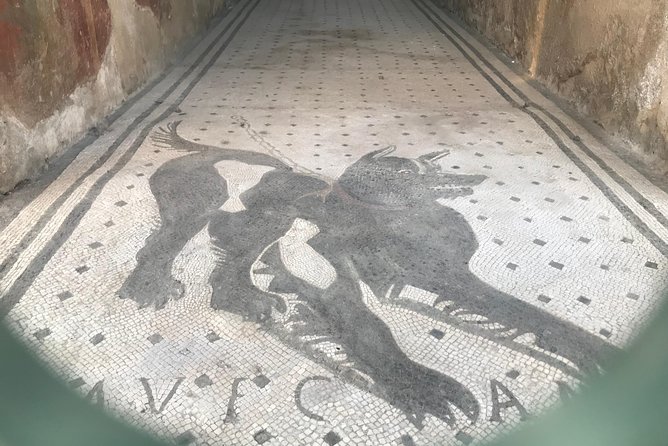
The tour duration is listed at 2 hours (approx.), but the main park stop is described as 3 hours. That mismatch can happen with online descriptions, route design, or day-of pacing. Either way, I’d treat this as a couple-hours walking experience where you should expect to stay flexible.
Real-world planning tip: arrive a little early. You start at Piazza Immacolata at 3:30 pm, and tours are far less fun when you’re jogging through an entrance crowd while everyone else is already lined up.
Also note the tour ends at Piazza Porta Marina. That’s convenient if you’re planning to keep exploring afterward, but it does mean this isn’t a tight out-and-back. Build in time to reposition yourself for your next stop.
Price and value: what $254.07 means for your group
The price is $254.07 per group for up to 8 people, and the experience is described as a small group with a maximum of 10 travelers. In other words, the pricing model is group-based, but the tour capacity is slightly higher than the “up to 8” grouping for the listed rate.
Here’s how to think about value without overcomplicating it:
- If you split it within a group of 4, you’re paying about $63.50 per person
- With 8 people, it becomes about $31.75 per person
That’s why timing and group size matter. If you’re traveling solo or as a couple, the value can still be solid because it’s a guided route with a small group cap and an English-speaking guide. But the best deal happens when you can fill out your end of the group.
One more value point: because admission is not included, your total trip cost will be a bit higher than the tour price alone. Still, separating tickets can be normal at major sites, and it keeps the tour price focused on the guiding service.
Finally, this tour is booked on average 24 days in advance, which suggests it’s popular in that afternoon slot. If you’re traveling in a high season or on a busy weekend, it’s smart to reserve earlier rather than hoping a slot appears.
Tickets, comfort, and what to bring
You’ll need Pompeii admission tickets separately. The tour includes the guided portion only. So plan for that, even if you’ve pre-bought other activities in the area. Arriving without the ticket is how a smooth afternoon becomes an annoying start.
For comfort, the biggest thing is to be ready for walking in an open archaeological park. In the afternoon, it can be cooler than midday, and reviews highlight that relief, especially later slots. Still, the ruins don’t offer much cover, so dress and pace for warm weather and bring what you need to keep going.
A quick checklist that fits this style of tour:
- comfortable shoes for uneven stone and long walking stretches
- sun protection
- water (and a small plan for snack breaks, even if you don’t stop often)
- a lightweight layer in case the temperature swings later in the evening
And since it’s near public transportation and service animals are allowed, getting there doesn’t have to feel like a logistics puzzle.
Who this tour is best for (and who might want another option)
This afternoon Pompeii experience fits best if you want:
- a guided route through major sites, not wandering with a map
- less crowd pressure than the morning rush
- a guide who can explain things clearly, including to teens
- a group size that feels human (max 10)
It’s also a strong choice for families where not everyone wants the same kind of storytelling. The guide’s ability to tailor descriptions was a key highlight.
Potential drawback: the “afternoon” trade-off
If you’re the type who loves early starts or you hate feeling like the day is already half gone, an afternoon start can feel less ideal. Also, because the tour ends at Piazza Porta Marina, you’ll want to make sure your next plan makes sense geographically.
Should you book Ancient Pompei in the afternoon?
I’d book this if you care about a more comfortable, less crowded Pompeii visit and you want someone to connect the ruins into a clear story. The small-group size, the English guide, and Glauco Messina’s reputation for keeping younger visitors engaged make it a smart pick for mixed-age groups.
Book it sooner if your schedule is tight. The tour averages 24 days in advance, and afternoon slots can go quickly.
Skip or reconsider if you already know you want a longer solo roam with no structured stops, or if you don’t want to handle entry tickets separately. But if you want an efficient, guided Pompeii afternoon that helps you see the city as a city, this tour is an easy yes.
FAQ
How long is the Ancient Pompei in the afternoon tour?
The duration is listed at about 2 hours (approx.).
What time does the tour start?
The start time is 3:30 pm.
Where do I meet the guide?
You meet at Piazza Immacolata, 80045 Pompei NA, Italy.
Where does the tour end?
The tour ends at Piazza Porta Marina, 80045 Pompei NA, Italy.
Is Pompeii admission included in the price?
No. Admission tickets are not included, and the tour price covers the guided tour only.
What group size is this tour?
The tour has a maximum of 10 travelers.
Is the tour offered in English?
Yes, the tour is offered in English.
When should I book if I want this time slot?
On average, it’s booked about 24 days in advance.
Can I cancel for free?
Yes. You can cancel up to 24 hours in advance for a full refund. If you cancel less than 24 hours before the start time, the amount paid is not refunded.