REVIEW · KATHMANDU
Full Day Private Tour of Kathmandu – UNESCO World Heritage Sites
Book on Viator →Operated by Shepherd Holidays · Bookable on Viator
Four UNESCO stops. One focused day.
This private Kathmandu heritage tour strings together Hindu and Buddhist landmarks in a way that feels like you’re watching Nepal’s beliefs and architecture evolve in real time. I like that it visits four iconic UNESCO-linked sites and I also like the private guide angle, because the explanations help you read what you’re seeing instead of just snapping photos. One thing to plan for: main-site entrance fees are not included, so you’ll want to budget a bit extra on the day.
I also appreciate the practical setup. You get hotel pickup and drop-off, bottled water, and an air-conditioned vehicle, which matters when your day is moving. The guide-led pacing makes a long day feel organized, even though it’s only about six hours total.
The main drawback is the classic “great sites, tight schedule” trade-off. Each stop is about an hour, so if you want to linger at every corner, you may feel a little rushed—especially at the busiest religious areas.
In This Review
- Key reasons this Kathmandu Heritage Tour works
- Four UNESCO landmarks, one efficient 6-hour plan
- Swayambhunath Monkey Temple: copper-gold stupa views plus Hindu-Buddhist meaning
- Pashupatinath on the Bagmati River: Shiva worship in a living setting
- Boudhanath Stupa: Tibetan Buddhist influence and the all-seeing eyes
- Kathmandu Durbar Square: Kathmandu’s traditional heart and its 17th–18th century roots
- Price and value: what $35 really includes (and what you should pay extra for)
- Guide and driver details that make the day run smoothly
- Timing, tickets, and comfort tips that keep you from feeling rushed
- Should you book this Kathmandu UNESCO World Heritage day?
- FAQ
- What sites are included in this Kathmandu UNESCO private tour?
- How long is the tour?
- Is hotel pickup and drop-off included?
- Are entrance fees included for the main sites?
- Does the tour include food or drinks?
- What does the price include besides the guide?
- Is it truly private or shared with strangers?
- Is there free cancellation?
Key reasons this Kathmandu Heritage Tour works
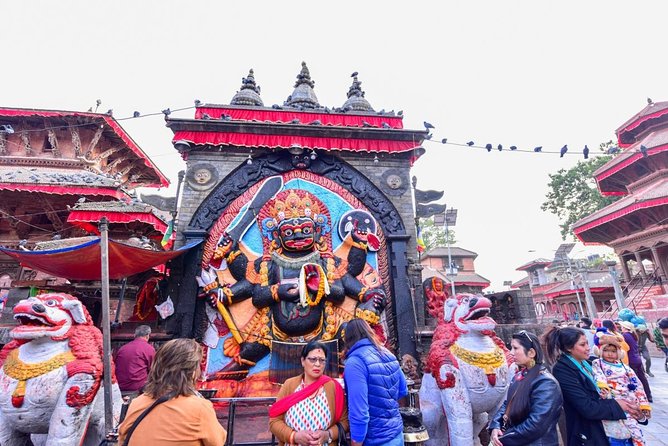
- Private, not crowded: Only your group joins, with a driver and guide handling the logistics.
- Four different architectural styles: You’ll see Hindu temple life, Tibetan-influenced stupa culture, and Kathmandu’s older palace-square heart.
- Real religious context: The guide connects what you see to the beliefs behind each place.
- Comfort included: Hotel pickup, bottled water, and an air-conditioned vehicle keep the day workable.
- Mobile ticket: Simple, no-fuss access on the day.
- Long-day value: At about six hours, it’s a compact way to hit major highlights without bouncing around yourself.
Four UNESCO landmarks, one efficient 6-hour plan
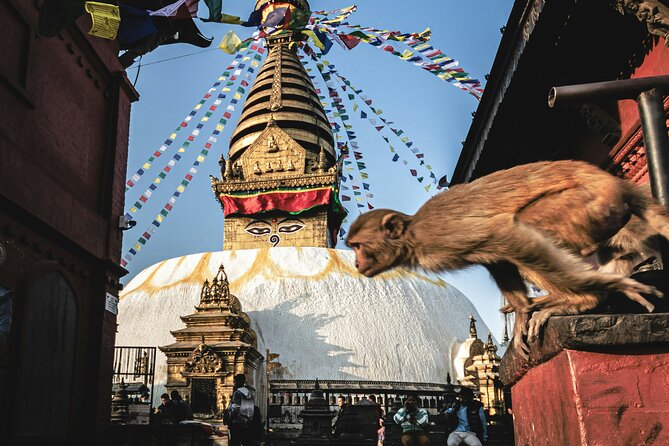
Kathmandu can feel chaotic if you’re trying to map heritage sites on your own. This tour is built to remove that stress by grouping four major stops into one route, with a private guide and private transportation doing the heavy lifting.
The day runs for about six hours, and the itinerary keeps each stop to roughly one hour. That’s a good rhythm for most people: enough time to understand the place, but not so long that you burn the day waiting in lines or wandering without direction.
You’ll also appreciate the “scattered yet closer glimpse” idea. These landmarks are spread across the city, but the tour connects them as a single story—religion, craft, and symbolism—rather than as four unrelated tourist stops.
You can also read our reviews of more private tours in Kathmandu

Swayambhunath Monkey Temple: copper-gold stupa views plus Hindu-Buddhist meaning
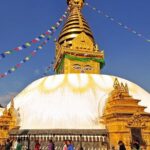
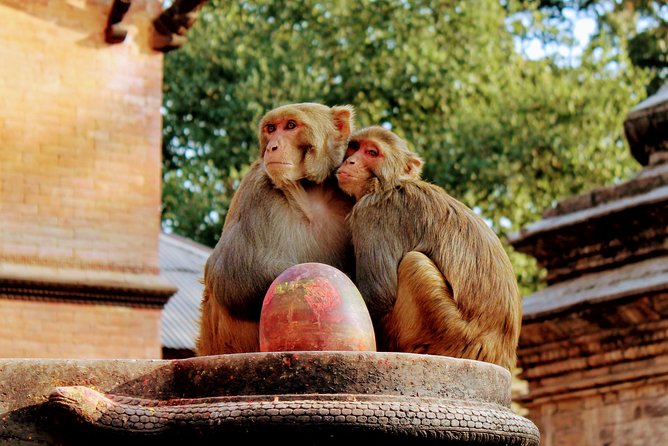
Swayambhunath is the kind of place that feels instantly alive. It’s known worldwide as the monkey temple, and it matters to both Hindu and Buddhist followers—so you get a layered spiritual vibe rather than a single-faith experience.
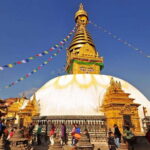
What I like in particular is the description of the lofty conical spire that’s copper and gold-plated. Even if you don’t know the symbolism yet, that standout form helps you spot the stupa from viewpoints and orient yourself as you move around the complex.
This stop is about an hour, which is just enough time to enjoy the atmosphere and take in the main stupa area. The trade-off: if you’re hoping for long, slow exploration, you might want a separate visit later so you can spend more time at your preferred corners.
One more practical thing: admission to enter the main site isn’t included. So plan on paying onsite, then use that time to focus on what the guide is explaining about why this place is revered by multiple religions.
Pashupatinath on the Bagmati River: Shiva worship in a living setting
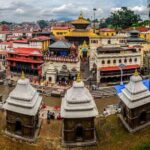
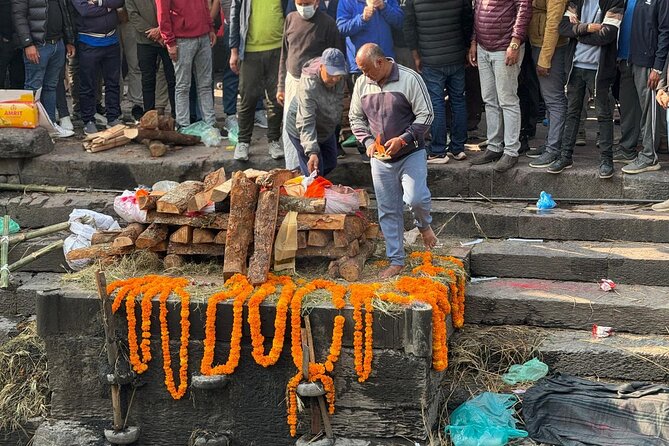
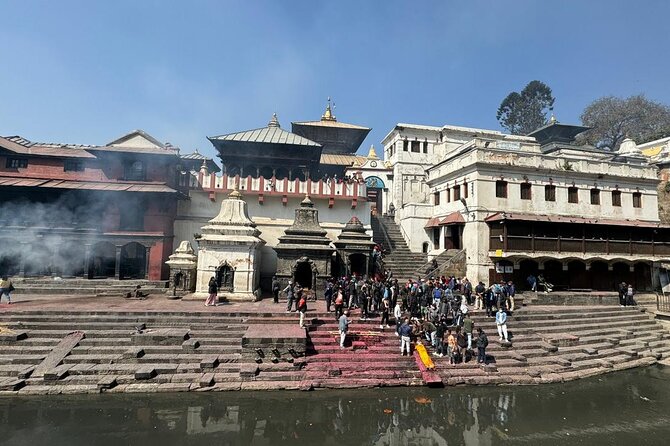
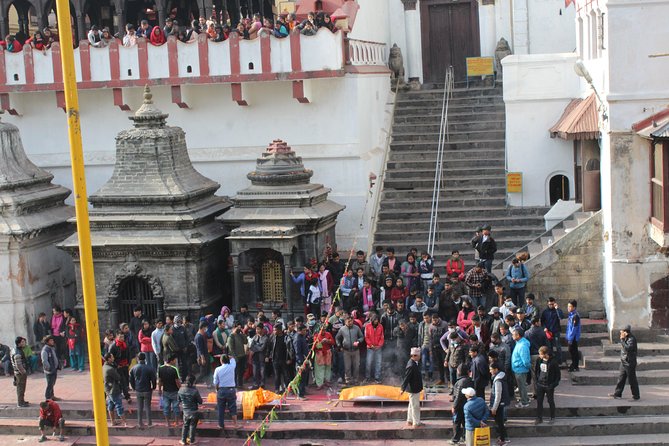
Pashupatinath is one of Kathmandu’s holiest Hindu temples dedicated to Lord Shiva. It sits on the banks of the Bagmati River, and that location shapes the atmosphere—this is not a museum. It’s a religious space where people come for meaningful reasons, and you’ll feel it as soon as you arrive.
The best part of a guided stop here is context. When someone explains the symbolism and the religious background, it’s easier to make sense of what you’re seeing instead of treating everything as scenery.
You get about an hour at Pashupatinath. That’s workable for most visitors who want a strong introduction, but it’s still quick for a place this significant. If you’re the type who likes to watch details for a long time, you may want to return on your own later.
Also remember: the tour covers your transportation and guide time, but entrance fees aren’t included. So keep a little budget aside so you don’t end up deciding on the fly.
Boudhanath Stupa: Tibetan Buddhist influence and the all-seeing eyes
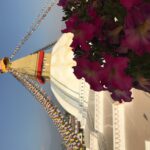
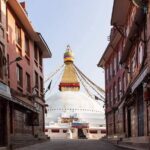
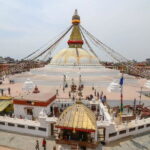
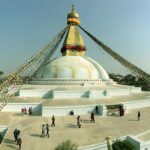
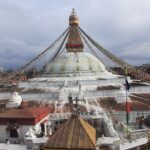
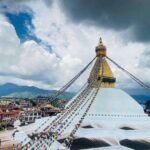
Boudhanath Stupa is a heavyweight landmark. It’s described as one of the largest stupas in South Asia, influenced by Tibetan Buddhism, with a whitewashed dome and the famous all-seeing eyes of the Buddha.
I like how this stop balances the day. Swayambhunath and Pashupatinath give you a Hindu-Buddhist mix and Shiva devotion, then Boudhanath shifts the tone toward Tibetan Buddhist symbolism. The “eyes” motif is the kind of detail that makes your photos better, but the guide’s explanations are what make it stick in your head.
Expect about an hour here. That’s enough to walk around the stupa area and get the visual language, but it’s not a slow wander. If you’re hoping for a long break in the middle of your day, you’ll likely appreciate the timing because many tours build in space for you to eat nearby.
On that note, one review mentioned a lunch break at a rooftop restaurant close to Boudhanath. Even if your exact meal isn’t fixed, this is the sort of area where you can usually find a practical place to eat during your stop window.
Like the other main sites, entrance fees aren’t included, so you’ll pay onsite if there’s a fee for the areas you want to access.
Kathmandu Durbar Square: Kathmandu’s traditional heart and its 17th–18th century roots
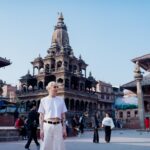
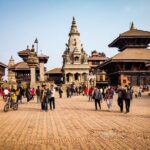
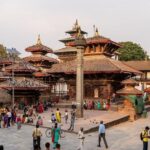
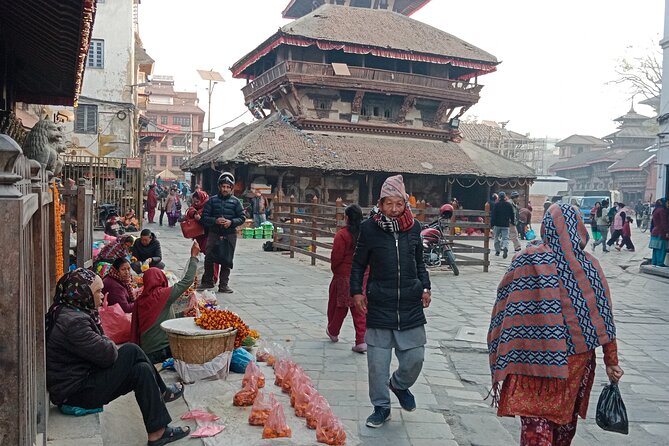
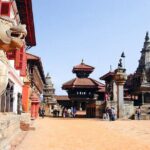
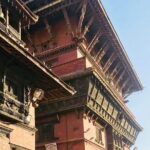
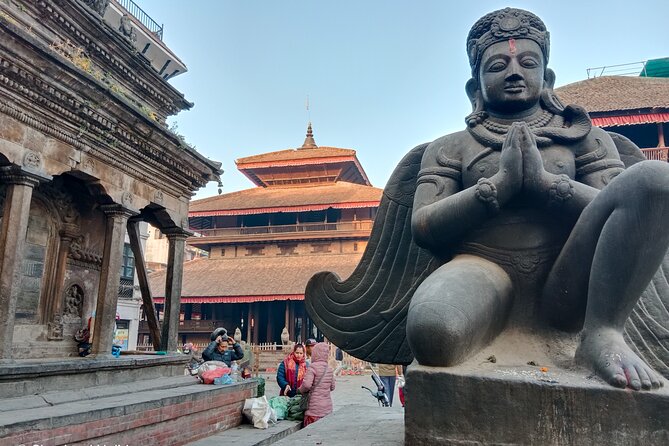
Kathmandu Durbar Square is the traditional heart of the city and one of the most impressive legacies of traditional architecture. The square’s roots go back to the 17th and 18th centuries, which gives it a different feeling from the religious complexes.
I like that this stop closes the day with a “city center” perspective. After temple and stupa spaces, Durbar Square puts you in the mindset of heritage as architecture and urban life, not just worship. It’s also a good contrast in craft and layout, so the day doesn’t feel repetitive.
You’ll have about one hour here, enough to take in the main sights and let the guide connect what you see to the idea of Kathmandu’s historical identity. The drawback is the same as the rest of the route: you might want more time to read every carved detail, especially if you enjoy architecture.
As always, entrance to the main areas is not included in the tour price. Budget for that so you can focus on the square rather than negotiating access at the last minute.
You can also read our reviews of more historical tours in Kathmandu
Price and value: what $35 really includes (and what you should pay extra for)
The price is $35 per person, and for many people, that’s the main appeal: you’re paying for a private guide, private transportation, and a structured route through major sites.
What you get is practical value:
- Hotel pickup & drop-off
- Bottled water
- Private transportation in an air-conditioned vehicle
- A private tour guide
- Mobile ticket support
What you should budget separately:
- Entrance fees to enter the main sites
- Food and drinks during the day
That split matters. A low base price can be great, as long as you expect entrance fees and plan your meals. If you treat the $35 as “everything included,” you’ll be surprised later. If you treat it as “pay for the guide and transport, then pay site fees,” it usually feels like a fair deal.
One more value point: the tour is private, but it also offers group discounts. Even though it’s only your group, the provider clearly understands that couples, friends, and families may book together and want sensible pricing.
Guide and driver details that make the day run smoothly
The difference between a good tour and a useful tour is often the guide. In the feedback you can see a consistent theme: the guides focused on the historical importance and religious background of each stop, and they made the experience feel welcoming.
Names that came up include Subu (guide) with Ram (driver), and Sumit or Sumit Kharel with Bijay as driver. The common thread: friendly service, a strong ability to explain the sites in clear English, and a sense of humor that makes the day less stiff.
This matters because the stops are spiritual spaces. You don’t need a lecture, but you do need help noticing what’s important: why a temple matters, what a stupa design represents, and how Kathmandu’s heritage fits together.
On the logistics side, having a driver who handles the route and vehicle timing can save you from the worst part of city visiting—unplanned waiting. You also get bottled water, which is a small thing until you’re halfway through a long day and grateful someone thought of it.
Timing, tickets, and comfort tips that keep you from feeling rushed
This is a six-hour tour with about one hour at each stop. That means you’re not meant to spend the entire day in one place. If you want photos, chatting, and a bit of slow looking, plan to move efficiently and trust the guide’s pace.
You’ll likely find it easiest if you already know what you want to see at each site before you arrive. For example:
- At Swayambhunath, aim for your main stupa views and the key walking areas.
- At Pashupatinath, focus on understanding the Shiva dedication and the riverfront setting.
- At Boudhanath, watch for the all-seeing eyes feature and let the guide explain what you’re seeing.
- At Kathmandu Durbar Square, prioritize the traditional architecture and the older square layout.
Because entrance fees and food aren’t included, keep your day organized around that reality. Bring what you need to pay for site access, and decide in advance whether you’ll eat near Boudhanath during your stop window.
The tour uses a mobile ticket, which is convenient if you want to keep everything on your phone. And since pickup and drop-off are included, you won’t be stuck figuring out where to meet or how to get back.
Should you book this Kathmandu UNESCO World Heritage day?
Book it if you want a guided, efficient “big highlights” route that covers major Hindu and Buddhist heritage sites in one day. I think it’s a strong match for first-time visitors who don’t want to spend time planning travel between scattered landmarks.
Skip it or pair it with extra time if you’re the type who needs long hours per site. With roughly one hour at each stop, you’ll get a solid introduction, but you might want a second visit to your favorite location later.
If your top priority is value for money, this tour fits well: you’re paying for private transport, an air-conditioned vehicle, bottled water, and a guide, while entrance fees and meals are handled separately. That’s a fair trade when you want structure and context without overpaying for “package extras.”
FAQ
What sites are included in this Kathmandu UNESCO private tour?
The tour covers Swayambhunath, Pashupatinath, Boudhanath (Boudhanath Stupa), and Kathmandu Durbar Square.
How long is the tour?
It lasts about 6 hours.
Is hotel pickup and drop-off included?
Yes. The package includes hotel pickup and drop-off.
Are entrance fees included for the main sites?
No. Entrance fees to enter the main sites are not included.
Does the tour include food or drinks?
No. Food and drinks are not included.
What does the price include besides the guide?
In addition to a private tour guide, you get private transportation, air-conditioned vehicle, bottled water, and a mobile ticket.
Is it truly private or shared with strangers?
It’s a private tour/activity. Only your group will participate.
Is there free cancellation?
Yes. You can cancel up to 24 hours in advance for a full refund.