REVIEW · MEXICO CITY
3 Hours of Kayaking at the Ancient Canals of Xochimilco
Book on Viator →Bookable on Viator
Quiet canals inside Mexico City. A kayak puts you close to Xochimilco’s working waterways, with small canals, birds, and chinampa farms coming into view at human speed. I especially love the early start that keeps things calm before the bigger boats show up, and the wildlife time where herons and other birds feel like they’re part of your paddle stroke.
One thing to consider: this is for travelers with moderate physical fitness—you’ll be paddling for about three hours, and it’s not a sit-and-glide ride.
In This Review
- Key moments that make this trip worth it
- Xochimilco by kayak: why this view beats the boat lines
- Meeting at Embarcadero Cuemanco: getting there early for the good water
- What the 3 hours on the water actually feels like
- Chinampas on the canal: seeing prehispanic farming in motion
- Wildlife spotting: herons, night herons, and the “right there” factor
- The guide factor: Grant’s history-meets-now explanations in English
- What to bring: layers, staying dry, and simple comfort
- Who this trip suits best (and who should choose something else)
- Price and value: is $71.65 worth it?
- Should you book this kayaking trip?
- FAQ
- Where does the kayaking tour start?
- How long is the kayaking trip?
- What group size should I expect?
- Is the tour offered in English?
- Is there a physical fitness requirement?
- Is free cancellation available?
Key moments that make this trip worth it
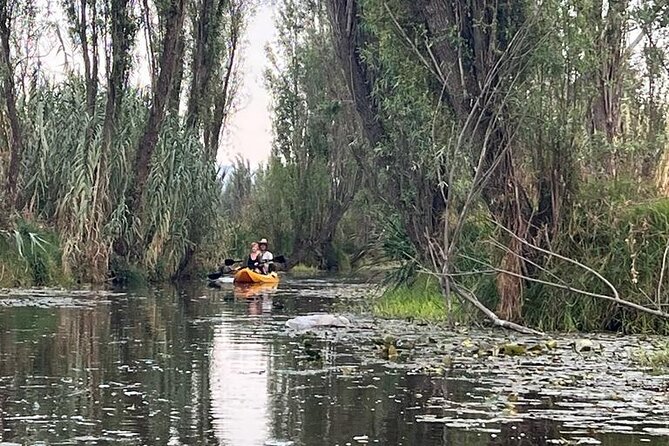
- Early-morning timing for quieter canals and better wildlife viewing
- Small group size (max 7) for a more personal pace and questions that actually get answered
- Lesser-known side canals instead of the main tourist routes
- Chinampa farms in action, still tied to prehispanic-style agriculture
- Bird spotting focus, including herons and even a night heron sighting
- English-speaking guide (Grant) who mixes ecology with canal history and today’s issues
Xochimilco by kayak: why this view beats the boat lines
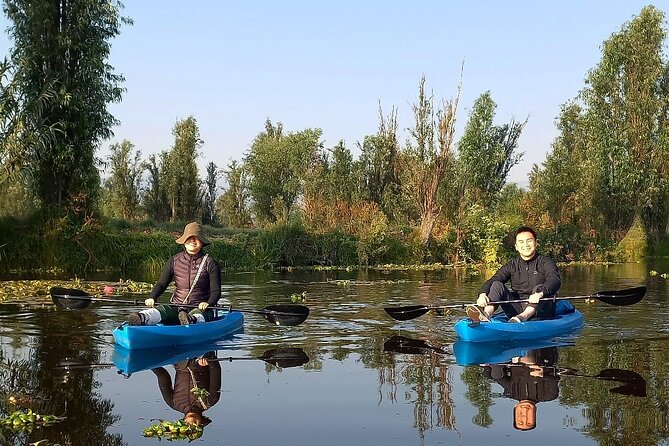
Xochimilco has a reputation, and it can get touristy fast. This kayaking format changes the whole feel. You move through narrower channels where the water looks busy but the scene stays gentle—birds doing their thing, fish flicking under the surface, and working farms lining the edges.
What you gain is perspective. From a big trajinera, you see the canal as a corridor. On a kayak, the canal becomes a living place with details you can notice: reeds, floating plant edges, water reflections, and small stretches where wildlife feeds or rests. If you like nature that you can actually interact with (not just watch from afar), you’re going to enjoy this.
It’s also a better fit if you don’t want your day to be all noise and photo stops. The trip is designed as a calm paddle into the agricultural section of Xochimilco, with time built in for observation and guide-led explanations.
You can also read our reviews of more tours and experiences in Mexico City.



Meeting at Embarcadero Cuemanco: getting there early for the good water
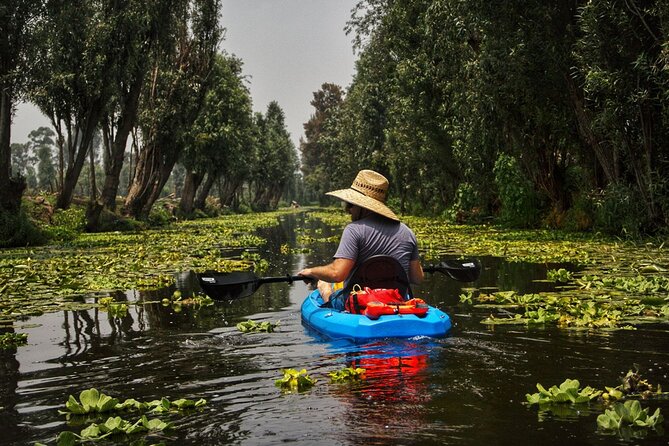
The action starts at Trajineras Xochimilco – Embarcadero Cuemanco on Periférico sur Adolfo Ruíz Cortines (Cuemanco, Xochimilco). This matters more than you might think. Being at the water early is the difference between a crowded canal and one that feels like it belongs to the birds.
The trip runs within morning hours (with opening hours listed through the early part of the day). Dawn is the sweet spot. People describe that first light as especially beautiful, and you can feel why once you’re moving: the air tends to be cooler, the water is calmer, and wildlife activity often comes earlier than the tourist pulse.
You’ll want to treat this like an outdoor start, not a casual brunch plan. Bring layers. Even if the day warms up later, mornings on the water can stay cool, and you want to stay comfortable without overheating.
What the 3 hours on the water actually feels like
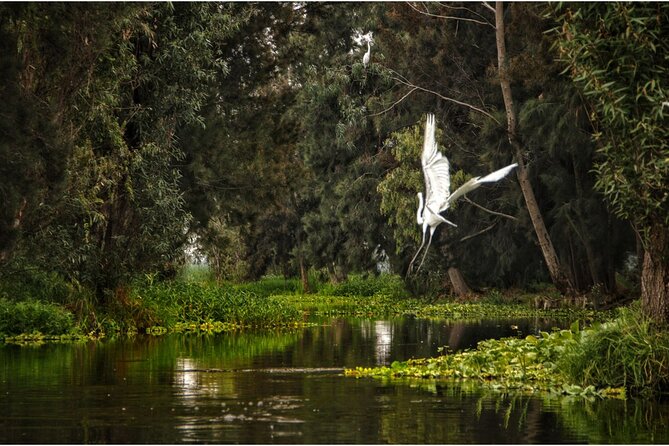
Plan for roughly 3 hours 15 minutes on the water and the ride experience. The pacing is calm by design. This isn’t a race. It’s more like gliding through a working canal system where your guide steers you toward the smaller, quieter waterways.
That “small canal” part is key. The route is built to take you off the main path, into lesser-known channels that are known for bird and fish life. In practice, it means fewer interruptions from passing boats and more time with a clear view of what’s right there at the waterline.
Since the group is capped at 7 travelers, you’ll also feel the difference in how the experience unfolds. Your guide can slow down when someone spots something. You’re not just part of a mass; you can ask a real question and get an answer in context.
Chinampas on the canal: seeing prehispanic farming in motion
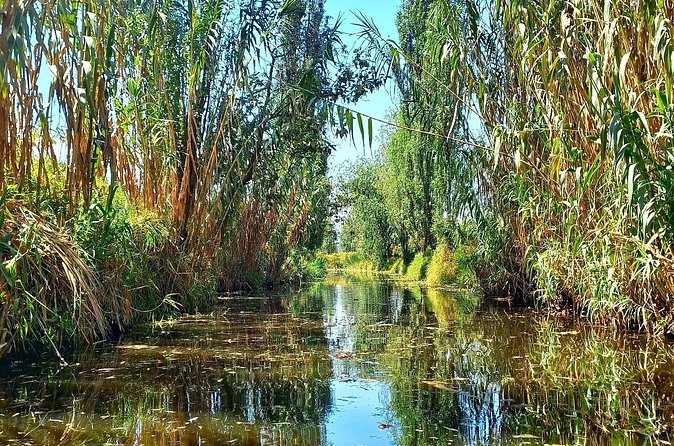
One of the best reasons to choose this trip is that you’re not only seeing nature—you’re seeing agriculture that has been happening for centuries. As you paddle, you pass still working island farms (chinampas) that trace back to prehispanic times.
Chinampas are farming plots built in or alongside the water, tied to the canal ecosystem. In other words, this isn’t just a scenic backdrop. It’s a system where land, water, and plants are connected. When your guide points that out, the whole canal starts to make sense: why certain plants grow where they do, why water quality and flow matter, and why the local relationship to the waterways has shaped daily life for generations.
This is also where your tour becomes more than “pretty scenery.” You’re moving through a place that’s still producing food and still tied to the rhythms of water. Even if you’ve never heard the word chinampa before, the guide’s explanations make it stick because you see it while you learn.
Wildlife spotting: herons, night herons, and the “right there” factor
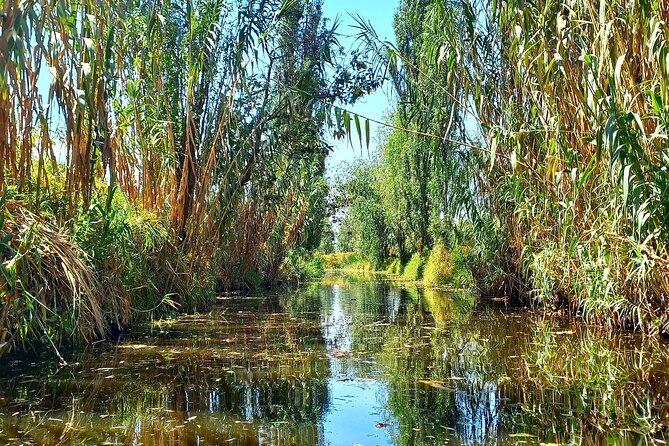
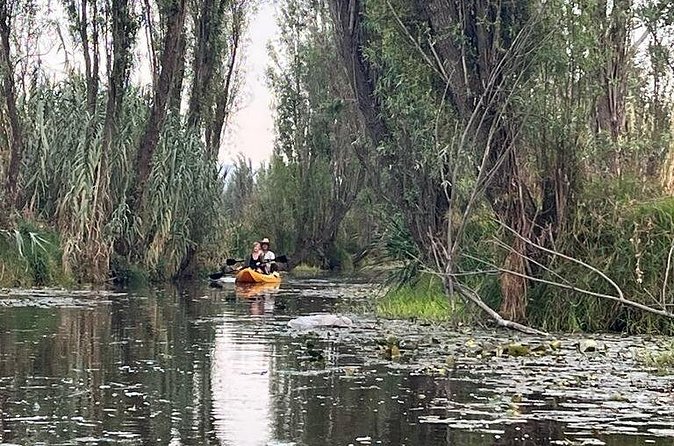
Wildlife is a major theme here, and it’s not vague. The route and timing are chosen so you have repeated chances to notice birds along the canal edges. In reviews, people specifically call out herons—and at least one night-heron sighting very close to the kayak.
That closeness is the value of the kayak format. You’re quieter than larger boats and you’re moving slowly enough to let animals decide whether to keep feeding or watch you from a safe distance. It’s still their space, not yours—but your presence is close enough to feel special without turning the environment into a performance.
A practical tip: look beyond the obvious bird sitting in the open. Watch the waterline, the reed edges, and the small pockets where plants cluster. That’s where you often see movement first, then the bird shows itself.
And yes, you’ll likely get a lot of bird talk. The guide explains what you’re seeing in plain terms, including what’s meaningful about the species and their place in the canal habitat.


The guide factor: Grant’s history-meets-now explanations in English
Your guide plays a huge role in whether a tour feels like random facts or like a coherent story. Here, you’ll be in good hands with Grant, who leads in English and connects ecology to real canal history and current issues.
From the way the tour is described, Grant doesn’t treat the past like a museum piece. He frames the canal system as something people built and sustained, and then he brings it to the present with the challenges that affect island life and water use today. That mix is why the trip feels educational without becoming heavy.
One review mention that the tour was tailored to the group’s interests. You can expect that kind of flexibility when there are only up to 7 people. If your group cares more about birds, you’ll likely spend more time scanning. If you’re curious about farming, you’ll get that angle too.
This is also where the early start helps. When you’re not fighting crowds, it’s easier to listen. Your guide’s stories land better when the environment is quiet enough for you to focus.
What to bring: layers, staying dry, and simple comfort
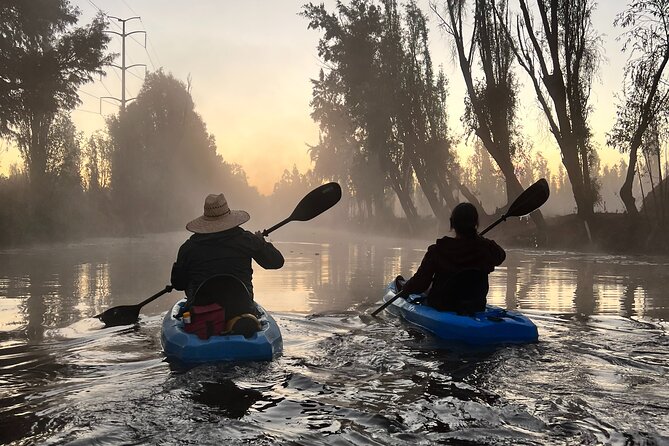
This trip is outdoors for a good chunk of the morning. People recommend wearing layers and using good sense for staying dry. Even with calm water, you’re on a kayak, so small splashes happen. You’ll enjoy the experience more if you plan for it.
I’d pack:
- Layers for a cool morning that can warm later
- Water-resistant outer layer or something you don’t mind getting damp
- Sunglasses and sunscreen, since mornings still get bright
- A small dry bag or waterproof pouch for your phone and essentials
- Comfortable footwear that works around boats and wet surfaces
Also, bring patience for the pace. Kayaking works best when you let it be calm. If you try to “power through” everything, you’ll miss the wildlife details you came for.
Who this trip suits best (and who should choose something else)
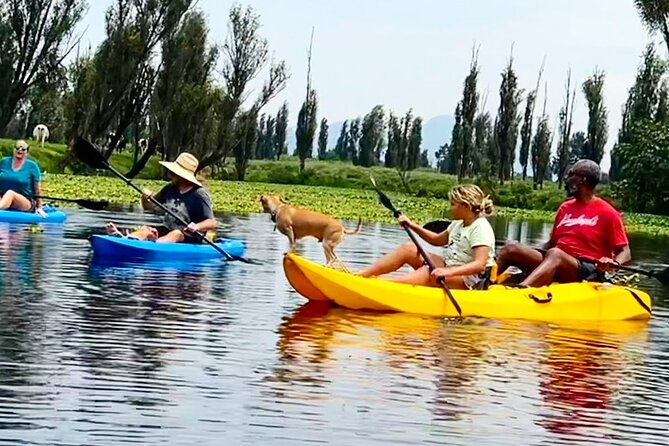
This is best for you if you want:
- A small-group outing where you can actually interact with the guide
- Nature and history mixed together, not one or the other
- Early-morning beauty and wildlife time
- A quieter way to experience Xochimilco than the larger boat circuits
It’s not ideal if you’re looking for high-energy adventure or lots of standing, walking, or city sightseeing. The tour is primarily about steady paddling and watching.
Also consider the moderate physical fitness requirement. You don’t need to be an athlete, but you do need to feel comfortable spending time paddling. If that part of physical effort worries you, you might want to choose a different water activity.
Price and value: is $71.65 worth it?
At $71.65 per person, this isn’t the cheapest thing on a Mexico City day plan. But it doesn’t feel overpriced once you factor in what you’re actually buying.
You’re paying for:
- A 3+ hour guided kayak experience
- A small group cap of 7 travelers
- A route designed for quieter, lesser-known canals
- A guide who provides English explanations tied to both wildlife and canal history
- The early timing that can make the whole experience feel peaceful
If you’ve ever done Xochimilco and felt like you spent most of the time stuck with crowds, this price starts to make sense. You’re essentially paying for access to a calmer slice of the canals and for interpretation that turns the scenery into understanding.
For me, the value is strongest if your goal is wildlife and chinampa agriculture, not just checking off Xochimilco as a name.
Should you book this kayaking trip?
If you want a calmer, more nature-focused way to experience Xochimilco, I’d strongly consider booking. The combination of small group size, early start, and a guide who ties ecology to history is exactly what turns a boat outing into a real memory.
I’d especially book this if you like bird spotting, enjoy quiet mornings, and want to understand how chinampas fit into the canal system instead of just seeing the water from a distance. The only reason to skip is if the moderate paddling requirement or early timing doesn’t match your comfort level.
If you’re flexible and ready for a peaceful morning on the water, this is the kind of trip that reminds you why Mexico City isn’t only museums and streets—it also has living canals you can glide through.
FAQ
Where does the kayaking tour start?
The tour starts at Trajineras Xochimilco – Embarcadero Cuemanco (Cuemanco, Xochimilco, 16034), and it ends back at the same meeting point.
How long is the kayaking trip?
It lasts about 3 hours 15 minutes.
What group size should I expect?
The tour has a maximum of 7 travelers.
Is the tour offered in English?
Yes, the experience is offered in English.
Is there a physical fitness requirement?
Yes. Travelers should have a moderate physical fitness level.
Is free cancellation available?
Yes. You can cancel up to 24 hours in advance for a full refund.