REVIEW · CHARLESTON
Charleston: 2-Hour Strong Women of the South History Tour
Book on GetYourGuide →Operated by Holy City History Tours · Bookable on GetYourGuide
History gets personal when you follow women. The Strong Women of the South History Tour reframes Charleston through the lives and work of women who built the city, fought for it, sold to it, printed it, managed it, and myth-busted it. I love the way the tour uses real stops—especially the Philip Simmons House iron works—to make the past feel physical, not just explained.
I also like the art-and-architecture pairing: you don’t just hear stories, you get admission to the contemporary art space and then look at the streetscape of Harleston Village like it matters. One possible drawback: the tone and pacing can be hit-or-miss depending on the guide and group energy, so if you want a very formal, tightly timed script, this might feel a little too chatty.
In This Review
- Key things I’d circle before you book
- A 2-hour walking tour that changes how you read Charleston
- Where you’ll meet: Old Charleston Jail on Magazine Street
- The opening stop: an alleged execution-site beginning
- Meeting the Old Maids: activists, printers, madams, and makers
- Halsey Gallery of Contemporary Art: why it’s included
- Philip Simmons House: the ironwork you’ll want to look closely at
- Harleston Village architecture: reading the neighborhood like a clue
- Price and value: $37 for two hours, with admissions included
- Rain or shine, and how to plan for the pacing
- Who should book this tour (and who should think twice)
- Should you book Charleston Strong Women of the South?
- FAQ
- Where is the meeting point for the tour?
- How long is the tour?
- What is the price per person?
- What’s included with the ticket?
- Does the tour run rain or shine?
- Are tips included in the price?
- Is the tour wheelchair accessible?
- Is the tour offered in English?
- Does each ticket support any charities?
- What is the cancellation window?
Key things I’d circle before you book
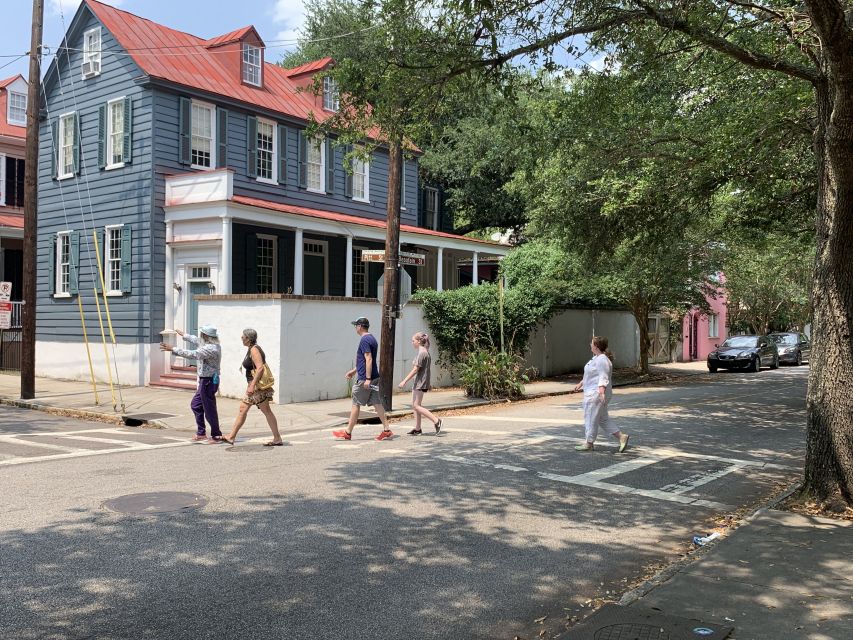
- Women’s voices in the spotlight: founding mothers and women of every color, including activists, printers, artisans, madams, shopkeepers, and plantation owners
- Old Charleston Jail start: the tour begins at the alleged execution site of America’s first female serial killer
- Two real admission stops: Halsey Gallery of Contemporary Art and the Philip Simmons House are part of what you pay for
- Look for the ironwork: the visit to the Philip Simmons House includes time to take in the signature iron details
- Architecture walks with a purpose: Harleston Village isn’t just scenery—it’s part of the argument the guide makes
- You’re supporting local institutions: $1 from each ticket goes to the Halsey Contemporary Art Foundation and the Philip Simmons Foundation
A 2-hour walking tour that changes how you read Charleston
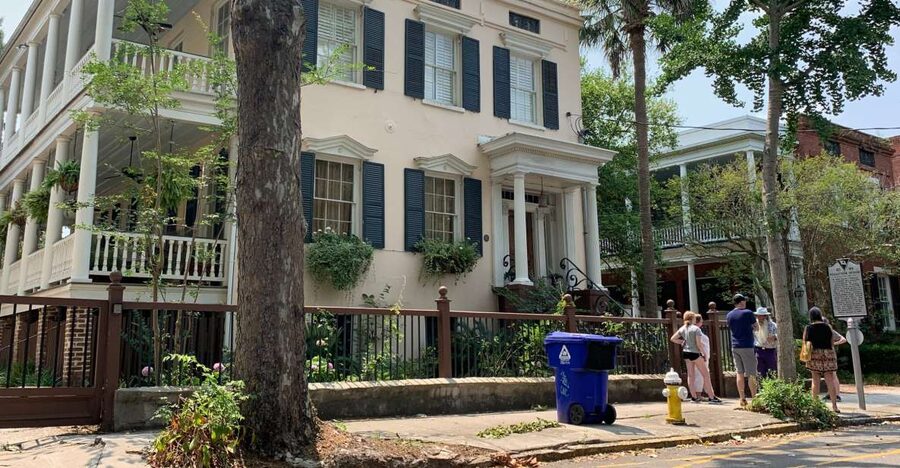
This isn’t the usual Charleston loop where you bounce between famous homes and call it history. This tour is built around a pointed question: who actually held power in everyday life, and whose names got left out?
In just 2 hours, you get a guided walk that connects several layers of Charleston—public myth, private labor, and the physical evidence left behind in buildings, streets, and ironwork. You’ll also get a clear, modern lens for the stories. The tour aims to smash the usual stereotypes: the fainting Southern Belle, the woman behind the man, and the idea that chattel slavery was only a backdrop instead of a system.
It’s perfect if you like your history with stakes—stories where people made choices, took risks, negotiated with power, and sometimes lost anyway.
You can also read our reviews of more historical tours in Charleston



Where you’ll meet: Old Charleston Jail on Magazine Street
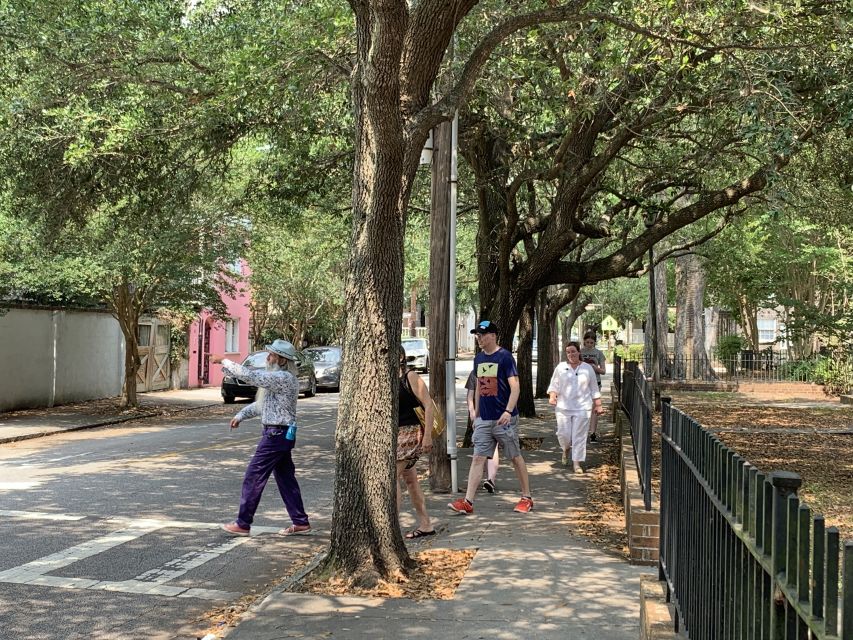
Your group meets in front of the Old Charleston Jail at 21 Magazine Street. That matters because the tour starts by putting you near the kind of place where narratives get decided—by authorities, by rumor, and later by the way we remember.
From the start, the vibe is set for storytelling. Expect a walking format where you’re constantly asked to look outward (toward buildings and street details) and inward (toward what the stories mean). If you’re coming with a group—bachelorettes, couples, locals, or first-timers—this start point also keeps everyone from feeling lost. You’re in one tight geography, and you build the story from the ground up.
The opening stop: an alleged execution-site beginning
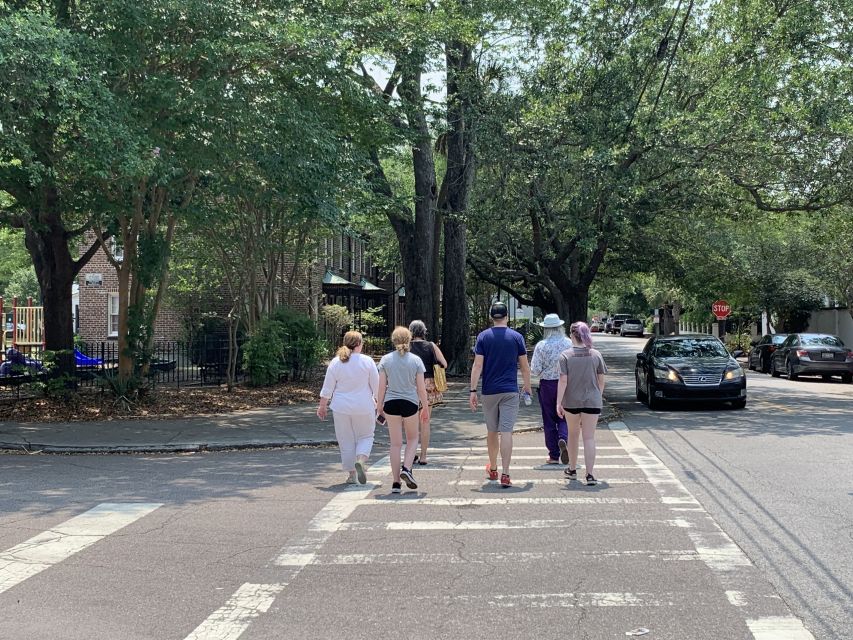
The tour begins at the alleged execution site of America’s first female serial killer. Even though it’s described as an alleged site, it’s still an arresting way to open: it forces the conversation to start where fear, justice, and public spectacle intersect.
I like this opening because it immediately tells you the tour won’t treat history as a museum label. It’s about consequences. It’s also about how stories get packaged for public consumption—then repeated until they harden into belief.
If you’re the kind of person who hates grim surprises, give yourself a heads-up: the tour starts with crime and punishment in the mix. If you can handle that, you’ll probably appreciate how the rest of the walk pivots from sensational narrative into everyday power and labor.
Meeting the Old Maids: activists, printers, madams, and makers
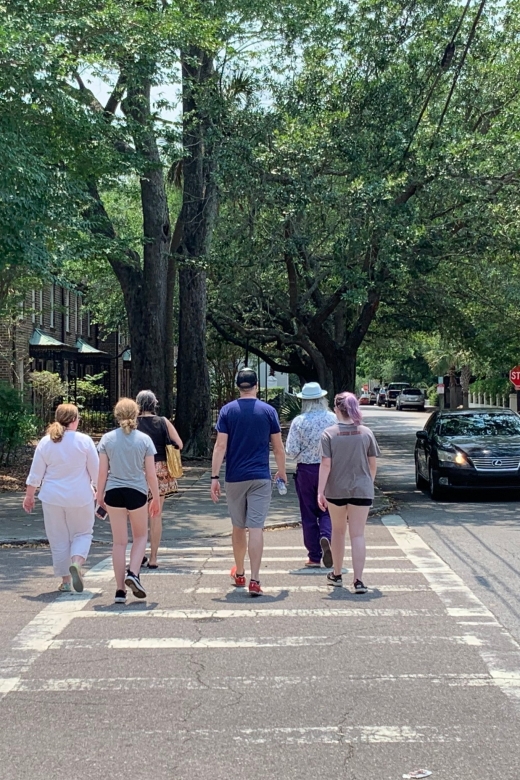
After the opening, the tour moves into what it frames as the homes and sites of the “Old Maids.” The idea here isn’t just to list famous women. It’s to show you how a range of women—across occupations and identities—operated in a city that didn’t run on one narrow kind of power.
You’ll hear stories about women who were activists, printers, artisans, madams, shopkeepers, and plantation owners. That variety is the point: Charleston’s women weren’t a single archetype. They were entrepreneurs, workers, cultural operators, and political actors.
The tour also leans into the complicated claim that Charleston was once owned and controlled by women. You’re not just learning facts. You’re being encouraged to reframe what “ownership” and “control” looked like in that world—who could negotiate, who could profit, who could shape reputations, and who had to maneuver inside systems built to limit them.
One practical note: because this section is story-heavy, it’s a good tour for curious listeners. If you need constant visual breaks and very little speaking, this may test your patience a bit.
Halsey Gallery of Contemporary Art: why it’s included
One of the tour’s useful twists is that admission to the Halsey Gallery of Contemporary Art is included. That can feel unexpected on a history walk—until you realize it’s doing the job of a bridge.
The tour isn’t just saying the past happened. It’s saying the past is still being interpreted, argued with, and answered back in the present. Contemporary art spaces are one way cities do that publicly. So when you step inside, you’re not just collecting more information—you’re meeting the theme in a different format: today’s voice responding to yesterday’s erasure.
If you like tours that connect time periods instead of treating them like separate boxes, you’ll probably enjoy this inclusion. It also gives you a rhythm break: you get moving outside, then a calmer indoor pause.



Philip Simmons House: the ironwork you’ll want to look closely at
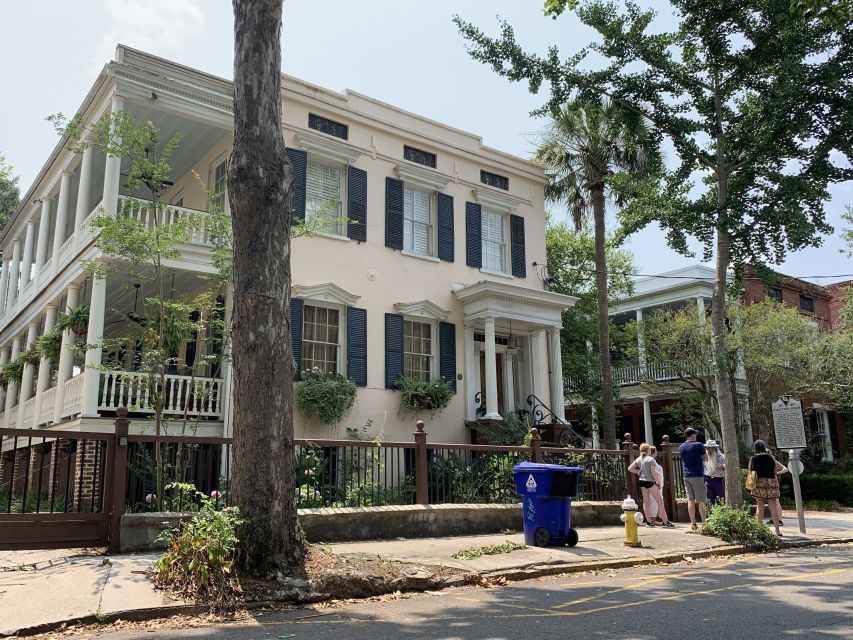
The tour includes admission to the Philip Simmons House, and this is one of the stops highlighted for a reason: the iron works are the kind of detail that makes history feel hands-on.
Ironwork is easy to overlook when you’re rushing past houses. But the tour’s framing helps you slow down. You’re shown what to pay attention to, and you’ll likely leave with a better sense of how craft can be power—literally shaping a look, a boundary, and a reputation.
This is also where the tour’s theme stays consistent. The point isn’t just that women worked. It’s that women made a visible mark. And when you’re looking at iron details, you’re looking at evidence of labor that survived.
Harleston Village architecture: reading the neighborhood like a clue
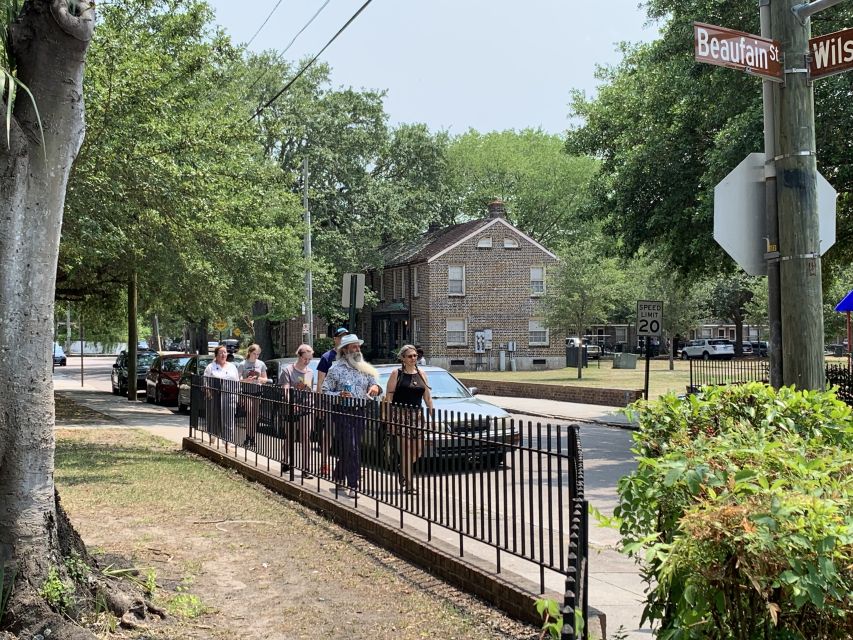
The final third leans into Harleston Village architecture. The streets and facades do more than look pretty—they’re part of the argument the guide is making about who built Charleston, who shaped commerce, and who lived inside the city’s systems.
I like architecture segments on walking tours when they’re tied to specific themes. Here, it’s tied to women who built the city and the myths the tour wants you to drop. So when you look at the shape of the streets and the structure of buildings, you’re not only admiring. You’re connecting what you see to what you heard.
This is also a nice way to keep the walk from feeling like a lecture. You’ll have to do some looking, and that helps the stories stick.
Price and value: $37 for two hours, with admissions included
At $37 per person for 2 hours, the biggest value question is what you actually get for your time.
The tour includes:
- an expert guide
- admission to the Halsey Gallery of Contemporary Art
- admission to the Philip Simmons House
That turns it from a basic walk-and-talk into a walk with paid-entry components. You also get a stated contribution model: $1 from each ticket supports the Halsey Contemporary Art Foundation and the Philip Simmons Foundation. Even if you don’t treat that as the main reason to book, it’s a meaningful bonus that aligns with the tour’s theme.
Where the price can feel less justified is if your group expects a super-formal, timed script with no wandering stories. The tour’s format depends on the guide’s style, and one person described the experience as feeling short on what was promised when stops didn’t happen. So the practical move is simple: make sure your confirmation matches the inclusions you want—especially the art gallery and Philip Simmons House.
Rain or shine, and how to plan for the pacing
The tour runs rain or shine, so wear shoes that can handle wet pavement and plan for the walking time to be non-negotiable. Since it’s only two hours, the pace stays fairly tight. You’ll want to show up on time at the meeting point so you aren’t rushed during the opening story section.
Tips aren’t included, so if you’re someone who tips guides, budget for that.
If you’re booking with friends who like very light talking, this might not be the ideal match. This is a story-driven tour, and the best experience comes when you’re willing to listen and look.
Who should book this tour (and who should think twice)
This tour is a strong fit if:
- you want a Charleston history tour that isn’t just mansions and dates
- you like women-centered storytelling with real-world stops
- you enjoy mixing indoor art time with outdoor walking
- you’re okay with a tone that can be lively and informal
Think twice if:
- you want a very structured, academic lecture with minimal personality
- you’re easily bothered by casual guide language or side tangents
- you’re booking at a time when you’d be upset if any promised admission stop didn’t happen (double-check expectations at check-in)
One more practical consideration: some guests flagged issues like missed stops and other guests didn’t love the guide’s tone. That doesn’t mean the tour is bad. It means you should treat your expectations like a checklist. The tour description clearly includes the admissions; ask questions if anything feels unclear when you meet.
Should you book Charleston Strong Women of the South?
I’d book it if you want Charleston history with a sharper angle and you’re excited to see how women shaped the city in visible ways—especially through the Philip Simmons House ironwork and the Halsey Gallery stop. At $37 with admissions included, it’s good value for a two-hour, story-focused experience.
I’d be cautious if you’re a stickler for strict pacing and formal delivery, or if you’d be genuinely disappointed if the tour felt less complete than promised. In that case, do yourself a favor: confirm that your group will include the Halsey Gallery of Contemporary Art and the Philip Simmons House, and go into it ready to listen.
If you pick it up with the right mindset—curious, open, and ready to look at the city differently—you’ll come away with Charleston that feels more human and more real.
FAQ
Where is the meeting point for the tour?
The group meets in front of the Old Charleston Jail at 21 Magazine Street.
How long is the tour?
The tour lasts about 2 hours.
What is the price per person?
The price is $37 per person.
What’s included with the ticket?
The ticket includes an expert guide, admission to Halsey Gallery of Contemporary Art, and admission to Philip Simmons House.
Does the tour run rain or shine?
Yes, it takes place rain or shine.
Are tips included in the price?
No, tips are not included.
Is the tour wheelchair accessible?
Yes, the tour is wheelchair accessible.
Is the tour offered in English?
Yes, the tour is offered in English.
Does each ticket support any charities?
Yes. $1 from each ticket sold goes to the Halsey Contemporary Art Foundation and the Philip Simmons Foundation.
What is the cancellation window?
You can cancel up to 24 hours in advance for a full refund.