REVIEW · BANGALORE
World heritage site of Belur & Halebid with temple sculptures
Book on Viator →Operated by 5 Senses Walks · Bookable on Viator
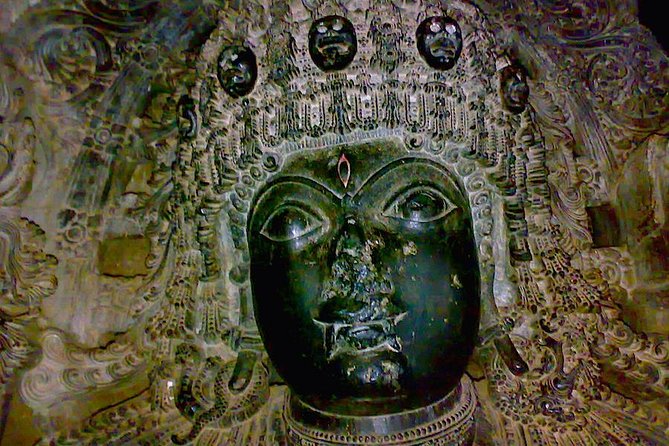
Stonework so detailed it feels alive. That’s the magic of Belur and Halebid, two UNESCO World Heritage sites tied to the 12th-century Hoysalas. I especially love the moveable details you can spot on dancer sculptures at Chennakesava Temple, and the veins on the giant Nandi face at Halebid. The one drawback to plan for is time: you get about two hours in each temple complex, so you’ll want to focus on what you want to notice.
You’ll also get a guide who helps you read the carvings instead of just staring at them. Expect scenes drawn from major Hindu epics, plus dancers, animals, and temple iconography in stone. Add in an air-conditioned ride with hotel pickup and drop-off, and you get a day trip that feels structured without feeling rushed.
If you like culture that you can actually see and interpret, this one delivers. Just know it’s an early start (around 7:00 am) and a long day (about 12 hours), so bring patience, comfortable shoes, and a plan for staying hydrated since drinks aren’t included with lunch.
In This Review
- Key things to know before you go
- Getting to Belur and Halebid: a 7:00 am start with smart comfort
- Chennakesava Temple at Belur: the 100-year carvings you’ll notice fast
- Halebid’s Hoysaleswara Temple complex: two shrines and a Nandi built over 80 years
- Lunch on the tour: a traditional vegetarian South Indian break that keeps the day on track
- Why the guide changes the experience (and not just the facts)
- Price and value: what $170 per person really covers
- Making the most of two hours in each temple (without rushing)
- Who should book this Belur & Halebid tour
- Should you book it?
- FAQ
- What time does the tour start?
- How long is the experience?
- Is hotel pickup and drop-off included?
- Is lunch included, and what type is it?
- Are entrance tickets included for the temples?
- Is there a guide on the tour?
- How do I get my tickets?
- Is this tour private?
- What is the cancellation policy?
Key things to know before you go
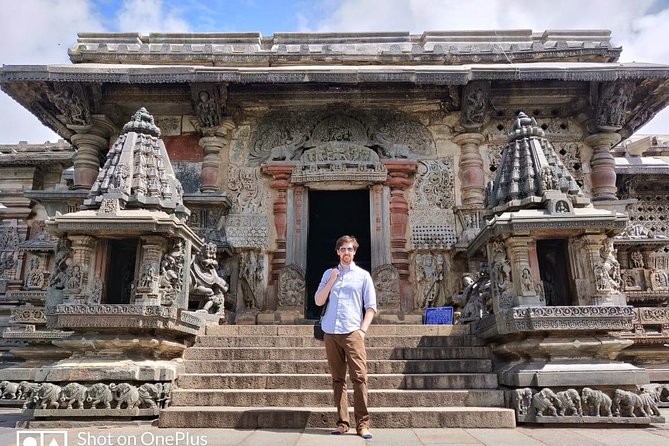
- Chennakesava Temple (Belur) took over 100 years to build, and the stonework shows every year of that effort.
- Some dancer statues have working stone details, like arm bracelets that move and a headdress ring that moves.
- Halebid’s Hoysalesvara and Shantalesvara temples give you two impressive stops inside the same UNESCO complex.
- Nandi took 86 years to build, and the sculpture includes lifelike vein-like detail on the face.
- Lunch is included, a traditional vegetarian South Indian meal (but beverages are not included).
- You get hotel pickup/drop-off and an air-conditioned vehicle, which makes the day easier than DIY.
Getting to Belur and Halebid: a 7:00 am start with smart comfort
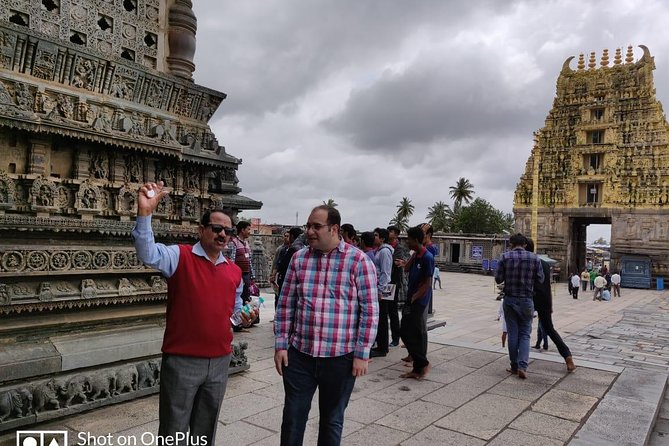
This tour runs from 7:00 am and lasts about 12 hours. Most of that time is moving between two heritage sites that are close enough to do in one day—Belur first, then Halebid (about 16 km away).
What I appreciate is the comfort and simplicity. You get hotel pickup and drop-off, plus an air-conditioned vehicle. That matters on a long temple day because it helps you arrive calm, not sweaty and frazzled, before you even start looking at carvings.
You’ll also have an included guide and entrance charges, so you don’t waste time figuring out tickets on the spot. And because this is organized as a private tour for your group, you won’t be stuck in a huge cattle-herd scenario. The company behind this experience is 5 Senses Walks, and you’ll use a mobile ticket.
You can also read our reviews of more historical tours in Bangalore
Chennakesava Temple at Belur: the 100-year carvings you’ll notice fast
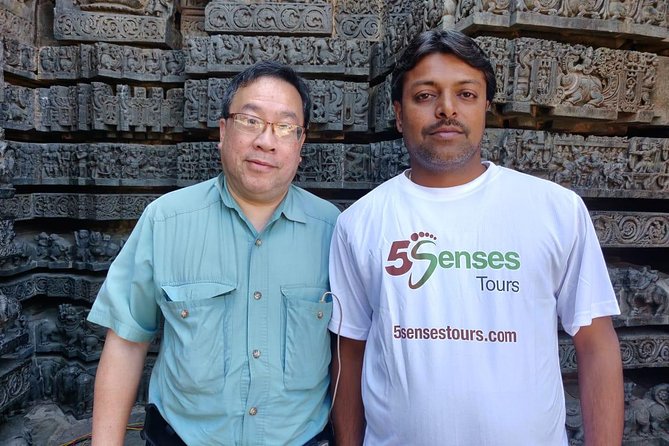
The first big stop is Beluru Shri Chennakeshava Swamy Temple, with about two hours inside the temple complex. This is the star of Belur, and it took over 100 years to build. That timeline isn’t just a trivia fact—it shows in the sheer density of decoration, where panels of animals and dancers feel like they were carved to be read carefully, not skimmed.
Here’s what’s worth centering your attention on:
- Animal and dancer carvings: You’ll see animals and dancers covering the walls in intricate detail. It’s not one neat “one-size-fits-all” sculpture style. Instead, the figures feel varied—different poses, different costumes, different story roles.
- Epic scenes in stone: Episodes from the Ramayana and Mahabharata show up as carved narratives. A good guide helps you connect the stone panels to the stories so it doesn’t turn into random decoration.
- High-detail main hall sculptures: The main hall is where you’ll want to slow down. The carving work is especially fine here, with crowded details that reward a steady gaze.
Now for the detail that really sticks with you: some dancer sculptures have moveable stone elements. One dancer’s bracelets on the arms can be moved up and down, and another dancer’s headdress includes a moveable ring. Even if you’ve never seen temple mechanical stone details before, you’ll know what to look for when your guide points it out. It makes the whole place feel more human, like the sculptors expected visitors to interact with the design.
One more cool detail: sculptors signed their work, and those signatures can read like a painter’s mark—often with a proud epithet. It’s a reminder that these weren’t faceless artisans. These were artists claiming authorship.
Halebid’s Hoysaleswara Temple complex: two shrines and a Nandi built over 80 years
After lunch, you head to Halebid, where the Hoysalesvara Temple complex lives. You get another couple of hours here, with highlights that feel bigger in scale than Belur’s temple interiors.
Halebid’s UNESCO listing makes sense quickly once you see the carvings and the layout. Inside the complex, you’ll visit two major temple shrines dedicated to:
- Hoysalesvara
- Shantalesvara
The carvings follow the Hoysalas’ signature style, with dancers, mythological storytelling, and animal motifs. What makes the visit meaningful is that you’re not just looking at art—you’re looking at religious iconography made physical. A guide helps you connect what you’re seeing to the temples’ meaning.
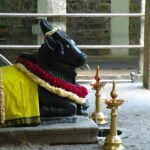
Then comes the headline: the giant Nandi statue (the holy bull associated with Lord Shiva). This sculpture took 86 years to build, and it’s built for attention. The face isn’t just proportionally impressive—it includes vein-like details that give the Nandi a lifelike presence. Your eyes naturally track across those features, and the longer you look, the more the stone starts to feel almost anatomical.
If you’ve only ever seen Nandi in simpler forms, Halebid changes the definition of what’s possible with stone carving.
Lunch on the tour: a traditional vegetarian South Indian break that keeps the day on track
Lunch is included: a traditional vegetarian South Indian lunch. Beverages are excluded, so plan to pay for drinks separately if you want water, tea, or anything beyond the meal.
In practice, this is one of those “small but important” inclusions. When you’re spending most of the day between temple sites, the meal needs to be filling and easy. South Indian vegetarian food tends to be just that—simple, practical, and quick to eat without slowing down your schedule.
Also, because the tour includes lunch, you don’t have to make decisions mid-day. That reduces stress, and you’ll still have energy when you move from Belur to Halebid.
Why the guide changes the experience (and not just the facts)
Temple sculpture can overwhelm you. There’s so much to see that your brain picks one thing and then misses the rest. A guide matters because they help you develop a “reading order” for what you’re looking at.
What I like about this tour setup is that the guidance is tied to the big themes you can actually recognize:
- Hoysalas (12th century) as the cultural frame
- Iconography and how the myths show up in carving
- Signed sculptor work, like you’re seeing the artist’s signature on a master painting
- Narrative scenes from major epics such as the Ramayana and Mahabharata
One detail I’d pay attention to, even if you’re only half-listening: when the guide points out specific elements—like those moveable dancer details or the veined features on Nandi—it turns the whole visit from sight-seeing into noticing. That’s the difference between a good day and a great one.



Price and value: what $170 per person really covers
At $170 per person, this day trip isn’t “cheap,” but it also isn’t charging you extra for things you’ll end up paying anyway.
Here’s what’s included:
- Hotel pickup and drop-off
- Air-conditioned vehicle
- Guide
- Entrance charges
- Vegetarian South Indian lunch
- All taxes, fees, and handling charges
And what’s not included:
- Drinks
- Anything beyond the lunch meal
So you’re basically paying for a guided, ticketed UNESCO heritage day with transport. If you tried to do this on your own, you’d still have to cover tickets, figure out transport, and spend time coordinating. This price makes more sense if you value time and want the carvings explained in context rather than winging it.
The biggest value question is your style of travel. If you love art history and want help decoding stonework, this price can feel fair. If you’d rather wander without guidance and spend extra time lingering, you might feel the time limits.
Making the most of two hours in each temple (without rushing)
Because each major site gets roughly two hours, don’t plan on reading every panel like a museum exhibit. Instead, aim for a simple approach:
- Pick one or two themes you care about most (dancers, animal figures, myth scenes, or signatures).
- Let the guide point out the standout “proof details” (moveable bracelets and rings in Belur, and the veined Nandi face in Halebid).
- After you’ve seen the key elements, then let yourself wander a little.
This tour works best when you treat those first guided highlights as your map. Once you have a map, your remaining time stops feeling like you’re racing and starts feeling like you’re discovering.
Also, since beverages aren’t included, you’ll want to plan for thirst during the day. Bring what you can, or expect to purchase drinks on the way.
Who should book this Belur & Halebid tour
This is a strong choice if you:
- Want a guided day focused on UNESCO temples and stone sculpture
- Like cultural interpretation, not just photo stops
- Prefer pickup/drop-off and an air-conditioned vehicle over independent planning
You might want to think twice if you:
- Want more time at the temples for slow, unstructured wandering
- Don’t care much about iconography or carvings and just want scenic views
It’s a very “art you can read” kind of tour, especially if you’re the type who enjoys learning what small details mean.
Should you book it?
I’d book this if your goal is clear: see Belur and Halebid properly in one day, with a guide who helps you understand what the sculptors were doing and why. The standout moments are the moveable dancer details at Chennakesava and the veined Nandi at Halebid—those are the kinds of specifics that make the temples unforgettable.
If you do book, come with a mindset of noticing: focus on the carvings your guide highlights, then look for patterns yourself. That’s when the day clicks.
FAQ
What time does the tour start?
The start time is 7:00 am.
How long is the experience?
It runs for about 12 hours.
Is hotel pickup and drop-off included?
Yes, hotel pickup and drop-off are included.
Is lunch included, and what type is it?
Lunch is included and it’s a traditional vegetarian South Indian lunch. Beverages are not included.
Are entrance tickets included for the temples?
Yes, entrance charges are included.
Is there a guide on the tour?
Yes, a guide is included.
How do I get my tickets?
You’ll use a mobile ticket.
Is this tour private?
Yes. Only your group will participate.
What is the cancellation policy?
You can cancel for a full refund up to 24 hours before the experience’s start time.