REVIEW · BANGALORE
Bangalore Heritage and Cultural Walking Tour
Book on Viator →Operated by Yo Tours · Bookable on Viator
Old Bangalore comes with a story. This 2-hour heritage and cultural walking tour strings together art, museums, parks, churches, and courts with an infotainment style that keeps the pace light. I like the mix of heritage lanes and major landmarks like St. Mark’s Cathedral and Cubbon Park, and I also like that the guide speaks both English and Hindi while sharing practical city tips to help you spend smarter.
The main drawback to consider is simple: a few past bookings reported guide issues, including no-shows and an early end to the tour. So it’s worth going in with your eyes open and a plan for how you’ll verify the guide at the start point.
In This Review
- Key highlights you’ll actually feel on the walk
- Where the tour starts: Golden Square, then right into old Bangalore
- Infotainment style: the secret sauce, and when it can go wrong
- Venkatappa Art Gallery and the archaeology/museum stop
- Visvesvaraya Industrial and Technological Museum: seeing the city through tech
- UB City and the modern-building stretch: contrast is the lesson
- St. Mark’s Cathedral and Mahatma Gandhi Park: where the stories meet public life
- Old market lanes, heritage buildings, and centuries-old temple areas
- Cubbon Park, M Chinnaswamy Stadium, and Minsk Square
- High Court of Karnataka (Attara Kacheri): the civic spine of the city
- Vidhana Soudha and the government-core cluster
- Price and value: what $12.46 buys you (and what it doesn’t)
- Group size, meeting point, and the human-factor reality
- What to bring so the walk feels easy, not annoying
- Should you book this Bangalore Heritage and Cultural Walking Tour?
- FAQ
- How long is the Bangalore Heritage and Cultural Walking Tour?
- Where does the tour start, and where does it end?
- What’s included in the tour price?
- What language does the guide speak?
- Is water included?
- How big is the group?
- Is hotel pickup or drop included?
Key highlights you’ll actually feel on the walk
- Story-first walking route that turns streets and buildings into easy-to-follow city lessons
- English and Hindi guide support for clearer explanations and better Q&A
- Museums plus old-town lanes rather than only sightseeing from the roadside
- Landmark variety: cathedral, park, high court area, and major civic buildings
- Smaller group size (max 15) that makes questions and conversation more realistic
Where the tour starts: Golden Square, then right into old Bangalore
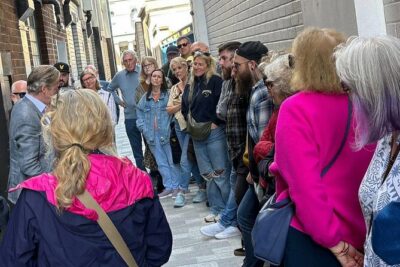
This walk begins at Golden Square Business Centre on Vittal Mallya Road in central Bangalore, and it ends back near the start point. That round-trip setup is handy: you don’t have to figure out a complicated second meeting point or ride across town at the end while your legs are already tired.
The meeting area is tied to a business center, and the tour is described as near public transportation. That matters in Bangalore, where traffic can swing your timing fast. If you arrive a little early, you’ll be in a better mood when you meet the guide and the group starts moving.
One more practical thing: you’ll want comfortable shoes. A “walking tour” here isn’t just strolling for Instagram photos. The route hops between museums, churches, parks, and government buildings, so expect steady walking for about two hours.
You can also read our reviews of more walking tours in Bangalore


Infotainment style: the secret sauce, and when it can go wrong
The tour is sold as infotainment, which is basically “information delivered like a story.” That format can be a big win if you usually tune out when someone starts listing dates. The goal is to keep you interested whether you came for history, culture, architecture, or just a fun way to get your bearings.
The guide lineup is also a plus on paper: you’re getting a friendly storyteller who can speak English and Hindi. That means you can ask questions without feeling like you’re waiting for translation. You also get local tips and recommendations meant to save you money and help you explore beyond the tour route.
Now for the caution. A few people reported problems at the start, including a no-guide/no-tour situation with waiting time involved. There’s also at least one report of a short, poorly connected start that ended early after about 15 minutes. That doesn’t mean every tour is like that, but it does mean you should treat the opening minutes like the most important part of your day. If the guide isn’t there on time, don’t just wait indefinitely.
Venkatappa Art Gallery and the archaeology/museum stop
Early on, the walk includes the Venkatappa Art Gallery and the Department of Archaeology and Museums. Even without going heavy on labels and dates, this is a smart first phase of the tour. You’re stepping into an “explainer zone,” where a guide can set the tone: how Bangalore’s identity shows up through art, collections, and preservation.
The value of this stop is that it helps you understand what you’re looking at later. When you move from formal museum spaces into neighborhoods and older lanes, the city doesn’t feel random. It feels like a story with chapters.
The drawback? Museum time can feel different depending on your interest level. If you only want outdoor sights and zero indoor wandering, this early stop might be a bit more structured than you’d like. But since the overall tour is about two hours, it’s unlikely to drag.
Visvesvaraya Industrial and Technological Museum: seeing the city through tech
Next comes the Visvesvaraya Industrial and Technological Museum. Again, the point isn’t just the building. It’s what a guide can do with it: connect industrial and technological themes to how a city grows, changes jobs, and reshapes everyday life.
This stop also gives the tour contrast. Some city walks lean hard into temples and streets. This one deliberately includes a tech-themed museum stop, which keeps the “culture” idea broader than only heritage buildings.
A practical note: museums can be quieter and more rules-based than streets. If your guide is aiming for conversation and fun facts, you may need to match the venue’s pace and respect signage. That usually works out fine, but it’s good to know what kind of environment you’re entering.
UB City and the modern-building stretch: contrast is the lesson
After the museum world, the route passes through UB City Mall (including its tower and aquarium) and other modern buildings along the way. This part is valuable because it forces comparison. You’re not only seeing “old” Bangalore. You’re seeing how newer development sits alongside the older layers.
For many visitors, this is the part that makes the tour feel like a real orientation. You can look at downtown planning, big commercial landmarks, and then later contrast it with older markets and centuries-old temple areas on the walking portion.
The possible downside is that a mall stop can feel less meaningful if you’re hoping for purely cultural sites. If you’re not interested in modern commercial architecture, you may treat it as a quick transit-with-stories section. Still, for understanding Bangalore’s mix of eras, it earns its place.
You can also read our reviews of more historical tours in Bangalore
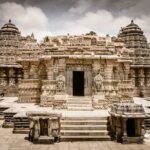


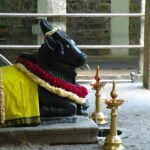
St. Mark’s Cathedral and Mahatma Gandhi Park: where the stories meet public life
The tour then moves to St. Mark’s Cathedral and Mahatma Gandhi Park. This pairing matters because you get a blend of formal religious architecture and a public outdoor space named for Gandhi. It also gives the guide a chance to talk about how different community spaces shape a city’s daily rhythm.
What I like about stops like this is that they’re easy to visualize even if you’re not a hardcore “architecture person.” A cathedral and a park are obvious landmarks. Your brain latches on fast, then the guide’s stories make those places more specific.
Possible drawback: parks and cathedrals can feel like “stop and stare” if the tour is quiet at that moment. If your guide is doing well, you should get enough storytelling to keep the energy up. But if the guide is struggling early, this is where you may feel the gap the most.
Old market lanes, heritage buildings, and centuries-old temple areas
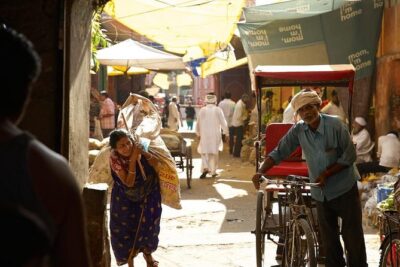
One of the most interesting promises is access to hidden yet prominent lanes and places people might not find easily on the internet. That’s where this part of the walk fits best: passing through the old market, museum areas, heritage buildings, and centuries-old temple areas.
This is the cultural “wind down” phase of many city walks, where the street level becomes the main character. Here, you’re not just looking at buildings. You’re moving through layers: older streets, market energy, and spiritual spaces.
The main value is texture. Big landmarks are great, but the lanes are what help you remember a place. You learn where streets feel tight, where the vibe changes, and how the city’s older rhythm differs from the downtown modern stretch.
If you’re sensitive to crowding or noise, old market areas can feel busy at times. Still, this is a walking tour designed to keep you moving. You’ll likely spend less time stuck in one place and more time getting the guided context.
Cubbon Park, M Chinnaswamy Stadium, and Minsk Square
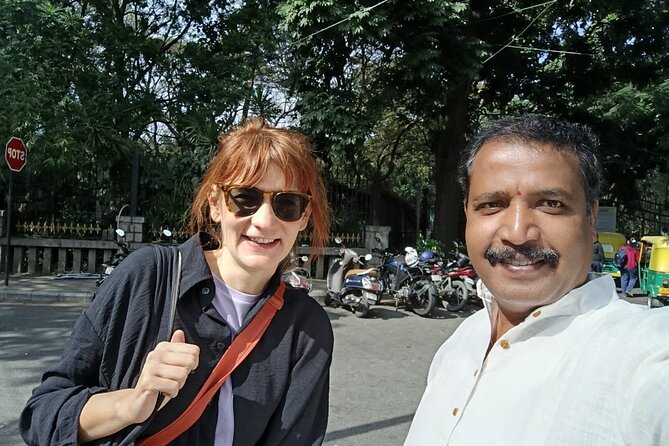
Next up: Cubbon Park, M Chinnaswamy Stadium, and Minsk Square. This segment gives you an open-space break and a mix of civic and sporting landmarks.
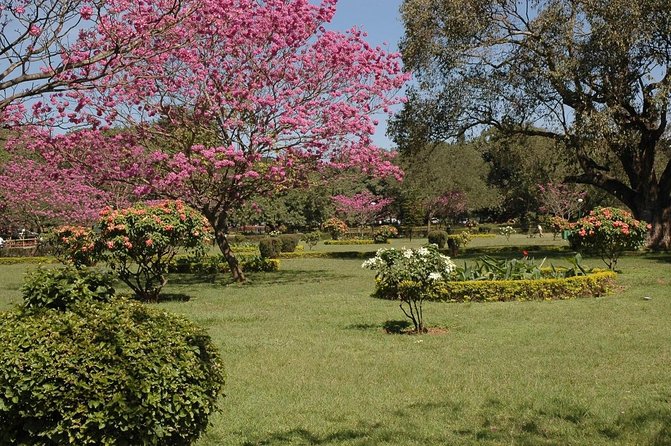
Cubbon Park is especially useful as a walking tour stop because parks are natural pauses. Even if you don’t know the background facts, a large green space gives your legs relief and your mind a moment to reset. A guide can also connect what you see around you to the city’s planning and public life.
M Chinnaswamy Stadium and Minsk Square add variety. Stadiums are big visual markers, and squares are where people feel the city’s center. Together, they help you understand Bangalore not just as a collection of monuments, but as a city organized around movement and gathering spaces.
The only consideration: if you’re traveling in hot weather, parks help, but you still might want to pace yourself. The tour doesn’t include a water bottle, so you’ll want to plan for hydration on your own.
High Court of Karnataka (Attara Kacheri): the civic spine of the city
The walk continues to the High Court of Karnataka, also known as Attara Kacheri. This is a great stop for a storytelling format because legal and civic buildings tend to trigger questions. What role do they play? Who visits? How do they shape a neighborhood?
This section can also help you connect earlier stops. If the museums and church explain culture, the court stop shows you another side: how Bangalore organizes governance and public authority in visible form.
Possible drawback: some people find government buildings less visually interesting than markets or churches. If you’re in that camp, think of this as a “context stop.” It’s part of the tour’s structure, giving you a fuller picture of what’s in the city center.
Vidhana Soudha and the government-core cluster
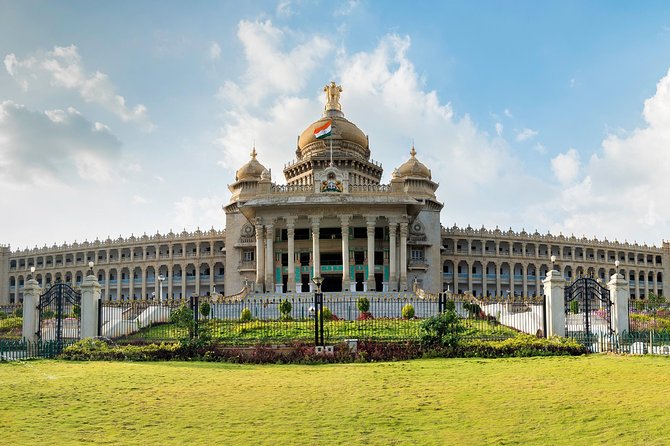
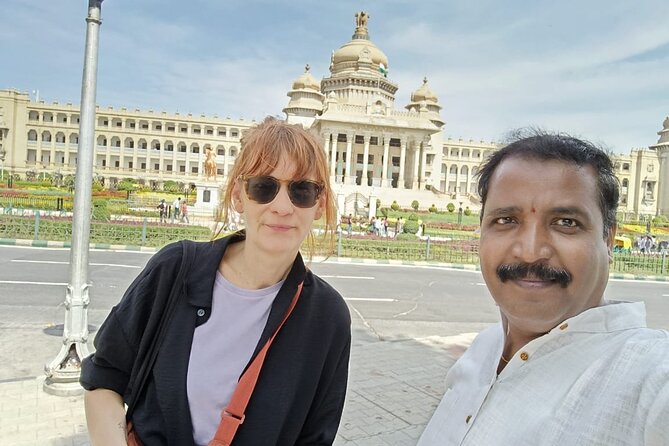
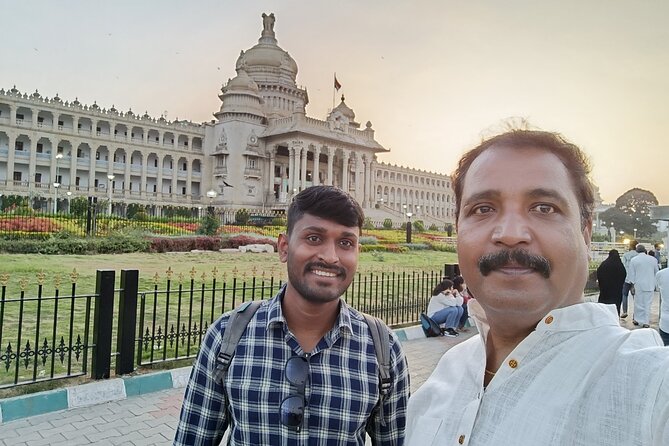
The final major segment includes Vidhana Soudha and nearby points like a Mahatma Gandhi Statue and the Press Club, plus other nearby buildings. This is where the tour leans hardest into Bangalore’s civic identity.
Even if you don’t have time to read every plaque, a guide can give you the key story beats that make the area coherent. You start to see how the tour’s earlier contrasts come together: museum culture, old-town lanes, and then the administrative backbone.
It’s also a strong closer because the last stop usually determines how you feel about the whole walk. If the guide’s storytelling is working well, this cluster can feel like the “big final chapter.”
Price and value: what $12.46 buys you (and what it doesn’t)
At $12.46 per person for roughly two hours, this is priced like a budget-friendly orientation walk. The biggest value elements aren’t flashy extras. It’s the combination of:
- A guide/storyteller who speaks English and Hindi
- Access to lanes and places that you might not stumble across
- Local tips to help you explore beyond the tour
- A group size capped at 15, which keeps the experience from turning into total chaos
What you should note: the tour doesn’t include a hotel pickup or drop, and a water bottle isn’t included. Those are small but real costs in your head. If you’re already budgeting transportation and hydration, you won’t be surprised.
Is it worth it? For the right person, yes. If you want a short, guided, story-based route through a mix of old and newer Bangalore, this price can be a good deal. If you only want highly curated indoor museum time or you’re picky about guide performance, you’ll want to be careful.
Group size, meeting point, and the human-factor reality
The tour caps at 15 people, which is a sweet spot for interaction. Smaller groups generally mean you get more personal attention, and the guide can keep the pacing under control. The route also ends back at the start point, so you can smoothly go from the tour to your next meal or transit plan.
But I can’t ignore the human-factor issues shown in past experiences. There are reports of guide no-shows and cases where people waited for a guide and weren’t able to reschedule. There’s also a report of an early stop ending after only about 15 minutes because the guide didn’t meet expectations.
So here’s my practical advice: arrive early, confirm the guide’s presence, and make sure you have a way to contact the provider if something seems off. If you’re the type who hates last-minute uncertainty, consider booking with a plan to stay flexible.
What to bring so the walk feels easy, not annoying
The tour doesn’t include a water bottle, so bring your own. After that, pack for a normal city walk:
- Comfortable walking shoes
- A small bottle of water
- Your phone for the mobile ticket
- A light layer if the weather swings
Also, go with the right mindset. This isn’t a “stand in one spot and learn 40 facts” kind of tour. It’s a moving story. If you stay curious and ask questions when your guide pauses at key stops, the experience will feel much more alive.
Should you book this Bangalore Heritage and Cultural Walking Tour?
Book it if you want a short, guided way to get oriented in Bangalore’s center and old-town feel, and you like tours that mix stories with real places like museums, St. Mark’s Cathedral, Cubbon Park, and the High Court area.
I’d hesitate if you’re highly sensitive to start-time problems or if you absolutely need a perfectly paced tour with no chance of disruption. A few bad start experiences have been reported, including no-shows and very early exits.
If you do book, set yourself up for success: arrive a few minutes early, keep water on hand, and treat the first 10 minutes as your quality check. When it’s working, this is exactly the kind of low-cost walk that helps you understand a city fast—without turning your day into a museum marathon.
FAQ
How long is the Bangalore Heritage and Cultural Walking Tour?
The tour lasts about 2 hours.
Where does the tour start, and where does it end?
It starts at Golden Square Business Centre on Vittal Mallya Road in Bengaluru and ends back at the meeting point.
What’s included in the tour price?
Included are a trained English and Hindi speaking storyteller/guide, local tips and recommendations, access to hidden lanes and places, and guided conversations and stories.
What language does the guide speak?
The guide can speak English and Hindi.
Is water included?
No, a water bottle is not included.
How big is the group?
The maximum group size is 15 travelers.
Is hotel pickup or drop included?
No hotel pickup and drop is not included.