REVIEW · JAIPUR
Walking Tour of Pink City (World Heritage Site) with Local Guide
Book on Viator →Operated by Pashmina Tours · Bookable on Viator
Jaipur’s Pink City is easiest on foot. I love how this walk turns UNESCO Jaipur into something you can see and understand fast, starting at Hawa Mahal and moving through the old-market streets. I also like the practical touches: an English-speaking guide and included drinks plus water make the 2.5-hour pace feel manageable. One thing to consider is that this is mainly a walking bazaar route, so you’ll want comfortable shoes and a little patience with crowds and street noise.
If you care about how the city actually works, this tour pays off. With a guide like Sanjeed (kind, prepared, and good at steering your attention), you’re not just looking at monuments—you’re learning why the old city is laid out the way it is and what local commerce looks like in real time. The best part is how the tour mixes quick photo moments with hands-on market atmosphere, without dragging you across town.
In This Review
- Key Highlights You’ll Notice on This Walk
- Getting Oriented at Tattoo Cafe Opposite Hawa Mahal
- Hawa Mahal: Palace of Wind, Not Just a Photo Stop
- Johri Bazaar: Jewelry Lanes and Wedding Dress Color
- Bapu Bazaar: Textiles First, Plus Everything Else
- Tripolia Bazaar: Books, Utensils, and Gemstone Wholesale Streets
- Chandpol Bazaar and Ishwar Lat: Spices, Dry Fruits, Marble, and a Minaret
- The Rickshaw Ride and Drink Break That Keep the Pace Honest
- Price and What You’re Actually Buying for $35
- Who This Walking Tour Fits Best (and Who Might Want Something Else)
- Tips to Enjoy the Pink City Markets Without Stress
- Should You Book This Jaipur Pink City Walking Tour?
- FAQ
- What is the duration of the Walking Tour of Pink City?
- Where does the tour start and end?
- Is this tour private?
- What’s included in the price?
- What is not included?
- Are there admission tickets included for the stops?
- How does ticketing work?
- Is free cancellation available?
- Is it near public transportation?
Key Highlights You’ll Notice on This Walk
- Hawa Mahal start point near Tattoo Cafe makes it simple to get oriented inside the Pink City.
- Johri Bazaar gives you a clear view of Jaipur’s jewelry world, including stone and precious-metal styles.
- Bapu Bazaar textiles stop helps you connect Jaipur branding to the everyday cloth trade.
- Tripolia Bazaar book, utensil, and gem-stone lanes show the city as a supply chain, not a museum.
- Chandpol Bazaar + Ishwar Lat photos add a spiritual landmark stop inside the old walled area.
- Rickshaw ride plus drinks keep energy up during a compact 2.5-hour loop.
Getting Oriented at Tattoo Cafe Opposite Hawa Mahal
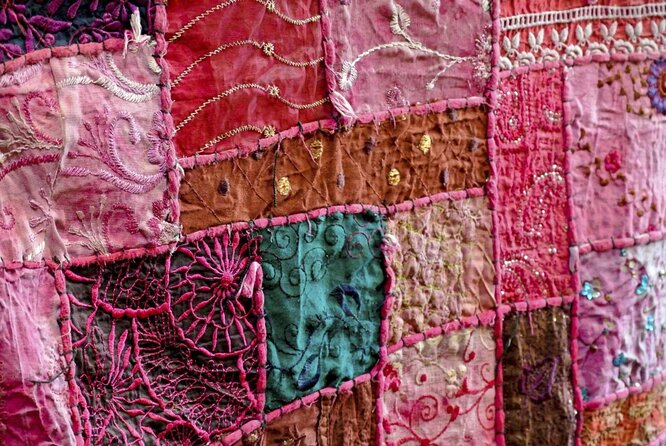
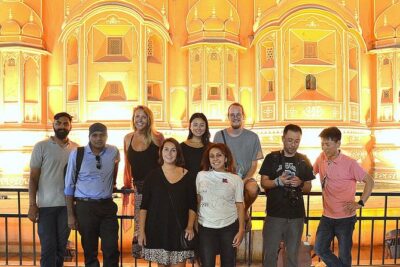
Your day starts right in the thick of Jaipur’s old center, with the meeting point at Tattoo Cafe & Lounge on the 3rd floor, opposite Hawa Mahal on Hawa Mahal Rd (near Badi Chaupar). It’s a smart place to begin because Hawa Mahal is one of the clearest visual anchors in the Pink City. If you’ve ever felt overwhelmed the moment you step into a dense old market area, a fixed starting landmark like this helps you relax and start exploring.
The tour timing matters, too. At about 2 hours 30 minutes, you get enough stops to build a real sense of place, but not so much that you’ll feel cooked by mid-tour. You’ll also get bottled water, plus a soda/tea/coffee during the experience, which is a bigger deal than it sounds when you’re walking in warmer weather.
Because it’s a private experience for your group, you won’t feel like you’re competing with a large crowd for the guide’s attention. That usually means more time for questions like where to look, what to notice in the architecture, and how these markets function day to day.
You can also read our reviews of more walking tours in Jaipur


Hawa Mahal: Palace of Wind, Not Just a Photo Stop
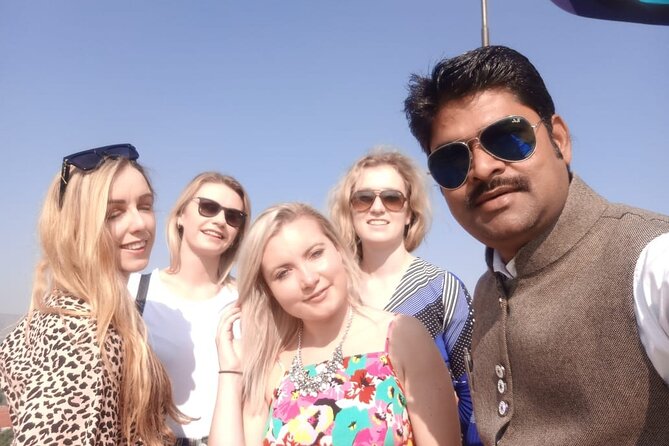
The tour begins at Hawa Mahal—Palace of Wind—and the focus here is on seeing it correctly from the street. Instead of rushing into the fastest selfie spot, you get a short orientation moment at the start, which helps you understand what you’re looking at when you finally frame the famous facade.
Hawa Mahal is known for its windowed design and the way it’s associated with cooling airflow. On this kind of walk, that design makes more sense when you’re also aware of the street level and how people move through the old city. You’re not studying the palace in isolation—you’re seeing it as part of a neighborhood.
One practical note: the tour starts at a cafe across from Hawa Mahal, so you’ll likely get a quick sense of the area’s daily rhythm right away. You’ll hear the market world start in the background, and that makes the rest of the stops feel less like a checklist and more like a real walk through Jaipur.
Johri Bazaar: Jewelry Lanes and Wedding Dress Color
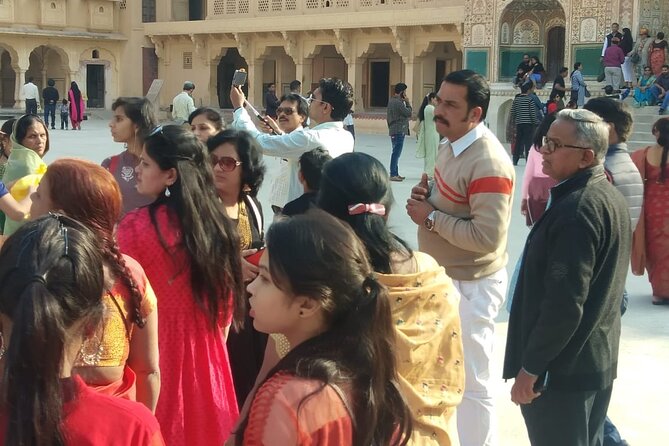
After Hawa Mahal, you move into Johri Bazar, where the atmosphere shifts from a monumental landmark to a working market. This stop is about texture and detail—especially jewelry. You’ll see shops focused on stone jewelry and options like silver and gold jewelry, along with the eye-catching clothing side of the market, including colorful wedding dress shops.
Why this stop matters: Johri Bazaar isn’t just “things to buy.” It’s a window into Jaipur’s identity as a craft and trade city. When you look at how many shops are specialized, you understand that the old city is built for commerce, with streets that funnel customers toward what they need.
Also, this stop is helpful if you like to shop but don’t want to get lost. The guide’s route keeps you from drifting into random lanes. Even if you don’t buy anything, you’ll still come away with a sharper eye for materials, styles, and what different shops emphasize.
A small consideration: markets like this can be busy, and prices and sales pitches vary by shop. If you’re not shopping, just keep it simple—look, photograph responsibly, and ask questions only if you actually want information. The tour pace keeps things moving, so you won’t get stuck in one place too long.
Bapu Bazaar: Textiles First, Plus Everything Else
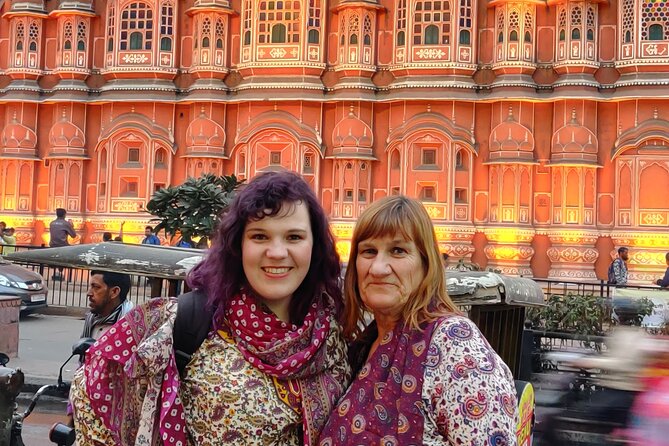
Next comes Bapu Bazaar, one of Jaipur’s best-known market streets. This stop centers on textiles, and that’s the key: it helps you connect Jaipur’s economy to fabric, clothing, and how materials are showcased.
Textiles markets are especially worth your attention because they’re visual. You’ll often see color blocking, patterned cloth, and neatly displayed items that immediately explain why the Pink City looks the way it does. Even if you’ve seen fabric in other Indian cities, Jaipur’s old-city trade has its own look, and Bapu Bazaar is a solid place to get that impression quickly.
What I like about this stop for value is how it’s balanced. It’s not just “look at shops.” It’s part of a planned route through different market functions—jewelry, textiles, then books, utensils, and gemstones later—so your brain starts to map the city as a network.
If you’re sensitive to loud sales energy, keep your tone friendly and your questions simple. You can enjoy the fabrics and still keep the shopping part optional.
Tripolia Bazaar: Books, Utensils, and Gemstone Wholesale Streets
From Bapu Bazaar you head to Tripolia Bazar, and the vibe becomes more specialized. Here, you’ll find a book market, utensils market, and wholesale trade connected with precious and semi-precious gem stones.
This stop is where the tour gives you something beyond sightseeing: it shows how buyers and supply chains work inside the old city. Books and utensils are practical goods, and gemstones are high-value items. Seeing those categories side by side helps you understand that Jaipur’s Pink City isn’t only about monuments—it’s also a dense marketplace built for real daily transactions.
Even if you’re not shopping for gemstones or wholesale items, you’ll still benefit from the guided route. The guide keeps you in the right lanes and helps you notice what each lane specializes in. Without that help, it’s easy to wander for an hour and still feel like you didn’t learn anything.
One consideration: gemstone and wholesale areas can feel intense if you’re not used to sales pressure. Keep your expectations calm and realistic. Enjoy the sights and let the guide handle the flow.
You can also read our reviews of more guided tours in Jaipur



Chandpol Bazaar and Ishwar Lat: Spices, Dry Fruits, Marble, and a Minaret
Your final main market stop is Chandpole Bazaar, where you’ll see spice and dry fruit shops, plus silver jewelry and marble work. This variety makes sense for a last big stop because it mixes everyday cooking ingredients with giftable crafts.
Spices and dry fruits are great for sensory payoff. Even from street level, you can often spot how displays are arranged, what’s most prominent, and how sellers present goods. Marble work and silver jewelry add a more craft-focused layer, which pairs nicely with what you saw earlier in jewelry and textiles.
Then comes a landmark moment: a stop at Ishwar Lat, described as the tallest minaret inside the Pink City. You’ll have time for photos here, and it’s a useful contrast to the bazaars. After a few hours of shops, standing near a minaret gives your eyes a different kind of focus—vertical lines, a sense of scale, and a quick reminder that this city’s old walls contain both commerce and belief.
If you’re photographing, aim for a few minutes of patience rather than rushing the first shot. Tight lanes and uneven footing can make tripods unrealistic, so steady hand and quick composition are the best strategy.
The Rickshaw Ride and Drink Break That Keep the Pace Honest
Included in the experience is a rickshaw ride, along with bottled water and soda/tea/coffee. These details matter because a good walking tour is really about energy management. A short ride breaks the walking rhythm before you’re too tired, and the drink moments keep you from turning the last 20–30 minutes into a struggle.
It’s also a practical comfort for families and people who want to see the city without spending the whole day in transit. Since transport to and from the start is not included, you’ll want to plan your own way to Tattoo Cafe & Lounge. But once the tour begins, the experience covers the internal movement and a couple of hydration boosts.
The tour loops back to the meeting point at the end, so you’re not left figuring out your next step while tired.
Price and What You’re Actually Buying for $35
At $35.00 per person for about 2 hours 30 minutes, you’re paying for more than route planning. You’re paying for:
- An English-speaking local guide (the real value in a dense old city)
- A guided route through multiple specialized bazaars
- A rickshaw ride
- Drinks (soda/tea/coffee) and bottled water
- A mobile ticket format for the experience
Compared with doing this on your own, the guide helps you avoid two common problems: wandering into dead ends and missing the meaning behind what you’re seeing. In a market area, direction is knowledge. If you’re only budget-minded, it can be tempting to self-walk. But if you want the walk to teach you something while still moving at a comfortable pace, the guide earns the price.
What’s not included is important: transport, lunch, and dinner. So build your day with food plans before or after. The tour is short enough that you can usually handle a snack break outside the official stops, but don’t assume it replaces a full meal.
Also, admission tickets are listed as free for each stop, which supports the idea that this is a walk-and-view style experience rather than a museum ticket marathon.
Who This Walking Tour Fits Best (and Who Might Want Something Else)
This is a great match if you want a structured way to understand Jaipur’s Pink City without feeling like you need to read an architecture textbook. It’s especially good for:
- First-time visitors who want a fast orientation in the old city
- People who like markets, crafts, and street-level shopping culture
- Anyone who appreciates a guide who keeps things moving and explains what you’re looking at
It may be less ideal if you strongly prefer quieter sights over busy market streets. You’ll spend a meaningful portion of the time in bazaars, and those areas can be crowded and noisy.
Still, the route is compact, and you get breaks and a rickshaw ride to keep it from becoming exhausting.
Tips to Enjoy the Pink City Markets Without Stress
Here’s how to make the most of the experience from the moment you meet your guide:
- Wear comfortable, grippy shoes. Stone and uneven ground are common in old market areas.
- Bring a light layer. Even in warm months, temperature shifts and shade can vary as you move through streets.
- Have your camera ready, but don’t block passage. Take photos quickly and step aside.
- If shopping isn’t your goal, still look closely. Jewelry, textiles, spices, and marble work tell you different parts of Jaipur’s economy.
- Ask your guide one clear question at a time. With a tight 2.5-hour schedule, you’ll get better answers when you don’t scatter the focus.
Should You Book This Jaipur Pink City Walking Tour?
If you want an easy, structured way to understand why Jaipur’s old city earned its UNESCO World Heritage listing, this is a solid book. The price is reasonable for a guided walk that includes a rickshaw ride plus drinks, and the stop sequence makes sense: landmark → jewelry → textiles → practical markets → crafts and a minaret.
Book it if you’ll enjoy markets and you like learning by walking, not by sitting. Consider skipping it if you want mostly quiet monuments or if you’re not comfortable in busy street environments.
Bottom line: this tour is a practical sampler of Jaipur’s old center—markets you can actually see, landmarks you can actually place in context, and a guide who keeps your attention where it helps.
FAQ
What is the duration of the Walking Tour of Pink City?
The tour runs about 2 hours 30 minutes (approx.).
Where does the tour start and end?
It starts at Tattoo Cafe & Lounge, 3rd floor, 30 Opposite Hawa Mahal, Hawa Mahal Rd, Badi Chaupar, Jaipur, Rajasthan 302002, and it ends back at the same meeting point.
Is this tour private?
Yes. Only your group participates.
What’s included in the price?
An English speaking tour guide, a rickshaw ride, soda/tea/coffee, and bottled water are included.
What is not included?
Transport, lunch, and dinner are not included.
Are there admission tickets included for the stops?
Admission tickets are listed as free for the stops during the experience.
How does ticketing work?
The tour uses a mobile ticket, and confirmation is received at the time of booking.
Is free cancellation available?
Yes, you can cancel for a full refund up to 24 hours in advance of the experience start time.
Is it near public transportation?
Yes, the meeting point is near public transportation.