REVIEW · PHILADELPHIA
2.5 Hour Philadelphia History Tour with Washington War Tent Show
Book on Viator →Operated by WeVenture · Bookable on Viator
Philadelphia’s founding story is right on your feet.
This 2.5-hour Philadelphia History Tour is a compact way to connect Independence Hall with newer stories like the Museum of the American Revolution, including a George Washington War Tent presentation. Guides like Tom and PJ also bring the details to life, so the stop-and-go feels more like a great conversation than a checklist.
What I like most: the small-group size (max 12) makes it easier to ask questions and actually hear the answers, not just catch a sound bite. And I love that the tour includes a ticket to the Museum of the American Revolution plus a chance to use a discounted entry after the walking portion.
One thing to consider: several major buildings in the Independence Hall area are viewed from the outside, so if you’re hoping for nonstop interior time, you’ll want to plan a bit of extra flexibility.
In This Review
- Key things that make this tour worth your time
- How a 2.5-hour Philly history walk keeps moving (without feeling rushed)
- Signer’s Garden: the perfect warm-up for a tight Revolutionary route
- Independence National Historical Park: the core locations you’ll recognize instantly
- Independence Hall, Congress Hall, and Old City Hall: what you get from the curb
- Liberty Bell Center: learning the history and clearing up common myths
- Carpenters’ Hall: where early power got organized
- Museum of the American Revolution: the included War Tent presentation
- Elfreth’s Alley and Arch Street: when the Revolution story gets human
- Betsy Ross House and President’s House: myths, reality, and the people behind the story
- Price and value: what $45 gets you (and why it can be a smart use of time)
- Who should book this Philadelphia history tour
- The guide factor: why storytelling changes everything on a walking tour
- Should you book this tour?
- FAQ
- What’s the duration of the Philadelphia History Tour with Washington War Tent Show?
- How much does the tour cost?
- How big is the group?
- Is the tour in English?
- Where do I meet and where does the tour end?
- What’s included besides the walking tour?
- Are food and souvenirs included?
- Can I cancel for a full refund?
Key things that make this tour worth your time
- Max 12 people keeps the pace personal and the Q&A real
- War Tent presentation included at the Museum of the American Revolution
- Discounted museum entry after the tour lets you linger where you want
- Myth-busting Liberty Bell context gives you smarter ways to remember the story
- Old streets and political landmarks add texture beyond just famous facades
- Guides like Tom, PJ, Adam, and Caroline show strong storytelling and fast answers
How a 2.5-hour Philly history walk keeps moving (without feeling rushed)
This tour is built for people who want the big landmarks and the big ideas, but don’t want to spend an entire day playing museum shuffle. You start in Old City and end nearby, and in between you cover a tight loop through the core Revolutionary sites. It’s the kind of route that helps you get your bearings fast, especially if it’s your first time in Philadelphia.
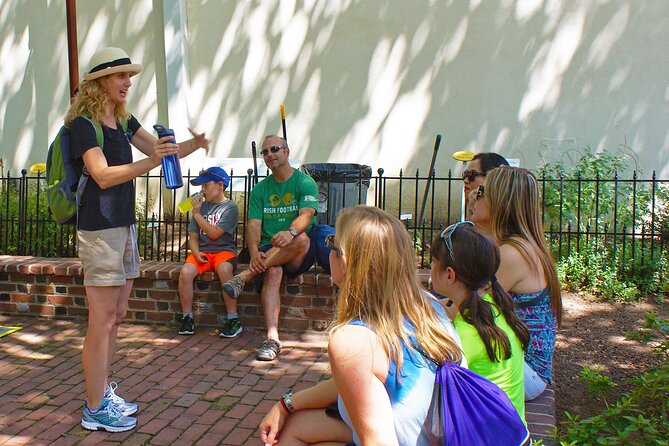
The biggest win is the structure. You’re not just looking at buildings. Your guide ties each stop to the politics, arguments, and everyday realities of the era. That’s where the small-group format matters. When the group is under control, your guide can slow down when someone asks about a document, a slogan, or who actually made what happen.
Also, expect a real walking experience. Shoes matter. This isn’t a bus tour where you can treat each stop like a quick photo moment. You’ll cover ground on sidewalks and stone-straight streets, and the timing works best if you go with the flow and don’t plan a big side quest every 10 minutes.
You can also read our reviews of more historical tours in Philadelphia


Signer’s Garden: the perfect warm-up for a tight Revolutionary route
You begin at Signer’s Garden at the statue of The Signer. It’s a smart start because it frames the whole tour around the people behind the Declaration of Independence and the U.S. Constitution. In other words, you’re not jumping straight into buildings—you’re setting up the themes your guide will keep returning to: freedom, governance, and the fight to make ideas become reality.
This first stop is brief, which is good. It helps you settle in without losing momentum. You’ll likely get quick orientation on what you’ll see next, plus a feel for the tour’s tone: practical, story-forward, and focused on what mattered and why.
One practical tip: since this is the first stop, it’s worth arriving a little early. The address is 434-498 Chestnut St, right in the heart of the action, so it’s easy to get there—but still, you’ll want a minute to check the meeting spot and settle your group.
Independence National Historical Park: the core locations you’ll recognize instantly
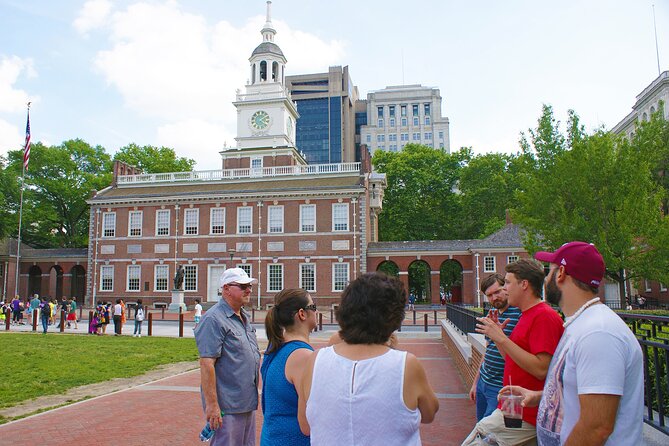
Next you step into Independence National Historical Park, where the Revolutionary story is concentrated into a walkable cluster. Here you’ll see iconic spaces tied to Independence Hall, Congress Hall, and Old City Hall. Your guide walks you through what each place meant in its moment, and how those decisions shaped the United States that followed.
This is also where the tour helps you connect the dots. It’s easy to think of the Revolution as one dramatic event. Here, it feels more like a sequence of arguments, compromises, and hard choices. You’ll hear why the site mattered not just locally, but globally—especially around the idea of democracy and legitimacy.
One note: admission isn’t included for this part, so you’re mostly taking in the area and key viewpoints rather than buying into a timed interior experience. Still, the context is valuable. Even if you’ve seen photos of Independence Hall a hundred times, the guide’s framing turns the scenes into a story you can follow.
Independence Hall, Congress Hall, and Old City Hall: what you get from the curb
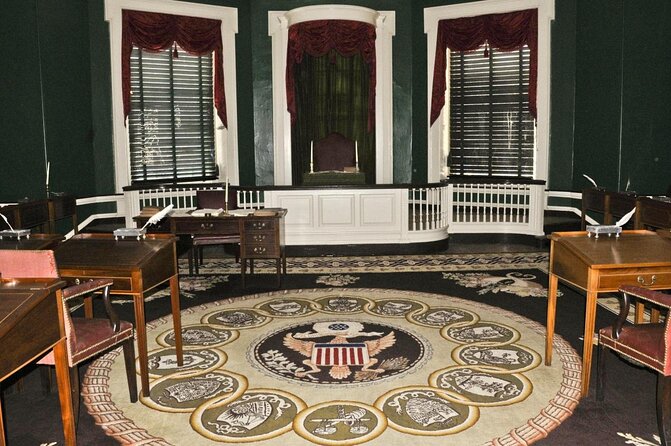
You’ll spend time at Independence Hall—famous for the $100-bill image and for good reason. On this tour you’ll see it from outside, as the route circles the area while your guide explains the philosophies and conflicts around the founding.
From there, you move to Congress Hall, originally the home of the United States Congress, and then to Old City Hall. These stops are also mostly about the exterior views and the surrounding context. You’ll hear the role each building played in building modern-day democracy, including how the early leadership thought about rule, rights, and order.
If you love architecture or you love political history, this is a great combo. You’ll start to notice patterns: symmetry, symbolism, and the way public buildings send messages about who has authority. If you’re expecting door-to-door interiors at every stop, you might feel slightly teased—but the time spent outside works well for staying on schedule and covering more ground.
Liberty Bell Center: learning the history and clearing up common myths
At the Liberty Bell Center, you get a chance to learn the history of the bell and also dispel myths about how it has been used over the years. This is one of those stops that’s small in time but big in payoff. The Liberty Bell is one of the most recognizable symbols in the U.S., and the story has been shaped by retellings and slogans. Your guide helps you separate the facts from the popular version.
The tour doesn’t include the ticket for the Liberty Bell Center entry here, so think of it as a context stop. You’re there to understand the symbol and its impact: from abolitionists and suffragettes to later movements. That broader timeline gives the bell a new weight, not just as an old object but as a repeating source of inspiration.
Practical tip: if you want more than a quick look, plan your Liberty Bell Center visit for before or after the walking portion. This tour is designed to give you the story thread; it’s not designed to monopolize your day in ticketed interiors.



Carpenters’ Hall: where early power got organized
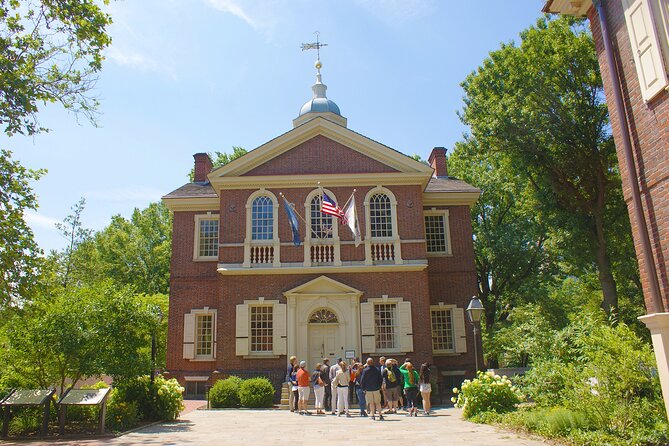
Carpenters’ Hall is one of the strongest “history with real stakes” stops on the route. You’ll admire the building from the outside while your guide connects it to Pennsylvania’s founding and its role in American independence. It’s also associated with the first Continental Congress, which makes it feel less like a museum stop and more like a hinge point in political organization.
Good news: this one is marked with admission ticket free, so you don’t have to worry about additional costs for this stop. Even if you’re outside mostly, the stories give you enough detail to imagine how meetings, debates, and decisions played out in the era before modern communication.
If you’re a person who likes details—names, dates, and why a particular decision mattered—this is where you’ll likely lean in the most. A well-run guide will make it feel like people were arguing in real time, not reading from a history textbook.
Museum of the American Revolution: the included War Tent presentation
The highlight for many people is the Museum of the American Revolution stop. Here you’ll go inside and see a presentation featuring George Washington’s War Tent, shown in a way tied to the Revolutionary War period when it would have been present at critical moments.
This matters because it turns the tour from “buildings and symbols” into something more tangible. A tent is small and human compared to a grand hall, so it helps explain the day-to-day reality of leadership, movement, and military life. Even if you’re not a reenactment fan, seeing the tent presentation makes the Revolution feel less distant.
This museum stop is also where the tour earns its cost. The Museum of the American Revolution ticket is included at this point. And when you finish, you get access to a discounted ticket to see the rest of the museum at a time of your choosing. That means you can do the walking tour first, then decide later how long you want to spend in galleries that match your interests.
Timing here is key. The museum section is long enough to make an impression, but short enough that you don’t lose the rest of the afternoon feeling like you’re stuck. If you’re history-minded, you’ll likely want to return for more.
Elfreth’s Alley and Arch Street: when the Revolution story gets human
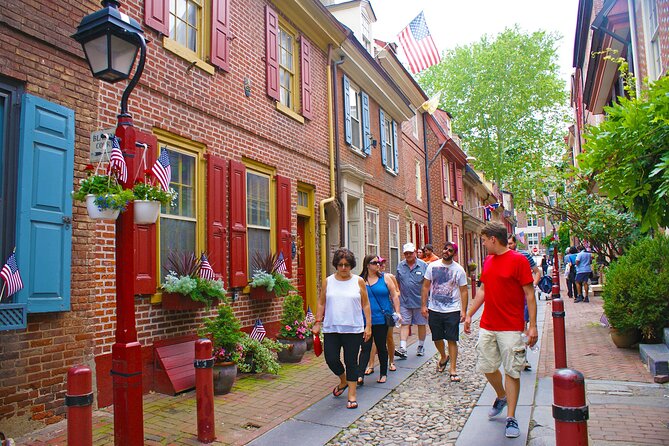
After the museum, the tour shifts gears in a nice way. Elfreth’s Alley is next, and it’s special for one big reason: it’s the oldest continuously occupied residential street in the United States, with architecture dating to the early 1700s. This stop makes the Revolutionary period feel lived-in rather than staged.
You’ll walk through the visual language of the time—narrow homes, old brickwork, and the kind of street that makes you think about how people actually lived near the events you just learned about. It’s a reminder that while leaders met and debated, regular residents were raising families, running businesses, and coping with the costs of political upheaval.
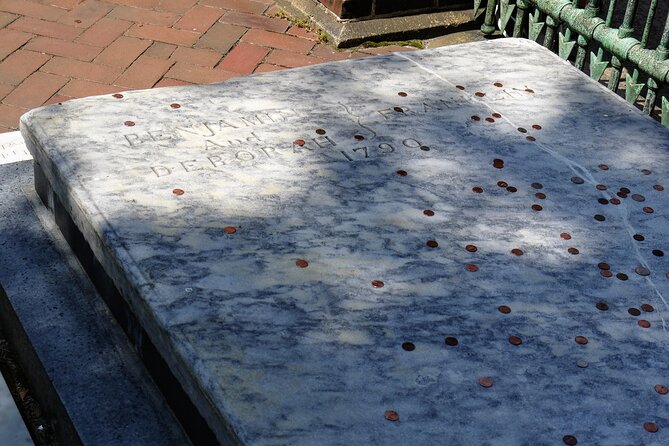
Then you’ll pass Benjamin Franklin’s grave while walking along Arch Street. Franklin is everywhere in Revolutionary history, but his burial place adds a different kind of gravity. It’s a quiet stop that helps balance the more dramatic symbols earlier in the route.
If you like the “ordinary life around big events” angle, these two stops are the kind you’ll remember later when someone asks what Philadelphia was like back then.
Betsy Ross House and President’s House: myths, reality, and the people behind the story
You’ll pass by Betsy Ross House and learn about the stories and myths around the figure and the famous flag-making claim. This is one of those stops where the guide’s job is to keep you from falling into the easy legend. Instead, you get the history framing that explains why the myth spread and how it got treated over time.
From there, you’ll reach The President’s House, where icons like George Washington and John Adams lived while president. This stop is also significant because your guide will point out that it’s an active archaeological site, which is still rare for a downtown location. Even more important, you’ll learn about the fact that enslaved people lived at this site, and how that reality is part of the full story of early U.S. leadership.
This section can feel heavier than earlier stops, but it’s also one of the most important. It keeps the tour honest. You don’t just get founding ideals; you get the contradictions and the real human impact of the era.
Price and value: what $45 gets you (and why it can be a smart use of time)
At $45 per person for roughly 2 hours 30 minutes, this tour competes well with other “intro to Old City” options because it includes more than just walking and talking. The value comes from the mix:
- You get a guided walkthrough that links major landmarks into a coherent storyline.
- You get a museum ticket included for the Museum of the American Revolution stop.
- You get a discounted ticket after the tour, so you can follow your interests without paying full price again right away.
- You also end with the street-level history of Elfreth’s Alley and the contextual sites like Franklin’s grave.
Add in that the group is capped at 12 travelers, and the odds improve that you’ll get answers to your questions instead of just hearing what the guide says to the front of the pack. That matters more than people think, especially if you’re the type who asks about dates, documents, or how decisions were made.
If your time in Philadelphia is tight—say you only have one afternoon to get oriented—this is a strong value play. You’re paying to turn a pile of landmarks into an actual story you can remember.
Who should book this Philadelphia history tour
This is a good match if:
- You want the Revolutionary-era “greatest hits” without spending all day in lines and ticket booths
- You like walking tours where your guide can answer questions and explain connections
- You care about both big symbols (like Independence Hall) and real context (like the tent presentation and life on Elfreth’s Alley)
- You’re traveling solo, as a couple, or with a family that can handle a steady walk
It might be less ideal if:
- You need lots of interior time at every stop
- You dislike structured routes and prefer wandering without a schedule
- You’re hoping for a full museum day as part of the main ticket
The guide factor: why storytelling changes everything on a walking tour
Across the tour, the guide seems to be the engine. Names you may see include Tom, PJ, Adam, Caroline Hodash, David, John, Maria Gorshin, and Donato, and a common thread is how animated and question-friendly the experience feels. People often mention pacing that doesn’t drag and explanations that make it easy to understand the flow of events.
If you want to maximize your experience, do this: pick one or two themes before you start—like how democracy was debated, or how myths get created—and ask about those. With a group this size, you’re more likely to get a direct response rather than a quick, polite pass.
Should you book this tour?
I’d book it if you’re visiting Philadelphia and want a focused, well-paced way to understand the Revolutionary story across symbols, politics, and everyday life. The included Washington War Tent presentation and the museum ticket add real value, and the small-group size makes the difference between hearing history and actually getting it.
Skip it only if your top priority is nonstop interior access. Otherwise, this is a smart use of a half-day in Old City—enough structure to guide you, enough flexibility through the museum discount to make it your own.
FAQ
What’s the duration of the Philadelphia History Tour with Washington War Tent Show?
The tour runs about 2 hours 30 minutes.
How much does the tour cost?
The price is $45.00 per person.
How big is the group?
The maximum group size is 12 travelers.
Is the tour in English?
Yes, it’s offered in English.
Where do I meet and where does the tour end?
You meet at Signer’s Garden, 434-498 Chestnut St, Philadelphia, PA 19106, and the tour ends in Old City, Philadelphia.
What’s included besides the walking tour?
Included features are a knowledgeable local expert guide, the Museum of the American Revolution presentation featuring George Washington’s War Tent, a donation to a local historic organization, and a discounted ticket for the Museum of the American Revolution after the tour.
Are food and souvenirs included?
No. Additional food and drink are not included, and souvenirs or personal shopping are not included.
Can I cancel for a full refund?
Yes. You can cancel up to 24 hours in advance for a full refund. If you cancel less than 24 hours before the start time, the amount paid will not be refunded.