REVIEW · AGRA
Agra Heritage & Cultural Walk
Book on Viator →Operated by TOP TRAVEL AND TOURS PVT LTD. · Bookable on Viator
Agra teaches fast with feet and food. This 3-hour cultural walk mixes Mughal-era sights with everyday Agra life, plus a smooth electric rickshaw ride through the old bazaar areas. I especially like how the route pulls you from big-city landmarks into real local routines, like eating at an 180-year-old poori shop.
One drawback to plan for: this is not only a monument tour. A few key stops have tickets you may pay separately (like Shahi Jama Masjid and the Shiva temple), and the schedule also includes bazaar time at multiple shop stops.
In This Review
- Key highlights you’ll feel right away
- A 3-hour Agra city introduction with people, prayers, and plates
- Agra Fort Railway Station to Shahi Jama Masjid: where Mughal style meets real life
- Chimman lal poori wale: the 6th-generation snack stop you’ll actually remember
- Betel leaf and paan culture at the old bazaar
- Ancient Shiva at Mankameshwar Mandir and the daily light ritual
- Radha Mohan temple’s carved balcony: a classic Agra craftsmanship moment
- Rawatpara spice market: Mughal logistics you can taste later
- Lohar Gali: bangles, metalwork energy, and a classic street finish
- Gyarah Sidi and the Taj view point: history clues and a photo endgame
- Price and value: is $89 worth three hours of Agra?
- Logistics reality check: bazaar time, extra tickets, and vehicle comfort
- What the reviews suggest about the human side of the tour
- Should you book Agra Heritage & Cultural Walk?
- FAQ
- How long is the Agra Heritage & Cultural Walk?
- What does the tour cost?
- Is pickup included?
- Is this a private tour?
- What’s included in the price?
- Are monument entrance fees included?
- Is Taj Mahal itself included?
- What time does the tour run?
- How do you get the ticket?
- What is the cancellation policy?
Key highlights you’ll feel right away

- Electric rickshaw ride that gets you from Agra Fort parking into old Agra bazaar areas fast
- Family-run food tasting at a poori shop with 6th-generation ownership
- Paan and betel leaf culture explained through the old market tradition and auction history
- Sacred stops with specific details like daily akhand jyoti at Mankameshwar Mandir
- Spice and bangles streets at markets set up under Mughal rulers
- Gyarah Sidi plus Taj view point for history context and a photo vantage
A 3-hour Agra city introduction with people, prayers, and plates
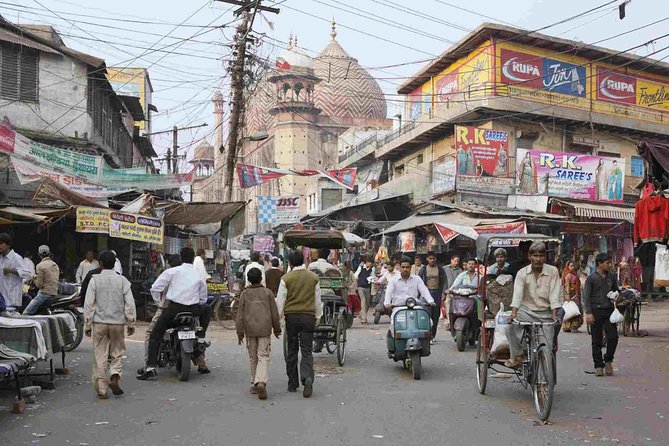
Agra can feel like a lot if it’s your first time. This experience helps you get your bearings fast by layering the city in short chunks: railway-architecture vibes, mosque importance, family food traditions, temple rituals, and market crafts.
The timing also matters. Runs are scheduled 5–7 pm in summer and 4–6 pm in winter, which is often a good window for cooler air and better street energy. And it ends with a Taj view point stop, so you’re not only relying on memory when you see one of the world’s most famous sights.
You should like this tour if you want guided context, not just photos. The pace is designed for learning while you move, and you get a guide throughout, plus basic comforts like bottled water and a rickshaw ride.
You can also read our reviews of more walking tours in Agra


Agra Fort Railway Station to Shahi Jama Masjid: where Mughal style meets real life
The first stop is Agra Fort Railway Station. Even before any monument-ticket expectations, you’ll notice the distinctive red-and-white façade with arches and domes that reflect Mughal influence. It’s also described as one of the busiest stations and among the early electrified ones in India, so the setting isn’t staged for tourists—it’s part of daily movement.
From there, you board electric rickshaws to reach the old bazaar area. That jump is more than transport. It helps you understand how Mughal-era urban design and modern commerce overlap right where visitors usually start exploring.
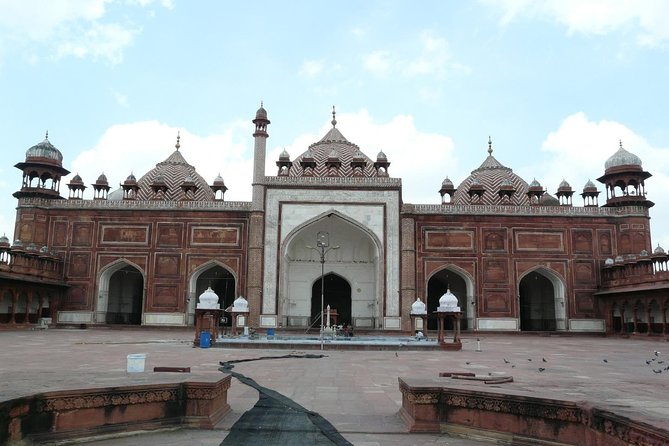
Your next major sight is Shahi Jama Masjid, built by Mughal emperor Shah Jahan as a dedication to his daughter Jahanara Begum. It’s a royal mosque, and the guided explanation helps you connect names you’ve seen in Taj Mahal history to the broader religious landscape of the city.
Practical note: the mosque’s admission is listed as not included, so plan to pay any entrance ticket on the day. Also, expect temple-and-mosque etiquette: dress respectfully and be ready for quiet moments when everyone else is doing the same.
Chimman lal poori wale: the 6th-generation snack stop you’ll actually remember
Next comes one of those stops that turns a history walk into a living experience: Chimman lal Poori Wale. This shop is said to be about 180 years old and run by the sixth generation of the same family. It’s known for Indian delicacies, and it’s described as a favorite stop for people coming out of Agra Fort railway station.
Because the tour includes food tasting, this is where you’re likely to get that payoff. Instead of a generic “here’s a snack,” you get the feeling of a place that has served the same crowd for generations.
What I like about this stop is how it gives you a break without breaking the story. You’re still in the same historical zone, just switching from architecture to everyday food economics.
If you’re sensitive to spicy food, you can ask the guide to help you choose milder options. The tour doesn’t say specific items for tasting, but it clearly places tasting alongside this long-running food stop.
Betel leaf and paan culture at the old bazaar
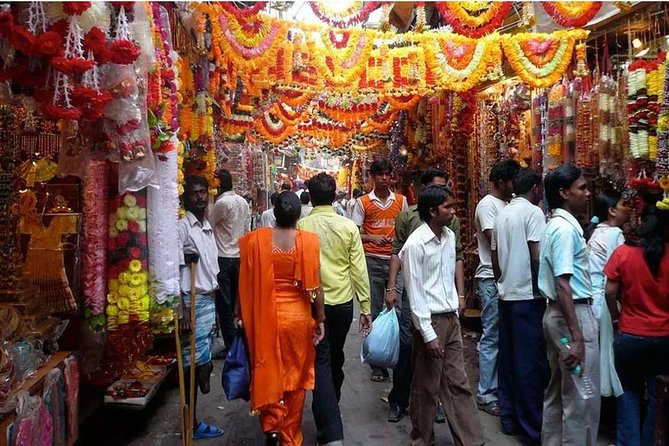
Agra is famous for the Taj, but it also has small cultural practices that don’t show up in postcard photos. This stop is betel leaf shop time, focused on paan—betel leaf mixed with areca nut, traditionally chewed for its stimulating effects.
You’ll also learn that the old Agra bazaar is known for paan leaf auctions since Mughal times. That detail turns a simple street custom into something historical: commerce, ritual, and daily pleasure all tied together.
This is one of the best moments for shoppers and people-who-like-stories-of-things. Even if you don’t buy anything, you’ll understand why certain markets in Agra exist and how they survived through changing rulers.
Caution: paan is a strong flavor and not everyone wants to try it. The tour doesn’t state that tasting is mandatory here, so you can watch, ask questions, and decide on your own comfort.
Ancient Shiva at Mankameshwar Mandir and the daily light ritual
Next is Shri Mankameshwar Mandir, described as one of the most ancient temples devoted to Lord Shiva. The tour notes that the Shivlinga is covered by silver metal, and it’s said to have been founded by Shiva himself—so the guide will likely connect the myth and ritual side of the temple to how people worship there today.
One specific detail you can remember: 21 akhand jyoti lights are lit every day. That’s the kind of practical, observable tradition that makes a temple stop feel more real than a quick photo-and-go.
Admission is listed as not included, so you’ll need to handle any entry ticket. This stop is also a good place to slow down mentally. You’ll be moving through markets, then through prayer spaces, then back to streets again. It’s a neat change of pace.
You can also read our reviews of more historical tours in Agra

Radha Mohan temple’s carved balcony: a classic Agra craftsmanship moment
After the Shiva temple, you head to Radha Mohan temple, described as famous for an ornately carved balcony. The balcony was built by Mohan lal in 1880, which gives you a quick anchor in time. It’s not just Mughal-era storytelling; you also see later craftsmanship that continued shaping Agra’s visual language.
This is one of those stops where the value is in the guide’s pointing. Without context, you might see carved details. With context, you start noticing patterns and the effort behind them.
The tour lists this stop’s admission as free, so it’s a good one to include in your day if you’re trying to keep ticket costs predictable. Still, dress respectfully and keep your pace modest inside temple areas.
Rawatpara spice market: Mughal logistics you can taste later
Then you get to Rawatpara, a spice market described as 400 years old, set up by Mughal emperors to cater to the spices needed for the fort. This matters because it reframes spice markets as infrastructure, not just shopping.
Spices were part of court life, food preservation, and everyday cooking. So when you walk through Rawatpara, you’re seeing a system built to serve power centers—long before modern supermarkets made it easy.
Admission is listed as free. Expect vendors, packaging, and lots of aromas. This is a great stop if you want to bring something home, but it’s also fun just to understand what made these markets so important.
If you’re price-checking like a pro, take a breath first. The guide can help you navigate what’s standard versus what’s being marked up.
Lohar Gali: bangles, metalwork energy, and a classic street finish

The tour continues to Lohar Gali, a busy street known for vendors selling many goods, with special fame for bangles. This is your last major street stop before the route transitions back to transport.
It’s also a good place to pick up souvenirs that match the experience you just had. If you’ve been learning about Agra’s markets, it’s only natural to end at a market craft focus instead of abruptly switching to a bland “shopping mall” vibe.
Admission is listed as free, and after this point, the tour says the walking part ends. You then head back to the parking lot using electric rickshaws.
Gyarah Sidi and the Taj view point: history clues and a photo endgame
Your tour wraps with Gyarah Sidi (Eleven Steps). From the Agra Fort parking, the plan is to take cars to this site, where you’ll see remains of the astrological observatory of Mughal emperor Humayun.
This stop is valuable because it connects the city’s monument fame to another type of Mughal brainpower: science and astronomy tied to power. It’s a very different angle from mosques and markets, and it helps your understanding of Agra feel bigger than one building.
Then the experience ends at the Taj view point, described as one of the best vantage points in the city for viewing and photographing the Taj Mahal. Admission is listed as not included here, so keep your expectations flexible if a local ticket is required on the day.
This is a smart finish. Even if you’ve seen Taj photos before, the guided lead-in from earlier stops changes how you interpret it. You’re not only looking at marble. You’re looking at a city shaped by rulers, rituals, trade, and craft.
Price and value: is $89 worth three hours of Agra?
At $89 per person for about 3 hours, the value depends on what you want to get out of Agra besides the Taj name.
This price includes a few high-use items that add up in India day-to-day costs:
- Pickup and drop from Agra city hotels only
- Guide throughout
- Rickshaw ride
- 2 mineral water bottles (500 ml each)
- Food tasting
- All applicable taxes
- You get a mobile ticket
So you’re paying partly for logistics and partly for interpretation. If you’ve ever tried to self-navigate bazaars and temples on a tight timeline, you’ll appreciate having someone handle routing and context.
Where cost planning matters: monument entrance fees are not included. The tour specifically marks admissions as not included for some stops, so your total day cost may rise a bit depending on ticket requirements. Still, several stops are listed as free, which helps keep the surprise factor down.
Also, this is labeled as private—only your group participates. That tends to make pacing and explanations more workable than a big crowded walk.
Logistics reality check: bazaar time, extra tickets, and vehicle comfort
Two practical notes before you book.
First, this experience includes multiple marketplace and shop stops by design. If your dream day is only ticketed monuments, you might feel like you’re doing more shopping-world than sightseeing-world. The schedule is built around food, spices, paan culture, and craft street life.
Second, some admissions are not included. So be ready to pay on-site if you want to enter Shahi Jama Masjid and Mankameshwar Mandir. The Taj view point is also listed as not included, so it’s smart to carry some cash just in case.
Finally, I saw a couple of very harsh complaints in the review set about operator issues like ride cleanliness and too much time in shops in a different Agra day-trip context. That doesn’t automatically mean this exact walk runs that way. But it does mean you should set expectations early: confirm the plan for timing, ask what is included in the food tasting, and ask your guide to keep you on the heritage focus you paid for.
What the reviews suggest about the human side of the tour
The overall rating is 4.4 out of 13 reviews. The most repeated positive theme is professional, helpful guidance and smooth organization. People named specific team members like Lalit, Anuj, and 瑞達 (Ruidaa) in the guide role. The compliments also point to a stress-reducing approach: pickup, routing, and explanations handled well.
One response in the review set praises the team for helping participants have a good Taj Mahal experience and thanks a reviewer for writing back. That kind of customer follow-up is a decent sign that they monitor feedback and try to address concerns.
So if you care about having someone who can explain what you’re seeing in plain terms, this tour seems aligned with that goal.
Should you book Agra Heritage & Cultural Walk?
You should book if:
- You want a guided introduction to Agra that includes markets, faith sites, and food—not just the big photo spots.
- You like learning about how Mughal rule connects to everyday life, from mosques to spice supply chains.
- You’d rather spend a few hours with a guide than figure out transport and timing alone.
You might skip or modify expectations if:
- You want a monument-only day with minimal shop stops. This one is built around bazaars (paan, spices, bangles, and the poori stop).
- You hate paying extra for any entry tickets. Some key places are listed as not included.
My practical recommendation: if you book, message or ask right at pickup what the plan is for entrances and how long you’ll spend at each market stop. You’ll get far more value when you know what parts are optional versus ticketed.
Overall, this is a solid way to see Agra’s texture in a short window. It trades long Taj lines and marathon pacing for a smart mix of places you can talk about later—especially if you like your sightseeing with real food and real religious context.
FAQ
How long is the Agra Heritage & Cultural Walk?
It runs for about 3 hours.
What does the tour cost?
The price is $89.00 per person.
Is pickup included?
Yes, pickup and drop are included from Agra city hotels only.
Is this a private tour?
Yes. It’s described as private, with only your group participating.
What’s included in the price?
The tour includes a guide throughout, pickup and drop (Agra city hotels), 2 mineral water bottles per person, a rickshaw ride, food tasting, and applicable taxes.
Are monument entrance fees included?
No. Entrance fees of monuments (if any) are not included, and some specific stops list admission as not included.
Is Taj Mahal itself included?
The itinerary ends at a Taj view point for viewing and photographing the Taj Mahal, but Taj admission is listed as not included.
What time does the tour run?
In summer it runs 5–7 pm, and in winter it runs 4–6 pm.
How do you get the ticket?
You receive a mobile ticket.
What is the cancellation policy?
Free cancellation is available up to 24 hours in advance for a full refund. Changes within 24 hours of the start time are not accepted.