REVIEW · AGRA
Agra Fort: Guided UNESCO Heritage Walking Tour
Book on GetYourGuide →Operated by Crystal India Holidays · Bookable on GetYourGuide
Fort walls with real courtroom drama. In just one hour, this guided UNESCO walking tour of Agra Fort turns the site’s big sights into a clear story of Mughal power—where emperors ruled, prisoners suffered, and gardens offered a quieter kind of control.
I especially like two things. First, you get a guided route that actually hits the main rooms and the most meaningful stops—Diwan-i-Am, Diwan-i-Khas, Jahangiri Mahal, and the Musamman Burj linked to Shah Jahan’s imprisonment and final days. Second, the experience is practical: you’re walked through what to look for in architecture (arches, jharokhas, marble details) and you’re steered to strong photo spots without wasting time.
The main drawback to know up front: the fort is huge and the ground can be uneven, so if you’re not into lots of walking in an old stone complex, you may feel it in your legs before the hour ends.
In This Review
- Key highlights worth planning for
- Agra Fort in an hour: what this guided walk gets you
- Starting at Amar Singh Gate: entry, security, and your first views
- Diwan-i-Am and Diwan-i-Khas: where rule was performed
- Jahangiri Mahal and the Mughal design mix you can see
- The Peacock Throne spot and the politics of movement
- Shah Jahan, Aurangzeb, and Musamman Burj: the story behind the stone
- Mirrored palace and Anguri Bagh gardens: a softer side of power
- Your guide makes the difference: Gagan and Shahid Khan style notes
- Photos, shoes, and the fort rules that keep things smooth
- Pairing it with the Taj Mahal: 2.5 km is close enough to plan
- Price and value: is $6 worth it?
- Who this tour is best for
- Should you book Agra Fort: Guided UNESCO Heritage Walking Tour?
- FAQ
- How long is the Agra Fort guided walking tour?
- Where does the tour start?
- Is this tour private?
- What languages are the guides?
- How much does the tour cost?
- Is transportation or transfers included?
- How do I find the guide on the day of the tour?
- Can I cancel for a refund?
- What should I bring?
- Is photography allowed at Agra Fort?
Key highlights worth planning for

- Amar Singh Gate is your starting point (and it’s the main entry visitors use)
- Diwan-i-Am and Diwan-i-Khas show how Mughal rule worked, not just what it looked like
- Jahangiri Mahal and Mughal mix-and-match design connect Rajput, Persian, and Islamic influences in one place
- Shah Jahan’s imprisonment story is anchored by specific spots in the fort complex
- Musamman Burj pairs a personal tragedy with a Taj Mahal viewpoint
- Anguri Bagh and the mirrored palace add beauty and texture, not only power and stone
Agra Fort in an hour: what this guided walk gets you
A one-hour format sounds tight until you’re at Agra Fort, where every turn feels like a new chapter. This tour is designed to keep you moving through the site’s most important zones without turning it into a full-day marathon. You’ll still walk plenty, but you’ll do it with direction.
The value isn’t only that you see famous buildings. It’s that a guide helps you notice what’s easy to miss on your own: the way the fort functions as a military stronghold and a royal residence at the same time. You start to read the stones like they were built for both defense and display. That shift changes your whole visit.
Because it’s a private group with an English or Hindi live guide, you can ask quick questions as you go. You’re not stuck waiting for a large group to catch up, which matters in a place where paths can feel confusing and crowds can pop up near entrances and viewpoints.
You can also read our reviews of more walking tours in Agra
Starting at Amar Singh Gate: entry, security, and your first views
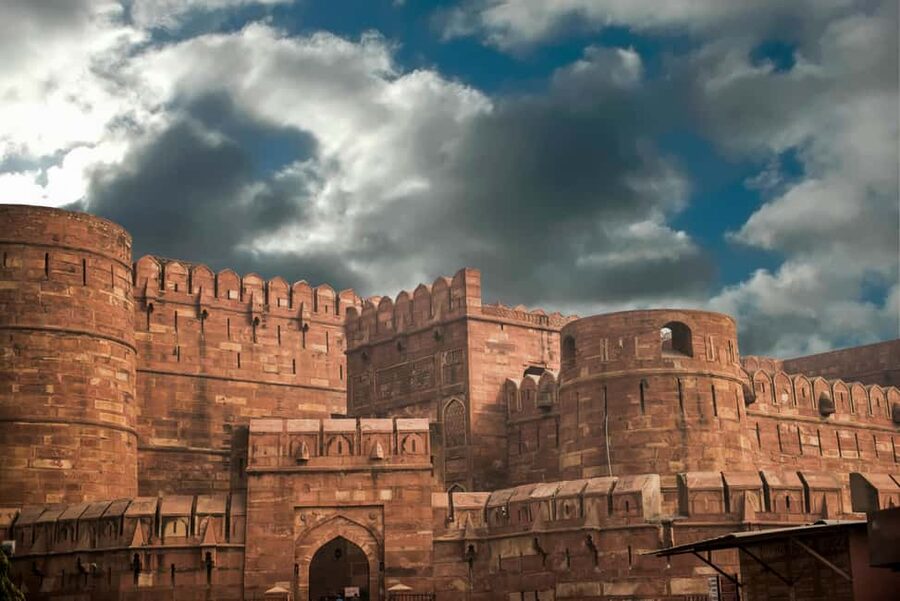
The tour begins at Amar Singh Gate, the main entry for visitors. That first step matters because you’re not just wandering in—you’re getting oriented for the rest of the fort.
Right away, expect bag checks at the entrance. This is one of those realities you can plan around: avoid large bags and only bring what you genuinely need inside. If you show up with a big daypack, you may lose time sorting it out, and Agra Fort doesn’t reward impatience.
Also plan your timing for photos right after entry. The fort can feel like it’s pressing you forward—big gates, strong geometry, and wide lines. Early on, you’re still fresh, and your camera will cooperate better before the walking and sun do their thing.
Diwan-i-Am and Diwan-i-Khas: where rule was performed
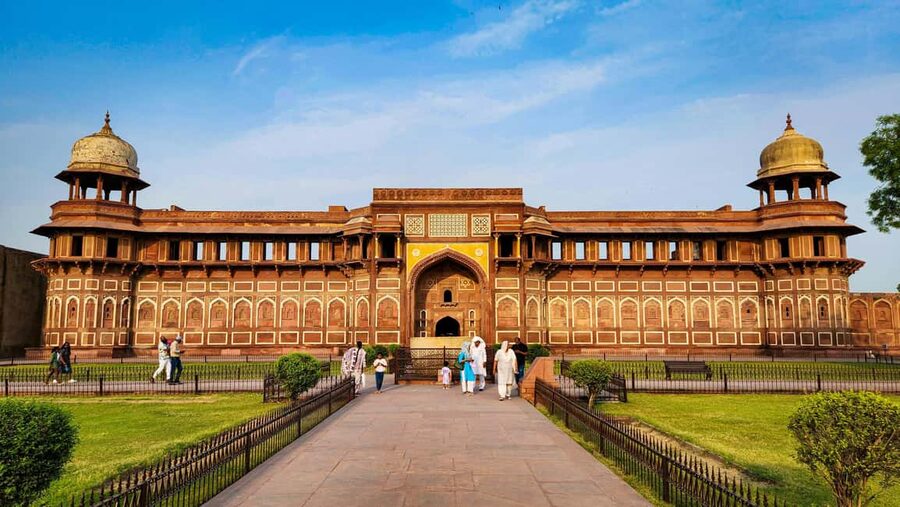
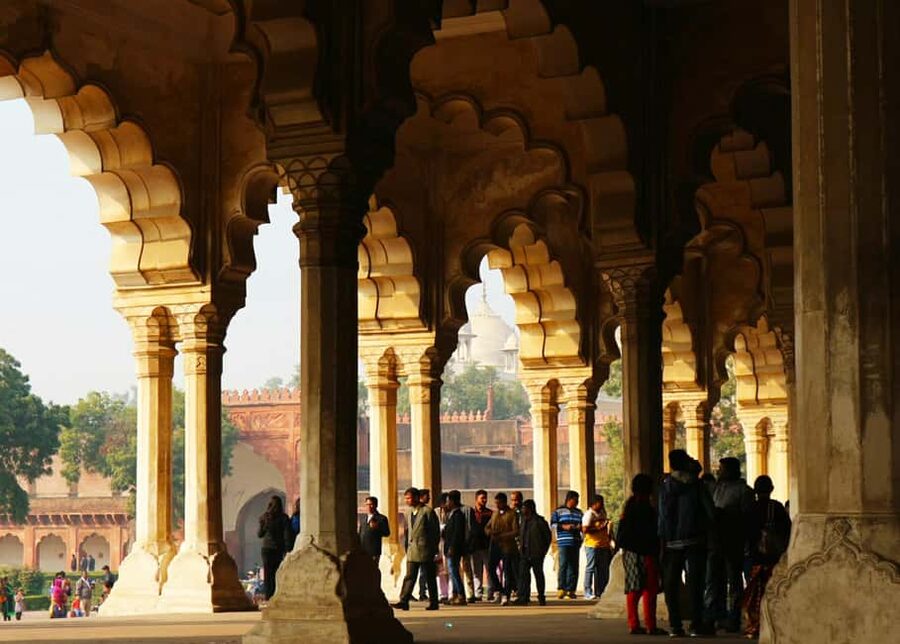
Inside the fort, you’ll spend time in Diwan-i-Am and Diwan-i-Khas. These aren’t just impressive halls. They explain the Mughal way of governing through spaces: public audience versus more private access.
When you’re standing in these chambers, the guide’s job is to connect architecture to behavior. The pillared layout, the scale of the rooms, and the way light moves around openings all reinforce how authority was staged. Even if you’ve read names like Akbar, Jahangir, and Shah Jahan before, the rooms help you understand the lived reality of court life—where conversations weren’t casual, and access wasn’t random.
A big practical plus here: with a guide, you’re less likely to miss the “why” behind what you’re seeing. You might know the names of the halls. The guide helps you understand why people would have traveled through them, paused where they paused, and looked where they looked.
Jahangiri Mahal and the Mughal design mix you can see
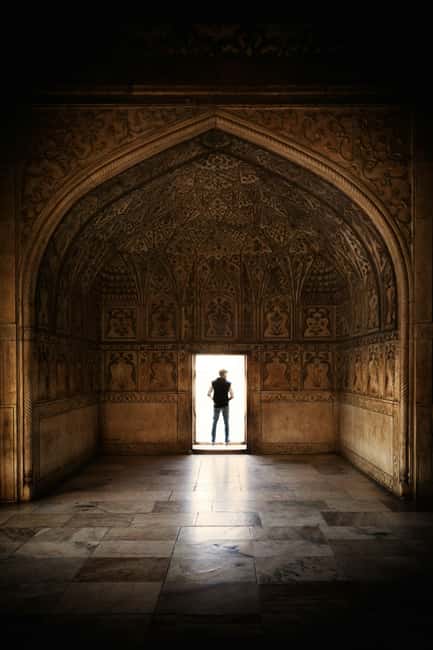
Next up is Jahangiri Mahal, where the fort’s style becomes a fun puzzle. You’ll also hear stories tied to how Mughal architecture blended influences. The fort complex is often described as a blend of Rajput, Persian, and Islamic design ideas, and you can actually spot that feel in ornamentation and form.
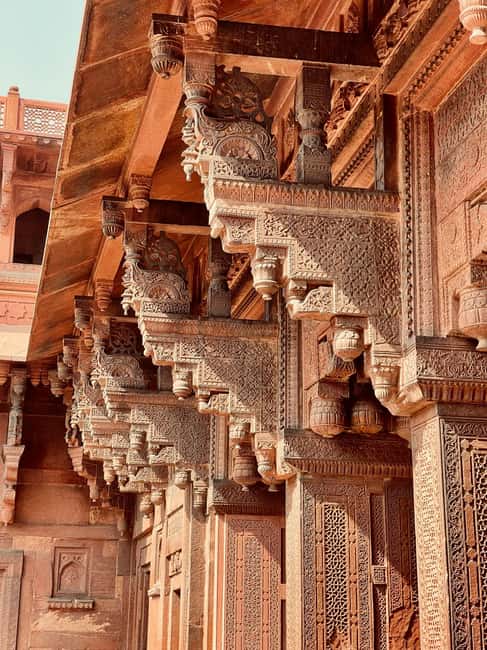
This is where you’ll start noticing details that don’t announce themselves. Mughal arches, jharokhas, marble carvings—these elements aren’t just decoration. They’re part of how the buildings controlled views, framed people, and created moments of drama.
If you like architecture, this stop is worth your full attention. The tour pace is steady enough that you can stop and look without constantly feeling rushed. And if you’re more of a story person than an ornament person, you’ll still get enough context to make the carvings make sense.
The Peacock Throne spot and the politics of movement
At Agra Fort, “famous object” points can either be distracting or useful. Here, the guide’s approach turns them into anchors. You’ll stand where the Peacock Throne once dazzled onlookers, and the point isn’t to make you stare at nothing. It’s to help you picture the power display that turned architecture into a stage.
The fort is all about movement—who moves where, who sees what, and who is allowed inside. When you have a route that includes key halls and palaces, you understand that movement as part of governance. The guide ties it together so you’re not just collecting landmarks.
Shah Jahan, Aurangzeb, and Musamman Burj: the story behind the stone
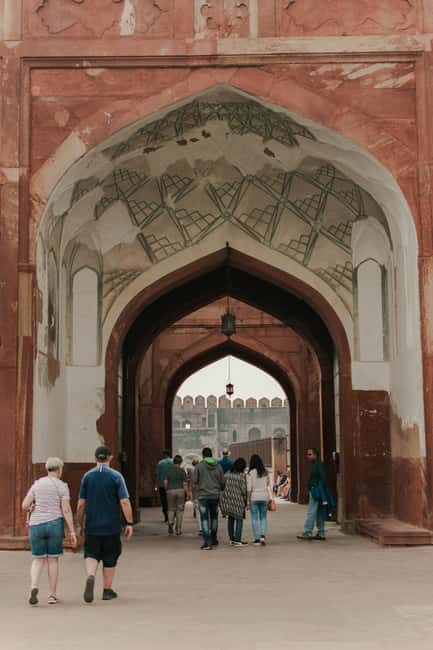
One reason people love Agra Fort is the emotional punch built into its layout. This tour points you to the spot where Shah Jahan was imprisoned by his son Aurangzeb, and it doesn’t treat it like a trivia fact. You’ll connect that imprisonment story to later events in the fort complex.
Then you reach the Musamman Burj—a standout stop because it ties tragedy to beauty. This is where Shah Jahan spent his final days, and the famous connection is the view toward the Taj Mahal. Standing here, the experience can feel bittersweet in a way no photo can replicate.
If you’ve already seen the Taj Mahal or you plan to soon, this stop changes how you interpret it. It’s not only a monument to love or craftsmanship. It becomes part of a larger, harsher timeline—power, conflict, and longing built into the geography.
Mirrored palace and Anguri Bagh gardens: a softer side of power
Not every Mughal story is told through punishment and court politics. The tour includes two stops that shift the mood: the mirrored palace and Anguri Bagh.
If the mirrored palace is accessible during your visit, you may get a chance to step inside. The guide helps you notice what the mirror surfaces do to light and space, so you’re not just walking through a pretty room—you understand why it would have mattered to royal life.
Then you move to Anguri Bagh, known for geometric gardens. This is where the tour becomes visually satisfying. Gardens like this weren’t random decoration. They were a planned space for atmosphere, privacy, and display. Walking the garden layout with context makes it easier to understand how Mughal queens would have used and experienced such spaces.
If photography is your thing, this is also where your camera tends to come alive—patterns, symmetry, and bright geometry can make photos look great even without perfect weather.
Your guide makes the difference: Gagan and Shahid Khan style notes
The strongest reviews point to one theme: the guide matters. Here’s why that’s not just a soft compliment.
Gagan is described as arriving on time, communicating clearly where and when to meet, and taking great pictures at key spots. One review also mentions he’s patient and can wait if you’re really late. In a fort like this, that patience helps your whole timing stay intact instead of collapsing.
Shahid Khan is another name you’ll hear connected with great energy and detailed explanations. One review notes he’s active, enthusiastic, and especially good at pointing out the best places to view the Taj Mahal. That kind of guidance saves you from wandering around trying to figure out where the “right” angle might be.
A third practical point: good guides help you handle the entrance area without getting pulled into scams or pressure from opportunistic photographers and vendors. If you’ve ever felt your head swiveling every time someone calls out, you’ll appreciate having a guide who’s alert to that environment.
Photos, shoes, and the fort rules that keep things smooth
Here’s your practical checklist.
Bring comfortable shoes. The fort is huge, the surfaces can be uneven, and you’ll be walking longer than you expect from a “one-hour” label. If your shoes are cute but not stable, your feet will vote against the tour halfway through.
Bring a camera. Photography is allowed, and you’ll find plenty of angles where the guide will tell you where to stand.
For tech: drones and tripods are usually prohibited without special permission. So if you’re traveling with gear, plan for the normal restrictions rather than hoping it works out at the gate.
One more thing: bag checks are real. Keep your bag small enough that you don’t have to negotiate with security for ten minutes.
Pairing it with the Taj Mahal: 2.5 km is close enough to plan
Agra Fort and the Taj Mahal are about 2.5 km apart, and this matters because the fort’s story lines up beautifully with the Taj Mahal view.
If you’re doing both in one day, this tour gives you context first—especially around Shah Jahan’s imprisonment and the Musamman Burj viewpoint link. Then when you walk around the Taj Mahal, you’re not only looking at marble. You’re recalling a timeline and a location you just learned.
You’ll want to manage your day so you’re not rushing between sites. The fort’s pace is guided and focused, but it still requires energy. If you schedule the Taj Mahal immediately after, wear shoes you can handle both walking and stairs.
Price and value: is $6 worth it?
At about $6 per person for a 1-hour guided UNESCO heritage walk, you’re paying for direction and interpretation, not for transport. Transfers aren’t included, so you’ll handle your own getting there.
Is it worth it? For most people, yes—if you care about understanding what you’re seeing and you want the visit to feel efficient. A fort this large can eat your attention quickly if you’re trying to self-navigate. The guide reduces that time cost and adds story value at the same time.
The biggest “value win” is that you hit the key named stops—Diwan-i-Am, Diwan-i-Khas, Jahangiri Mahal, Musamman Burj, mirrored palace if accessible, and Anguri Bagh—within a set, manageable duration.
The “value miss” happens if you don’t want a guided route at all and you’d rather wander freely. If that’s you, a self-guided visit might feel cheaper. But if you want your time to count, this price is hard to argue with.
Who this tour is best for
This tour fits best if you:
- want a focused, time-smart way to experience Agra Fort
- enjoy architecture plus story, not only one or the other
- like guided help at photo spots and viewing areas
- prefer a private group experience over a crowded shuffle
It might be less ideal if you:
- have mobility issues that struggle with uneven surfaces
- hate walking through large historic complexes, even for a short duration
- expect hotel pickup (transfers aren’t included)
Should you book Agra Fort: Guided UNESCO Heritage Walking Tour?
I’d book it if you’re doing Agra with limited time and you want your visit to feel guided, not random. The stops cover exactly the parts that make the fort meaningful: audience halls, palace spaces, the prison narrative, and the garden-and-mirrors side of Mughal life.
I’d pass only if you want a slow, unstructured explore where you can stop as long as you like at every corner. With this tour, the pace is built for a one-hour hit list. That’s the trade. For many people, it’s the right trade.
If you can, wear solid shoes and bring a camera. Then show up with curiosity. The guide’s job is to turn “big fort” into something you can actually follow—and when you do, Agra Fort lands harder than you expect.
FAQ
How long is the Agra Fort guided walking tour?
The tour lasts 1 hour.
Where does the tour start?
You’ll start at Amar Singh Gate, which is the only entry for visitors.
Is this tour private?
Yes, it’s listed as a private group.
What languages are the guides?
The live guide offers English and Hindi.
How much does the tour cost?
The price is listed as $6 per person.
Is transportation or transfers included?
No. Transfers are not included.
How do I find the guide on the day of the tour?
You’ll receive the guide’s contact details through WhatsApp (or by email if you don’t use WhatsApp) one day before your tour. The WhatsApp number is also shown on your booking voucher.
Can I cancel for a refund?
Yes. You can cancel up to 24 hours in advance for a full refund.
What should I bring?
Bring comfortable shoes and a camera.
Is photography allowed at Agra Fort?
Photography is allowed. Drones and tripods are usually prohibited without special permission.