REVIEW · BOSTON
Boston: Votes for Women History Tour of Back Bay
Book on Viator →Operated by Hub Town Tours · Bookable on Viator
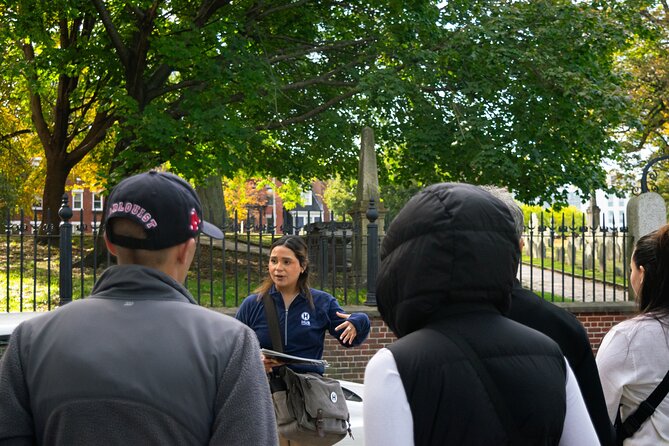
Boston’s women’s suffrage story is right outside. This small-group walking tour links key suffrage figures to the Back Bay streets and landmarks where ideas turned into action, guided by historian Maura. It’s also a solid value at $35, because you’re mainly outside and most stops are free to see.
Two things I really like: the way the tour turns regular buildings into clues about the fight for the vote, and the fact that the group stays small (15 max), so questions don’t get swallowed. One watch-out: it’s a standing-and-walking experience, so if you have trouble standing for extended periods, it may not be your best match.
You’ll also finish in a meaningful spot—right at the Boston Women’s Memorial—so the last leg doesn’t feel like a random end point. The route is about 2 hours 30 minutes at a moderate pace, and it’s offered in English with a mobile ticket.
In This Review
- Key points to know before you go
- Boston’s Votes for Women tour: why Back Bay works so well
- Finding your start at Make Way for Ducklings
- Boston Public Garden and the suffrage “vibe shift”
- Marlborough Street: Pauline A. Shaw and the real arguments
- The College Club of Boston: women built institutions
- RH Boston and Katherine McCormick’s protest
- Copley Square, Boston Public Library, and the offices behind the push
- Boston Women’s Memorial: where the walk lands
- Price, time, and who should take this tour
- Should you book the Boston Votes for Women Back Bay walking tour?
- FAQ
- How much does the Boston Votes for Women History Tour of Back Bay cost?
- How long is the tour?
- What time does the tour start?
- Where does the tour start and where does it end?
- What group size should I expect?
- Is the tour offered in English?
- Are museum tickets included?
- Are the landmark stops free to visit?
- Is this tour suitable for people who have trouble standing for long periods?
- What happens if the weather is bad?
Key points to know before you go
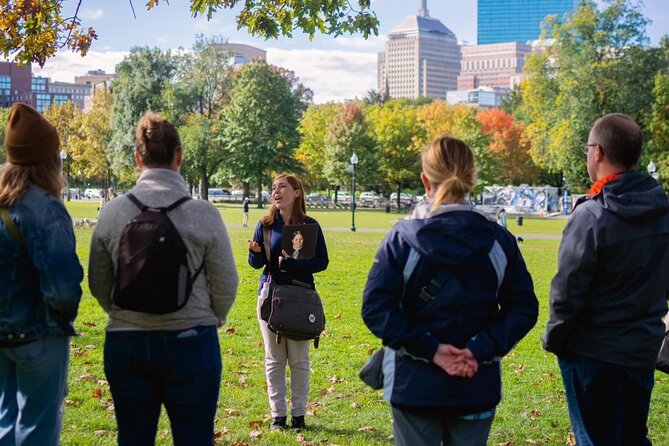
- Small group, real Q&A: a max of 15 guests means you can ask Maura questions and actually get answers.
- Back Bay landmarks, not just names: you’ll connect women’s rights history to buildings you may have walked by before.
- Most stops are free: many landmark stops are listed with free admission, and you won’t be paying to get into museums along the way.
- Built for outdoors: the experience depends on good weather, since it’s primarily a walking route.
- Starts at a recognizable children’s book sculpture: Make Way for Ducklings is your launch point, not an abstract meeting place.
Boston’s Votes for Women tour: why Back Bay works so well
Boston does history well, but the best tours make you see it. This one uses the Back Bay grid to keep the story anchored to place. You’re not stuck reading plaques; you’re walking between sites tied to pro-suffrage and anti-suffrage organizing, plus the women who pushed public meetings, clubs, and institutions into existence.
The format is also practical. You’re out for about 2 hours 30 minutes, and you’ll hit a sequence of stops that feel like a guided storyline through the city rather than a series of disconnected photos. With a 15-person maximum group, you’re more likely to get the context you need to understand why each person mattered.
One more thing: the tour doesn’t rely on fancy extras. There are no period costumes, and museum admissions aren’t included, which keeps the focus on walking, looking, and talking.
You can also read our reviews of more historical tours in Boston


Finding your start at Make Way for Ducklings
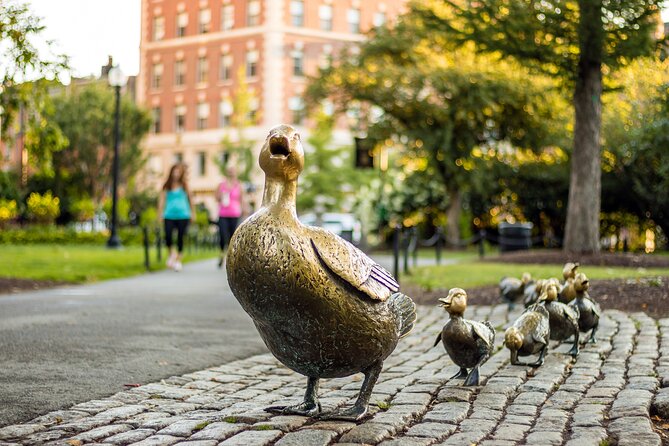
The tour begins at Make Way for Ducklings (4 Charles St, Boston). It’s an easy landmark to spot and a fun way to get your bearings fast. Even if you’ve never read the book, the sculpture has that “okay, I’m really in Boston” feeling.
From the start, the route also signals what kind of tour this is. Instead of jumping straight into distant monuments, you begin in a part of the city where you can quickly orient yourself. That matters because the rest of the walk moves through the Back Bay’s best-known outdoor areas—places you can mentally keep track of while Maura ties them to women’s rights history.
Tip: if you’re arriving early, take a minute to look around the immediate block. You’ll be walking through a lot of built-in “Boston details,” like street width, building lines, and the way the city funnels you along certain corridors.
Boston Public Garden and the suffrage “vibe shift”
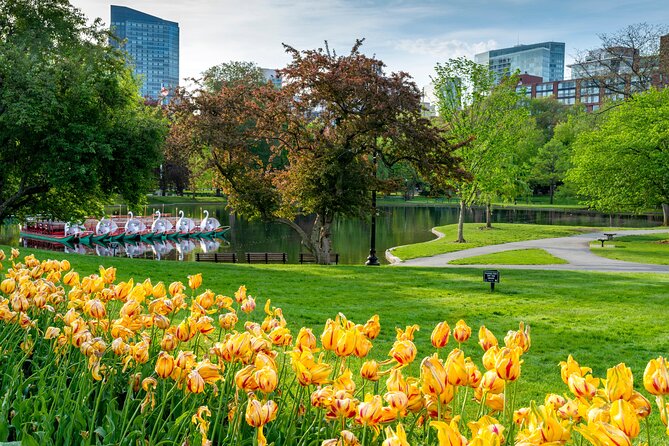
Your first major stop is the Boston Public Garden, established in 1837 as the first public botanical garden in the United States (free admission is noted). It’s a perfect opener because it gives you a calm setting before the tour turns toward sharper questions: who had access to public life, who didn’t, and how women argued for change.
Right in this area, you’ll also see the equestrian statue of George Washington by Thomas Ball, commissioned in 1859. This doesn’t just serve as a famous photo stop. It gives the tour a baseline of public power and public symbolism—useful when you hear how suffrage leaders fought for women to be part of that civic space.
Then you get the shift: the tour starts linking public-facing spaces to the people who tried to widen public participation. It’s an easy way to understand suffrage as more than ballots and speeches—it was also about visibility.
What to consider: the Public Garden is popular and busy on many days. Even if the tour moves smoothly, you may have moments where you’re sharing sidewalks with regular foot traffic.
Marlborough Street: Pauline A. Shaw and the real arguments
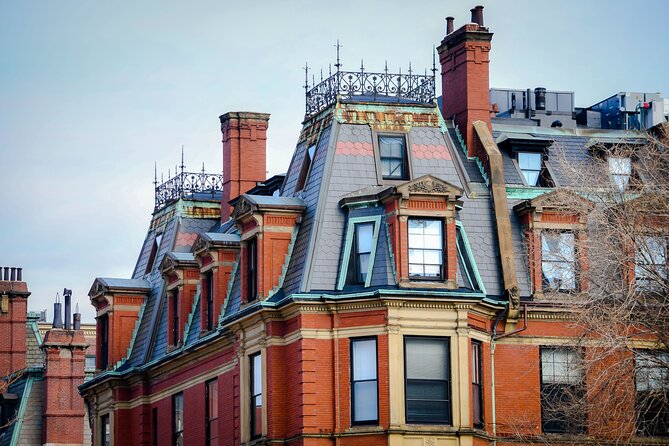
One of the most direct “this person really mattered here” stops is 6 Marlborough St, home of Pauline A. Shaw. She was a financier of Boston’s women’s suffrage movement and founded the Boston Equal Suffrage Association for Good Government. That single sentence is the point: suffrage wasn’t only public speaking. It needed money, organization, strategy, and institutions.
And that’s where this tour is strongest. Maura connects names to the built environment so you understand how campaigns actually functioned—who funded work, who built associations, and how persuasion had to work on multiple fronts.
From there, the walk moves through an area tied to several key figures, with a mix of pro-suffrage and anti-suffrage perspectives. You’ll pass sites associated with:
- a church that later became a center of the Transcendentalist movement
- Elizabeth Putnam, an anti-suffragist and the first woman to preside over a state electoral college
- Julia Ward Howe
- Blanche Ames, a pro-suffrage cartoonist and an early advocate for birth control
- the Ames Mansion area, where politics and influence show up on both sides, including Mary Shreve Ames (anti-suffrage) and Blanche Ames (pro-suffrage)
The tour doesn’t treat suffrage as a straight line with a single cast of heroes. Instead, it shows that women held different views and fought with the tools they had—religious networks, clubs, media, and political structure.
There’s also a stretch along a historic, long avenue with trees, grassy areas, park benches, and statues—so you’re not just moving from corner to corner. Those pauses matter. They let you absorb the names Maura is connecting, and they give you a break from the “constant walking” feeling.
The College Club of Boston: women built institutions
Stop 3 is the College Club of Boston, described as the first women’s college club in the United States. That’s a big deal, because it reframes the story. Suffrage doesn’t land from one big moment. It’s fed by education, networking, and groups that keep ideas alive between major campaigns.
In plain terms: clubs helped women practice leadership in a world that often denied them leadership roles. When you see a physical location tied to that, the whole movement feels less abstract.
This stop also works well because it’s short (about 10 minutes), so you get the key facts without losing momentum. For a walking tour, that balance is worth it.


RH Boston and Katherine McCormick’s protest
Stop 4 brings you to RH Boston | The Gallery at the Historic Museum of Natural History. The building housed the Museum of Natural History from 1864 to 1951, and it was previously connected to MIT lab work where Katherine McCormick protested popular fashion as part of the suffrage movement.
You might not expect fashion to show up in a suffrage tour, but that’s exactly the point. The tour is showing you how social norms and public respectability connect to political rights. If women are expected to stay quiet and “stay in their place,” then changing attitudes about what women do and wear becomes part of the broader argument.
The building itself is also noted for being one of the top 10 buildings in the U.S. according to the American Association of Architects. That helps you switch gears from people to place: this is where architecture and civic prestige meet the story of women trying to claim public influence.
One practical note: this stop is outside-looking / landmark-focused. If you’re hoping for museum-style interior time, you should know admission inside museums isn’t included.
Copley Square, Boston Public Library, and the offices behind the push
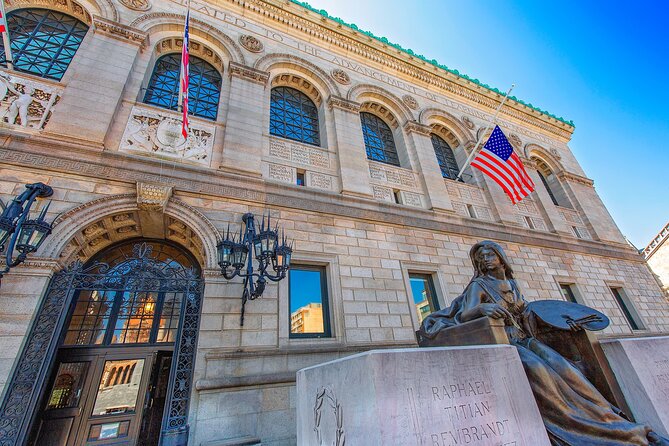
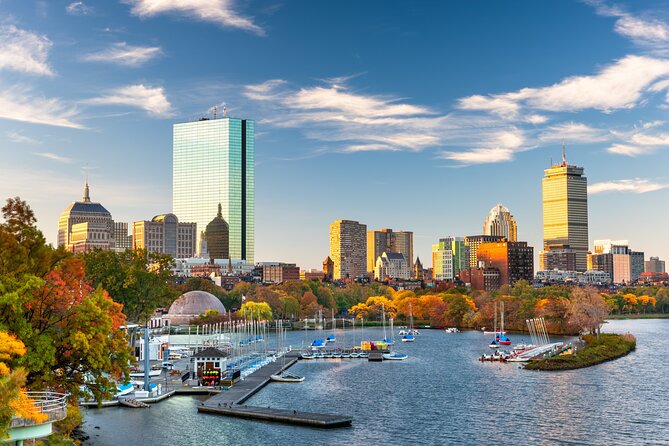
Next you reach Copley Square, built as Boston’s cultural center. It’s iconic, and the tour uses that visibility as a lead-in to organization. From there, you move to the Boston Public Library (founded in 1848 and noted as the third-largest public library in the U.S.), another free landmark stop.
Here’s where the story gets especially “Boston.” You’ll learn about organizations that operated in spaces connected to the library area—places where suffrage efforts weren’t only public events but also day-to-day office work.
The tour also ties these areas to specific organizational footprints, including:
- an area once known as Chauncy Hall, with offices for pro-suffrage organizations including the Massachusetts Woman Suffrage Association and The Women’s Journal
- a location tied to the Massachusetts Association Opposed to Further Extension of Suffrage to Women, connected to the Kensington Building (demolished in 1967)
That inclusion of opposing organizations is important. It shows the vote fight wasn’t just about persuasion from one side. It was also an organized resistance movement, with its own supporters and messaging.
Then, you hit a couple of other “how Boston layers over itself” moments:
- the finish line of the Boston Marathon (an unexpected but fitting marker of civic participation)
- Commonwealth Ave’s famous shopping and dining street life
- a site that was formerly a Spiritualist Temple, where women were allowed to lead public meetings
If you like walking tours that connect the dots between culture and politics, this stretch is a highlight.
Boston Women’s Memorial: where the walk lands
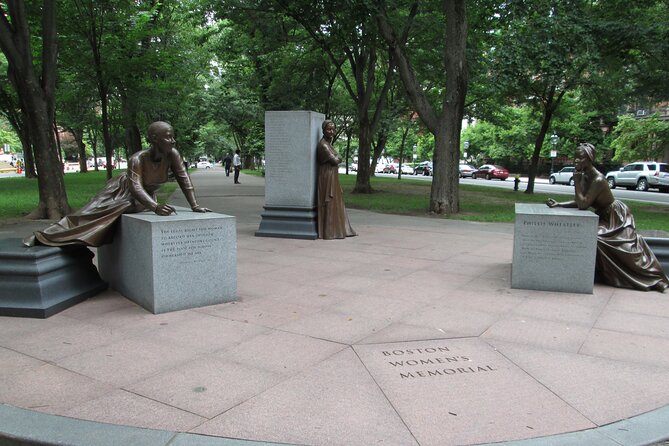
Your final stop is the Boston Women’s Memorial (256 Commonwealth Ave). It’s designed around three figures: Abigail Adams, Phillis Wheatley, and Lucy Stone. This ending point matters because it brings the story into one visual statement rather than stopping on another street corner.
It also works for photos and reflection. The memorial is close to the center of the action, but the theme gives you a mental pause: you’ve gone through organizing, disagreement, institutions, and symbolic public spaces. Now you’re left with the names and what they represent.
From a logistics standpoint, the tour ends on the Commonwealth Avenue Mall beside the memorial, about 0.8 miles from the start. If you’re planning the rest of your day, you’re well positioned to keep exploring Back Bay or head toward Downtown.
Price, time, and who should take this tour
At $35 per person for about 2 hours 30 minutes, this tour is priced in a way that makes sense for what you get: a guided storyline, a small group (max 15), and a route that stays mostly outside with free landmark stops.
You’re also not paying for museum entry during the experience, which keeps the cost from creeping upward. The trade-off is simple: if you want interior museum time or long indoor discussions, you’ll need to pair this with separate museum visits.
Who it fits best:
- People interested in women’s rights history and how it played out in Boston specifically
- First-time visitors who want more than the usual “big landmark circuit”
- Anyone who likes walking tours where buildings matter, not just the facts in the guide’s mouth
Who might want to skip or plan carefully:
- Anyone who struggles with standing for extended periods, since it’s a moderate fitness walking route
- People who want strictly indoor stops or lots of museum time (those aren’t the focus here)
Should you book the Boston Votes for Women Back Bay walking tour?
Yes—if you want suffrage history tied to real places, not just a lecture. This tour’s value comes from the way it connects names like Pauline A. Shaw, Julia Ward Howe, Blanche Ames, and Katherine McCormick to the streets and landmarks around them, and it does it in a small-group format with a guide who makes the story feel personal.
I’d book it if you’re:
- in Boston for a short trip and want a high-impact route
- curious about both pro-suffrage and anti-suffrage sides of the story
- the type who likes seeing how civic life, social norms, and politics overlap
I’d think twice if you:
- have limited tolerance for standing and walking
- don’t enjoy outdoor walking on weather-dependent days
If your goal is to leave with a sharper understanding of Boston’s women’s rights struggle—and a few new names to read up on—this is a strong choice.
FAQ
How much does the Boston Votes for Women History Tour of Back Bay cost?
It costs $35.00 per person.
How long is the tour?
The duration is about 2 hours 30 minutes.
What time does the tour start?
The start time is 10:00 am.
Where does the tour start and where does it end?
It starts at Make Way for Ducklings, 4 Charles St, Boston, MA 02116, and ends at the Boston Women’s Memorial, 256 Commonwealth Ave, Boston, MA 02116.
What group size should I expect?
The tour has a maximum of 15 travelers.
Is the tour offered in English?
Yes, it’s offered in English.
Are museum tickets included?
No. Admission inside museums is not included.
Are the landmark stops free to visit?
Many stops listed on the route note free admission, and the tour includes visiting landmarks without charging you museum entry fees.
Is this tour suitable for people who have trouble standing for long periods?
It isn’t recommended for travelers that have trouble standing for extended periods, and you should have a moderate physical fitness level.
What happens if the weather is bad?
The experience requires good weather. If it’s canceled due to poor weather, you’ll be offered a different date or a full refund.