REVIEW · ANURADHAPURA
Anuradhapura: 14 Ancient City Sites Tuk Tuk Tour
Book on Viator →Operated by RAJARATA ANCIENT City · Bookable on Viator
Anuradhapura is a city of big moments, scattered far apart. This private auto-rickshaw tour strings together 14 major ancient landmarks without wasting time negotiating or hunting for the next stop. You get a digital audio guide so you’re not just looking at stupas and temples, you’re understanding what you’re seeing as you go.
What I really liked is the front-door pickup and drop-off (hotel or railway station). The other big win is the audio guide, which helps you move through a dense circuit of religious and royal sites without feeling lost. The route also stays realistic for a half day, since a tuk-tuk handles the distances.
One consideration: you’ll still pay for entry tickets separately for the UNESCO sites, and some stops involve walking over hot sand or tiles. If you’re not used to that, plan footwear and socks accordingly.
In This Review
- Key reasons this tour makes sense
- Why a private auto-rickshaw route works so well in Anuradhapura
- Price and what you really get for $46.40 per group
- Pickup, mobile ticket, and how the 4–6 hour pace feels
- Isurumuniya Temple: carvings near Tissa Wewa
- Ranmasu Uyana: the Magul Uyana park stop
- Mirisaveti Stupa: the Dutugamunu story behind the relics
- Sri Maha Boodhi Temple: a 2,300-year-old human-planted fig
- Ruwanwelisaya: the big hemispherical stupa
- Dagoba of Thuparama: bell-shaped and restored after destruction
- Lankarama Stupa, Sandakada pahana (Moonstone), and the craft details
- Rathna Prasadaya & Guardstone: symbols of protection and prosperity
- Abhayagiri monastery ruins: from the main refectory to Abhayagiri Dagaba
- Mahamevnāwa Park Samadhi Statue and Kuttam Pokuna’s twin baths
- Jethawanaramaya: the tall stupa that anchors Jetavana ruins
- Small practical tips that matter in the heat and on tile
- Who should book this 14-site audio tuk-tuk tour
- Should you book it or DIY Anuradhapura instead?
- FAQ
- How long is the Anuradhapura 14 Ancient City Sites tuk tuk tour?
- What is included in the tour price?
- Are pickup and drop-off included?
- How much is the tour, and how many people can it cover?
- Are entry tickets included for the UNESCO sites?
- Is this a private tour?
- What places are visited on the route?
- Do I need to bring anything like an audio device or ticket?
- What if the weather is bad?
Key reasons this tour makes sense
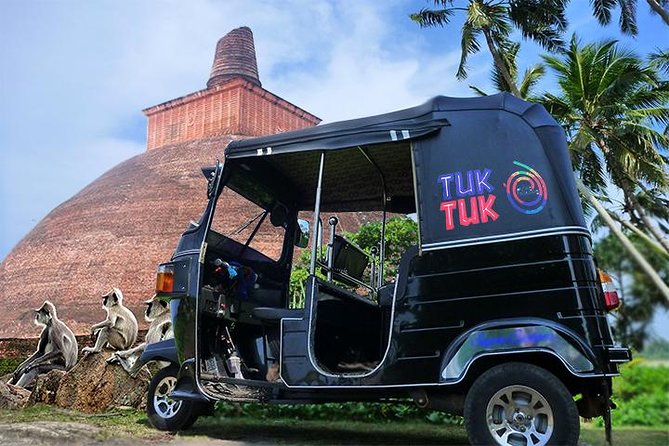
- Private tuk-tuk for up to 3 means you’re not squeezed into a crowded group schedule.
- Audio guide for every stop turns quick site visits into something you can actually remember.
- Hotel or railway pickup saves you time in a spread-out ancient city.
- Bottled water and parking fees included, so you’re not constantly making small purchases.
- Four to six hours keeps the day focused without feeling rushed to see everything.
Why a private auto-rickshaw route works so well in Anuradhapura
Anuradhapura isn’t a tidy “walk-everything” kind of place. The sights are spread out, and if you rely on hailing tuk-tuks or negotiating each ride, you can burn your time before you even reach the first landmark. This tour solves that with a private half-day auto-rickshaw plan that moves you from one major site to the next.
The value is in the combination: you’re getting transport plus an organized route, not just a vehicle. And since you’re stopping at 14 points, the spacing between them matters. A tuk-tuk driver can shift you quickly when one area runs hot, busy, or simply takes longer than expected.
Another thing I appreciate is that the tour is set up to be flexible within a half-day window. That matters because ancient sites often reward slow looking. You can spend your time on the details that catch your eye, then keep the pace where it fits the day.
If you want a smart “greatest hits” approach without turning your day into a logistics puzzle, this is a good fit.
You can also read our reviews of more city tours in Anuradhapura


Price and what you really get for $46.40 per group
The tour price is $46.40 per group (up to 3), with a typical booking lead time of about 9 days. That base price covers the practical stuff you’d otherwise pay for or manage yourself: pickup/drop-off, the private auto-rickshaw, bottled water, parking fees, and the digital audio guide.
Then there’s the separate ticket cost. Entry tickets for the UNESCO World Heritage sites are listed as $30.00 per person (for 8 UNESCO sites). That’s the part you need to plan for up front, because it’s where the total cost changes based on how many people are in your group.
Here’s the simple way to think about value:
- If you’re traveling as one person, you pay the $46.40 base plus $30 per person entry tickets.
- If you’re traveling as a group of 3, the $46.40 base gets split three ways, while the entry cost still scales per person.
For many people, the tipping point is whether the audio guide and route save enough time and effort to justify the setup. In Anuradhapura, they often do, because you’re visiting multiple key monuments in one go, and you’re not guessing which sites to hit first.
Pickup, mobile ticket, and how the 4–6 hour pace feels
This is a private, half-day tour that runs about 4 to 6 hours. You also get pickup and drop-off from your hotel or railway station, which is a big deal if you’re not staying right in the main historic core.
You’ll use a mobile ticket for this experience, and the tour includes a digital audio guide for all the sites on your route. That audio component matters because you’ll often be standing in front of religious monuments that have lots of meaning, names, and details. Without some guidance, it can blur into “another stupa” quickly.
The audio guide helps you keep your bearings. You’ll get context while you’re still onsite, so the time you spend walking between stops turns into real learning instead of just photos and quick glances.
One more practical point: because this is a half-day plan with many stops, you’ll feel best if you’re comfortable with short walks and repeated transitions. If you want one ultra-slow site day, consider pairing this with a lighter day elsewhere.
Isurumuniya Temple: carvings near Tissa Wewa
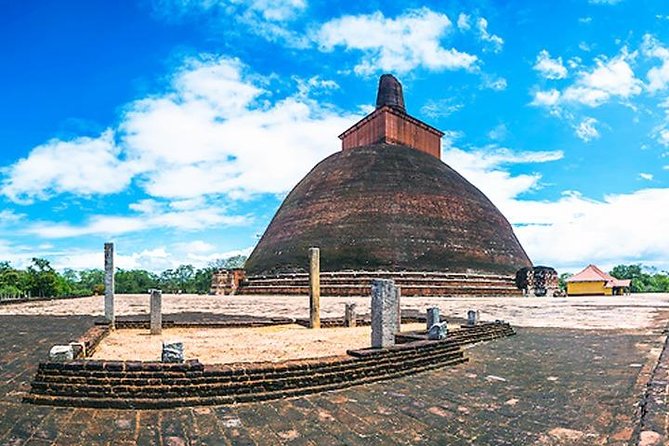
Your first stop is Isurumuniya Temple, near Tissa Wewa. This is a Buddhist temple area with four carvings of special interest, including the Isurumuniya Lovers, the Elephant Pond, and the Royal Family. These names are exactly what make the stop easier to appreciate quickly: you know what you’re looking for instead of just facing a wall of decoration.
Plan for this as a “detail-hunt” stop. Ten to twenty minutes can be enough if you focus. Look for the carving themes the audio guide points out, then shift your attention to the surrounding temple setting.
A drawback to know: carvings can get visually crowded if you’re rushing. Since you have multiple stops scheduled, it’s tempting to speed through. I’d keep your pace steady but intentional: spend a moment longer on the carvings and then move on rather than trying to see everything at once.
Ranmasu Uyana: the Magul Uyana park stop
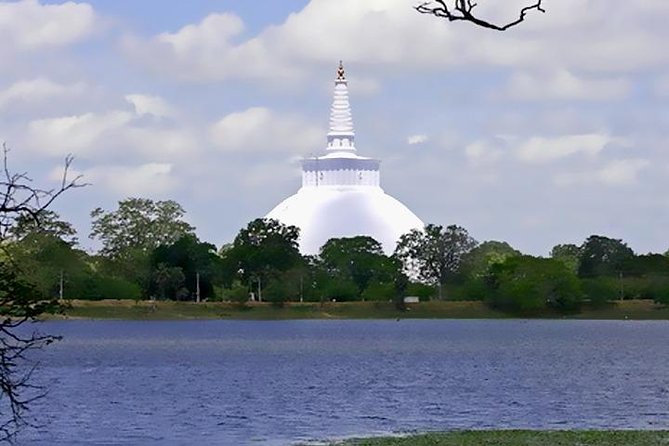
Next is Ranmasu Uyana, a park that contains the ancient Magul Uyana. It sits close to Isurumuni Vihara and Tissawewa, and it’s said to cover roughly 40 acres (about 40 ac).
This stop is a nice change of pace because it’s not only “monument viewing.” It’s about how the sacred city includes garden and park spaces as part of its religious and royal fabric. If you’ve been mainly focused on stupas and shrines, this is a good breath.
At about 40 minutes, you should have enough time to observe both the setting and the layout feel. Just remember: in hot conditions, shade and orientation can matter, so use your time wisely.

Mirisaveti Stupa: the Dutugamunu story behind the relics
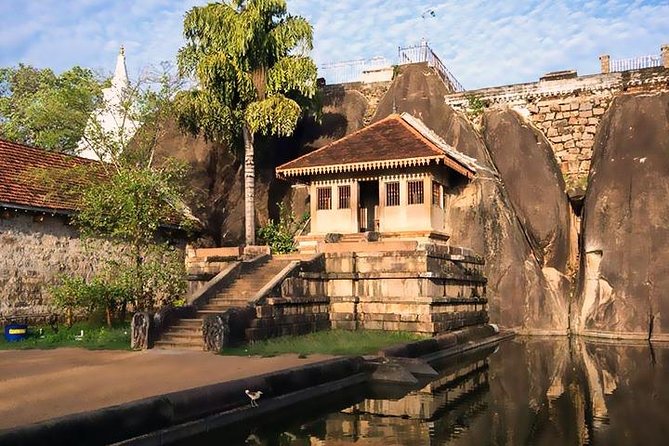
Then you’ll reach Mirisaveti Stupa, tied to a specific royal moment. According to the tour description, King Dutugamunu built the Mirisaveti Stupa after defeating King Elara. The story includes placing Buddha relics in the sceptre.
This is where the audio guide earns its keep. A stupa can look similar from a distance, but when you anchor it to a named king and an event, the site stops feeling generic. You’re not only seeing a structure; you’re learning the reason it exists.
Time here is shorter (about 10 minutes). That’s fine if you use that time to absorb the key story points from the audio, then observe the structure with those details in mind.
Sri Maha Boodhi Temple: a 2,300-year-old human-planted fig
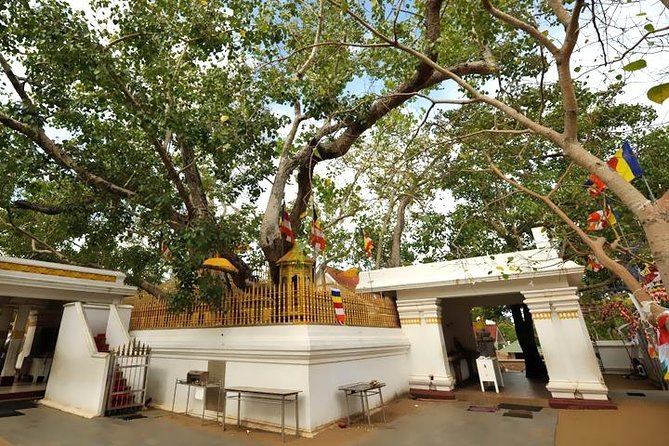
One of the most meaningful stops on your route is Sri Maha Boodhi Temple, home to the Sri Maha Bodhiya tree. The description says it’s the oldest tree known to have been planted by a human rather than by natural seeding, and it’s about 2,300 years old.
This isn’t just “nice scenery.” It’s a sacred focal point tied to devotion and continuity over centuries. If you care about religious symbolism, you’ll appreciate how quickly this stop gives you a strong anchor for everything else you see today.
Plan to give it at least the allotted time (around 20 minutes). The key is to stay present and look at the tree and temple space as a living act of reverence, not only as a historical landmark.
Ruwanwelisaya: the big hemispherical stupa
Next comes Ruwanwelisaya, described as a stupa with a hemispherical structure containing relics. It’s considered sacred to many Buddhists, and it’s credited to King Dutugemunu, built around c. 140 B.C.
This stop is your “scale moment.” Even if you’re not a stupa expert, you’ll feel the importance quickly because Ruwanwelisaya is central to Anuradhapura’s sacred identity. The audio guide context helps you notice what you might otherwise skip, like why the relic connection matters.
Time is roughly 20 minutes. I’d use that for a few angles: take a moment to look broad, then shift to the details where carvings or architectural features catch your eye, and finally return to the overall structure before moving on.
Dagoba of Thuparama: bell-shaped and restored after destruction
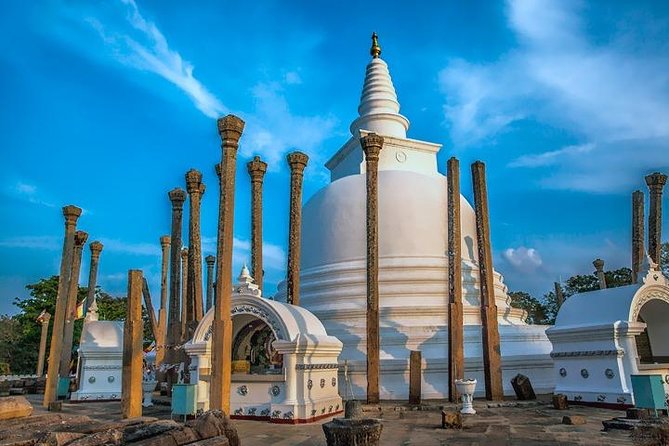
At Dagoba of Thuparama (also called Thuparamaya dagoba), the key feature is shape. The description notes it was built in the shape of a bell. It was destroyed from time to time, and during the reign of King Agbo II it was completely destroyed and then restored.
This stop is a reminder that monuments aren’t always frozen in time. They’re tied to a long chain of building, damage, and restoration. Even if you only have 10 minutes here, you can still get value by focusing on the bell-like form and the restoration story.
Short visit tip: don’t spend all your time trying to confirm every structural detail. Instead, use the audio guide explanation to “see” the form with the right context, then enjoy the monument as a symbol of continuity.
Lankarama Stupa, Sandakada pahana (Moonstone), and the craft details
Your route includes both Lankarama Sthupa and the Moonstone (Sandakada pahana), and together they bring attention to artistry you might miss.
Lankarama Sthupa is described as a stupa built by King Valagamba in an ancient place at Galhebakada. The description also says nothing is known about the ancient form of the stupa, and that later changes happened, though the text cuts off before explaining exactly how. What you can take from the provided info: this is a site tied to a known king, with historical uncertainty about the earliest form.
Then comes the Moonstone (Sandakada pahana), described as semi-circular stone slab carvings found across these moonstones. The pattern includes a half lotus in the centre and several concentric bands.
This is one of the best spots for slow looking. The Moonstone pattern rewards attention, and your audio guide can help you understand the layout. Don’t try to capture everything on your camera; focus on recognizing the half lotus and the band structure, then let the design sink in.
Rathna Prasadaya & Guardstone: symbols of protection and prosperity
After the Moonstone comes Rathna Prasadaya & Guardstone (pohoy ge and murgal). The tour description explains that the guardstones supporting the heavy stone balustrade started unadorned, but later became carved with symbols representing prosperity and protection.
This stop is a good example of why an audio guide helps. Those symbols don’t always register at first glance. With context, you’ll be more likely to notice the meaning behind what might otherwise look like decorative stonework.
Time is about 10 minutes, so keep it efficient: look at the guardstones, scan for the carved symbols, and use the audio to connect them to the themes mentioned in the description.
Abhayagiri monastery ruins: from the main refectory to Abhayagiri Dagaba
In the Abhayagiri area, you have two substantial stops: the Main Refectory of Abayagiri Monastery and then the Abhayagiri Dagaba.
The Main Refectory is a ruined building in the Abhayagiriya monastery premises. It’s described as the place where the daily al… (the text cuts off), but the point is clear: this was a core functional space within the monastery complex.
Then Abhayagiri Dagaba is described as historically a great monastic centre and a royal capital. The tour notes magnificent monasteries rose to many stories, roofed with gilt bronze or tiles glazed in brilliant colors, and it references the complex being to the north of the city.
This pair of stops helps you see the difference between everyday religious infrastructure and larger royal-monument scale. Even though you’re viewing ruins, the descriptions give you a framework: imagine the daily rhythm in the refectory, then zoom out mentally to the grand monastery visual impact suggested for Abhayagiri.
Time allocations here are around 20 minutes for the refectory and about 30 minutes for Abhayagiri Dagaba. I’d treat Abhayagiri Dagaba as your longer “look and interpret” stop today.
Mahamevnāwa Park Samadhi Statue and Kuttam Pokuna’s twin baths
Two stops that bring variety are the Samadhi Statue and the Twin Baths (Kuttam Pokuna).
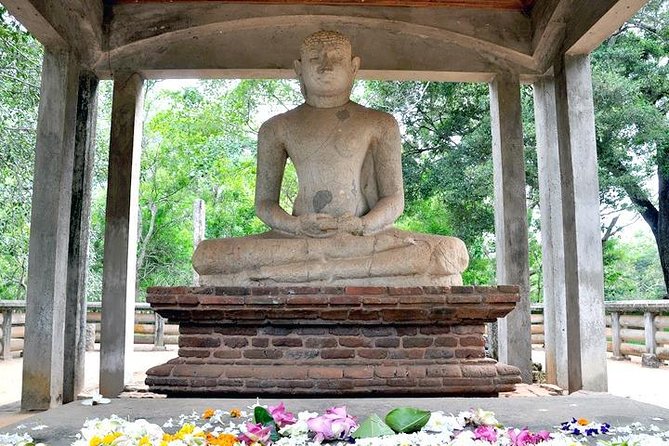
The Samadhi Statue is described as a Buddha statue at Mahamevnāwa Park in Anuradhapura. The Buddha is depicted in the Dhyana Mudra, the meditation posture associated with his first… (text cut). Even with the missing final word, you can still understand the visual focus: it’s a meditation pose, meant to reflect calm and practice.
Then comes Kuttam Pokuna (Twin Baths), described as one of the best specimens of ancient Sri Lanka’s bathing tanks and pools. The description says it’s a pair of pools built by the Sinhalese in the ancient kingdom of Anuradhapura.
This is a great contrast to the stupas. Instead of relic monuments and temple structures, you’re looking at functional, built-water heritage. If you’re someone who likes archaeology that connects to daily life, you’ll probably enjoy Kuttam Pokuna more than you expect.
Keep an eye out for surface details and how the pools are shaped. In a short visit (about 20 minutes), your goal is recognition, not mastery.
Jethawanaramaya: the tall stupa that anchors Jetavana ruins
Your last site is Jethawanaramaya, described as a stupa (Buddhist reliquary monument) in the ruins of Jetavana monastery. The description states it sits in the UNESCO world heritage city of Anuradhapura, and it’s at 122 metres (about 400 ft), noted as the world’s tallest stupa.
That size detail is the big headline. Even without comparing it to anything else, you’ll understand why this monument draws attention: it was designed to dominate the sacred skyline.
Time here is about 20 minutes. Use that time for your final broad look of the entire circuit. When you’ve already visited multiple stupas and temples, standing in front of Jethawanaramaya can feel like the payoff moment for the whole half-day route.
Small practical tips that matter in the heat and on tile
One tip that really helps: plan for your feet. A common issue at these sites is discomfort when you’re on hot sand and tiles. If you expect bare feet, or you’re the type who tends to remove shoes, bring socks to protect yourself. Even if you wear shoes, have some flexibility in your plan, because each site can ask different things about foot coverings.
Also bring water habits into your routine. Bottled water is included, but you’ll still want to pace it. Half-day tours with 14 stops can feel faster than the clock says, especially in bright sun.
If you’re sensitive to heat, treat mid-stop shade and slower pacing as part of the plan. The point isn’t to speed through sacred spaces; it’s to use the tuk-tuk to save time on driving so you can spend your energy where it counts.
Who should book this 14-site audio tuk-tuk tour
This tour is best for you if:
- You want a private half-day with pickup and drop-off rather than self-arranging each leg.
- You like the idea of a digital audio guide so the sites feel meaningful instead of random.
- You’re interested in Anuradhapura’s major religious landmarks, from Isurumuniya and Sri Maha Boodhi to Ruwanwelisaya and Jethawanaramaya.
It might not be ideal if:
- You want lots of free wandering time with no structure.
- You struggle with short walking segments between stops.
- You prefer a day focused on only one or two sites rather than a packed circuit.
Should you book it or DIY Anuradhapura instead?
I’d book this if your priority is efficiency plus context. The private transport and the audio guide work together in a place where distances add up. For many visitors, the biggest win is not just seeing 14 sites—it’s understanding why each one matters while you’re standing there.
Do consider the separate ticket cost for UNESCO sites (the $30 per person entry fee for 8 sites). If you’re traveling with only one person and cost sensitivity is high, it might feel less “cheap.” But if you value time saved, and you don’t want to negotiate logistics in a spread-out historic city, this setup usually feels worth it.
If you do book, wear socks and plan for heat. With that small prep, you’ll get a smoother, more comfortable day and come away with more than just photos.
FAQ
How long is the Anuradhapura 14 Ancient City Sites tuk tuk tour?
The tour runs about 4 to 6 hours.
What is included in the tour price?
The package includes a private auto-rickshaw tour, a digital audio guide for all sites, bottled water, and parking fees.
Are pickup and drop-off included?
Yes. Pickup and drop-off are offered from your hotel or railway station.
How much is the tour, and how many people can it cover?
It costs $46.40 per group for up to 3 people.
Are entry tickets included for the UNESCO sites?
No. Entry tickets for the UNESCO World Heritage sites are not included. The listed cost is $30 per person for 8 UNESCO sites.
Is this a private tour?
Yes. It’s a private tour/activity, and only your group participates.
What places are visited on the route?
The tour includes 14 stops such as Isurumuniya Temple, Sri Maha Boodhi Temple, Ruwanwelisaya, Twin Baths (Kuttam Pokuna), and Jethawanaramaya.
Do I need to bring anything like an audio device or ticket?
You’ll use a digital audio guide, and you receive a mobile ticket for the experience.
What if the weather is bad?
The experience requires good weather. If it’s canceled due to poor weather, you’ll be offered a different date or a full refund.