REVIEW · ANURADHAPURA
Anuradhapura ancient city tour with Travandgo tours
Book on Viator →Operated by Ashan Sri Lanka Tours · Bookable on Viator
Ancient ruins, neatly packed into a morning. This Anuradhapura ancient city tour is a smart way to see the big-name Buddhist landmarks without wasting time figuring out routes, entrances, or what you’re looking at. You’ll hit temple sites tied to the Mahavihara and Abhayagiriya worlds, starting at Isurumuniya Vihara area and working through major stupas and sculpted stonework.
I especially liked the flexibility of the guiding. If you’ve already visited several temples on your own day, the driver can swap in sites that feel more relevant, while still keeping the day focused. I also like that the tour is built around comfort and convenience: an air-conditioned vehicle and practical stops that fit into a 4 to 6 hour window.
One thing to consider: several stops list admission as not included, and there’s no lunch included. So plan on small extra costs for entry fees and bring a snack or budget time for food before or after the tour.
In This Review
- Key tour highlights that make a difference
- Why this Anuradhapura plan works (and how to use it)
- Getting to the sites: pickup, vehicle comfort, and the real schedule
- Stop 1: Isurumuniya Vihara area near Tissa Wewa
- Stop 2: Vessagiriya ruins and the three-boulder setting
- Stop 3: Jaya Sri Maha Bodhi and the early Buddhism timeline
- Stop 4: Mirisavetiya (Mirisaveti Stupa) and King Dutugamunu’s era
- Stop 5: Ruwanwelisaya, the Mahathupa shape, and relic context
- Stop 6: Thuparama’s Dagoba and the early post-introduction era
- Stop 7: Abayagiriya Stupa and the Valagamba connection
- Stop 8: Moonstone (Sandakada pahana) and the art details worth pausing for
- Stop 9: Samadhi Statue between Abhayagiriya Stupa and Kuttam Pokuna
- Stop 10: Kuttam Pokuna (Twin Baths) and the hydrology marvel
- Stop 11: Abayagiriya Stupa again, but with a different historical angle
- The driver factor: flexibility and photo help that feels personal
- What you should budget for (beyond the $25 tour price)
- Who this tour suits best
- Should you book this Anuradhapura ancient city tour?
- FAQ
- How long is the Anuradhapura ancient city tour?
- What time does the tour start?
- Is pickup included?
- Do I get an air-conditioned vehicle?
- Are admission tickets included for all sites?
- Is lunch included?
- Is this a private tour?
- What happens if the weather is poor?
- What is the cancellation policy?
Key tour highlights that make a difference
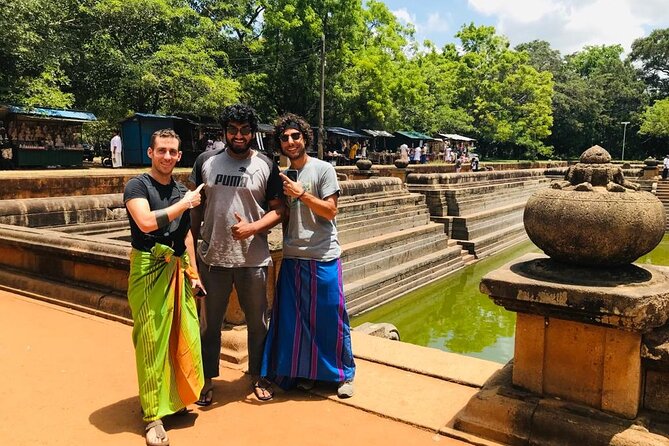
- Private group pace: You’ll tour as your own group, not alongside strangers.
- AC vehicle + parking included: Comfort matters in Anuradhapura heat, and it removes hassle.
- Driver flexibility: The day can adjust if you already know some sites.
- Sacred tree roots in the story: Jaya Sri Maha Bodhi connects directly to Buddhism’s early Sri Lanka chapter.
- Engineering you can see: Kuttam Pokuna (Twin Ponds) shows hydrology used by monks.
- Photo-friendly finishing touch: The guide can take photos for you at the last stop.
Why this Anuradhapura plan works (and how to use it)
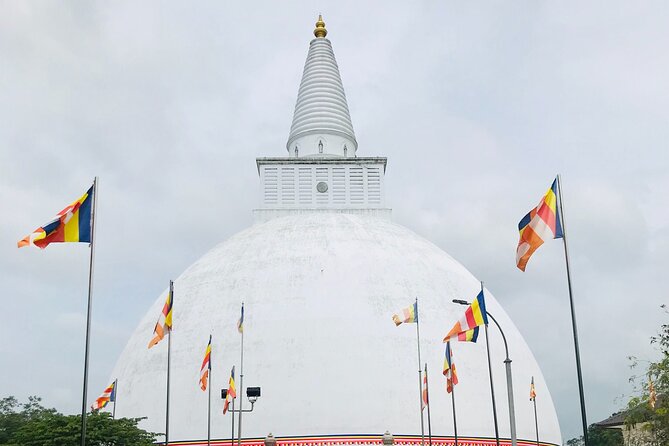
Anuradhapura is one of those places where it’s easy to wander too long and miss the best connections between sites. This tour fixes that problem by grouping the most meaningful locations into a single run, with a start time of 8:00 am and an estimated 4 to 6 hours.
The value here isn’t just that you visit “temples.” It’s that the itinerary is arranged around how Anuradhapura developed: different monastic complexes, major stupas, and the stone objects people made to worship, teach, and remember. If you enjoy history that you can walk through—rather than just read—you’ll feel like the day “clicks” more easily.
Also, the tone of this experience is practical. You’re not stuck watching a script. With the flexibility you’re offered, you can keep the day useful even if you’ve already seen a few monuments earlier.
You can also read our reviews of more city tours in Anuradhapura

Getting to the sites: pickup, vehicle comfort, and the real schedule
This is a private tour with only your group participating, which usually means your guide can move at the pace that makes sense for you. Pickup is offered, and the tour uses an air-conditioned vehicle, which is a big deal in Sri Lanka mornings when you’re still walking and climbing steps.
You’ll start at 8:00 am and spend about 10 to 30 minutes at most stops. That may sound short, but it’s actually a good approach for ancient city touring. You get enough time to orient yourself, take photos, notice the key features, and still keep energy for the next site.
One more practical point: parking fees are included. That matters because you’ll spend less time waiting while a vehicle is sorted out at the curb.
Stop 1: Isurumuniya Vihara area near Tissa Wewa
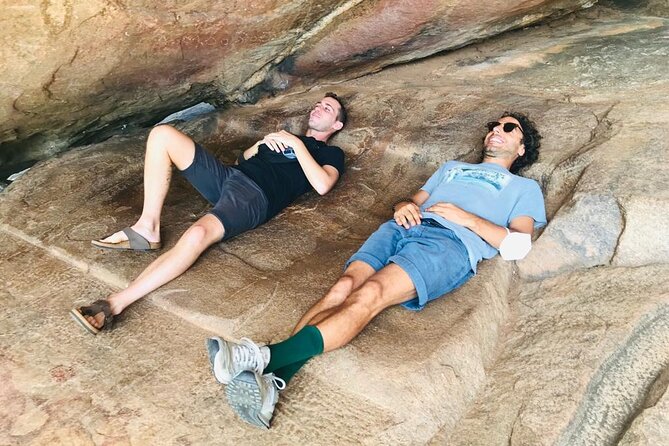
Your first major stop is Isurumuniya Vihara, also known as Isurumuniya (with Meghagiri Vihara mentioned as the name you’ll see used). It lies near Tissa Wewa in Anuradhapura.
What makes this stop interesting is the naming and location story. The original Isurumuni Vihara is described as being a few hundred meters away, and that nearby site is now called Vessagiri Vihara. Even if you don’t plan to hunt down the smaller “original” location on foot, hearing this context helps you understand why the area feels so layered.
Admission note: this stop lists admission as not included. So if you like to avoid surprises, keep a little cash or card access handy for entry fees.
Time on site: about 30 minutes—enough to look around without feeling rushed.
Stop 2: Vessagiriya ruins and the three-boulder setting
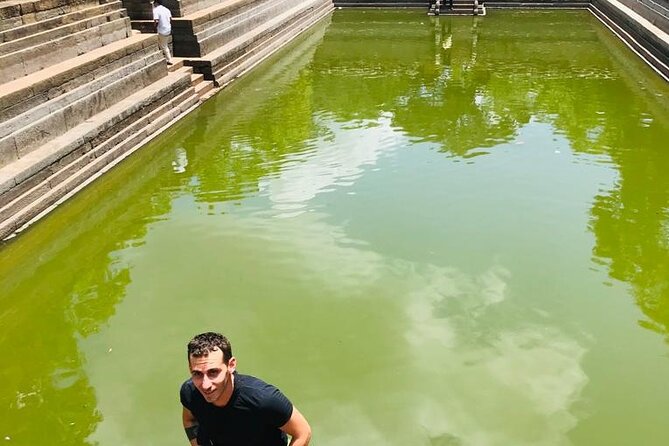
Next up is Vessagiriya ruins, located a few hundred meters to the left of Isurumuniya on the old Anuradhapura–Kurunegala road (so you’re essentially staying in the broader Isurumuniya/Vessagiri zone). This one’s special because it’s described as spreading around three boulder formations.
That matters because it changes how you photograph and how you “read” the site. In places where the stone formations dominate, you can often see how people positioned shrines and walkways to fit the natural geometry, instead of trying to force the landscape to copy European-style ruins.
This stop is listed as free admission, which makes it a nice fit early in the day when you want maximum sight payoff without extra entry costs.
Time on site: about 20 minutes.
Stop 3: Jaya Sri Maha Bodhi and the early Buddhism timeline
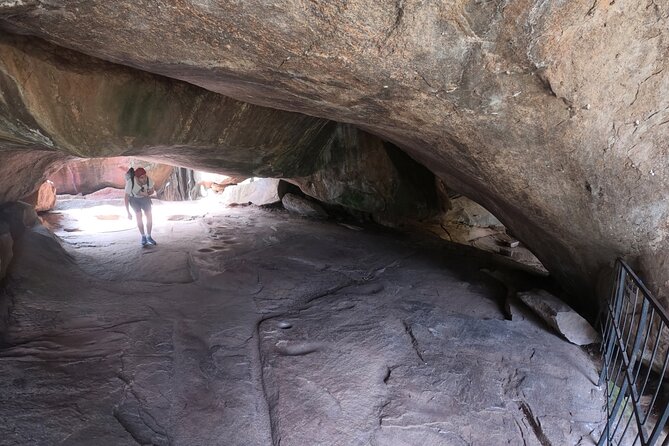
Then you move to Jaya Sri Maha Bodhi, one of the most emotionally meaningful stops on a Buddhist circuit. The tour context ties it directly to Buddhism’s introduction to Sri Lanka. You’ll hear that in 250 BC, Mahinda Thero brought Buddhism to Sri Lanka, and later Emperor Asoka sent his daughter, Theri Sanghamitta, to the island with a branch of the Sacred Bodhi tree from Bodh Gaya.
Even if you’re not a deep Buddhism scholar, this is the kind of background that helps you look differently at what’s in front of you. Instead of thinking, This is a tree you visit, you start thinking, This is a living link in a much longer story.
Admission note: this stop lists admission as not included.
Time on site: about 20 minutes. Aim to slow down here more than elsewhere, because this is where the spiritual weight is.

Stop 4: Mirisavetiya (Mirisaveti Stupa) and King Dutugamunu’s era
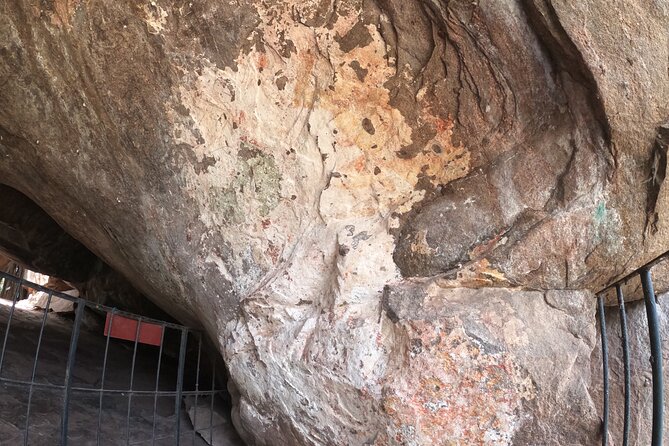
After the bodhi connection, you’ll see Mirisaveti Stupa, also known as Mirisaweti Dagaba. It’s linked to King Dutugamunu (161–137 BC), and it’s part of the Mahavihara Complex.
What I like about including a stupa from a specific reign is that it gives you a handle for timing. You’re not just visiting shapes—you’re seeing how power, conflict, and religious authority shaped what got built.
This stop is listed as free admission.
Time on site: about 15 minutes. Treat it like a quick visual reset between larger compounds.
Stop 5: Ruwanwelisaya, the Mahathupa shape, and relic context
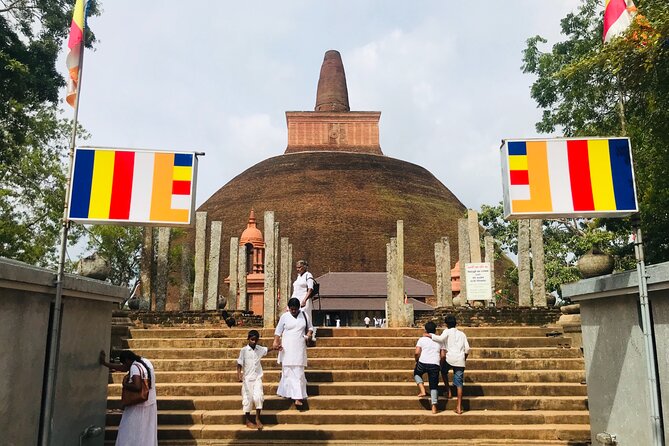
Next comes Ruwanwelisaya (Ruwanweli Maha Seya, often called the Mahathupa, the Great Thupa). This is described as a hemispherical stupa containing relics, and the tour notes include that two quarts or one Dona of the Buddha’s relics are enshrined there.
Even if the exact measurement wording is what you remember later, what matters is the idea: relic stupas aren’t only “big buildings.” They are containers of belief, built in a form meant to focus attention and reverence.
Admission note: listed as not included for this stop.
Time on site: around 15 minutes. If it’s sunny, this is also a good place to take photos early, before the light shifts.
Stop 6: Thuparama’s Dagoba and the early post-introduction era
Then you’ll visit the Dagoba of Thuparama. The tour description frames it as the first stupa built in the country after Buddhism was introduced to Sri Lanka, during the reign of King Devamnampiyatissa (250BC – 210BC). It’s also described as an Aramic complex (monastery complex), meaning this wasn’t only a one-building worship spot.
If you like understanding how religious life worked, this is a valuable stop because it hints at daily systems: monks, study, residence, and worship space all connected.
Admission note: this stop lists admission as not included.
Time on site: about 15 minutes.
Stop 7: Abayagiriya Stupa and the Valagamba connection
Now you’ll reach Abayagiriya Stupa, tied to the Abhayagiriya Viharaya aramic complex. It’s described as being constructed during the reign of King Vattagamini Abaya, also known as King Valagamba, in the 1st Century BC.
This stop adds another important ingredient: it shows how Anuradhapura wasn’t one single “Buddhist center.” Different complexes existed, and they had their own identities. It’s a good anchor point for seeing why the city’s religious geography feels so distinct as you move between sites.
Admission note: not included for this stop.
Time on site: about 15 minutes.
Stop 8: Moonstone (Sandakada pahana) and the art details worth pausing for
Next is Moonstone or Sandakada pahana. The tour information notes that no monument has been clearly discovered from before Arahath Mahinda’s visit in the 3rd century BC, but chronicles record that the earliest forms of Buddhist architecture in Sri Lanka date back to that era.
In practical terms, this means the Sandakada pahana isn’t just decoration. It’s part of the visual language of stairways and sacred entrances, and when you’re seeing a site as a whole, the stonework details help you understand how people marked thresholds between ordinary space and sacred space.
Admission note: not included.
Time on site: around 10 minutes. Even in 10 minutes, you can do a quick pattern scan: look for the border, figure placement, and the way carvings guide your eye upward.
Stop 9: Samadhi Statue between Abhayagiriya Stupa and Kuttam Pokuna
Then you’ll see the Samadhi Statue, located between the huge Abhayagiriya Stupa and the Kuttam Pokuna (Twin Ponds). It’s described as one of the greatest works of sculptural art of the early period of Anuradhapura.
If you’re a photography person, this is a stop where you can get value without long entry lines. It’s a single focus object. You’ll benefit most if you take 2 minutes to step back and look at proportion, not only at the face or hand area.
Admission note: not included.
Time on site: about 15 minutes.
Stop 10: Kuttam Pokuna (Twin Baths) and the hydrology marvel
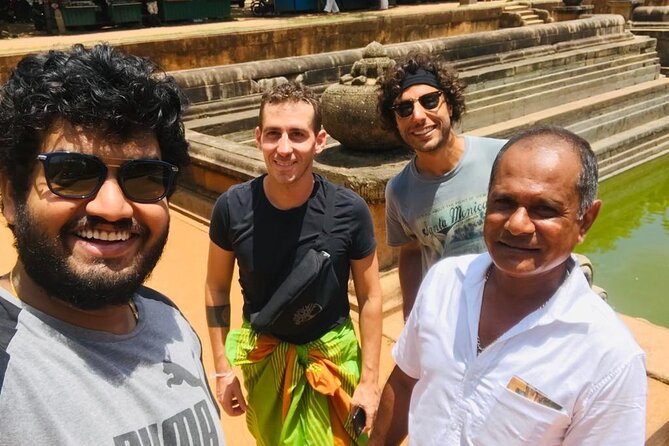
At Kuttam Pokuna, you’ll see the Twin Baths, described as another hydrologic engineering marvel of ancient Sri Lanka. The tour notes say there were two ponds used by monks for bathing.
This is a fantastic stop because it breaks the usual “only religious monuments” rhythm. Instead of only visual religion, you get practical religion: water systems, maintenance, and daily routines built into sacred space.
If you’re traveling in Sri Lanka and you only focus on grand stupas, you’ll miss this kind of engineering story. Here, you can stand back and watch how the ponds frame the area and how water likely flowed through the design.
Admission note: not included.
Time on site: about 10 minutes.
Stop 11: Abayagiriya Stupa again, but with a different historical angle
The final stop is another visit to Abayagiriya Stupa, but with a distinct historical note included in the tour description. During the reign of King Gothabhaya (253–266 AC), a disagreement took place between monks of the Maha Vihara Monastery and the Abhayagiriya Monastery regarding a vetulya doctrine. The king took the side of the Maha Vihara, shaping which group’s influence would be favored.
This is why repeating the name of a stupa in the itinerary can actually be helpful. You’re not just ticking a box twice; you’re finishing the day with a “how the religion changed” thread.
Admission note: not included.
Time on site: about 15 minutes.
The driver factor: flexibility and photo help that feels personal
One reason this tour earns a strong score is the kind of guidance it offers. The driver can be flexible if you’ve already visited many temples on your own. Instead of forcing you to see what you’ve seen, you can get substitutions of lesser-known sites while still keeping the day meaningful.
That same style shows up in small practical moments. If you want photos, the guide can take pictures for you at the final site and share them with you afterward. It’s the sort of detail that matters because the best monuments in Anuradhapura are also hard to photograph well when you’re juggling your own camera and awkward angles.
What you should budget for (beyond the $25 tour price)
The headline price is $25, and that’s a strong starting point for a private, vehicle-based ancient city circuit. You also get parking fees included and an air-conditioned vehicle, which is often where costs add up in Sri Lanka.
But remember what isn’t included: lunch and admission tickets for several stops. Based on the stop list, some locations are free while others are not included. If you want a smooth day, bring a small buffer for entry fees and keep water and a snack plan.
Also, the tour needs good weather. If conditions are poor, the experience may be canceled and you’d be offered a different date or a refund.
Who this tour suits best
This works especially well if you:
- want a private way to cover multiple Anuradhapura highlights in one morning
- enjoy Buddhist art and monuments with background context
- prefer a guide who can adapt when you already covered some sites earlier
- want comfort from an AC vehicle rather than long, exposed transfers
It may be less ideal if you expect long museum-style reading time. The stops are short, so you get a guided sweep, not a multi-hour deep study at each complex.
Should you book this Anuradhapura ancient city tour?
Yes, if you want a cost-friendly private circuit that hits the core monuments and also keeps the day adjustable. The best part is how the guiding approach respects your time: if you’ve already been around, the driver can help you land on sites that still feel worth seeing.
Book it if your priority is practical sightseeing with context, not if you want every stop at a slow, wandering pace. If you’re comfortable budgeting a little extra for admission fees and you’re okay with no lunch being included, you’ll likely find this a very solid value.
FAQ
How long is the Anuradhapura ancient city tour?
The tour is listed as lasting about 4 to 6 hours.
What time does the tour start?
The start time is 8:00 am.
Is pickup included?
Pickup is offered.
Do I get an air-conditioned vehicle?
Yes, the tour includes an air-conditioned vehicle.
Are admission tickets included for all sites?
No. Some stops list admission tickets as not included, while others are free.
Is lunch included?
Lunch is not included.
Is this a private tour?
Yes. It’s a private tour/activity, and only your group will participate.
What happens if the weather is poor?
The experience requires good weather. If it’s canceled due to poor weather, you’ll be offered a different date or a full refund.
What is the cancellation policy?
You can cancel for free up to 24 hours in advance for a full refund. If you cancel less than 24 hours before the experience start time, the amount paid is not refunded.