REVIEW · ANURADHAPURA
Anuradhapura Private Ancient City Day Tour
Book on GetYourGuide →Operated by Navin Lanka Tours · Bookable on GetYourGuide
Old capitals can change how you see faith.
In Anuradhapura, you’re not just ticking off temples. You’re moving through a UNESCO-listed ancient capital where active worship sites sit right beside archaeological ruins, and your guide helps you connect the dots. On this private tour with Navin Lanka Tours, I like that you get personal guidance in English (plus an audio guide backup), and you’re handled end-to-end with hotel pickup and transport. The only real drawback to plan for: this circuit is timed, and it’s done in daylight, so it can feel warm and foot-pace isn’t slow.
You’ll cover the big names and several smart extras in one afternoon: Sri Maha Bodhi, Ruwanwelisaya, Jethawanaramaya, and more, with short guided stops that still leave time for photos and questions. One more consideration: entrance tickets for the ancient city aren’t included, so budget for that on top of the tour price.
In This Review
- Key highlights you’ll actually care about
- First things first: what this private Anuradhapura tour feels like
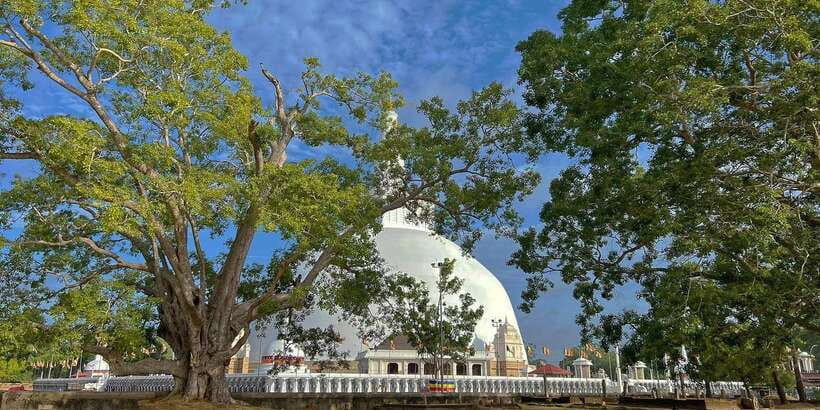
- Sri Maha Bodhi: the sacred tree and the stories around it
- Ruwanwelisaya and Jethawanaramaya: big stupas, big meaning
- Kuttam Pokuna, Moonstone, and Muragala: the details most people miss
- Thuparama Seya: a final sacred stop with context
- Abhayagiri Vihara and the monastery spaces: ruins that explain beliefs
- Elephant Pond: why water features belong on a spiritual itinerary
- Transportation, timing, and the tuk tuk lesson: fun with a purpose
- Price and value: why $30 can make sense here
- Who this tour is best for (and who might want a different pace)
- Should you book this Anuradhapura private city tour?
- FAQ
- How long is the Anuradhapura private ancient city day tour?
- Is hotel pickup and drop-off included?
- Is this tour private?
- What language is the live guide?
- Is there an audio guide?
- Are entrance tickets included?
- What’s included in the price besides the guide?
- What should I bring?
- Are hats allowed?
- Is it wheelchair accessible, and who should avoid it?
Key highlights you’ll actually care about
- A private English guide named Navin who ties Buddhism, history, and today’s Sri Lanka into one story
- Hotel pickup and tuk tuk transport that keeps you from wrestling with local logistics
- A quick tuk tuk lesson, and in practice you may even get a chance to try driving if conditions allow
- Stop-by-stop explanations at Sri Maha Bodhi, Ruwanwelisaya, Jethawanaramaya, and the Abhayagiri area
- A route built for pictures and pacing rather than a rushed checklist
- Waters included, plus guidance on timing for comfort in the sun
First things first: what this private Anuradhapura tour feels like
Anuradhapura can be overwhelming in the best way. There’s a lot of stone, a lot of symbolism, and a lot of “wait, what am I looking at?” If you come on your own, you’ll still get beauty and atmosphere—but you’ll miss the meaning behind many details. That’s where this private format pays off.
You start in Anuradhapura with pickup arranged to meet you at your lodging, then you’re out in a tuk tuk with transport handled for you. Your guide’s job is to keep the day coherent: what you’re seeing, why it matters, and how the sites connect to Buddhism and to the city’s older kingdoms. It’s also structured for a 5-hour visit, so you don’t spend the whole day traveling between far-flung spots with no context.
The best part for me is the tone: it’s not lecture mode. Navin’s style is energetic and interactive, and people consistently mention how he answers questions and keeps the flow comfortable. There’s also a strong practical side—people note pacing that doesn’t feel rushed, and the guide typically builds in small pauses so you can take photos and reset.
The catch is simple: it’s a concentrated route. You’ll see a lot, but you won’t linger all day at one shrine. If you want hours of quiet contemplation in only one temple, you might prefer a slower, custom plan. If you want a well-rounded highlights tour with explanations, this fits.
You can also read our reviews of more tours and experiences in Anuradhapura.

Sri Maha Bodhi: the sacred tree and the stories around it

Sri Maha Bodhi isn’t just another stop. It’s the heart of the city’s spiritual identity. Even if you’ve never studied Buddhism, the atmosphere signals that this is a place people come back to again and again.
On your visit, your guide explains what Sri Maha Bodhi represents, and why the site is treated with such care. You’ll also learn how the “meaning” of a sacred object can carry through time—even when the surrounding world changes. This is one of those places where the visual details (how people move through space, how the shrine is respected, how the site is used today) make the history feel alive.
What you should do: take a few minutes just to watch how worshippers behave. Your guide’s explanations help you interpret it, but your eyes do the rest. And keep your expectations realistic: this is a pilgrimage spot, so plan for crowds and be ready to keep your pace steady.
A small practical tip: wear comfortable shoes and keep sun protection handy. You’re in daylight for most of the day, and Sri Maha Bodhi is one of those stops where you might be looking up, standing still, and taking in details.
Ruwanwelisaya and Jethawanaramaya: big stupas, big meaning
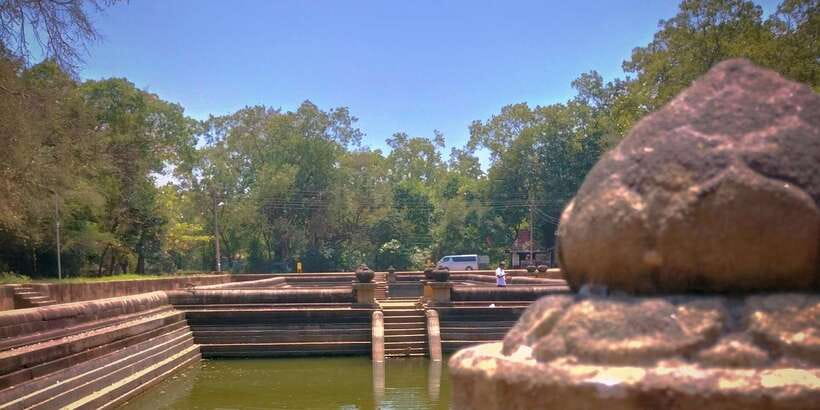
After Sri Maha Bodhi, the route naturally shifts into monumental architecture: stupas. Ruwanwelisaya (Ruwanweli Maha Seya) is the kind of shrine that makes you understand why people build in stone for generations. It’s not only a religious object; it’s also a statement about devotion, community, and how a civilization wanted to be remembered.
Your guide helps you understand the basics of what a stupa symbolizes and how these sites fit into the broader Buddhist worldview. You’re not just seeing the structure—you’re getting context for the purpose behind it.
Then comes Jethawanaramaya, where the scale and presence really hit. In many UNESCO heritage places, ruins can feel like leftovers. Here, the storytelling makes it feel like a living memory of earlier ambition and religious practice. You’ll learn what made this area important and how the city’s spiritual life shaped what was built.
Possible drawback to consider: these are popular sites, and the tour’s time window is limited. If your priority is architectural photography, try to get there with your camera ready and expect that some angles will be busier than others.
Kuttam Pokuna, Moonstone, and Muragala: the details most people miss
Here’s a clever thing about a guided highlights tour: you get nudged toward the small details you’d otherwise overlook. In Anuradhapura, the “small” things can be surprisingly meaningful—water features, carved stones, and entrance guardians.
You’ll stop at Kuttam pokuna, a site tied to water management in the ancient city. Water isn’t a side theme here; it’s part of how communities functioned. Your guide’s explanations connect the engineering aspect with how sacred spaces were maintained and used.
Next you’ll visit Anuradhapura moonstone, known for its decorative entrance motif. Moonstones often symbolize thresholds—what changes when you move from one kind of space into another. It’s the kind of visual that becomes much more satisfying once you know what you’re looking for.
Muragala (Guard Stone) is the other detail stop that makes this tour feel “deeper” than a basic temple loop. Guard stones and related elements are about protection and order, but your guide will show you how they fit into the site’s overall design language. It’s a good moment to slow down mentally even if the schedule is tight.
If you like photography, this portion is your friend. When the main stupas are the stars, these intricate carvings are the supporting cast—and you’ll get a chance to focus on them.
Thuparama Seya: a final sacred stop with context
Thuparama Seya rounds out the “active worship meets ancient heritage” feel of the day. By the time you reach this stop, you’ve already learned the language of the places: what stupas represent, what sacred trees mean, and why certain architectural cues matter.
So Thuparama Seya becomes easier to read. You’ll see it with more confidence because your guide has already built up the background. This is one of the most valuable parts of a guided circuit: each stop reframes the next one, so the day doesn’t feel like separate sightseeing errands.
If you’re the type who gets impatient when you’re told history you can’t connect to the present, you’ll likely enjoy this portion. It’s a chance to connect what you learned earlier to how the site works today—how people use it, how it’s treated, and what still matters.
Abhayagiri Vihara and the monastery spaces: ruins that explain beliefs
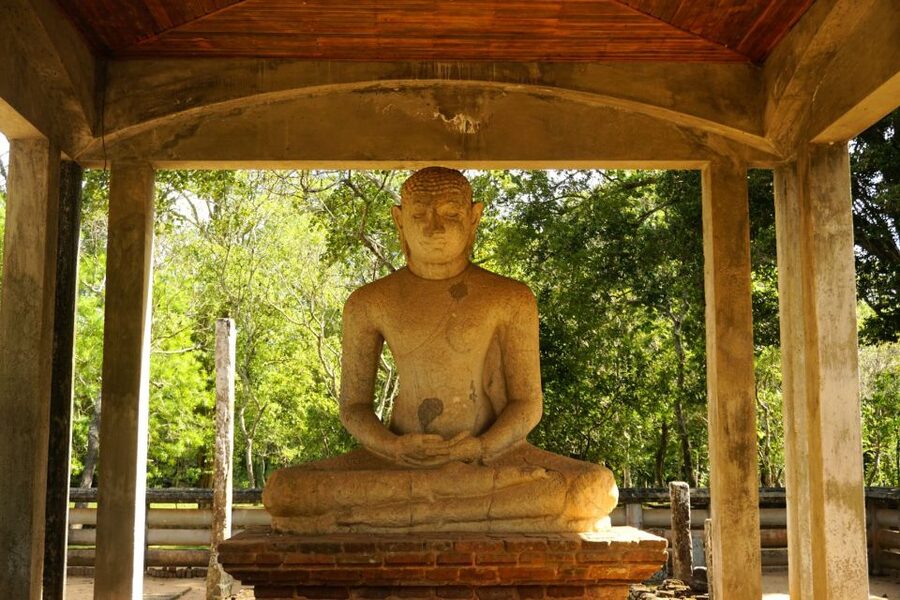
The Abhayagiri area is where Anuradhapura turns from “beautiful” to “wow, that’s complex.” Abhayagiri Vihara is tied to major monastic history, and it’s one of the most interesting parts of the route for history lovers.
Your guided visit doesn’t just point at ruins. It tries to help you understand the monastic function of the spaces and how religious ideas were practiced in physical form. This is also where you’ll appreciate why your guide’s interpretation matters: ruins can look like random broken pieces unless someone explains what the space was meant to do.
You’ll also visit the main refectory of Abhayagiri Monastery (अභයගිරි ප්රධාන දාන ශාලාව). A refectory theme is a reminder that monastic life wasn’t only prayer and symbols. It involved daily routines—community, offerings, and shared meals. Even in ancient settings, food and hospitality were part of the social structure of faith.
Then there’s a quieter visual you’ll also see: Samadhi Buddha Statue. Even if you’re not a Buddhism student, a statue like this communicates practice and focus. Your guide’s explanations make the symbolism readable rather than mysterious.
Elephant Pond: why water features belong on a spiritual itinerary
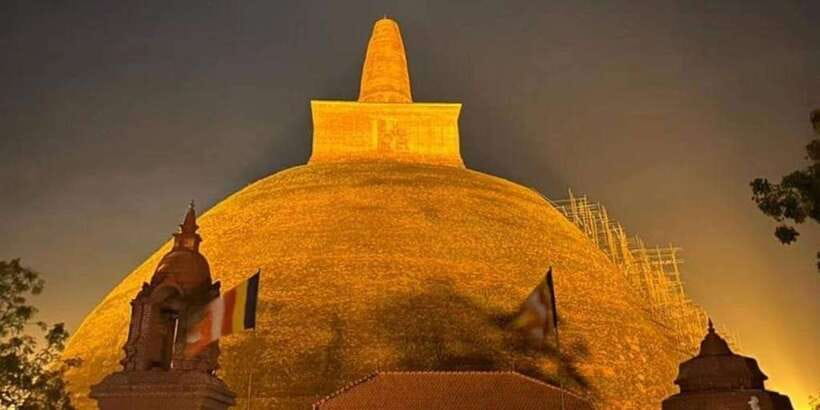
Elephant Pond (a stop included on this route) gives you a break from pure monument viewing. It’s also a reminder that ancient cities weren’t built only for ceremonies—they were built for life and continuity.
Your guide connects the pond to the city’s planning and to how water features fit into religious and community spaces. This is the moment when you might realize that Anuradhapura’s spirituality is intertwined with practical design.
Don’t rush this stop. Even if it’s listed for a short guided visit, it’s the kind of place where you can look around and notice how water shapes movement, shade, and how people gather. If your guide points out birdlife or small movement around the pond (Navin often does this kind of thing), you’ll get an added layer of richness without extra cost.
Transportation, timing, and the tuk tuk lesson: fun with a purpose
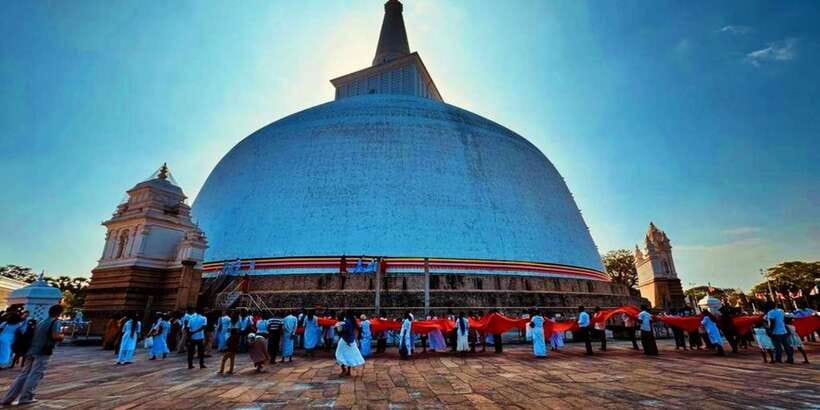
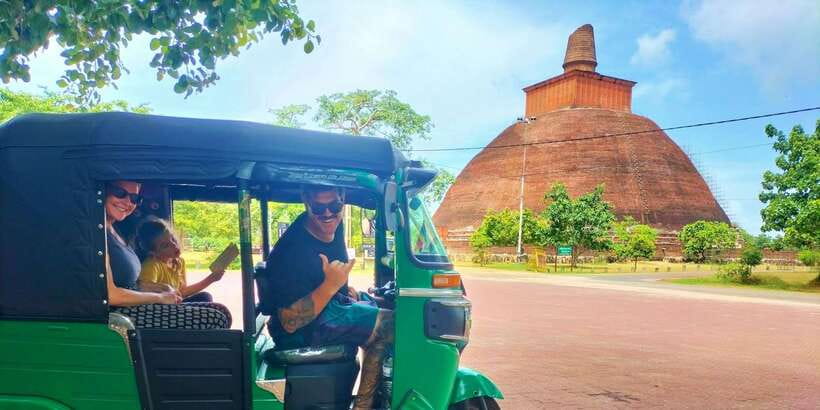
This tour uses private tuk tuk transport, which is a smart fit for Anuradhapura. You’re moving between clustered sacred sites quickly, without the stress of navigating on your own. It’s also a way to feel the place as a living city instead of a distant museum.
One of the most practical inclusions is the tuk tuk lesson. You’ll get quick guidance on how to understand the vehicle and how things work during the ride. Some guides even give you a chance to try driving for a moment, and based on what people report, Navin is happy to accommodate when possible.
Value-wise, that lesson matters because it turns transport into part of the experience rather than dead time. And the guide’s presence helps you avoid common travel-day headaches—asking where to go next, interpreting signs, or dealing with entry flow.
Timing is the other piece. With a 5-hour overall window, the stops are guided for shorter segments. That’s not a problem if you like a highlights tour. It can be a mismatch if you want to spend long hours inside one complex. Think of it as: you’re buying orientation plus key moments, not a slow, full-day study seminar.
Price and value: why $30 can make sense here
At $30 per person for a 5-hour private experience, you’re paying for more than transport. You’re paying for a guide who can connect what you see—Sri Maha Bodhi, Ruwanwelisaya, Jethawanaramaya, the Abhayagiri area, and the detailed stone and pond stops—into a single coherent storyline.
Your included basics are also meaningful in day-of-practical terms: hotel pickup and drop-off, a private guide, private transport, water bottles, and an English audio guide for support. Add the tuk tuk lesson, and you’re getting a bundle that can be harder to replicate if you try to coordinate everything yourself.
One important cost note: tourist entrance tickets are not included. Based on one traveler’s note, foreigners’ entrance fees for the ancient city have been around US$30 per person. Don’t count on that exact amount staying the same, but do treat it as a realistic “extra” you’ll need to budget.
So the value question becomes: do you want a guide to help you read the site in a short time? If yes, this price often feels fair. If you’re a solo wanderer who loves researching on your own for hours, you might spend less by going independently—just expect you’ll pay that back in time and confusion.
Who this tour is best for (and who might want a different pace)
This is ideal if you:
- want a private guide in English for a focused highlights day
- like Buddhist sites and want the stories behind what you’re seeing
- prefer not to plan the route or manage entry flow on your own
- enjoy tuk tuk rides and want a quick lesson, not just sitting in the back
It’s less ideal if you:
- want long, quiet hours at one location rather than multiple stops
- don’t like walking on uneven ground, even if the tour is wheelchair accessible
- are traveling with very limited sun tolerance, since the tour happens in daylight and you’ll be standing and moving outdoors
- are 95+ years old, since this tour is not suitable for people over that age range
If you’re traveling with family, couples, or friends who want answers quickly and clearly, this format works well. People also mention that Navin is friendly and keeps the energy up, which helps when you’re juggling several culturally important stops in one afternoon.
Should you book this Anuradhapura private city tour?
If your goal is to understand Anuradhapura—why it matters, what the structures mean, and how Buddhist practice shaped the city—then yes, I’d book it. The standout reason is simple: you’re not just looking at monuments; you’re learning how to read them. Navin’s English explanations and the way the route is paced make a short day feel productive without feeling like a sprint.
Before you go, do two things that will make a big difference: wear comfortable shoes and bring sun protection. Then budget a little extra for entrance tickets at the ancient sites.
If you want a guided day that feels personal, organized, and genuinely helpful in translating Sri Lanka’s ancient heritage into something you can understand fast, this is a strong choice.
FAQ
How long is the Anuradhapura private ancient city day tour?
It lasts about 5 hours.
Is hotel pickup and drop-off included?
Yes. Pickup is included in Anuradhapura, and you wait in the hotel lobby about 10 minutes before the scheduled time.
Is this tour private?
Yes. It’s a private group tour.
What language is the live guide?
The live tour guide is English.
Is there an audio guide?
Yes. An English audio guide is included.
Are entrance tickets included?
No. Tourist entrance tickets are not included.
What’s included in the price besides the guide?
You get a private guide, private transport, a tuk tuk lesson, and water bottles.
What should I bring?
Bring your passport and wear comfortable shoes.
Are hats allowed?
No, hats are not allowed.
Is it wheelchair accessible, and who should avoid it?
The tour is wheelchair accessible, but it is not suitable for people over 95 years old.