REVIEW · BELGRADE
Belgrade: Football History Tour
Book on GetYourGuide →Operated by Serbian Adventure Factory · Bookable on GetYourGuide
Football rivalries here hit political nerve endings. This 3.5-hour tour turns Belgrade’s Dorćol streets into a map of loyalty, then brings you inside Red Star Belgrade’s home to see the Champions League trophy tied to the club’s 1991 glory. I like how the walk isn’t just sightseeing; it teaches you why the Eternal Derby between Partizan and Red Star matters beyond the pitch.
One possible drawback: the tour doesn’t treat football like a harmless hobby. It explains how ultras and hooligan firms link to politics and how rivalries can show up as violent clashes, so keep your expectations realistic.
In This Review
- Key things to love about this Belgrade football history tour
- Belgrade’s Eternal Derby: why this tour hits harder than football
- Dorćol from the ground up: Partizan stronghold on a walking route
- The ultras, the politics, and the hard edge of fan culture
- Rajko Mitic Stadium: where Red Star’s trophies become real history
- Seeing both sides: a quick look at Partizan Stadium
- Guides make or break this kind of tour: the Q&A vibe is real
- Price and value: is $82 fair for 3.5 hours?
- Timing, pacing, and what to do with your questions
- Who should book this tour (and who might not)
- Should you book Belgrade: Football History Tour?
- FAQ
- How long is the Belgrade Football History Tour?
- Where does the tour start?
- Is the tour guided in English?
- What’s included in the price?
- Do I visit Red Star and Partizan stadiums?
- Is the tour wheelchair accessible?
- Is there free cancellation?
- Can I reserve without paying immediately?
Key things to love about this Belgrade football history tour
- Dorćol neighborhood walk where street art points to Partizan allegiances
- Rajko Mitic Stadium museum time focused on the club’s European peak
- The Champions League trophy display tied to Red Star’s 1991 title
- Clear explanation of ultras and fan politics and why the city connects football to power
- A short Partizan Stadium visit so you see both poles of the Eternal Derby
Belgrade’s Eternal Derby: why this tour hits harder than football
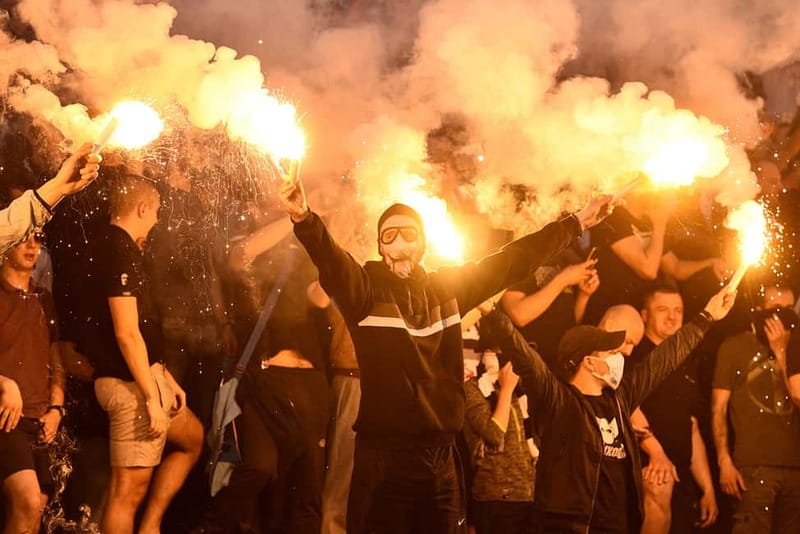
If you think the biggest rivalries are only about kits and chants, Belgrade will correct you fast. The Eternal Derby between FK Partizan and Red Star Belgrade isn’t presented as a sports-only story. It’s treated like a social and political event that people carry into daily life.
That framing is exactly why I think this tour is such good value. You don’t just hear club facts. You learn how the city’s history, government, and even crime connect to who supports which side, and why certain groups grow influence through many layers of society. It makes the rivalry feel understandable, not random.
And yes, there’s still classic football stuff. Red Star’s European run is a big focus, including the club’s late 1980s to early 1990s success when top European teams like Real Madrid, Liverpool, and Bayern Munich suffered defeats. But the tour keeps pulling you back to what those results meant socially in Belgrade.
You can also read our reviews of more historical tours in Belgrade



Dorćol from the ground up: Partizan stronghold on a walking route
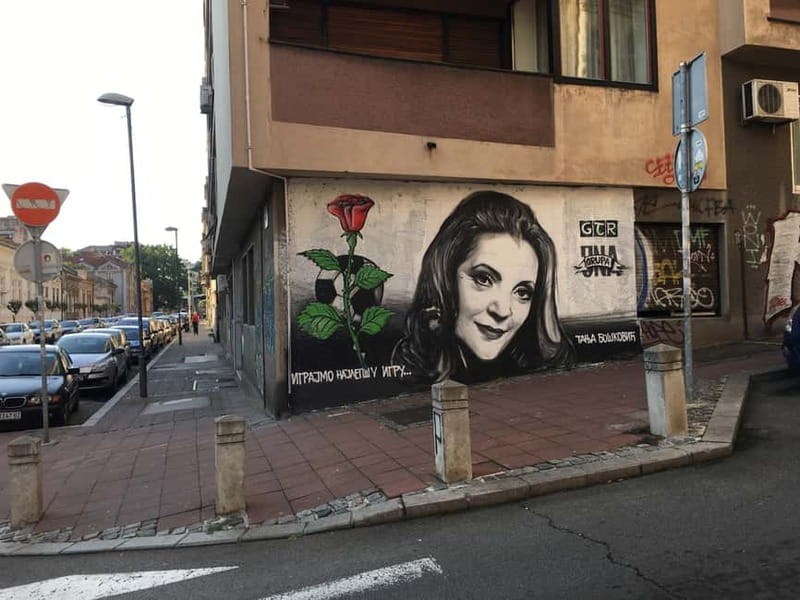
The tour starts near Studenstki trg. From there, you head into the Dorćol neighborhood for about an hour of guided walking. Dorćol is described as a Partizan stronghold, and you’ll see that idea made visible through street art and local signals of allegiance.
This part works even if you’re not a lifelong football fan, because it’s basically a neighborhood orientation with a football lens. You get your bearings fast: where people are placing identity in public spaces, how supporters express themselves, and how the city’s football map overlays the normal city map.
Practical note: plan for real walking. The Dorćol segment is the foundation of the tour story, so wearing comfortable shoes matters more than being stylish.
The ultras, the politics, and the hard edge of fan culture
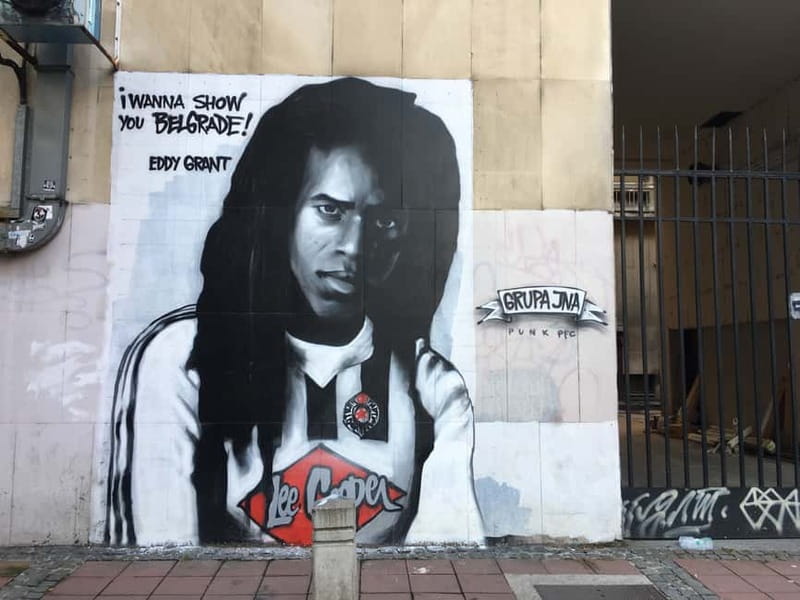
After the initial neighborhood walk, the tour makes a point that many sports history tours skip: fan culture has consequences. You’ll hear how supporters’ groups known as ultras and hooligan firms are described as crucial parts of fan life for both major clubs.
What’s helpful here is the explanation style. Instead of just labeling people or calling it good or bad, the guide connects it to power and politics. You learn how these groups can hold political influence across social strata, and why rivalry sometimes becomes physical.
Is it heavy? It can be. But it’s also more honest than a tour that pretends football rivalries don’t spill into real life. If you want a clean, purely romantic view of football culture, this might feel too direct. If you want to understand Belgrade as it actually works, it’s one of the tour’s strongest features.
Rajko Mitic Stadium: where Red Star’s trophies become real history
Next comes the big visual moment. You travel by car to Rajko Mitic Stadium, home of Red Star Belgrade, and you get roughly 75 minutes for the stadium and museum visit.
This stop is built for impact. The stadium is described as imposing, and the schedule gives you time to slow down rather than race through photos. You’re not just standing outside a famous venue. You’re inside the story of why Red Star became a European headline.
The museum portion is where the tour earns its ticket price. You get to see the club museum and the famous Champions League trophy displayed for visitors. Red Star’s European title is highlighted as the club’s 1991 win, with an extra angle that it’s the only Eastern European club described as having won this competition. That context matters. It turns a trophy photo into a sense of historical scale.
And the tour doesn’t ignore the football credibility. The guide ties the museum experience to the club’s era when major European teams—Real Madrid, Liverpool, Bayern Munich—were among those that experienced defeat during Red Star’s late-1980s/early-1990s peak. It’s the kind of detail that makes the past feel measurable, not just romantic.
Seeing both sides: a quick look at Partizan Stadium
About 20 minutes are set aside to visit Partizan Stadium. It’s shorter than the Red Star segment, but that makes it more focused. You’re not expected to get a full second deep-dive. Instead, you get a contrast point after spending more time learning the Red Star story.
That contrast is useful. Once you’ve walked Dorćol and learned the Partizan connection, the Partizan Stadium stop helps you connect identity to place. You’re reinforcing the tour’s main idea: this rivalry isn’t only a match-day product. It’s built into neighborhoods and into the way people map meaning onto buildings.
Guides make or break this kind of tour: the Q&A vibe is real
A football-history tour lives or dies on the guide’s ability to explain complex relationships without turning it into a lecture.
The guides connected to this tour—Andrija, George, Thiomir, and Vojin—are repeatedly praised for being friendly and answering questions, including questions that drift beyond the core topic. That matters because the Eternal Derby themes naturally raise side questions: about the city, about identity, about what you’re seeing in the streets.
Thiomir is specifically highlighted for taking visitors to see fan murals in the city centre before the stadium visit later on. That’s a smart touch for anyone who wants the visual story to start earlier, not only when you reach the big venues.
Also, there’s a small gift at the end. It’s not a reason to book by itself, but it’s the kind of detail that makes the tour feel finished, not rushed.
Price and value: is $82 fair for 3.5 hours?
At $82 per person for about 3.5 hours, you’re paying for more than entry tickets. You’re paying for a guided narrative that ties together football, history, politics, and fan culture in a way that’s hard to replicate on your own unless you already know what to look for.
Here’s what you get for the money:
- Dorćol walking tour (with local sights tied to allegiances)
- Entrance to Red Star Stadium and the museum
- A car journey between areas
- A live English-speaking guide
- A small memento at the end
The museum stop plus the trophy display are the big practical value drivers. If you only wanted stadium views, you could cobble together a self-guided route. But the museum connection to Red Star’s European success—and the guide’s explanation of why football became political in Belgrade—turn the trophy into context, not just an object.
So I’d call it fair value, especially if you like your city history with a strong local point of view.
Timing, pacing, and what to do with your questions
The tour is built in chunks:
- Dorćol walking: around 1 hour
- Red Star museum and stadium: around 75 minutes
- Partizan Stadium visit: about 20 minutes
- Car movement between stops
- Back to Studenstki trg at the end
That pacing helps. You get one long walking section to absorb the neighborhood, then a slower indoor/venue section to learn and look, then a short final stop.
If you want the tour to work best for you, prepare a couple question types:
- Ask what you’re seeing in the street art and how it connects to supporters’ groups.
- Ask how the guide explains ultras culture without reducing it to stereotypes.
- Ask about what made Red Star’s European success in 1991 so different in the bigger European context.
And if your guide is the type praised for answering even off-topic questions, use it. That flexible conversation is often where you pick up the Belgrade “how it feels” layer.
Who should book this tour (and who might not)
This tour is a great fit if:
- You care about football history and want it connected to real city life
- You like learning how local culture uses sports as a language
- You want a museum moment that isn’t just passing through
It might be less ideal if:
- You want football only, no politics, no crime, no discussion of violent clashes
- You dislike tours that explain fan culture in blunt, direct terms
- You prefer long stadium visits at both clubs instead of one deep museum experience plus a shorter Partizan stop
Should you book Belgrade: Football History Tour?
I’d book it if you want a short, efficient way to understand Belgrade through the Eternal Derby. It’s not just a checklist of landmarks. The value comes from how the guide links neighborhood identity, ultras, and Red Star’s trophy-era history into one story you can actually carry around the city after the tour.
If you’re on the fence, use this simple test: do you want your football history to explain why rivalries can become political and sometimes violent? If yes, this is a smart spend. If your ideal day is sports without the heavier context, you may want a lighter stadium-focused alternative.
FAQ
How long is the Belgrade Football History Tour?
The tour lasts about 3.5 hours.
Where does the tour start?
It starts at Studenstki trg. You meet your guide near the entrance of the park.
Is the tour guided in English?
Yes, the live tour guide provides the tour in English.
What’s included in the price?
You get a walking tour in Dorćol, entrance to the Red Star Stadium and museum, and a car journey between stops.
Do I visit Red Star and Partizan stadiums?
You visit Red Star Belgrade’s Rajko Mitic Stadium and its museum, and you also make a shorter visit to Partizan Stadium.
Is the tour wheelchair accessible?
Yes, the tour is wheelchair accessible.
Is there free cancellation?
Yes, free cancellation is available up to 24 hours in advance for a full refund.
Can I reserve without paying immediately?
Yes, there’s a reserve now & pay later option, so you can book your spot and pay nothing today.