REVIEW · SEOUL
Seoul UNESCO Heritage Palace, Shrine, and More Tour
Book on Viator →Operated by I Love Seoul Tour · Bookable on Viator
Four hours, three UNESCO stops, one big story. I like how this small-group tour links UNESCO World Heritage sites with Joseon-era life in Bukchon Hanok Village, so the palaces and shrines feel less like random buildings and more like part of one historical system. You also get air-conditioned minivan transport from central areas and a drop-off in Myeongdong, which makes the whole day feel efficient.
The one real trade-off is pace. This schedule is tight, and the final ginseng museum stop can feel salesy if you’d rather spend time walking slowly through the palace grounds instead.
In This Review
- Key highlights I’d plan around
- How This Seoul UNESCO Tour Actually Runs (Timing, Stops, Getting There)
- Bukchon Hanok Village Traditional Culture Center: The Joseon Street-Museum Start
- Jongmyo Shrine: Ancestral Tablets and the Ritual Memory of Joseon
- Changdeokgung Palace Complex: Focus on the Rear Garden
- Cheongha Korea Ginseng Museum: Educational Stop with a Sales-Push Risk
- Value for $34: Admissions Included, But No Meal Included
- Who This Tour Suits Best (And Who Might Feel Unsatisfied)
- Quick Booking Decision: Should You Book This Seoul UNESCO Tour?
- FAQ
- What UNESCO sites are included?
- Which traditional village stop is included?
- What happens if Jongmyo is closed?
- What happens if Changdeokgung is closed?
- Are admission tickets included?
- Is hotel pickup included?
- Where do you meet and where do you end?
- Is food included?
- How physically demanding is it?
- Is there free cancellation?
Key highlights I’d plan around
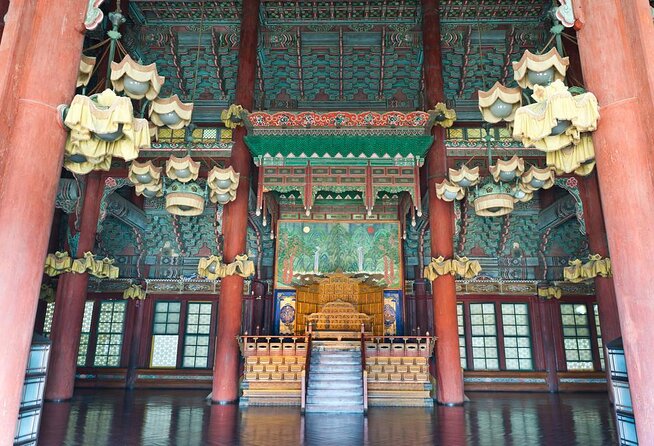
- A tight route with guided context at Bukchon, Jongmyo, and Changdeokgung, not just a bus-and-pose tour
- Changdeokgung’s rear garden focus, including a tree reported to be over 300 years old
- Jongmyo’s ancestral tablets and the memorial tradition, explained in plain language by your guide
- Small-group feel with a max of 40 people and minivan pickup for centrally located hotels
- Built-in substitutions for closures, like Insadong if Jongmyo is closed on Tuesday
How This Seoul UNESCO Tour Actually Runs (Timing, Stops, Getting There)
This half-day experience is about 4 hours total, starting at 8:30 am. You’ll meet at Myeongdong Station Exit 1061-7, Chungmuro 2(i)-ga, Jung District, then the group moves between sites by air-conditioned minivan. The tour ends with a drop-off around Myeongdong, which is convenient if you’re planning lunch, shopping for essentials, or catching another activity right after.
Pickup is the only “fine print” to pay attention to: hotel pickup works for centrally located Seoul hotels. If your place is tucked behind alleys, the English guide meets you at the nearest central hotel or a nearby subway station instead. That’s not a deal-breaker, just something to factor so you arrive at the right rendezvous point early.
Group size matters here. With a maximum of 40 travelers, you should still feel like you’re moving together as a group while keeping some breathing room for photos and questions—especially when a guide is good at pacing. If you’re booking because you want history explained clearly, you’ll likely appreciate guides known for lively explanations, like Leo, Sam, Jung, Park, or Dragon (names that show up for this provider on past departures).
You can also read our reviews of more historical tours in Seoul
Bukchon Hanok Village Traditional Culture Center: The Joseon Street-Museum Start
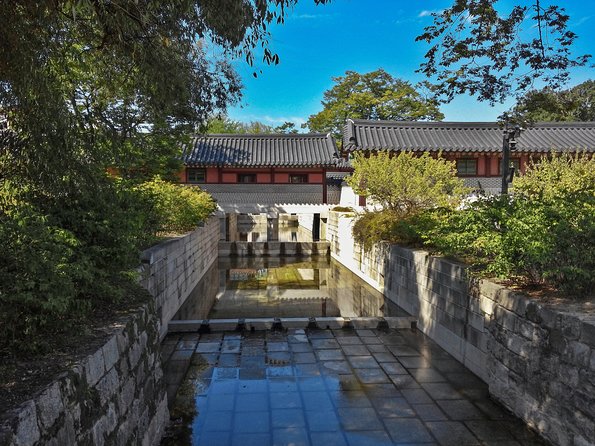
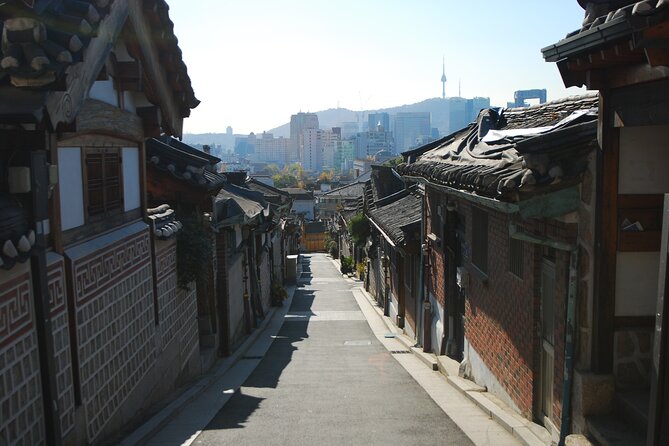
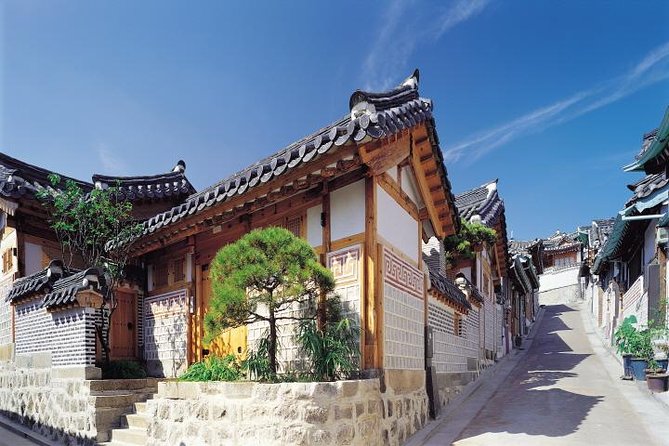
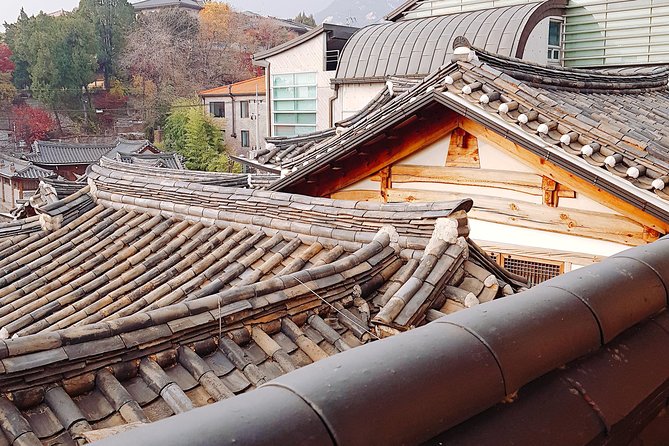
You begin at the Bukchon Traditional Culture Center, a smart first stop because it frames the rest of the tour. Bukchon is often described as a street museum in the middle of the city, and this area’s hanoks trace roots back to the 14th century. You’ll have around 40 minutes here with admission included, and the goal is to help you understand what you’re seeing before you walk into palaces and shrines where the symbolism is layered.
What makes this stop useful (beyond the photos) is the way it sets the “how people lived” context. Instead of treating palaces like isolated monuments, you get a sense of the domestic Joseon-era world—homes, layout ideas, and daily life—so later details in royal spaces feel connected.
A small note: if your departure day makes access tricky, your guide may adjust timing to keep the day working. Also, on Sunday, the schedule may shift to Namsangol Hanok Village as an alternative. Either way, you’re starting with a grounded look at traditional Korea rather than rushing straight to the big ticket buildings.
Practical tip: wear comfortable walking shoes. Even in short windows, you’ll be moving between viewpoints and entrances, and Bukchon-style streets can be uneven.
Jongmyo Shrine: Ancestral Tablets and the Ritual Memory of Joseon
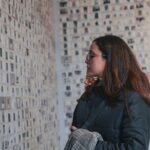
Jongmyo Shrine is the UNESCO stop that puts the “people behind the palaces” front and center. This is where the ancestral tablets of Joseon kings and queens are enshrined. The memorial service tradition dates back about 600 years from the dynasty’s establishment, and the guide’s job is to explain what a ritual space like this meant day-to-day in Joseon culture.
You’ll spend about 40 minutes, admission included. With a good guide, you can understand why Jongmyo feels different from a typical tourist site: it isn’t only about architecture. It’s about continuity—how the state remembered rulers, legitimacy, and respect through ritual.
There’s also a real-world adjustment built in. Jongmyo Royal Shrine is closed on Tuesday, so on those days you’ll visit Insadong Antique shop alley instead. That substitution keeps you in the older Seoul neighborhoods while trading a formal ritual site for a more market-like cultural street.
If you’re sensitive to crowds, going earlier can help your experience feel calmer. This tour’s morning timing generally supports that, especially if your day includes quieter conditions. And if parts of the shrine or palace areas are under renovation, expect visual interruptions—but also don’t let that spoil the big picture the guide is teaching.
Changdeokgung Palace Complex: Focus on the Rear Garden
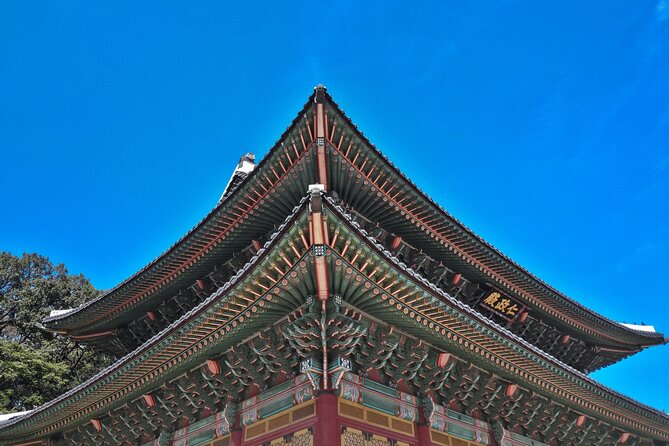
Then you get to Changdeokgung Palace, where the tour really comes alive for many first-timers. Changdeokgung was the principal palace for many Joseon kings, and it’s often considered the most well-preserved of the remaining Joseon royal palaces. You’ll get about 1 hour here, with admission included.
What’s especially worth your attention is how the grounds are organized into three parts: a public palace area, royal family residence buildings, and the rear garden. Many people race through palaces because they don’t know what to look for. The guide helps you slow down mentally and notice the shift from ceremonial space to kingly resting space.
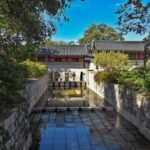
The rear garden is the star. You’ll hear about a gigantic tree reported to be over 300 years old, plus a small pond and pavilion. That combination matters because it shows how royal life wasn’t only politics—it was also about retreat, scenery, and controlled nature.
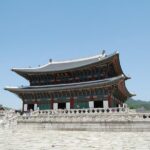
As with Jongmyo, there’s a closure swap. If Changdeokgung Palace is closed on Monday, you’ll visit Gyeongbokgung Palace instead. So you still get the palace experience even when your first choice isn’t operating.
One more thing to keep expectations realistic: renovations can affect what you can see and how close you can get to certain areas. If you hit construction zones, focus on what you can access—the layout, the garden elements, and the stories your guide is connecting to the spaces.
Cheongha Korea Ginseng Museum: Educational Stop with a Sales-Push Risk
The final stop is the Cheongha Korea Ginseng Museum, scheduled for about 30 minutes. Admission is listed as free, and the theme is Korean ginseng—its background and uses. You’ll hear it was first mentioned in the text Ji Jiu Zhang during the Han dynasty, described as a herb used widely across the orient for a range of ailments. You’ll also learn that Korean ginseng is studied for adaptogenic properties.
This stop can be interesting if you want a quick health-culture snapshot instead of only royal history. It’s also a useful breather in a packed morning because it’s not all walking and stairs.
The caution is tone. Some people can find the last stop less relaxing than the palace areas because it can turn into a hard-sell environment. If you want to stay in control of your experience, treat it like a short lecture: ask any questions you genuinely have, listen politely, and decide in your own time whether you want to engage further. You can always keep your wallet shut and just enjoy the education.
Value for $34: Admissions Included, But No Meal Included
At $34 per person, this tour is best viewed as a bundled deal for first-time visitors who want three major landmarks in one half-day. The big value lever is that admission tickets are included for the first three stops (Bukchon Traditional Culture Center, Jongmyo Shrine, and Changdeokgung Palace). That alone can make the total feel more reasonable than buying everything separately.
You’re also getting a local guide plus transport by air-conditioned minivan, which matters in Seoul where transit logistics can eat time. With the drop-off in Myeongdong, you’re positioned in one of the easiest areas to continue your day, whether that means grabbing lunch or heading to another neighborhood.
Two trade-offs you should plan around:
- No meals are included, so have a meal plan for after the tour (or bring a light snack if your schedule is tight).
- The tour is designed to fit a lot into a short window, so if you like to linger in courtyards and read every sign, you may feel a bit rushed.
Also, this tour doesn’t stop at shopping centers, which is a plus if you’d rather spend your time on heritage sites than detours.
Who This Tour Suits Best (And Who Might Feel Unsatisfied)
This tour is a great fit if you:
- Want UNESCO World Heritage sites without having to organize the route yourself
- Prefer a guide who explains what you’re looking at, not just the facts of what’s there
- Have limited time and want a structured half-day hitting Bukchon + Jongmyo + Changdeokgung
- Like photo-friendly stops with built-in viewpoint time
It may feel less ideal if you:
- Want a slow, text-by-text palace experience (the schedule is tight)
- Dislike any part of a tour that mixes education with sales pressure (the ginseng stop is the main area to consider)
- Are hoping for uninterrupted access at every site (renovations or restrictions can happen)
If your main goal is to maximize palace time, you might still appreciate the guide context here, then plan a longer return later. For many people, that ends up being the best of both worlds: guided orientation now, slower exploration another day.
Quick Booking Decision: Should You Book This Seoul UNESCO Tour?
I’d book this tour if you’re a first-time Seoul visitor who wants a smart, guided hit of Jongmyo Shrine and Changdeokgung Palace, plus the hanok context of Bukchon—all with easy minivan transport and a convenient end in Myeongdong. The price feels fair because key admissions are included, and the guide-driven explanations help the day make sense.
I wouldn’t book it (or I’d treat it as a “good orientation, not a long linger”) if you hate being rushed or you strongly dislike salesy stops. If you can accept a packed schedule and keep your expectations straight for the ginseng museum, you’ll likely come away with a clearer sense of how Joseon-era ritual, home life, and royal space connect.
FAQ
What UNESCO sites are included?
You’ll visit Jongmyo Shrine and the Changdeokgung Palace Complex.
Which traditional village stop is included?
The tour includes Bukchon Traditional Culture Center as the Hanok village start. On Sunday, the day’s plan may instead use Namsangol Hanok Village.
What happens if Jongmyo is closed?
Because Jongmyo Royal Shrine is closed on Tuesday, the tour visits Insadong Antique shop alley instead.
What happens if Changdeokgung is closed?
Because Changdeokgung Palace is closed on Monday, the tour visits Gyeongbokgung Palace instead.
Are admission tickets included?
Yes. Admission tickets are included for Bukchon Traditional Culture Center, Jongmyo Shrine, and Changdeokgung Palace. The Cheongha Korea Ginseng Museum admission is listed as free.
Is hotel pickup included?
Hotel pickup is only available for centrally located hotels. If your hotel is behind alleys, the guide meets you at the nearest central hotel or nearby subway station.
Where do you meet and where do you end?
Meet at Myeongdong Station Exit 1061-7, Chungmuro 2(i)-ga, Jung District. End with drop-off in the Myeong-dong area.
Is food included?
No. Meals or drinks are not included.
How physically demanding is it?
The tour is noted as requiring moderate physical fitness, which usually means you should be comfortable with walking between short stops.
Is there free cancellation?
Yes. Free cancellation is available up to 24 hours before the experience start time for a full refund.