REVIEW · ATHENS
Blue Lake, Sanctuary of Hera, Mycenae, Ancient Corinth, Canal
Book on Viator →Operated by Ancient Greece Tours & Transfers · Bookable on Viator
My favorite kind of day trip mixes big ruins with a real break. This one strings together Mycenae, Corinth, and Heraion into a single 9-hour route, with time to swim at the Blue Lake to cool down after the stone-and-sun sightseeing.
I really like the stress-free format: door-to-door hotel pickup in a comfortable private vehicle, plus bottled water, wipes, and WiFi to keep the day smooth. And because it’s private, you’re not stuck pacing with strangers when you want to linger by a wall or rush a museum.
The main drawback is simple: it’s a long day with lots of stops, so some sites feel more like highlights than deep study. Also, entrance fees and lunch are not included, so budget a bit extra once you see what you’ll pay on the spot.
In This Review
- Key highlights worth building your day around
- A private 9-hour route that works when you want fewer logistics
- Corinth Canal and the Ancient Diolkos: engineering you can actually feel
- Mycenae: grave circles, cyclopean walls, and the palace spaces
- Treasury of Atreus and the tombs: tholos architecture that still feels strange
- The Museum of Ancient Mycenae: gold objects that make the ruins click
- Acrocorinth and the views: when Corinth becomes a fortress story
- Upper Peirene Fountain, Geraneia, and the Gulf views
- Ancient Corinth: Apollo Temple, the Agora/Bema, and Paul’s footsteps
- Heraion in Perachora and the Blue Lake swim: the payoff at the end
- Price and value: what you pay for at $337.15 per person
- Who this tour suits best
- Should you book this Corinth–Mycenae–Hera day trip?
- FAQ
- How long is the tour?
- Is pickup and drop-off included?
- Is this tour private?
- Are entrance fees included?
- Do they provide a skip-the-line option?
- What languages is the tour offered in?
Key highlights worth building your day around
- Private door-to-door transport from your Athens hotel, with WiFi, water, and wipes
- Mycenae in layers: grave circles, cyclopean walls, palace spaces, and museum gold
- Acrocorinth views from the dominant acropolis above the Peloponnese
- Ancient Corinth at multiple levels: Apollo temple, Agora/Bema, Roman remains, theater/Odeon
- Sanctuary of Hera and Blue Lake swim for a true reset at the end of the day
A private 9-hour route that works when you want fewer logistics
This is a private tour, so the day is shaped around your group, not around a bus schedule. You start with hotel pickup and you end back at your hotel in Athens, which matters if you’re tired of thinking about tickets, parking, and timing.
The vehicle support is part of the value. You get a professional driver, WiFi on board, bottled water, and even refreshing wipes and handmade Greek biscuits. That may sound like small stuff, but on a full-day route out of Athens, it helps you stay comfortable between sites.
The other practical piece: there’s an optional licensed tour guide add-on if you want someone walking you into museums and sites. If you don’t add that, you’ll still get strong storytelling from the driver as you travel between places, which is a common best-of-both-worlds setup for people who prefer to explore independently once you arrive.
You can also read our reviews of more tours and experiences in Athens.

Corinth Canal and the Ancient Diolkos: engineering you can actually feel
You kick off at the Isthmus of Corinth, where the Corinth Canal slices the land in a way that makes modern engineering feel almost theatrical. Even if you’ve seen photos, standing nearby puts the scale into perspective, and it’s an easy first stop to “wake up” on the drive out of Athens.
Just as important is what the stop teaches you about how this area moved goods. You’ll also see Ancient Diolkos, a paved trackway from Ancient Greece that allowed boats to be moved over land across the isthmus. It’s a great reminder that this corridor mattered long before the canal you see today.
Practical note: this is a fast early segment, so don’t count on long wandering. Treat it as an orientation stop—then you’ll be ready for the real concentration of ruins later.
Mycenae: grave circles, cyclopean walls, and the palace spaces
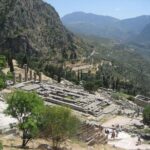
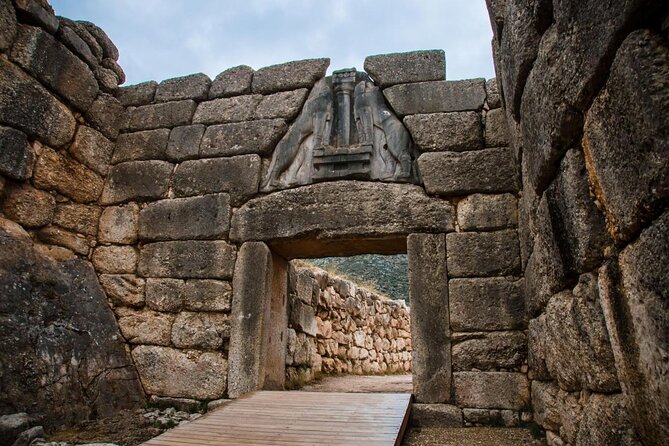
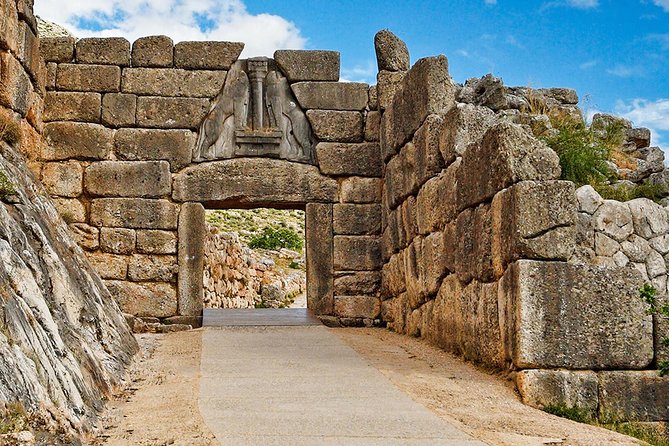
Mycenae is the kind of place where the stones do the talking. You’ll visit the Grave Circles A and B, royal cemeteries south of the Lion Gate area, and that positioning helps you understand how the city’s power projected into the landscape around it.
Then comes the unmistakable look of Cyclopean Walls, built with enormous limestone boulders. The tour gives you context for why these walls matter: the Mycenaeans used massive stone construction to create defensive power you could feel even without fancy signage.
After that, you’ll step into the Royal Palace area with domestic apartments, the Throne Room suite, the Grand Staircase, and spaces connected to officials. You won’t get the palace “as a house you can live in”—you’ll get it as a map of how authority, movement, and ceremonies were organized.
A small trade-off: much of this area moves quickly, and some stops are short by design. If you like slow museum-style reading, you may want to plan your energy so you’re not rushing through the details you care about most.
Treasury of Atreus and the tombs: tholos architecture that still feels strange
If you’re even mildly curious about how the Mycenaeans handled death, this part lands well. You’ll see the Citadel and Treasury of Atreus, a large tholos or beehive tomb built around 1250 BC. A tholos tomb has a specific, almost uncanny sense of geometry—built to pull you inward.
Right after, you’ll have time for the Tomb of Clytemnestra, also a tholos-style tomb dated to around 1250 BC, named after the wife of Agamemnon. Even if you’re not a Greek-tragedy specialist, the architecture and the dates help you connect myth to real stone.
Time here is limited, so I’d focus on what you can actually see: shape, construction, and placement. It’s one of those stops where a quick look done well beats a slow look done tired.
The Museum of Ancient Mycenae: gold objects that make the ruins click
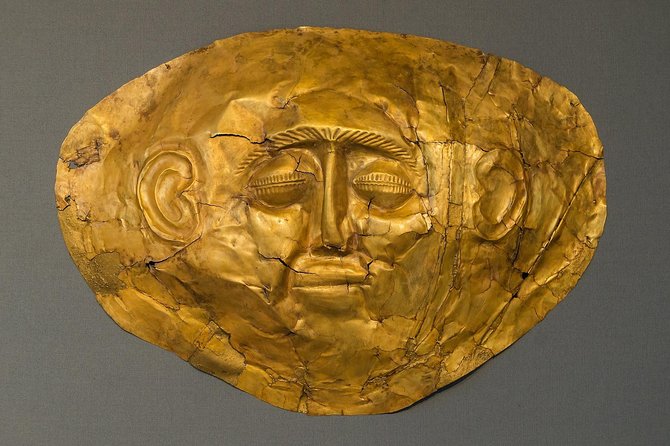
Then you’ll switch gears to the Archaeological Museum of Ancient Mycenae. This is where the day’s big claims become tangible: gold grave goods, burial masks, jewelry, weapons, worship idols, frescoes—objects that show craftsmanship and status, not just stone walls.
The museum time is about 30 minutes, so you’ll want to go in with an idea of what you’re hunting. If you love metalwork and funerary objects, lean into those displays first. If you prefer art details, start with the frescoes.
Even when a museum visit is short, it changes how you read the sites. After seeing the objects, the tombs and palace spaces feel less like names and more like an actual system of beliefs and power.

Acrocorinth and the views: when Corinth becomes a fortress story
Next up is Akrokorinthos, the acropolis of Corinth. You drive up to the dominant rock above the city, and once you’re there, the place makes sense fast. It’s a layered fortress site with gates and circuit walls reinforced by towers.
You’ll also notice the Temple of Aphrodite traces on one of the peaks. It’s not a fully “complete” temple experience, but the location helps you picture why this acropolis mattered spiritually as well as militarily.
A highlight for many people is the Frankish Tower and the inner keep area fortified during Frankish times. You may also see remains of churches, mosques, houses, fountains, and cisterns, which makes the site feel like a palimpsest—many eras writing on the same rock.
One practical consideration: you’re on a high, exposed acropolis. If you’re sensitive to heat or sun, treat this as the segment to bring water habits into play and pace yourself.
Upper Peirene Fountain, Geraneia, and the Gulf views
After the big fortress moment, the tour adds two calmer stops with a lighter feel: Peirene Spring near the Upper Peirene Fountain, and then a Geraneia viewpoint with views over the Corinthian gulf and the southwest coast of the Peloponnese.
These breaks are useful because they let your brain absorb what you’ve already seen. My advice: use the viewpoint time to look for patterns. See how the coast line and the terrain explain why Corinth was so strategically positioned.
These segments are shorter, but they work as a mental “reset” before Ancient Corinth, where you’ll have another long run of sights.
Ancient Corinth: Apollo Temple, the Agora/Bema, and Paul’s footsteps
Ancient Corinth is the biggest block of sightseeing on the day, with about three hours for the archaeological site and related areas. This is where you’ll get a mix of sacred architecture, civic space, and Roman-era remains.
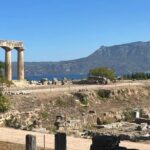
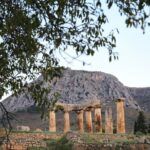
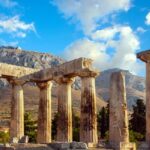
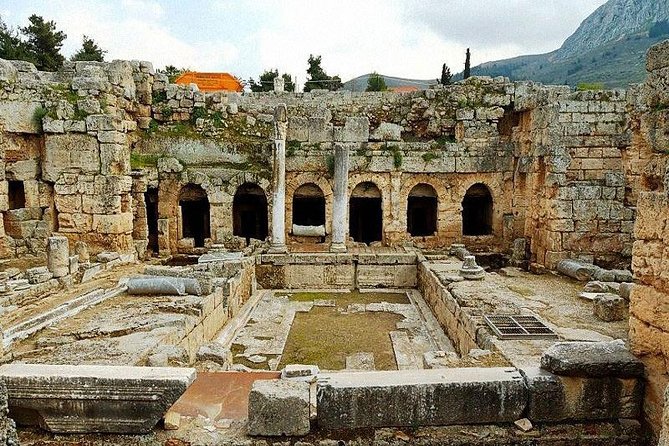
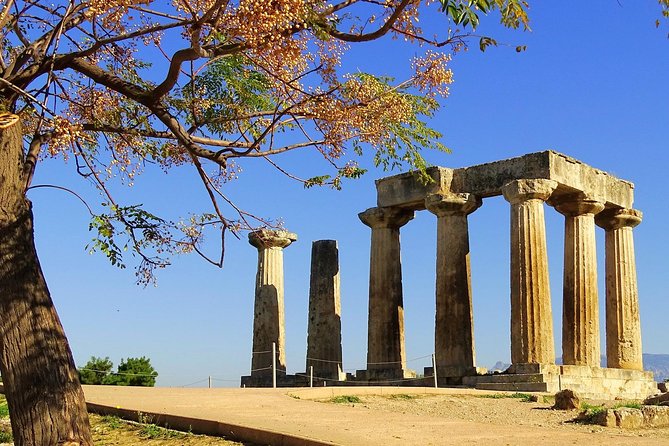
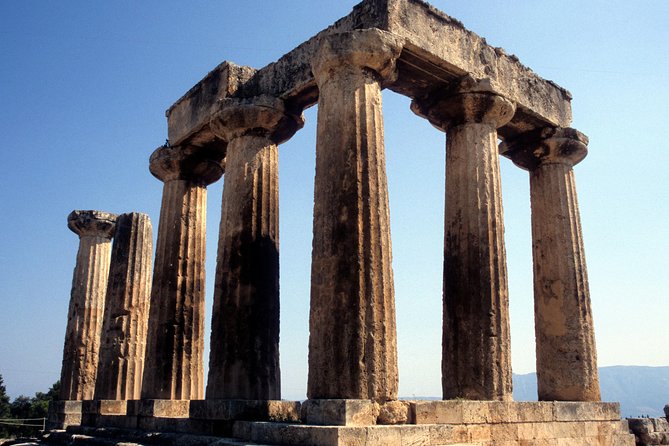
Start with Hadgimoustafa spring, then move into the Ancient Corinth Archaeological Museum if you have time and interest in artifacts from the local site and nearby areas. Then you’ll reach the Temple of Apollo—one of the earliest Doric temples in the Peloponnese and on the Greek mainland, built around 560 BCE. The monolithic columns make it feel rarer and more grounded than many temple ruins.
Next comes the Agora: a long rectangular civic space with central shops, small temples and altars, and the renowned podium or Bema where Apostle Paul addressed the Corinthians in 52 AD. Even if you don’t come for religious context, it’s a powerful reminder that public speech and civic life were tied to physical places.
You’ll also see Roman buildings, plus the theater and Odeon/Asklepieion areas. This section gives Ancient Corinth a fuller “city” feeling, not just one monument.
Then there’s the Lechaion road facing the Corinthian gulf and the port direction. This adds geography to the story. And you’ll have time for St. Paul’s church area, including a mosaic mural depicting Saul’s vision on the road to Damascus.
Lunch is offered on a terrace overlooking the archaeological site and the Temple of Apollo. It’s not included, but the setting is exactly why it’s worth planning for—this is your best moment to eat without feeling like you’re just grabbing calories in transit.
You’ll also have time to stroll through village-style shops afterward to pick up handmade souvenirs.
Heraion in Perachora and the Blue Lake swim: the payoff at the end
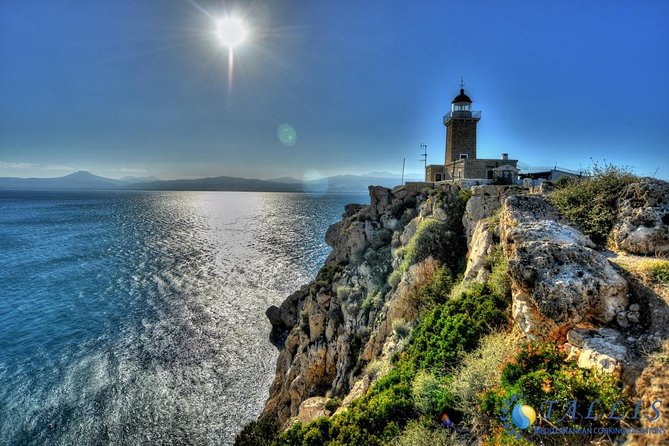
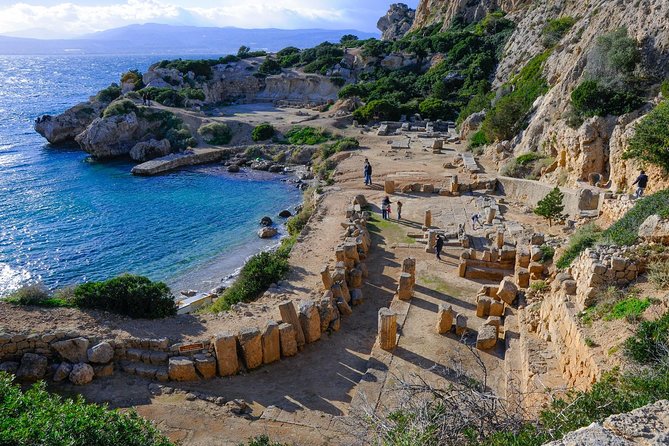
This is the emotional high point for most people. You reach the Sanctuary of Hera in Perachora, where you can take in the Malagavi Lighthouse area and then the Heraion itself.
Then you get what makes this tour feel different: time at the Blue Lake for a refreshing swim. The day’s been stone, sun, and walking. A water break is not just a bonus; it’s what makes the last third of the tour feel like a real vacation moment instead of a final sprint.
The swim block is about an hour, so it’s long enough for a proper dip. My practical advice: wear or pack swimwear, bring a towel if you have one, and plan to take it easy once you’re out—sun can be intense after time in water.
Price and value: what you pay for at $337.15 per person
$337.15 per person for a roughly 9-hour private day out of Athens can be good value when you price it against what it replaces: planning and driving yourself, plus a full route of multiple major sites.
Here’s what that price covers: private transportation by luxury vehicle, hotel pickup and drop-off, WiFi, bottled water and wipes, and handmade Greek biscuits. You also get skip-the-line ticket service on request, which can reduce stress at busy ticket points.
What it doesn’t cover: entrance fees to sites, food and drinks, and tips. So your total spend depends on how many paid entries you choose. If you want museums and tombs, plan on entrance costs adding up.
In other words, it’s best viewed as paying for time and comfort across a lot of stops, with driver context doing some of the “guide work” even if you don’t add the extra licensed guide.
Who this tour suits best
This fits you if you want a big-hit route without renting a car or juggling bus connections. It’s also a strong option if you prefer to explore at your own pace once you arrive, while still getting history and context as you travel.
It’s especially worth it if you like variety: engineering at the canal, monumental ruins at Mycenae and Corinth, plus a practical payoff at the end with the Blue Lake swim.
It might not be your best fit if you want deep reading at every stop. The schedule is built for coverage, not for hours of quiet museum-style immersion.
Should you book this Corinth–Mycenae–Hera day trip?
Yes, if you want an efficient, private day that mixes major archaeology with a real break in the form of the Blue Lake swim. The door-to-door transport and the on-the-road context from the driver are the big reasons it works, and the ending at Heraion is a memorable payoff.
Skip it only if you’re the type who needs long, unhurried time at a single site. For everyone else, this is one of those day trips that gives you a lot to talk about without turning the day into a logistics project.
FAQ
How long is the tour?
It runs about 9 hours.
Is pickup and drop-off included?
Yes. The tour includes hotel/port pickup and drop-off in Athens, with the driver meeting you at your lobby or arrivals area as applicable.
Is this tour private?
Yes. It’s a private tour/activity, and only your group participates.
Are entrance fees included?
No. Entrance fees to the sites are not included (food and drinks are also not included).
Do they provide a skip-the-line option?
Skip-the-line ticket service is offered on request.
What languages is the tour offered in?
It’s offered in English.