REVIEW · VILNIUS
Cathedral Crypts and Medieval History Tour
Book on Viator →Operated by Vilnius with Locals tours · Bookable on Viator
Vilnius has stories in the cracks. This small-group walk leads you from the big names—Gediminas and Mindaugas—to the chilly rooms beneath Vilnius Cathedral, with a guide tying it all into how medieval Lithuania formed. I especially like the way the tour gives you history that’s easy to picture, and I love that the Cathedral crypts ticket is included for your time underground. One thing to keep in mind: the crypt visit involves stairs and enclosed spaces, so it’s not a great fit for claustrophobia or mobility limits.
You’ll spend about 2 to 3 hours outside and inside, moving between key spots around Cathedral Square and the Old Arsenal area. The price is $36.09 per person, which feels fair here because you’re paying for real guide time plus a booked entry into the crypt chambers. Expect a walking pace that stays quick and focused—about 15 minutes at most stops—so it’s best if you like structured sightseeing more than lingering.
In This Review
- Key Highlights You’ll Actually Feel
- Why Vilnius Cathedral Crypts Hit Different
- Starting at Gediminas: Find the Guide and Get Oriented
- Cathedral Square: Pagan Roots to a City’s Beginning
- Mindaugas Monument: How a Kingdom Gets Made
- Defensive Castle Story Without the Hill Climb
- Palace of the Grand Dukes Courtyard: Power With Less Museum Time
- Entering the Crypts of Vilnius Cathedral: The Main Event
- Old Arsenal Building: Small Area, Big Early Purpose
- Price and Time: Is $36.09 Good Value Here?
- Who This Tour Suits Best (And Who Should Skip)
- Should You Book Cathedral Crypts and Medieval History?
- FAQ
- What is the duration of the Cathedral Crypts and Medieval History Tour?
- Is the ticket to the crypts included?
- Is the tour offered in English?
- Does the tour go up to Gediminas Hill and the castle?
- Is this tour suitable for claustrophobia or mobility difficulties?
- Can I cancel for a full refund?
Key Highlights You’ll Actually Feel
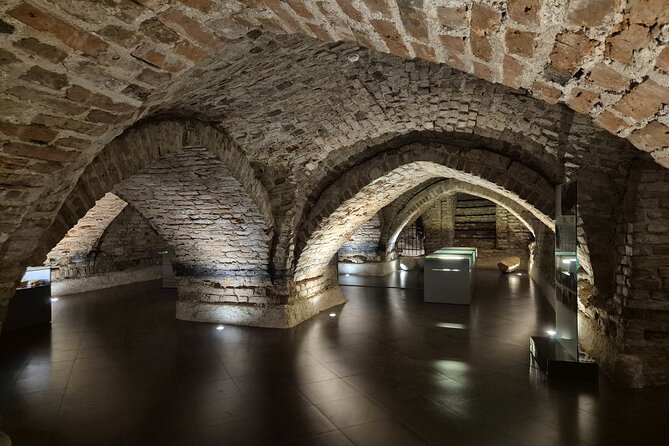
- Cathedral Crypts included: about an hour underground, not just a quick peek.
- Medieval timeline, in plain language: from Baltic tribes and pagan beliefs to Lithuanian kingdom power.
- Small group size (max 20): easier questions and better pacing through the sites.
- No hill climb: you get the tower view from below and the defensive story without the hike to the top.
- Courtyard at the Palace of the Grand Dukes: power and purpose, without turning it into a museum slog.
- English guides with strong presentation: examples include Milda and Christina, both praised for clear explanations.
Why Vilnius Cathedral Crypts Hit Different
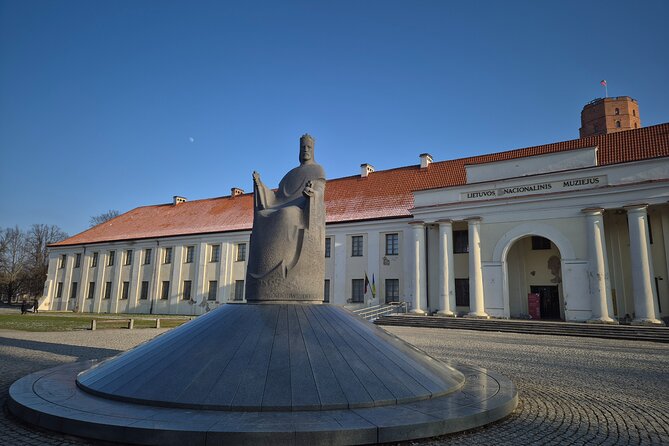
The crypts under Vilnius Cathedral aren’t just spooky photos waiting to happen. They connect religion, politics, and identity in Lithuania in a way that’s hard to grasp from the street-level view alone. When you’re down there, the cathedral stops being a landmark and becomes a setting for centuries of burial, belief shifts, and changing power.
I like how the tour frames the crypts as part of a larger story. You learn why this place matters, who ended up laid to rest in the chambers, and how religious development unfolded as the country’s medieval foundations took shape. If you’re the type who enjoys context more than checklists, this is a strong fit.
The tone stays practical. You’re not asked to memorize dates for points. Instead, the guide gives you the “why” behind what you’re seeing—so later, when you glance up at the cathedral above, you know there’s a second world underneath.
You can also read our reviews of more historical tours in Vilnius


Starting at Gediminas: Find the Guide and Get Oriented
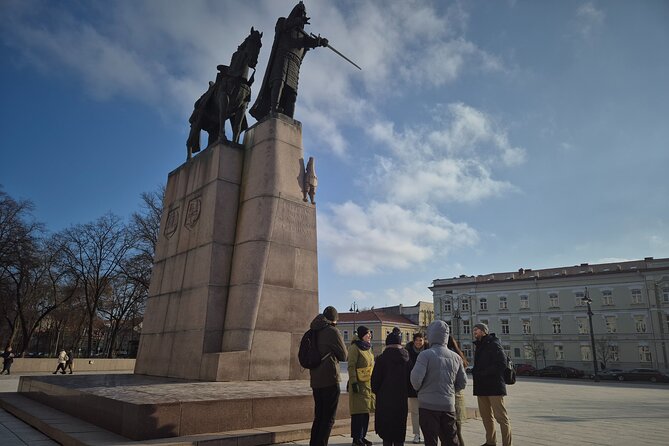
Your meeting point is the Monument to Grand Duke Gediminas on Katedros a. (01143 Vilnius). Look for the guide with a yellow sign, umbrella, or bag—the tour is designed so you can spot them fast and get moving.
This first stop is only about 15 minutes, and that’s on purpose. It’s the quick warm-up: you get bearings and the big-picture names you’ll hear again and again. Gediminas isn’t just a statue here. The guide uses him to connect the city’s medieval role to the broader kingdom story you’ll build toward.
If you arrive a bit early, do a quick visual scan around Cathedral Square area. Even without going far, you’ll start placing the landmarks. That makes the later crypt descent feel less like a random detour and more like a planned route through time.
Cathedral Square: Pagan Roots to a City’s Beginning
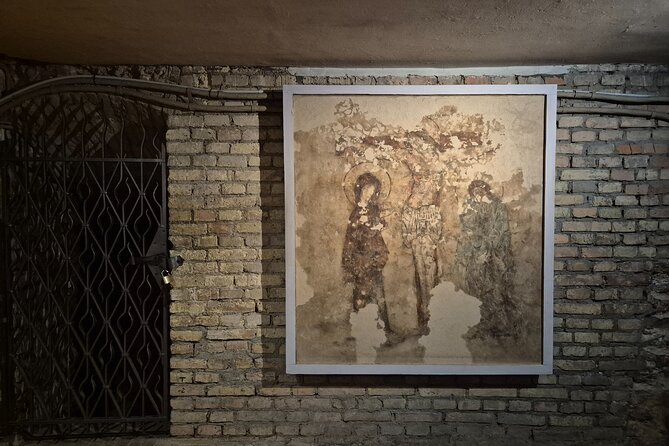
Next you’re at Vilnius Cathedral Square, and the discussion focuses on what came before the stone-and-ceremony version of the city. You’ll hear about the earliest inhabitants of the area and how Baltic tribes emerged here. The guide also explains what pagan religion meant in this setting, and how that set the stage for how Vilnius formed in this location.
This is a valuable step because it avoids the common trap: jumping straight into medieval kings without explaining the earlier layers. When someone explains pagan beliefs with the goal of making the setting understandable, you can better appreciate why later religious changes mattered. You also get a sense of why certain sites were built where they were—because geography and meaning worked together.
There’s also a practical note built into the flow: at one point, the guide explains what a nearby building was before and what to expect if you choose to visit later. That’s helpful if you want to keep exploring after the tour ends, without feeling lost.
Mindaugas Monument: How a Kingdom Gets Made
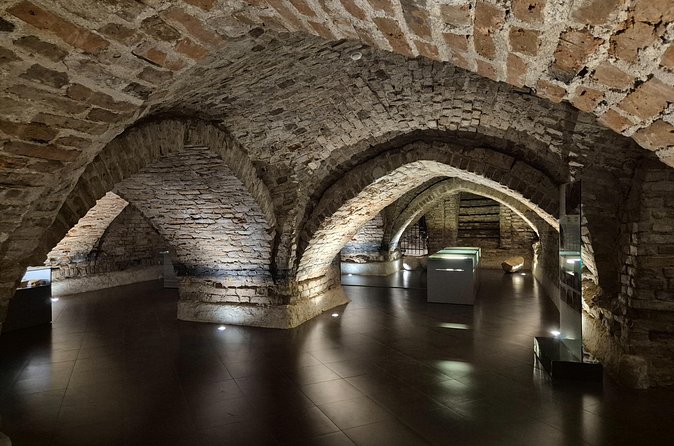
Then you pivot to the Monument to King Mindaugas, another 15-minute segment. This is where the tour focuses on the conditions under which the Lithuanian Kingdom was created in the 13th century. It’s early state formation: alliances, power consolidation, and the political reality that made kingship stick.
Mindaugas can sound like a name from a textbook, but on this tour the point is to connect him to the bigger medieval shift happening around Vilnius. You’ll leave this section with clearer mental links between rulers, locations, and why certain institutions gained importance.
I like that the guide doesn’t treat Lithuania’s medieval story as isolated. The explanations help you see it as part of how Europe’s power networks worked—while staying grounded in local specifics.
Defensive Castle Story Without the Hill Climb
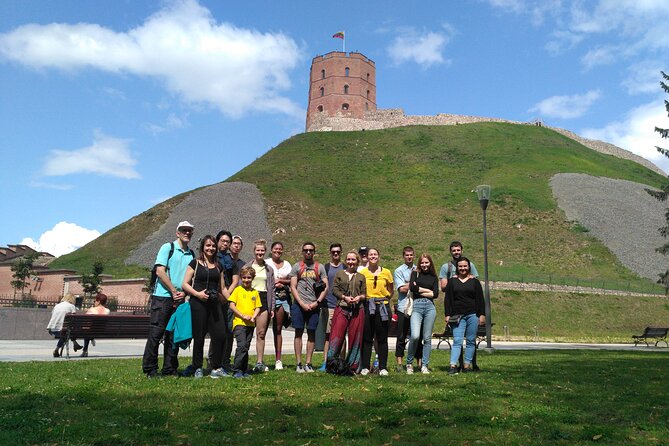
A lot of Vilnius tours either go all-in with a climb or skip the viewpoint story entirely. This one lands in a sensible middle. You do not go up to Gediminas Hill and the castle. Instead, the guide helps you check the view of the tower from the bottom and explains the purpose of the defensive castle around Vilnius.
This matters more than it sounds. From the street level, you can easily miss why the area was defensible or how sightlines and terrain helped protect power. Getting a tower view from below is an efficient way to understand the defensive logic without turning the tour into a long hike.
It’s also a kindness for your schedule. With a start time of 2:30 pm and a target of 2 to 3 hours, you need the route to stay tight. This tour does that, while still giving you a key piece of the medieval security puzzle.
If you’re hoping for a summit experience—stairs, walls, and tower time—this won’t replace that. But if you want the story and the perspective, it does the job.
Palace of the Grand Dukes Courtyard: Power With Less Museum Time

Next up is the Palace of the Grand Dukes of Lithuania, focusing on the yard of the palace. You learn why it was built there and hear about great historical rulers connected to the site. You also get a quick look at what you can find there now, with an important detail: you’re not visiting the museum itself.
That choice can be a plus. Museums can eat hours fast, and many cathedral tours already run up against the clock. By keeping it to the palace grounds and courtyard, the guide keeps the emphasis on medieval governance and meaning—things that connect directly to the crypt visit later.
I also like that the palace stop helps you connect the dots between political authority and sacred spaces. Medieval cities didn’t separate religion from power. When you understand the palace purpose and the cathedral role as neighboring forces, the crypts make more sense.
This stop is about 15 minutes, so don’t expect a full, self-guided deep walk. Think of it as a “spot the themes” moment.
Entering the Crypts of Vilnius Cathedral: The Main Event
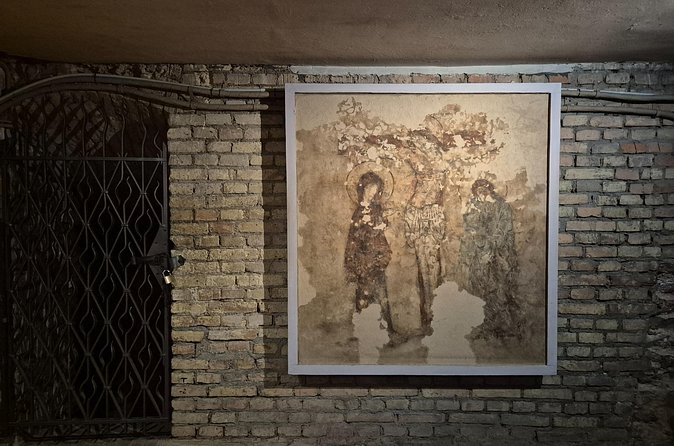
Now you descend into the heart of the tour: the Crypts of Vilnius Cathedral. This part lasts about 1 hour, and the cathedral crypt ticket is included. You’ll walk through the chambers and learn what the cathedral signifies, which people were laid to rest here, and how religious development shaped the country over time.
This is where the tour earns its name. Walking through a crypt with guided explanation changes your experience. You’re not just counting sarcophagi or scanning walls. You’re given a narrative for why these spaces exist, what they represented, and why they became part of Lithuania’s religious and cultural memory.
A big heads-up: this is not the right choice if you’re dealing with claustrophobia. The tour explicitly notes it’s not recommended for that reason, and it’s easy to see why once you’re underground with stairs and enclosed rooms. It’s also not ideal if mobility is a concern, since the experience requires descent and walking inside.
If you’re comfortable with enclosed spaces, though, this is the best value moment on the whole itinerary. The guide’s explanations turn the crypt from “interesting” into “meaningful,” and the time underground is long enough to actually absorb what you’re seeing.
Old Arsenal Building: Small Area, Big Early Purpose

After the crypt visit, you return to the outside city story with a stop at the Old Arsenal Building. This is another 15-minute segment focused on what surrounded the Cathedral Square area and what those buildings were originally for when Vilnius took shape.
This stop is easy to overlook because it’s shorter and less dramatic than the crypts. But it helps you round out the picture. A cathedral doesn’t sit in a vacuum. The surrounding buildings, their original purposes, and the way the city formed around this central area all affect how the cathedral’s role played out.
If you like turning a square into a timeline, this part will satisfy you. You’ll start thinking: who used the space, how the area functioned day-to-day, and how power and defense looked in architecture.
Price and Time: Is $36.09 Good Value Here?
At $36.09 per person for about 2 to 3 hours, this is priced like a focused guided experience rather than a big-ticket excursion. The key value is that your crypt entry is included, and you get a guide-led route across several major medieval touchpoints.
You’re also not just paying for the crypt. You’re paying for the structure: short orientation stops at major monuments, explanations at Cathedral Square, context before and after the underground visit, and a wrap-up back near the start point. The pacing is efficient. You’ll walk enough to feel like you’ve seen the core of the area, but you won’t burn the whole afternoon.
The tour also runs with a maximum of 20 travelers, which helps keep the experience interactive. With a small group, it’s easier to hear the guide and ask quick questions without feeling like you’re shouting over a crowd.
One practical detail: it’s offered in English, with the tour guide’s presentation praised as clear. If you’re traveling with English as your comfort language, this reduces friction and helps you get more out of the explanations you came for.
Who This Tour Suits Best (And Who Should Skip)
This experience is ideal if you want a guided medieval narrative with real payoffs at the end. It’s especially good for:
- First-time visitors who want Vilnius context fast
- People who like religion-and-politics connections, not just architecture photos
- Anyone comfortable with stairs and enclosed spaces underground
- Travelers who prefer a plan with minimal waiting and a small group feel
It’s not a great match if:
- You need step-free or mobility-friendly routes, since it involves the crypt descent
- You get uncomfortable in tight, underground spaces
- You specifically want Gediminas Hill/castle access, because this tour does not go up there
Should You Book Cathedral Crypts and Medieval History?
I think it’s a solid booking if you want to start your Vilnius visit with meaning, not just monuments. The underground hour is the clear highlight, and the rest of the tour builds the context so the crypts don’t feel random. The route also makes good use of time—no hill climb, no long museum detours—so you still feel like you covered a lot of medieval ground.
If your priority is maximum walking freedom or hilltop views, you might need a different add-on. But for a structured, English-friendly medieval history walk with crypts included, this one is a strong value pick.
FAQ
What is the duration of the Cathedral Crypts and Medieval History Tour?
It lasts about 2 to 3 hours.
Is the ticket to the crypts included?
Yes. The Cathedral crypts ticket is included.
Is the tour offered in English?
Yes, it’s offered in English.
Does the tour go up to Gediminas Hill and the castle?
No. The tour does not bring you up to Gediminas Hill and the castle.
Is this tour suitable for claustrophobia or mobility difficulties?
It’s not recommended for travelers with claustrophobia or mobility difficulties.
Can I cancel for a full refund?
Yes, you can cancel for free up to 24 hours in advance for a full refund.